Townes Van Zandt Down Home & Abroad/Doug Sahm Texas Radio & The Big Beat. Floating World Records

These two albums of vintage recordings from late Americana legends, both double disc CD sets with impressive liner notes, certainly serve a purpose as more and more live gigs and radio sessions from the past make it into the public domain. The question is, “Do they deserve to appear and is it worth forking out for them?” Well, in the case of Townes Van Zandt here, the answer is definitely yes. As for the Sahm set, it’s a bit more woolly.
Townes_hi-res_2000x

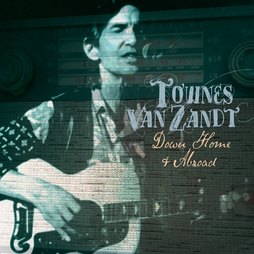
Down Home & Abroad consists of two live shows recorded in 1985 (at The Down Home in Johnson City, Tennessee) and 1993 (in Helsinki). In both shows Townes is in fine fettle, relaxed and chatty as he rambles through his stellar catalogue of songs, most of the classics are here with only four duplications across the discs. On the Tennessee set he is accompanied by guitarist Mickey White and flautist/saxophonist Donny Silverman, the latter’s contributions reminding one of the early Van Zandt studio albums. His talking blues on Talking Thunderbird Blues and Fraternity Blues both raise some hoots from the audience and some of his introductions raise a chuckle but when he delves into a song such as Rake, you know this is a guy who has faced darkness in his soul. The accompanying players give Snake Mountain Blues an additional heft and there’s a neat combination of Colorado Girl and Just Like Tom Thumb’s Blues which is just outstanding. By 1993 Townes is much more weathered, his voice more stained but still capable of dredging up deep emotions. Here he’s solo and his guitar is just a bit more ragged but again he has those great songs to back him up. He sounds tentative at first on this first visit to Finland but as the show progresses he relaxes, his chats loosen up and by the end of the show (which, going by his repeated assurances to the crowd that the main act will be on soon, goes on longer than planned) he’s flying, playing audience requests and goofing around as when he kicks off Brother Flower saying, “If I start humming it’s because I’ve forgotten the words.” A raw rendition of Flying Shoes and a halting Don’t you Take It Too Bad (and here you can compare the performance to that of eight years earlier) close the show. With both shows well recorded (aside from some minor tape hiss on the Helsinki show) this release is bound to attract devotees of Townes Van Zandt and for more fair weather listeners is not too shabby a way to hear what all the fuss is about when it comes to the peculiar genius of Townes Van Zandt.
Doug_hi-res_2000x

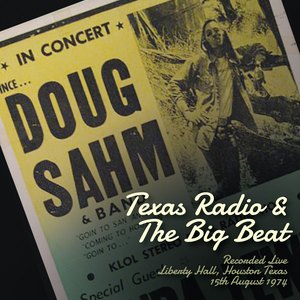
Texas Radio & The Big Beat (aside from the title the discs have no relationship with The Doors) consists of two shows recorded for radio transmission in 1973 and 1974, in Philadelphia and then in Houston. Recorded in the wake of Sahm’s Atlantic album, Doug Sahm and Band, which had the likes of Dylan and Dr. John sitting in, the shows don’t reflect that disc with only two songs, Papa Ain’t Salty and (Is Anybody Going To) San Antone represented. Instead, Sahm and the bands behind him offer some of his older hits such as She’s About A Mover and At The Crossroads along with numerous covers of blues and country standards. It has to be said that both recordings are thin, the band muffled for the most part with instrumental solos either too loud or lost in the mix. Sahm himself is fiery and passionate, having fun but with his vocal track way up high on most of the songs. The Philadelphia recording wins out in terms of its variety and Sahm’s between song chat but on both shows the majority of the songs are blues shuffles with little of the variety that was on show on that Atlantic Records studio album. That said the versions of (Is Anyone Going To) San Antone and Wolverton Mountain, both from the Philly gig, are pretty cool but it’s difficult to recommend this to anyone but die hard collectors.
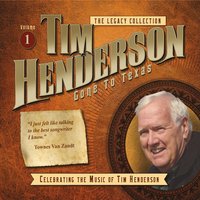
Tim Henderson. Gone To Texas: The Legacy Collection (Vol.1)

timhenderson6For anyone interested in Texan folklore and the songs of Townes Van Zandt, Butch Hancock and Guy Clark this album is an intriguing listen. Tim Henderson, who died in 2011, was from West Virginia but moved to Austin, Texas when in his 30’s. Influenced by his grandmother who played mountain dulcimer Henderson took up music at an early age but once in Texas he joined in the budding musical scene there releasing his first album in 1978. While his fame never expanded much beyond the State’s borders, at home he was feted with Townes Van Zandt championing him as he won a best song award at The Kerrville Folk Festival in 1977 while he was awarded a Lifetime Achievement Award by the Academy of Texas Music in 2011 for his “timeless contributions to Texas music.”
Gone To Texas is the first volume of a six album set which gathers Henderson’s recording together and, as the title hints, it concentrates on the songs he wrote about Texas history, culture and people. Released last year in The States it’s coming to our attention now due to the ministrations of promoter Rob Ellen who heard about Henderson when he was on the road with an artist Henderson mentored, Chuck Hawthorne. Ellen attended a concert celebrating the album release and was knocked out and amazed at the galaxy of Texas artists who turned up to pay homage and undertook to try and spread the word further. For that we say, Thanks Rob.

Listening to the album I was struck time and again as to why Henderson isn’t better known. His songs range from vibrant retellings of pivotal moments in Texas history to songs packed full of humour and wit. His Ballad Of Whiskey John (one of the songs that helped him win the Kerrville New Folk Competition – Van Zandt was a judge that year) is a folk tale, almost a talking blues, which recalls Loudon Wainwright and Kinky Friedman. Witch Of West Lynn, written in revenge against getting a ticket for running a red light, cackles with an absurd humour with Henderson roaring like Shel Silverstein while Jesus Would Have Loved El Paso is a sly dig at television pastors such as Jerry Falwell who delighted in calling Texans sinners and it’s delivered with a passion similar to that of Tom Russell.

Russell comes to mind again when Henderson dips into the border territory as on La Dona Maria and Maria Consuelo Arroyo, both replete with Hispanic sounds and the latter leading us into another comparison, this time with the rawness of Terry Allen’s Juarez. There really is so much treasure here (some not so polished, the living room recording of Texas Morning Ride gains from its lo fidelity) with songs such as Dust and Texas In His Ways truly embedded in the Texas tradition but our favourite is the magnificent Miss Amelia Harris, Spinster, a song which sounds as if you had bundled together all of the artists we’ve mentioned here and added a dollop of John Prine.

Gone To Texas is a tremendous listen and it whets the appetite for the accompanying volumes. Hopefully it and the other five discs serve to spread Henderson’s legacy further afield, we’d certainly love to hear more of the man. Thanks again, Rob.

Website

Here’s some vintage footage of Tim Henderson…

And here’s Chuck Hawthorne singing Miss Amelia Harris, Spinster (just for good measure)


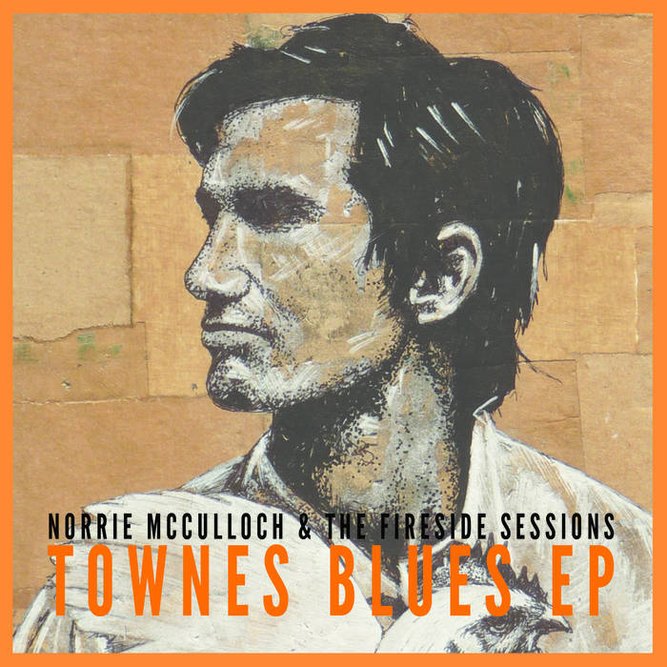
Norrie McCulloch & The Fireside Sessions. Townes Blues EP. Black Dust Records.

a4218351905_16One of the highlights of the recent Glasgow Americana festival was a night celebrating the late, great Townes Van Zandt. A host of musicians queued up to pay tribute to the man who is surely the lodestone of Americana singers and songwriters, the queue including Norrie McCulloch who sang his own tribute, Mountain Blues, along with his versions of Townes’ songs.

McCulloch has released three sublime albums which pitch him as one of the best artists to have emerged in the Scottish folk/Americana scene over the past few years. The title song of his second album was written beside Townes’ gravesite which McCulloch visited while on a stateside trip and it was when he managed to find a rare copy of a Van Zandt songbook that he embarked on this limited edition EP of Townes’ songs. Recorded back in January, twenty years almost to the day of his demise, the disc is an emotional and affectionate salute to the man famously described by Steve Earle as “the best songwriter in the whole world.”

With Dave McGowan, Shane Connolly, Iain Thompson, Stuart Kidd and Marco Rea constituting The Fireside Sessions, the disc rattles into view with a rollicking version of Dollar Bill Blues, scattershot guitar, banjo and growling electric guitar skittering over some tremendous percussion and double bass, the drums almost jazz like as if Terry Cox from Pentangle was in the drum seat while McCulloch’s gruff Scots’ brogue spits out the words. It’s a magnificent interpretation of an excellent song.

There’s always been a touch of the late sixties folk rock sound in McCulloch’s music and he sprinkles this over No Place To Fall with the result that one can imagine this as a long lost Fairport Convention outtake from Unhalfbricking. Again the drums are a wonder, a splash of cymbals while the guitar is as liquid as Richard Thompson’s back in the day. Flying Shoes follows and McCulloch sticks more firmly to the original in his vocal delivery although the sublime piano playing adds a sense of grandeur to the song. Thus far the songs covered are probably familiar to anyone with a passing interest in Townes. McCulloch next covers a deep cut, the waltz time Don’t You Take It Too Bad, a song perfectly suited for his vocal delivery and given a delicate, mandolin dappled delivery. It’s short, it’s sweet, and just about perfect.

The EP closes with a new version of Mountain Blues, McCulloch’s poignant paean to the man. Although it’s not too dissimilar from the original version it seems here to be more stately, more measured. The piano still strides majestically over the rolling percussion and McCulloch sings with a passion while there’s a brief reprise of the song after several seconds delay with McCulloch leading a singalong of the song’s refrain.

All in all Townes Blues is a splendid although brief snapshot of McCulloch’s undoubted admiration for the man. It’s available as a limited edition EP with handcrafted sleeve and there’s a smaller run of the CD along with a signed and numbered print of McCulloch’s portrait of Townes Van Zandt, a very nice artefact. Details of how to get these are here.

Website

Here’s the original version of These Mountain Blues…

Norrie McCulloch – These Mountain Blues live at Tron Theatre, Glasgow 18th March 2016

norrie

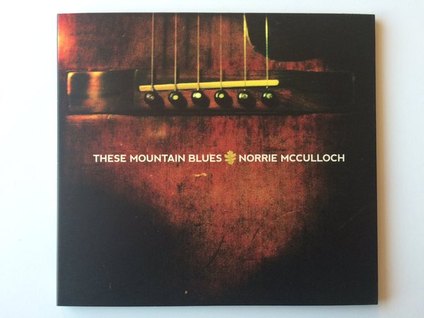
Such is the way of the music business that it’s been four months since Blabber’n’Smoke reviewed Norrie McCulloch’s second album, These Mountain Blues which only is released this week. It’s a beautiful album, the songs warm and expertly crafted, an opinion only reinforced last week when the limited edition vinyl album was delivered leading to several further listens.

The album was given an official release show on Friday night at Glasgow’s Tron Theatre in the fine setting of their Victorian Bar. Part of the regular Seven Song Club nights, McCulloch was given special dispensation to go over the usual seven song limit, the album unveiled in all its glory and played by the cast who recorded it. With Stuart Kidd on drums and Dave McGowan and Marco Rea swapping piano and bass duties through the night before a sold out crowd there were a few nervous moments from Norrie particularly when one of his guitars appeared to be somewhat recalcitrant when being tuned. However the band stepped up to the mark, their camaraderie obvious as they gamely held the song aloft as he found his stride. The audience, it must be said, willing him on.

These Mountain Blues has been receiving rave reviews across the board and it was a treat to hear the songs tonight. The musicians have lived with these songs for a while and their expert playing offered a fine sense of grandeur to McCulloch’s song writing while he delivered the words with grace, his voice warm, able to sound weary or joyous, stained with his memories.

Calico Days was an excellent opener, a clarion call to believers much in the way that Fairport Convention rallied their listeners on Come All Ye on Liege & Lief, its punchy drive and elegant piano nailing McCulloch’s colours to the mast. This bracing folk rock vibe was continued on Pass By My Door again with the piano prominent particularly on the closing melody and it was the fine interplay between McCulloch’s guitar and McGowan’s stately piano playing that elevated the following These Mountain Blues into a thing of wonder. Written by McCulloch after a trip to Townes Van Zandt’s grave it’s the beating heart of the album and the standout tonight although it was run a close second by McCulloch’s solo rendition of Black Dust, a song written for his grandfather who was bruised and eventually died from his coal mining exertions. A song that could well have come from the pen of Van Zandt was given a local bearing as McCulloch’s voice was more noticeably Scottish here while his words recalled the late William McIlvanney’s stout celebrations of the stoic Ayrshire working man.

The songs flowed sweetly. The grim acceptance of fate on Hard To Be The Man You Are Not and the plaintive loss of New Joke (here given a lengthy rendition) and The Old Room were testament to the band, the songs and the singer as they floated from the stage. Cloudberry Flower was a brief return to a more upbeat feel before they closed with the heartrending When She Is Crying Too and Heart’s Got To Be In The Right Place. The latter tentative at the beginning but as we said earlier it was gently guided by the band into its rightful place as a grand finale to a superb suite of songs.

The Seven Song Club generally features three acts, each confined to seven songs. Tonight’s set was opened by Alan Tempie, a chap you might encounter busking in the city centre. Playing guitar and using a harmoniser pedal on his vocals he sang a mix of his songs and some covers. His renditions of The Divine Comedy’s Lady Of A Certain Age and Fred Neil’s Everybody’s Talking certainly pinned him to a late sixties troubadour style, a style he carried off well with hints of chaps as varied as L. Cohen and Peter Sarstedt. His own Florence Foster Could Not Sing, a song about a 1940’s socialite who self funded her recording career in spite of her lack of talent, was a delight, a song that could sit easily on Findlay Napier’s VIP album.

tim

Everywhere were up next. A grizzled three piece they parlayed some songs that one would have termed “pub rock” back in the days, some funk, some Merseyside sparkle with guitarist/singer Jimbo MacKellar laying into his guitar. They then stretched back into a psychedelic haze that recalled The Pretty Things at their most deranged before ending with a cracking deconstruction of Bowie’s Jean Genie, the verses slowed down amid whip smart bursts of the chorus, the guitar shredded this time.

everywhere

Although the spotlight was on Norrie’s album launch, the two acts here offered up some fine appetisers.


Norrie McCulloch. These Mountain Blues. Black Dust Records

cvjtasvxiay-rz4

Ayrshire man Norrie McCulloch’s 2014 album, Old Lovers Junkyard, remains possibly Blabber’n’Smoke’s favourite Scottish album of the decade. McCulloch, seemingly from nowhere, wove a magnificent tapestry of country and folk influenced sounds on the album, its creamy pedal steel to the fore. However, as we mentioned when reviewing the album, there was more than a hint of classic UK folk rock lurking in the grooves, in particular the slightly jazz inflected keyboard work that John Martyn and Nick Drake used to adorn their songs on the cusp of the sixties and seventies. These Mountain Blues, due for release in February, reverses the mix. Yes, there are some sublime songs here which could stand tall beside the works of Townes Van Zandt or Guy Clark, the pedal steel still warms but the prominent instrument here is the piano, its cascading notes colouring the album with an autumnal melancholy and offering an understated grandeur. A perfect accompaniment for McCulloch’s excellent sense of nostalgia and regret expressed through his songs and his very fine, slightly wearied, voice.

Recorded live to analogue tape in the space of three days at The Tolbooth in Stirling (which just happened to have a baby grand piano in situ), These Mountain Blues captures McCulloch and his band (Dave McGowan, upright bass, piano and pedal steel; Marco Rea, bass and piano and Stuart Kidd, drums) in fine fettle. There’s an intimate organic feel to the disc as if they were playing in your room conjuring the images from the songs in front of you. McCulloch’s writing is evocative as he sings of his landscapes, his forebears and his descriptions of outsiders trying to fit in as on the impressive New Joke.

The album opens with Calico Days, a punchy acoustic guitar riff, not dissimilar to Bert Jansch’s work with Pentangle, grabs you before the rhythm section and piano glide in. A hymn in praise of life and the power of music McCulloch welcomes “old friends,” urging them to “bring your stories and your grace on these Calico days.” It’s a wonderful breeze of a song and the most upbeat on the album although the sweeping Pass By My Door which follows is a close contender. Here McCulloch captures some of that heady mix of folk, blues and jazz which informed Van Morrison on songs such as Young Lovers Do on astral Weeks. The freewheeling vibrancy and joyousness of the song is really that good, the piano celebrant, the lyrics approaching Morrison’s stream of consciousness way back then.

However if there’s a template for this album then it’s a fair bet that John and Beverly Martyn’s Stormbringer would fit the bill. Recorded in Woodstock in 1970 with Levon Helm on drums that album was produced by Joe Boyd with arrangement by Paul Harris who also played the very elegant piano parts. The sound they created informs much of These Mountain Blues with the title song a fine example. It’s a poignant recollection of McCulloch’s visit to the grave of Townes Van Zandt and as it soars and weeps the piano chords are resonant amid the guitar balladry at the heart of the song. Hard To Be The Man You Are Not and New Joke follow in similar style, wearied songs almost limping along but buoyed up by the piano along with pedal steel on the latter and it’s pedal steel which predominates on the tremendous When She Is Crying Too, a song which fulfils the promise shown on Old Lovers Junkyard. It’s a beautiful song, expertly played; steel guitar gliding over the slow rhythm and rich piano playing as McCulloch turns in a great vocal and lyrics,

” when that thief nightime comes around and steals the stars before they’re even out / that’s not the only crime even when you’re not here/ all it takes is a song for the pieces of my heart to start to disappear.”

Wreathed in a forlorn LA country vibe, When She Is Crying Too has some of the emotional heft and melancholic beauty of Gene Clark in its veins and is the stand out song here. That’s not to dismiss the remainder as McCulloch sings of his grandfather’s travails in the coal mines on Black Dust, a song that is defiantly rooted in local folk roots while The Old Room is another heady bout of nostalgia delivered with a light touch. Cloudberry Flowers is suffused with jangling acoustic guitar and woody bass and again captures some of that late sixties folk vibe and the album closes with another superb song, the ethereal Heart’s Got To Be In The Right Place. This tale of a split family, mother and father separating, is given a superb arrangement, the instruments delicately tip toeing around each other as McCulloch sounds forlorn, it’s a song that tugs at the heartstrings.

Richly textured, warm and chilling, soaked in memories and delivered with its heart on its sleeve These Mountain Blues is proof that Norrie McCulloch is mining a rich seam of songwriting. He transcends his influences creating some beautiful music which deserves to be heard by all who care about music.

Release date 26th February but you will be able to pre order the album on CD or vinyl soon via Norrie’s website

Gene Clark. Here Tonight: The White Light Demos


Gene Clark was the first Byrd to fly the coop, long before the band became a byword for ever-changing line ups. Back then he was considered the primary songwriter and front man of the band by many eclipsing the ringing Rickenbacker and nasal tones of Roger McGuinn and the caped (eventual super star) Davis Crosby. He was well placed to take pole position in the late sixties singer songwriter grand prix and got off to a flying start on his collaboration with the Gosdin Brothers and then revved up a pace with The Fantastic Expedition of Dillard & Clark, perhaps the best of the early country rock albums. Critically acclaimed the albums were commercial failures and Clark never again troubled the headlines despite the spectacular albums he released in the seventies, White Light (aka Gene Clark) and No Other. Even a much anticipated Byrds reunion album turned out to be a damp squib although general opinion is that Clark once again overshadowed his companions with his contributions. Although he continued to record (with and without fellow ex Byrds) Clark’s hard drinking took its toll and he died of a heart attacked aged only 46 in 1991.
Clark’s first album as a solo artist was White Light, released in 1971. A printing error left the title off of the cover art, another example of the bad luck that dogged his career. Composed after he left the pressure pot of L.A. for the serenity of Mendocino it featured another significant pairing (following that with Doug Dillard), this time with guitarist Jesse Ed Davis who produced the album. An introspective, poetic singer songwriter styled album it is perhaps the highlight of Clark’s work but once again it sank almost without a trace (apart from in Holland where it was voted album of the year). To listen to White Light today it has one failing, that it is firmly rooted in its time with the burbling bass of Chris Ethridge in particular sounding somewhat dated on the more upbeat songs such as the title track. However some of it is timeless with the soul tinged organ ballad Because of You standing out while the simple acoustic guitar arrangements of With Tomorrow and For a Spanish Guitar allow Clark to do what he does best as his mournful voice rings clear and uncluttered and his lyrics rival Dylan, stripped of symbols and allusion.
News that Omnnivore recordings were releasing Here Tonight, a collection of demos for the White Light album created a frisson of delight amongst the myriad Gene Clark sites on the old interweb thing and now that it’s arrived we can confidently state that the anticipation is matched by the delivery. Naked and unadorned, Clark sings and accompanies himself on guitar and harmonica allowing the essential beauty of the songs to shine through. Six of these songs appeared on the original release of White Light while two others turned up as bonus tracks on the 2002 CD reissue. The title song eventually saw the light of day with Clark backed by The Flying Burrito Brothers on the Dutch Roadmaster album and three of the songs are previously unreleased in any form. While the guitar work is fairly rudimentary, the harmonica Dylanesque, the voice and lyrics are mesmerising. Those steeped in Clark lore will spend hours comparing these songs to the final versions but anyone with an ear for good music should be able to engage with and be bewitched by Clark’s intimate version of Cosmic American music.
Of the songs that made it on to the album Because of You is the only one to suffer in comparison missing the superb arrangement of the official release. For a Spanish Guitar stands up on its own two feet and remains one of Clark’s masterpieces while The Virgin is stripped of its poppy arrangement allowing the Dylan like lyrics to come to the fore. White Light itself is taken at a brisk pace but again benefits from the stripped down sound. Here Tonight remains a beautiful song, proof, if needed, that solo or with a band he was up there in the pantheon and here one is reminded of his authorship of the magnificent Train Leaves Here This Morning which was covered so successfully by the Eagles.
Of the unreleased songs Please Mr. Freud is a (very) Dylan like dream song, Jimmy Christ is a short vignette that recalls Townes Van Zandt and Clark’s own The American Dreamer. For No One is the major find however as Clark picks gently at his guitar on what is presumably an unfinished song and his melancholic voice rises eventually with a brief two verses that encapsulate his poetic style, somewhat like a Zen version of Tennyson or Byron. Lovely.
Overall this album is a must have for any Gene Clark completist but it does stand up on its own. After listening to it several times there was a thought that if Clark had gone on the road and continued in this vein he would have rivalled Townes Van Zandt as the last doomed troubadour and be mentioned as such as opposed to being known as the Byrd who couldn’t fly.

Omnivore Recordings

Cahalen Morrison & Eli West Our Lady of the Tall Trees

When Morrison and West released their debut The Holy Coming of The Storm in early 2011 it received almost universal acclaim and ended up in many a top ten album list at the end of the year. Their unique blend of studied antiquity with their songwriting skills and superb picking and singing struck a chord with listeners and they topped it off with a triumphant Celtic Connections appearance.
18 months later and we have the follow up, Our Lady of the Tall Trees, an album that continues in much the same vein as its predecessor which is tantamount to saying that it’s essential listening. Morrison continues to write the bulk of the material here with one traditional song offered up. However this time around there are three contemporary cover versions included, the very familiar Townes Van Zandt’s Loretta, Norman Blake’s Church St. Blues and closing the album Garry Harrison’s Red prairie Dawn, a nice touch as it serves to pay tribute to Harrison, an Illinois fiddler and lover of old time music who sadly died earlier this year.
It’s a measure of how successful Morrison and West are in creating their sepia toned world that their version of Loretta jars the impression that we are listening to an archived recording from the dusty old days. Theirs is a fine reading but the familiarity of the song accords it an outsider status, a glitch in the matrix if you like, however the instrumental Red Prairie Dawn ends the album with a flourish, a beautiful tune lovingly picked and plucked on banjo and mandolin it captures the essence of old time country music.
As on the debut album however it’s Morrison’s songs that support any claim to greatness here. He has the ability to capture and recreate old time ballads, tales as strong as an Oak with language that seems to be hewn from ancient timber. It’s reminiscent of the best of the English folk rock revival of the seventies when tales of yore were married to a contemporary sound. Morrison and West however eschew drums and amplification creating their tapestries using guitar, banjo, mandolin and bouzouki. The words do hark back to the richness and poetry embodied in the King James Bible. When they sing

“Although starched your apron may now be, it’ll lose it’s shape in the water. But go swimmeth thee to the anchor most near, a lady does not often falter. Oh the winds they blow and the tide she swells, brings life into the beaches. Oh that seem between the Earth & Tide, from land that sea is not quite so wide”

one could be reading from that old good book. Morrison packs his songs with such lyrics on A Lady Does Not Often falter, All I Can Do and All For The Sake of Day. Meanwhile the front porch plucking on their instruments offers some fine moments of beauty with the mandolin solo on All For The Sake of Day especially standing out.
Ancient and modern, homespun and literate, it’s a standout album from a pair who astonish and exhilarate. Do give it a listen.

website