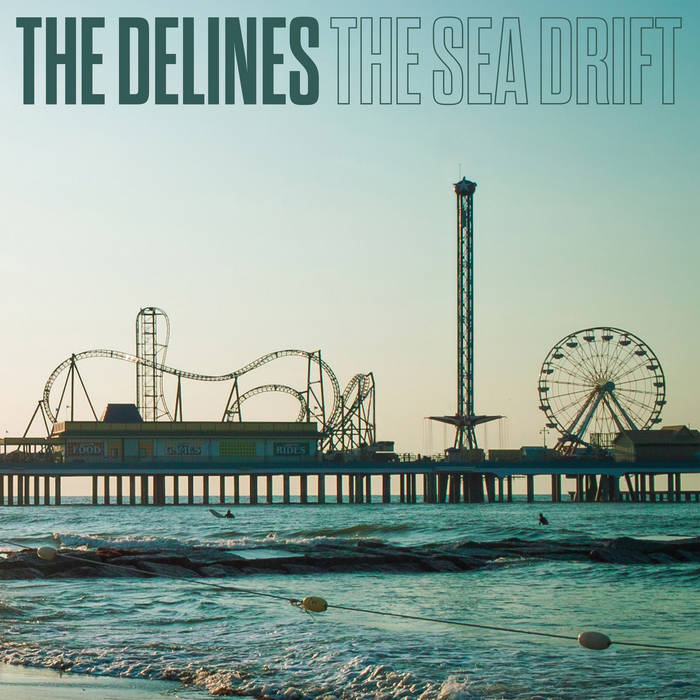
The Delines. The Sea Drift. Decor/El Cortez Records

a3713211486_16

After the triumph which was The Imperial, an album which marked not only Willy Vlautin’s new band as a pitch perfect setting for his emotionally raw vignettes but also served as proof (if needed) that singer Amy Boone amply rewarded Vlautin’s choice of her as his new voice with her wonderfully languid delivery. The Sea Drift is yet another winner for the band. On paper, it might be considered more of the same as Vlautin continues to portray a cast of drifters and grafters with some acuity and Boone breathes life into them, her voice hurt and bruised while the band lay down a soothing, soulful groove. However, this time around there’s more emphasis on the horn and string arrangements, a subtle shift but one which adds another layer to The Delines‘ take on “retro country southern soul,” adding a film noire element at times. While The Imperial centred on a downbeat motel, here the album takes place on the Gulf Coast, an area not too often captured in song. The album title recalls a section of Walt Whitman’s poetry collection, Leaves Of Grass, a section pertaining to the shore. The contrast between the presumably desirable coastal locations and the reality that life there is often grim hovers throughout.

The first two songs have the advantage of having been previewed earlier, accompanied by a pair of excellent videos. Little Earl is nothing less than the epitome of Vlautin’s spare writing style, its four short verses painting a picture which leaves one dying to know the full story of how a short assed kid – “Little Earl is driving down the Gulf Coast, sitting on a pillow so he can see the road” – while his brother lies bleeding in the back. It has a similar unhurried approach as many of the songs did on The Imperial and this continues on much of The Sea Drift but the next song, Kid Codeine, is one of their brisker outings. The heroine, always cool and easy, breezes through the song accompanied by horns, strings and a female chorus which all recall late sixties easy listening pop arrangements. Despite the “upbeat” arrangement there’s still a heart of darkness in the song and from here on in Vlautin really does dig deeper.

Drowning in Plain Sight is like an aural version of Diary Of A Mad Housewife, transposed to the working class south. Dolly Parton could take this song and make a hit of it but it wouldn’t be a patch on The Delines’ glacial delivery and Boone’s desperation. All Along The Ride is, if anything, even more desolate and again, Vlautin sets a scene perfectly, leaving us to imagine the intro and outro to this particular couple’s current isolation from each other. The delicate Spanish guitar which introduces Surfers In Twilight, an arresting tale with its very own Garden of Gethsemane denial moment, is joined by a mournful horn section giving the song an air not dissimilar to Miles Davis’s forays into Spanish themes and Davis is brought to mind on the two instrumentals written by trumpet and keyboard player Cory Gray. Lynette’s Lament and The Gulf Drift Lament both recall Davis on Ascenseur Pour L’Echafaud.

Hold Me Slow captures the languor and enervation of a love tryst in a humid sub tropical location while Past The Shadows is a reminder that several of the songs here are about escaping. This Ain’t No Getaway does offer a glimmer of hope as a woman gets out of a troubling scenario but she seems to accept that she’ll soon be in a similar position. The last song on the album, Saved From The Sea, is a torch song in effect with Boone crooning about a saviour of sorts, someone who “Makes me feel like my life ain’t been wasted, like my life ain’t just slipping away.” Here, it seems, Vlautin is saying that the proximity of the sea and the temptation to surrender to its depths is the get out clause for those ground down and wearied Southerners.

Ultimately, The Sea Drift finds The Delines with a fuller and richer sound and, while it’s in no way a concept album, listening to it is somewhat akin to reading Vlautin. Most of these songs could easily become short stories or even novels and perhaps some will. None of them are far removed from the subject of his latest book, The Night Always Comes, or indeed, any of his writings. But, with the help of Cory Gray, Freddy Trujillo, Sean Oldham, producer John Morgan Askew and especially Amy Boone, his words are brought to life here.
Website

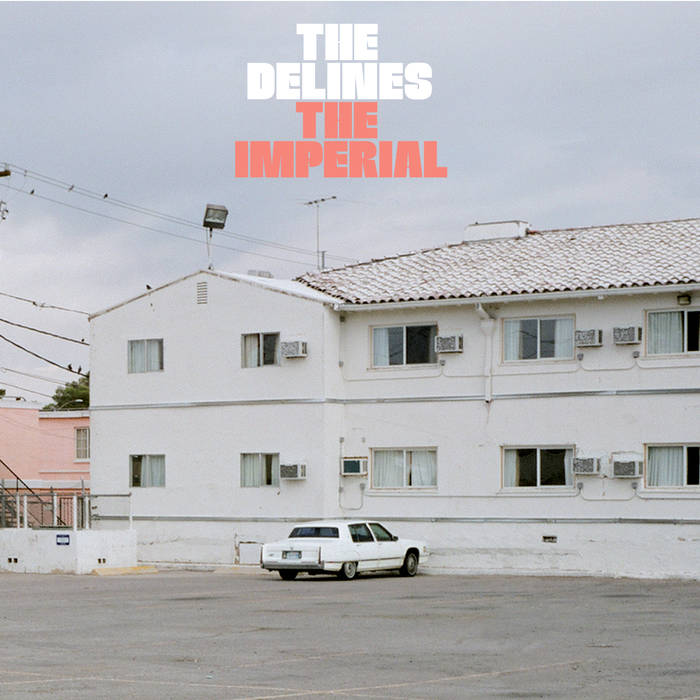
The Delines. The Imperial. Decor Records

a2944259605_16The story of The Delines (so far) could almost be the plot line of one of their songs. A band gets together, records an album of slow burning hangdog songs and then, just as they’re about to record a second, the singer is terribly injured when struck by a car. End of story? Except that the story doesn’t end there. Singer Amy Boone received severe injuries in the incident and is still recovering her full mobility but, three years on, she has recovered enough to record with and tour with the band who have just ended a triumphant UK tour.
The Delines are, of course, a vehicle (sorry for that but there’s no other word really) for Willy Vlautin’s songs, replacing the much lamented Richmond Fontaine. Boone had come on board the Fontaine’s to sing her sister’s parts from their album The High Country on tour and her voice got Vlautin to thinking that she could be an excellent conduit for some songs he felt he couldn’t really carry off. It’s a thought that is now fully fledged as The Imperial is as grand a listen as one could hope for with Boone’s magnificent voice breathing life into Vlautin’s wounded souls.

Vlautin has often gravitated to the faded grandeur of motel life and The Imperial can be considered a successor to The Fitzgerald, both run down establishments where life is somewhat murky and on the edge. Whereas Richmond Fontaine’s tales were dry and dusty, the stories here are delivered in a lush style which recalls both Memphis blue eyed soul and Kurt Wagner’s languorous outings. It’s an album to be wallowed in, the songs washing over you, a torch lit procession of glossy keyboards, supple bass playing, tentative guitar licks, sweet pedal steel and warm horn arrangements. With Boone’s achingly evocative voice on top The Delines are just superb here.

And of course, there are the songs, or stories, all perfectly written miniatures capturing the lives of Vlautin’s characters. He also breathes life into them, describing sometimes mundane situations, sometimes more dire straits, life’s trials and tribulations, while offering them a degree of dignity even as their self respect or self esteem is zero. Listening to the album, you can almost believe that you know Charley or Eddie and Polly or Holly, the latter in particular the subject of a devastating portrait on Holly The Hustle which is a screenplay in itself. Two quotes from the songs might sum up the album as Boone almost whispers, “Cheer Up Charley” at the beginning, most of the subjects having little reason for cheer. And then the repeated refrain of, “The party never stops/So the pressure starts” in Eddie And Polly indicates that our heroes and heroines are doomed to repeat their mistakes, trapped in the world of The Imperial, a hotel where it does seem that you can never leave.

Website

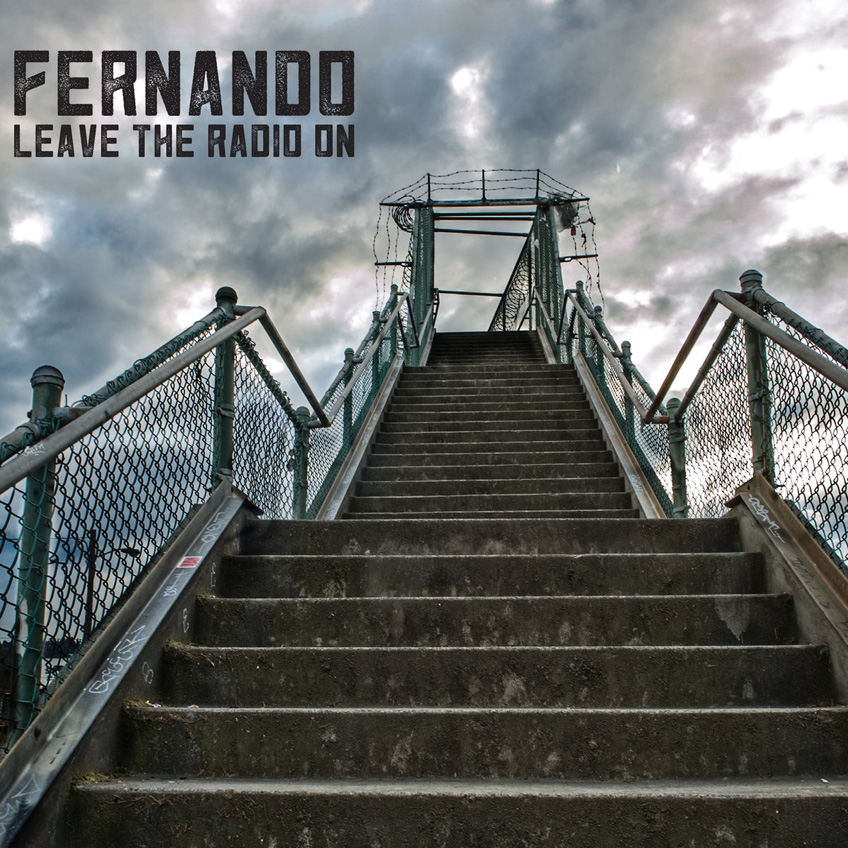
Fernando. Leave The Radio On. Fluff and Gravy/Decor Records

cd_leave-the-radio-on

Fear not, this review is ABBA free. This Fernando is Fernando Viciconte, born in Argentina but commencing his musical journey in LA with Monkey Paw, a hard rock band, before moving to Portland, Oregon in 1994. Since then he’s released several solo albums which have variously visited his Latin roots, alt-country and “gauzy, narcotic songs with Latin and country-folk accents”.  A health scare a few years back threatened his voice but he has thankfully recovered and recorded Leave The Radio On, the first of his albums (I think) to get a full UK release.

It’s getting so that Portland is the happening place to be in the States (actually, it may have been for some time and we’re just behind the curve here). Anyway, while fans of The Holy Modal Rounders will know of goings on eons ago, for the past decade or so it’s been a magnet for musicians, Peter Buck of REM the latest drawn to live there. We mention this as Fernando has a dream list of Portland musicians on the album. no surprise really when you consider that Willie Vlautin of Richmond Fontaine is on record as saying that Viciconte is “one of my all time favourite singer-songwriters”. Vlautin doesn’t appear here  but Daniel Eccles and Freddie Trujillo from RF are both onboard along with Paul Brainard, Scott McCaughey and Mr. Buck himself who variously plays guitar, sitar and mandolin on eight of the 11 songs. In addition there’s another “unsung” Portland musician here in the shape of Lewi Longmire on guitars and keyboards. A long time associate of Fernando, Longmire also has a history with various Rounders and the esteemed Michael Hurley, so, nice to see him in here.

The album itself is a polished affair. Viciconte’s voice is high in the mix, his tremulous vocals recalling at times Bowie and Lennon.  There’s little of his dusty Americana background although there’s a fine laid back vibe to the wonderful pedal steel and mandolin whorled Kingdom Come while the spectral White Trees oozes with a mysticism heightened by the simple ritualistic percussion, shadows gathering in the gloomy bass and subdued organ. Instead, we get the dark psychedelic soundscape of The Dogs, surely indebted to The Pretty Things in their lysergic days and the kaleidoscopic guitar tumblings of The Freak, a song that roots into Bowie’s 70’s paranoia (turn this one up loud). Buck’s presence isn’t flag posted throughout the album but it’s tempting to think that the churning guitar charge of Burned Out Love, a fantastic slice of power pop is a nod to him and Minus Five chap McCaughey. Turns out that the guitar here is handled by Fernando’s co-producer Luther Russell but it certainly hits the heights, a glorious addition to the canon of sun kissed guitar pop. Fernando certainly knows his way around a hook, the opening and closing songs here both memorable slices of dark melodic rock with shades of The Dream Syndicate and The Church lurking in there. Finally, there’s the odd seeming combination of Fernando sounding like Bowie on El Interior. Here, glistening guitars lead one into a twilight zone, an infra red desert, the singer stranded, his thoughts clouded by the intrusive Mariachi band. Whether Fernando intended this or not the song is a fine summation of the gin sozzled Thomas Jerome Newton damned in New Mexico. A wonderful song.

Good news is that Fernando is appearing near you soon as he is supporting Richmond Fontaine on their farewell tour.  Dates are here.

Website


Jim Dead. Ten Fires

What is Americana? The simple answer might be that it’s music (or literature, art) that refers to America, in particular to that continent’s (primarily the US of A) heritage. So a broad church with country, bluegrass, jazz, swing and god knows how many others getting a shout in. But are, for example, Kings of Leon Americana? U2? Jack Johnston? The answer of course is yes and no. Or rather, it depends. It depends on the singer, the song, the listener, the situation and for an awful lot of folk in the end it doesn’t matter. And perhaps therein is the rub. For if it does matter to you then you probably know the answer already.
Americana is a feel, an intuition, a knowledge of and respect for, well, Americana. It has depth, history, tradition. Tradition that harks back to the great immigrations that peopled the USA, that recalls the natives who were displaced by the newcomers, the poverty and violence experienced by the Negro slaves, the violence of the civil war, the culture that grew out of all of these. The tradition continued in modern times, the civil rights struggles, the protest songs, the discovery of their own culture by the late sixties generation which fed into the No Depression generation of the eighties which in itself reached back into the distant past also.
It’s easy for anyone anywhere in the world to be captivated by Hollywood cowboys, Lonnie Donegan records or books by Cormac McCarthy. Dig deeper and chances are you’ll find Americana, a fabulous land with a fabulous story. And best of all you don’t have to be American.
Jim Dead is a man who I reckon has done his fair share of digging. So much so that he inhabits a mythical Americana hometown, Deadsville. Deadsville is a mixture of all of the above however Dead has sculpted it into shape. A dust blown dread place with frontier justice, where gunslingers are replaced by guitar slingers, where the blues are amplified and dragged from the past and shot into Technicolor glory.
Calling up a new version of his band The Doubters consisting of Craig Hughes on guitar, James Duffin on bass and Tommy Duffin on percussion and harmonica, Dead offers up twelve songs that portray Deadsville as a scary place to be. Telling stories of lynchings, drugs and death the band walk throughout the landscape with a powerful swagger. Several of the songs here reach epic proportions both in length and delivery. The combination of Dead’s and Hughes’ guitars conjure up visions of Crazy Horse and the Drive By Truckers. While there are quieter moments such as the opening song Silence has No Place Here, Hotel, (with a touch of Willie Vlautin about it) and My Heavy Heart, My Aching Bones, there remains a sense of doom, of hopelessness in them. However the big hitters here are when the band plug in. The loping Bone Blue Moon has the feel of hank Williams backed by Creedence Clearwater, the song does indeed feel as if Dead is howling at the moon. Untitled has some spooky, almost psychedelic tinges, when Dead repeats the refrain Baby, Baby there is a sense of what could have been if Led Zeppelin were an American band. Hughes’ playing on this epic is spectacular, full of menace, coiled, ready to kill. Mean–Eyed River Snake is a mean tale of the death of a girl as retold by a confused, possibly pilled up youth who may have seen too many drive in horrors. It ends in a confusion of babbling while Hughes’ guitar rumbles in the background. The Hallelujah Revolver perhaps tries too hard here to achieve a proper dynamic, a gospel song from hell it’s the one song where the feel is muddied, Having seen a gobsmackingly good live version done by this line up of the band it’s possible we were spoiled beforehand. Honours must go to the stand out song here however. Jim Landstrom Must Die is a killer track. A deceptively jaunty riff leads into a sorry tale of a jive travelling salesman who gets lynched after selling bottles with “stars that fell from from the sky.” Peckinpaw in parts, “ hang him up by his legs, slit his throat so the streets turn ruby red” the band really gel with some tremendous bass playing and a cracking vocal performance from Dead.
If this album was by a crew from the south west of the USA chances are it would be hailed to the heavens. As it is it’s perhaps the best example I’ve heard so far of a local band setting up residence in that fabled Americana. Definitely one to buy.
website

Jim Landstrom Must Die