
Daniel Meade. Your Madness Is My Medicine

After a couple of albums (Ever Wonder Why you Get Out Of Bed and Rust) which found Glasgow’s Daniel Meade exploring various musical avenues, he returns to his roots with a bang on this exhilarating rock’n’rollercoaster of an album. Reunited with his long time guitar foil, the ever excellent Lloyd Reid and backed by Ross McFarlane on drums and Deke McGee on horns, Meade positively wallows in the barrelhouse rock and roll which he wallops out on piano throughout. It’s a killer album in more than sense as The Killer himself, Jerry Lee Lewis, is a guiding light here with Meade channelling the tousle headed firebrand who shocked the UK way back when he first toured over here.

Alongside Lewis there are healthy whiffs of Fats Domino, Professor Longhair and James Booker. Even the ghost of George Frayne, AKA Commander Cody is in the mix. McGee’s wonderfully fat horn fills are very much part of the joy here as he punches up the sound giving many of the songs a New Orleans vibe.  Drink It Up Now is in the New Orleans tradition of drinking songs celebrated with saloon piano rollicking away while Ain’t What It Ain’t is a classic sing-along song which one can imagine being as popular in a front parlour as a low down dive.

While he’s well able to deliver raucous and joyous slices of vintage sounding rockers, Meade tops it all with his vocal delivery, his voice just on the right side of Jerry Lee like lasciviousness. While he uses traditional tropes he sure knows how to knock them into shape with the best example here the title song with its repeated title refrain although special mention should be given to Got Me On A Good Day and Don’t Look Back, both of them perfect examples of how to update age old rock’n’roll with vigour.

Overall, Your Madness Is My Medicine finds Meade maybe returning to a comfort zone, the sort of music he can knock out without abandon, the sort of songs he was singing with his band The Flying Mules, but that he does it with such style and obvious love for the period just makes the album that much more compelling.

Website

Israel Nash. Ozarker. Loose Music

Missouri born Israel Nash continues to sound larger than life on his eighth album Ozarker, the title a nod to his family’s roots although he has long been domiciled in Texas. From folky beginnings Nash swelled into being a flag bearer for cosmic country music on albums such as Rain Plains and Silver Seasons, albums which shone with a psychedelic sheen.

On Ozarker Nash continues to roll back the years although here his template is the sweet sugar rush of prime time American rock’n’roll as delivered by the likes of Tom Petty and Bruce Springsteen. Gone are the almost Pink Floyd like guitar explorations (although he can still toss out explosive solos) of his more recent albums to be replaced by songs which, while not exactly pop fodder for the radio, trim any excess fat. In fact, if you could strip away the biker and storm trooper concerns of the early Blue Oyster Cult albums and concentrate on the sheer sonic joy of the songs then you might be able to imagine how Ozarker sounds.

The album opens with the swirling sounds of Can’t Stop, almost FM Fleetwood Mac in its infectiousness until Nash’s huge voice weighs in, no airy fairy Stevie Nicks here. It’s a punchy song with colossal chords and stinging guitars buzzing throughout. Roman Candle has a similar intro but Nash takes a left turn into Bob Seger land here with the song sounding as if Night Moves has been working out at the gym. The title song is next and it finds Nash in a sweet and sour mood as he parleys a story about his great-grandfather’s love tryst while delivering it in a cranked up to an eleven E Street Band vibe.

Behind the raw bravado of much of the songs here Nash actually is whittling down into the state of America these days. Lost In America, the lynchpin of the album is almost spectral as it opens before swelling into a blue collar anthem while Travel On has a degree of optimism contained within its muscular delivery. Going Back finds Nash ensconced in Texas and pondering (quite loudly) on his Missouri background and Shadowland closes the album with Nash returning to the Ozarks and again Bob Seger comes to mind as the song unrolls celebrating the importance of community.

Big, bold and brash, at times quite exhilarating, Ozarker is a powerful reminder of Israel Nash’s commanding presence.

Website

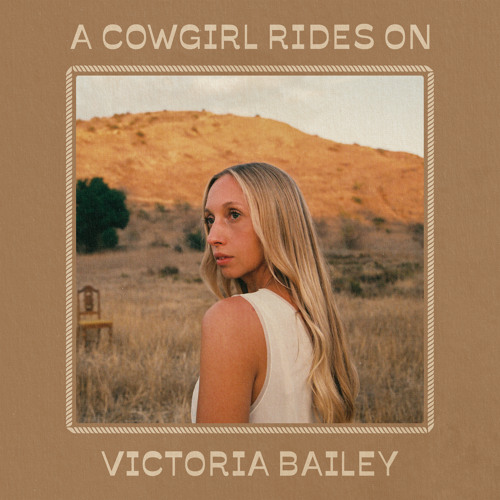
Victoria Bailey. A Cowgirl Rides On. Rock Ridge Records

Three years on from her excellent debut album (the wonderfully titled Jesus, Red Wine & Patsy Cline) Victoria Bailey trots back into view with an equally excellent follow-up which finds her standing tall in the saddle and embracing her inner cowgirl.

As on the first album Bailey clings fast to a traditional country sound replete with fiddle, mandolin and banjo and she remains a superlative singer. While Jesus, Red Wine & Patsy Cline had a honky tonk/ Bakersfield like sound to it, A Cowgirl Rides On is more akin to bluegrass with several of the songs having gospel like undertones. As such it’s a more immersive, and, dare one say it, a more emotional and personal listen than its predecessor. On occasion Bailey reaches into the pure Appalachian sounds of The Carter Family for inspiration and she delivers treasures such as the sublime Sweet By And By, a glorious song which resonates with the god fearing tradition and heavenly aspirations of early settlers. More upbeat but in a similar vein is the jaunty Down From The Mountain which is melodically similar to the old chestnut Give Me That Old Time Religion with both songs sounding simultaneously as fresh as a daisy and as old as the hills.

The album opens in a more contemporary vein with the title song which was inspired by Bailey’s reading of Distant Skies, a memoir penned in the ‘70s by Melissa Priblo Chapman which detailed her journey on horse across the US continent. The book resonated with Bailey who herself keeps a horse and she transforms it into a song about a spiritual voyage, a drifter, secure enough in the saddle who is buffeted and occasionally tempted (“Along came a cowboy from San Antone, he wanted to marry and build her a home) but instead she just moseys on along. It’s a tremendous song which deserves to be considered along with the likes of Gram Parson’s Grievous Angel in its portrait of a faded American dream. She tops this however with her own inner travelogue on End Of The Line, a five minute exploration of how best to battle on despite her travails.

Throughout the album, Bailey’s band  (producer Brian Whelan, who also co-wrote some of the songs, on guitar, Ted Russell Kamp on bass, Philip Glenn  on fiddle, mandolin, and banjo, Jeremy Long on pedal steel and Dobro and Leeann Skoda on background vocals) are on excellent form. They can whip it up as on the high spirited Snake Trails, a devil may care gallop of a song, or lay down a wearied cantina like patina on Sabina which is soaked with a liquor infused sense of revenge. There’s a slight return to the mode of the first album on Forever, You & I, a mid tempo tale which finds Bailey drinking alone and reminiscing about the man who walked out on her. Bailey closes the album with a fine rendition of Ricky Skaggs’ Waiting At The Gate, a return to the bluegrass gospel sound we mentioned earlier.

We reckoned Victoria Bailey was a name to watch back when Jesus, Red Wine & Patsy Cline came out and it’s gratifying to see that she hasn’t failed us. A Cowgirl Rides On is a tremendous step up and is destined to be one of our favourite albums of the year.   

Website

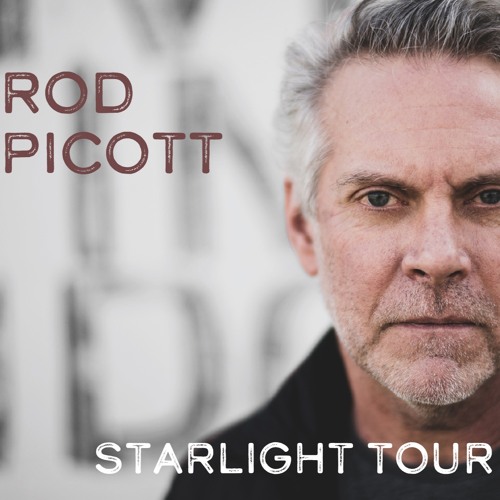
Rod Picott. Starlight Tour. Welding Rod Records

Rod Picott, currently touring the UK in advance of this album’s release, follows on from the superb Paper Hearts & Broken Arrows with the equally superb Starlight Tour. For anyone familiar with Picott there’s little here that is new or innovative and that’s not a bad thing. Indeed, the old idiom if it ain’t broke don’t fix it certainly applies here as Picott has steadily released a series of albums which have met much acclaim while he remains a huge favourite on the UK touring circuit.

Starlight Tour finds Picott once again in the company of producer Neilson Hubbard who also drums while Lex Price on bass and Juan Solorzano on guitars, keyboards and trumpet complete the band set up. They can whip up a fine rocking sound as on the driving diatribe against the opiate epidemic scourging the States which is Wasteland or delve into junkyard blues on the pulverising Digging Ditches but for the most part the band are more restrained, allowing Picott to play to his strengths – the raw emotional impact he carries when he strips his songs back to the bone. He goes straight for that emotional jugular on several songs here with Television Preacher a pitch perfect capture of a dirt poor family sending their money to a televangelist while the title song finds Picott at his best, finding poetry amidst misery and cruel fate.

A songwriter who has turned his hand to writing novels and short stories, Picott is a supreme chronicler of the loss of the American dream. Homecoming Queen (co-written with Amy Speace) tells the tale of a small town girl, once feted, now faded, while Pelican Bay finds an army veteran recalling the love of his life and their resultant daughter as he wanders lonesome on a beach, scratching his wife’s name in the sand and watching the ocean wash her away.

The band feature heavily on the opening song Next Man In Line, adding a fine muscular tension on this ode to Picott’s ailing father which contrasts his prime moments with his latter decline and ponders on his bloodline. At the other end of the album Time To Let Go Of Your Dreams finds Picott in an elegiac mood, not raging at the dying of the light, instead, proposing an acceptance of the inevitable, a good life followed by a good and peaceful death. It’s a wonderful song, tender and moving, a perfect close to a powerful and moving album.

Website