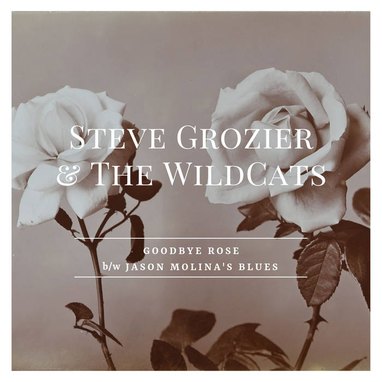
 Glasgow based singer/songwriter Steve Grozier released his latest songs on a double A side digital single last Friday. This Saturday he has a launch party to celebrate the release at The Old Hairdressers , a funky and wonderfully distressed venue in the city centre which is high on the list of the hippest places to play in these days. The release follows on from two well received EPs, Take My Leave, released in 2016, and A Place We Call Home which came out a year later. The discs were instrumental in getting Grozier prized slots at festivals in the UK and some regular rotation on roots based radio shows. The new release maintains Grozier’s reputation as a winsome and somewhat melancholic artist, his mellow voice supported by some very sympathetic players including his buddy, Roscoe Wilson, a Glasgow guitarist who has mastered the art of country rock licks and doleful lap steel.
Goodbye Rose is a lachrymose affair with some fine chunky and curling guitar licks over a sluggish rhythm, a thick as molasses southern affair. Jason Molina’s Blues is leaner with keening lap steel adding a valedictory sense as Grozier salutes one of his musical heroes. We’ve heard Grozier perform this live on a few occasions and it’s always been quite chilling to hear. Suffice to say that here he has captured that chill perfectly in the studio on what is a remarkable song. Both songs indicate that Grozier continues to grow in confidence as he plows on despite the difficulties encountered by a truly independent artist these days. In the run up to this weekend’s show Steve was kind enough to have a quick chat with Blabber’n’Smoke.
First off, congratulations on the new release. What can you tell us about the songs and why a double A side release?
Well, the first one is Goodbye Rose, which details the disintegration of a marriage following the loss of a child. The second, Jason Molina’s Blues, is inspired by and dedicated to the memory of the American singer-songwriter Jason Molina. I wrote the latter after reading Erin Osmon’s book Jason Molina: Riding with the Ghost. I don’t know if the term ‘double A side’ still has meaning with a digital only release, but I liked the way The Hold Steady recently released a series of singles (two tracks) over the course of about a year. I thought it was an interesting way to release music. The costs involved in delivering hard copies such as CDs are so prohibitive these days, particularly for independent artists, and I lost money on both of the EPs I released. I do want to continue to release music, but I need to work out how to do that in a sustainable way. I did look into a small run of 7” vinyl for these two tracks. Unfortunately, without a tour to support the release I definitely wouldn’t make my money back. I would love to have something on vinyl in the future, finances and audience permitting.
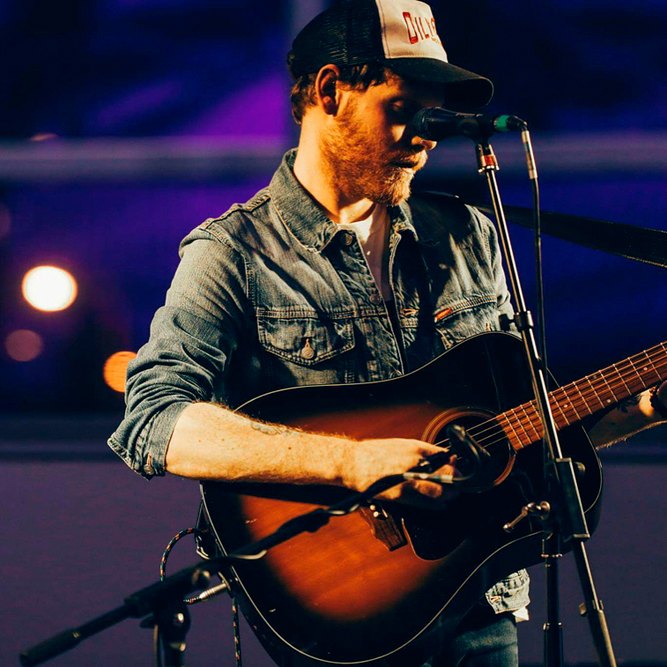
One of the reviews of your first release, Take My Leave, stated, “Part Townes Van Zandt, part Jason Isbell, Grozier’s vocal style is a classic blend of old and new Americana,” which is fine praise. Which artists have influenced you and who do you rate today?
Fine praise indeed. I admire both of those artists. Personally, I’m not sure I sound like either of them, but no complaints here. I’ve always been drawn to songwriters that have something interesting to say about heartbreak and the darker aspects of life and death. Equally, I like something with twangy guitars. The alt-country scene was emerging at the time I really started exploring music, buying my own records and going to shows. I was interested in the way that bands like The Jayhawks, Wilco, Son Volt, Old 97’s, Drive by Truckers and Richmond Fontaine took that punk/DIY ethos and applied it to country songs. A few of the contemporary artists I admire include Phoebe Bridgers, Lucy Dacus, Jenny Lewis and Big Thief and loads other that I can’t think of right now.
So was that when you started to write your own songs?
Like a lot of songwriters and musicians, I grew up in a house filled with music. I have my dad to thank for that. I don’t know if he ever played an instrument, but he was a singer in a band, briefly, and he loves music. I remember when I was growing up and he had this Pioneer record deck and he’d always have on a blues or rock ‘n’ roll record. I grew up listening to Springsteen and Dylan or The Stones and Rory Gallagher. I didn’t get into country music until later, when I heard The Flying Burrito Brothers. I started writing when I was in high school, probably when I was 15 or 16. It was just poetry at first. Then, I found my dad’s acoustic guitar. I’d never heard him play it. I started setting this awful poetry to the few chords I’d learned from a charity shop chord book. The first song I ever learned to play was Blowing in the Wind by Bob Dylan.
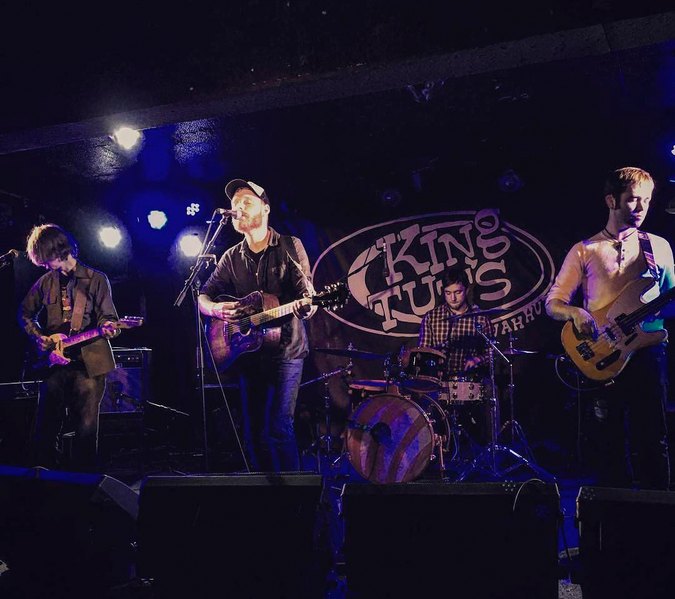
Going back to the EPs, they got some fine press and on the back of that you were selected to appear in the showcase events for last years’ AMAUK awards festival down in London. You’ve also played a couple of festival shows over the past two years so what have been the highlights?
It was great to have the opportunity to play the AMAUK showcase. Roscoe (Wilson) and I went down to London and we played completely unplugged in this little room above a pub and you could have heard a pin drop. It was a rad couple of days and it was also cool to have had our pals from James Edywn and The Borrowed Band there too. Other highlights from last year have to include Maverick Festival. I got to play in a barn and then record a couple of songs for Richard Leader’s radio show. Closer to home I did a rare full band show at King Tut’s with Blitzen Trapper back in April ’18 and it was fun too. The guys in that band are sweet people.
OK, it’s on to the launch show for the new release this weekend at The Old Hairdressers. What can we expect?
This show is going to be special. It’s an intimate (50 covers) all seated affair with cabaret tables, candles and fairy lights all those things. It’s with my band, the Wildcats – Roscoe Wilson on electric guitar and vocals, John Dunlop on bass and it will be our first show with Graham McDonald on drums. No spinal tap jokes please, but he’ll be our fourth drummer in just over two years! I’m also delighted to have Scottish Alternative Music Award winner Megan Airlie joining us on the bill.
Tickets for Steve’s launch show are going fast but you might be able to snag one here, a steal at only £6.
Goodbye Rose/Jason Molina’s Blues is available here.
Thanks to Ryan Buchanan and Graham McCusker for the pictures.
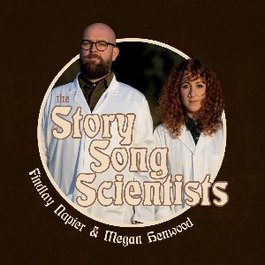 Having penned the cabinet of curiosities which was VIP and then eulogised his adopted city of Glasgow, Findlay Napier seems to have now gotten into the habit of releasing EPs with a selected partner. The first of these was his collaboration with Rebecca Loebe on Filthy Jokes and now here’s a six-song disc written with Megan Henwood, a BBC 2 Young Folk award winner. Napier is a huge champion of the art of song writing and subsequently either runs or attends writing workshops much of the time and it was at one such event he met Henwood and casually asked her if she fancied, “Writing a song about maths?”
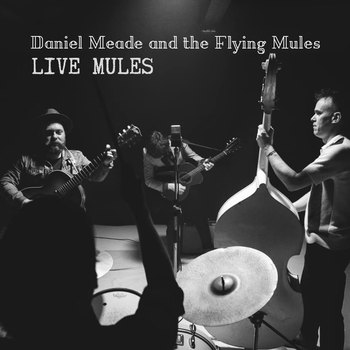 You have to admit that Glasgow’s Daniel Meade has several strings to his bow. Run through his back catalogue and you’ll find country, country blues, rockabilly, hillbilly, boogie woogie, honky tonk and good old fashioned rock’nroll all rubbing shoulders. A compulsive (and very talented) songwriter, Meade also has an eclectic approach to recording with some of his albums being entirely home made one man band productions while others have entailed trips to Nashville and collaborations with the likes of Old Crow Medicine Show, Diane Jones and Joshua Hedley. What we can say with some certainty is that all of the albums are well worth grabbing a hold of, while we can also say (again with some certainty) that if Meade has a natural element to be in then it’s when he’s onstage with his regular band The Flying Mules. Of his seven albums there’s only one credited to Meade and The Mules but anyone who has seen this band live will know that their high-energy rockabilly/skiffle approach allows Meade’s songs to leap out. In addition, in guitarist Lloyd Reid, Meade has the perfect foil as Reid’s mastery of his Hofner guitar adds an excellent touch to the songs channelling the likes of Barney Kessel and Les Paul.
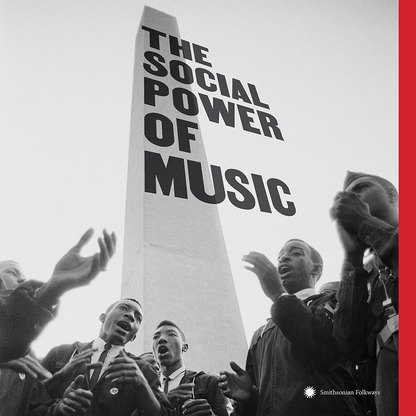 For all its shortcomings, the USA administration has one definite shining point, the mighty archives of The Smithsonian Institution. Irrespective of governments of whatever hue the Smithsonian has endured and within its Center For Folklife And Cultural Heritage it curates a massive collection of roots music from across the world. Smithsonian Folkways, set up following the donation of Moe Asch’s Folkways recordings to the Smithsonian, have an enviable reputation, releasing current recordings (such as the Rhiannon Giddings’ project, Songs Of Our Native Daughters), and important collections such as this one, The Social Power Of Music. It’s a four-disc set with extensive liner notes documenting what they choose to describe as, “the vivid, impassioned, and myriad ways in which music binds, incites, memorializes, and moves groups of people” or, more succinctly, “The song can be mightier than the sword.” Has any song ever changed the world you might ask? Probably not but again one of the essays states, “Has a song ever changed something for the better? Probably not, but groups of people do. A good song can change people’s understandings of something and motivate them to take political action.” Taking the long view, there’s no doubt that many of the issues addressed in songs here either have been overcome or are now socially unacceptable so perhaps if we all continue to sing together we can eventually affect change. If nothing else, the set is a reminder of the indefatigable spirit of humankind, even when mortally threatened there’s a song to be sung.
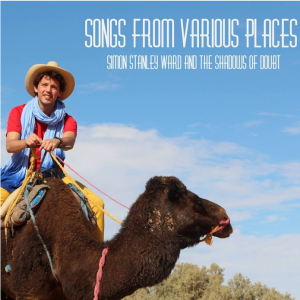 Long a mainstay of the London pub gigging scene Simon Stanley Ward released a fine
 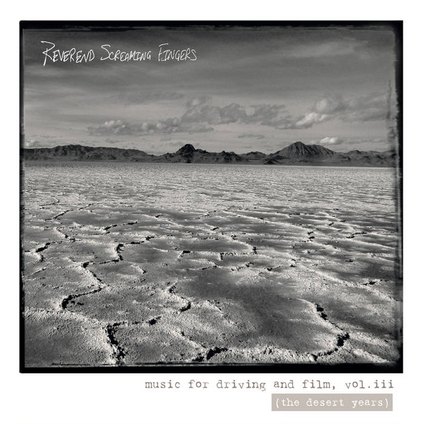 Someone just knew that we here at Blabber’n’Smoke have a soft spot for music that is dry and dusty and reeks of gulches and sand storms. Sure enough, we’ve reviewed plenty of albums which can fit into that bill, ranging from the “erosion rock” of Giant Sand to the monumental shifting sandscapes of 3hattrio, and so when we were sent this superb slice of cinematic instrumentals, hewn from the mystical Joshua Tree National Park where the Rev. currently resides, it fit right in.
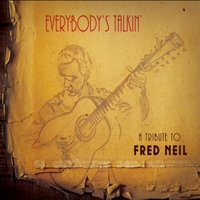 Fred Neil is probably most familiar as the writer of Everybody’s Talkin’, the song from Midnight Cowboy which was a smash hit for Harry Nilsson. Some folk might recall other songs from his heyday as perhaps the premier singer/songwriter of Greenwich village in the wake of Dylan while some might know that Neil just about retired from music in the seventies to spend his time on dolphin conservation in Florida, playing live occasionally in Coconut Grove. Neil died in 2001 but his reputation grows and this tribute album, featuring many who knew him, is a fine salute to the man.
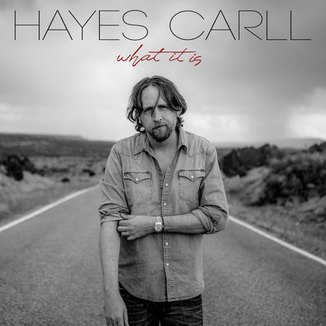 After the introspective ruminations of Lovers And Leavers, his 2016 album, Hayes Carll seems to have recovered his sometimes impish sense of mischief for his latest album, What It Is. Lovers And Leavers was of course a “break up” album and they’re not generally noted for being upbeat but here Carll is certainly on a bounce with several of the songs good old-fashioned Texan red dirt rockers while the quieter numbers are a fine indication of where his head is at right now. Co-producer (and fiancé) Allison Moorer has certainly settled his heart but he’s not so settled when it comes to the likes of racism and the fate of veterans, both the subject of songs here.
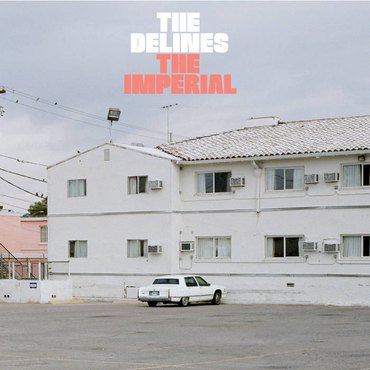 The story of The Delines (so far) could almost be the plot line of one of their songs. A band gets together, records an album of slow burning hangdog songs and then, just as they’re about to record a second, the singer is terribly injured when struck by a car. End of story? Except that the story doesn’t end there. Singer Amy Boone received severe injuries in the incident and is still recovering her full mobility but, three years on, she has recovered enough to record with and tour with the band who have just ended a triumphant UK tour.
 We’ve always been partial to