The Kennedys. West.


Husband and wife team The Kennedys have been delivering their particular blend of harmonic folk pop, influenced by the likes of Buddy Holly and Nancy Griffith for 20 years now and West is the first of three proposed albums to celebrate this milestone (the others will be solo efforts from both Pete and Maura Kennedy). West, it has to be said, is not a demanding listen but there’s a freshness and sense of joy in there with some sparkling guitar from Pete Kennedy and powerful vocals from Maura. Overall the album recalls earlier times with a wisp of the 60’s and 70’s and acts like The Mamas and Papas, Geoff and Maria Mulduar and The Byrds resulting in a variety of songs that have a sunny disposition, perfect for listening to as spring awakens.
All is not sweetness and light in some of the lyrics and there’s a sense of grit in the sinister sitar curls of Signs and the brooding bluesy Black Snake, White Snake, proof that the duo can get down and dirty when required. However the breezy open road sound of the opening song West points the album in the general direction it’s headed. Elegy is a Laurel Canyon speckled gem that could have been written by John Phillips while Jubilee Time is a sweet and weary trip to Gene Clark land. Buddy Holly looms large on the retro styled Locket (a debt acknowledged in the liner notes) with Pete Kennedy nailing Holly’s strat stylings excellently and his guitar work is again to the fore on the sing-along country rock of Southern Jumbo. Bodhisattva Blues is as far removed from the similarly titled Steely Dan song as can be imagined as the duo get all rootsy on a rollickingly good song that isn’t a million miles away from Froggie Went A Courtin’, excellent toe tapping stuff indeed.
There are two covers here, the first, a John Stewart Song, The Queen Of Hollywood High (from his album Blondes). It’s the only song on the album to have a full band playing and there’s a fine extended guitar solo towards the end but it doesn’t approach Stewart’s guttural delivery. Perfect Love, written by John Wicks of The Records is more successful as it bathes in jangled 12 string glory. They close the album with Good, Better, Best, written by Pete Kennedy to celebrate their 20 years together. Delivered in an Everly Brothers style it’s simple and eloquent and shows the pair at their best.
The Kennedys are touring in support of the album release and will be in Glasgow on Thursday 30th April at the Woodend Bowling Club.

website

Listen to Southern Jumbo here
Tom Brosseau. Perfect Abandon. Tin Angel Records


Apparently Perfect Abandon is North Dakota musician Tom Brosseau’s ninth album although he’s new to Blabber’n’Smoke. Googling his past releases reveals critics’ tendency to link him in with early sixties folksters while he varies his approach to recording, solo or band based at times. However it’s the current release we’re looking at here and while it’s a bit of a curio there’s no doubt that Brosseau has crafted a very fine set of songs that together draw the listener into his world, a world he observes and relates to with an air of detachment and reports on with an almost childlike sense of wonder and discovery.

This sense is reinforced by the simple recording process, perfectly captured by producer John Parish, with Brosseau on acoustic guitar accompanied by guitarist Ben Reynolds (from Glasgow’s Trembing Bells), double bassist Joe Carvell and drummer David Butler. Sat in front of one microphone on a theatre stage in Bristol they recorded the album live with no overdubs over two days. The result is an intimate sound, warm and engaging with the band sounding as if they were sitting beside you with the percussion in particular rattling around the room. It’s not lo-fi and it’s not weird folk but it is akin to some of the lesser known folk artists of the sixties such as Ed Askew while its general ambience is not too far removed from Skip Spence’s Oar.
The album opens with its simplest song, the talking blues of Hard Luck Boy featuring Brosseau’s gossamer voice and guitar. Delivered as if humorist David Sedaris was inhabited by the ghost of Woody Guthrie it sets Brosseau up as an abandoned child and although it might be a flight of fancy one can imagine the remainder of the album as an attempt to recover from this. Roll Along With Me introduces the band with squirrelly guitar lines over a loose rhythm section. There’s a train metaphor here but it’s not a barrelling new frontier feeling that’s evoked, rather the lyrics are introspective and narcissistic and the locomotive stutters along the way. Tell Me Lord is a supplication asking the Lord to explain the singer’s existential angst as he rails against his isolation and loss, at times almost howling. Take Fountain and Landlord Jackie are narratives describing a lost boy in an adult world with the words rushing out, word salads seeking to make sense of things and here the recording method perfectly suits as the sounds envelop the listener allowing Brosseau’s voice to worm its way in. There’s a disconnect in the anthem to an Eden that is Island In the Prairie Sea as Brosseau sings as if he’s imagining himself inside a picture postcard wishing himself into the scene. As he describes his imagined paradise there’s a pervasive sense of loneliness in the delivery. In this vein My Sweetest Friend might be retitled My Sweetest Imaginary Friend as Brosseau casts blame for his wrongs elsewhere. The album stutters to an end with the magnificent waywardness of The Wholesome Pillars, a song of despair and hope that recalls Bonnie Prince Billy and features the ensemble at their gloriously ramshackle best.

website

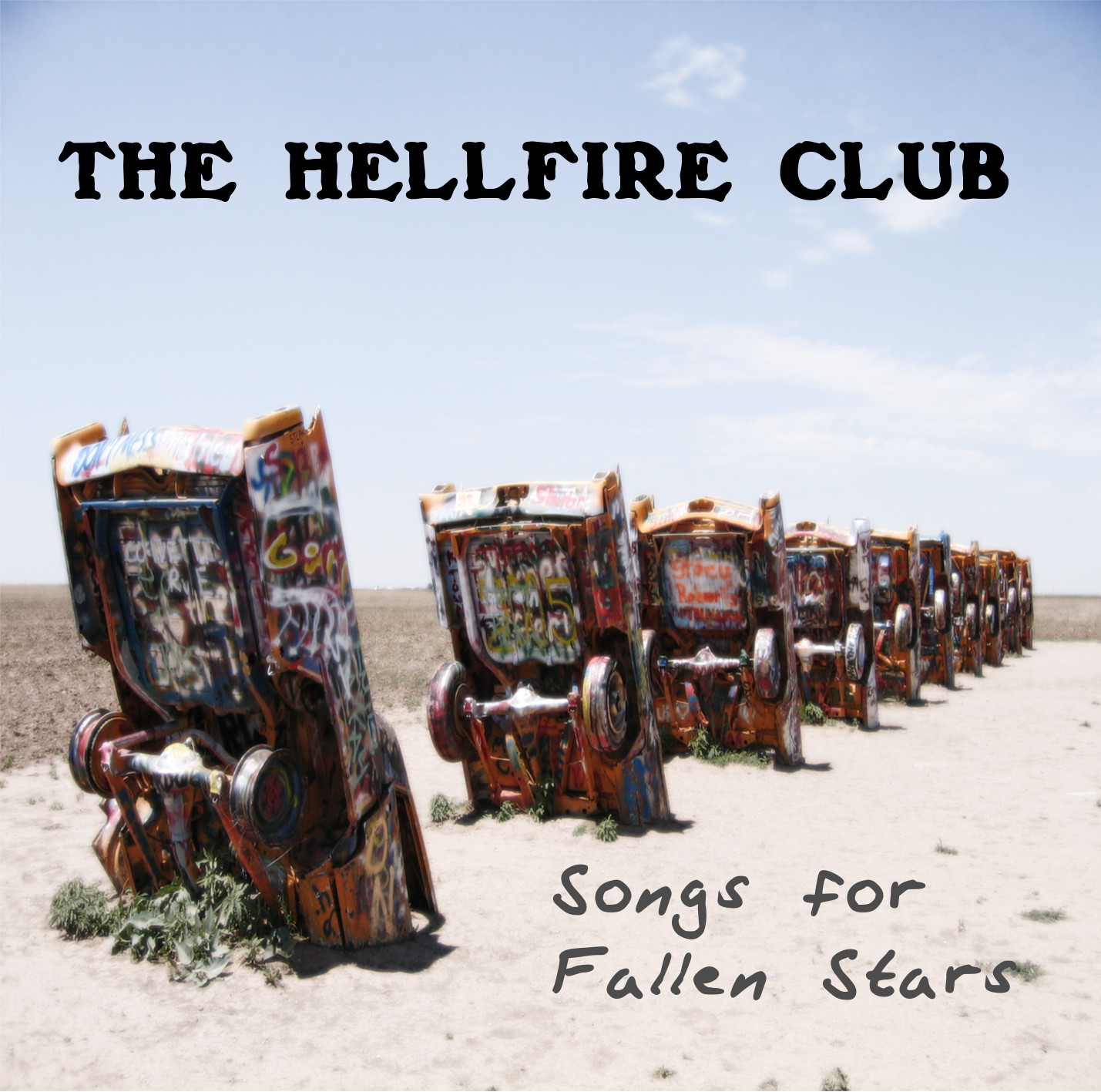
The Hellfire Club. Songs For Fallen Stars. Strength In Numbers Records

cover
Blabber’n’Smoke noted The Hellfire Club’s single release of Sun In The Sky back here.  Now the album it’s taken from, Songs For Fallen Stars is being launched this Saturday at Stereo, Glasgow. Produced by Johnnie Smillie the album is  jangle packed classic Americana, think REM, The Long Ryders, Grant Lee Buffalo with some Waterboys and Neil Young thrown in for good measure and you’ll have an inkling of what’s contained herein.
The single opens the disc and pretty much sums up the album. Strong and propulsive songs, hooks a plenty with muscular guitar breaks while Nick Ronan’s fiddle work is a fiery Celtic addition to the American influences. All Because Of You has some abrasive mandolin adding a folky feel with the band almost going into jig time on the refrains with fiddle and guitars skirling like bagpipes. Cal dips its toes into Neil Young waters with a melody that recalls Powderfinger at times. It lurches along with a rough and ready feel, the guitars unfettered and snarling while the fiddle is a dervish in the background as Willie and Helen Brown duet, their sweetness contrasting with the din and clatter of the band. Overall the song comes across as a bruised and battered dose of reality without any studio sweetness added; it does recall Neil Young’s maverick attitude to country rock and one wonders if producer Smillie’s well known affinity for Shakey was to the fore here.
Private Campbell is gentler fare initially with its mandolin driven intro although it’s not long before some restrained fuzz guitar starts to breakthrough adding a grittier feel to this tale of a soldier’s grim doom. Again there’s a folky root to this song but the band abandon any folk pretensions for the portentous and eponymously titled The Hellfire Club. An attempt perhaps to create a band mythology it’s a bit of a mish mash of roaring guitars and East Of Eden fiddle driven prog rock but there’s no denying it’s stirring enough and tailor made for live performance especially the climatic ending. We’re on surer ground with the honky tonk country waltz of Absent Friends which boozily weaves its unsure path and the fast-paced romp of Dali’s Clock which repeats the assured country rock of the opening song with the rhythm section on top form. Montgomery maintains this form as the band go on an Odyssey through the old South with lashings of guitar sparking and feeding back over an inventive backdrop that evokes the hope and fears of the civil rights movement as it pitches from jangled melody to discordant chaos. Montgomery closes the album on a high note although it should be noted that there’s a following snippet of old timey fiddle that properly ends the playing, a trick used by the band throughout the album with four of the 13 tracks comprising these snippets.
Overall a strong showing from The Hellfire Club and definitely recommended for anyone interested in home grown Americana. The album launch is this Saturday, 14th March and if you attend you can buy the album for the once only reduced price of £5 and that’s a bargain these days. In addition you’ll see the band play the songs and sets from The Dirt and Les Johnson And Me. In addition you’d be supporting local music, ’nuff said.

Asleep At The Wheel. Still The King. Proper Records

Celebrating The Music of Bob Wills & His Texas Playboys runs the banner under the album title and aside from that there’s precious little to say about this fabulous album; if you’re a fan of Asleep At The Wheel or Western Swing then you’ve probably already bagged this one. However there are folk out there who might not be so enamoured of the genre and who might be persuaded to dip a toe in the water, if so then this is as fine a place to start as any.

Western swing was a jazzy big band country pop phenomenon in the late thirties and forties, fiddle and pedal steel taking the place of sax solos and Bob Wills And His Texan Playboys were the kings of Western Swing. Asleep At The Wheel, led by the irrepressible Ray Benson appeared from the Austin, Texas melting pot of the early seventies, swinging with a vengeance and have been doing so ever since. Still The King is in fact their third tribute to Wills and pretty much follows the same formula, a roster of well-known country artists backed by Benson and the band. With several of the songs featured on all three albums (along with a few of the guest artists) one might wonder why Benson continues to record these. Well, Still The King features some of the younger country musicians who have come to prominence over the past decade with Old crow Medicine Show, The Avett Brothers and Pokey LaFarge all making an appearance. As Ray Benson told Rolling Stone recently “This album is just me trying to get younger and older Bob Wills aficionados together. Every time we put one of these out, I always say it’s the last one. But I shouldn’t say that because it’s not like this music ever died.”

So here we have 22 Western Swing classics, every one a winner really. The old timers are all here, Willie Nelson, Merle Haggard, Del McCoury, George Strait, Robert Earle Keen, Lyle Lovett along with two surviving members of the original Texas Playboys, vocalist Leon Rausch, now aged 86, and sax player, the 92 year old Billy Briggs. There’s a host of others, all bringing something unique to the project but we only have space to mention a few favourites. The Avett’s have great fun with The Girl I Left Behind Me as they get back to their roots. Lyle Lovett croons as only he can on the bluesy Trouble In Mind while Brad Paisley does a great job on My Window Faces The South. Robert Earl Keen dives headfirst into the tongue twisting Ding Dong Daddy From Dumas with Benson duetting (and a special mention here for the very fine pedal steel solo, sublime!). Old Crow Medicine Show deviate somewhat from the overall sound as they basically overlay their own act over Texan swing pedal steel on their fiddletastic and frantic version of Tiger Rag. Of the youngsters Pokey LaFarge perhaps comes out tops as he really lets rip vocally towards the end of What’s The Matter With The Mill, small wonder as he’s been playing this type of music for the past decade. As for Willie Nelson and Merle Haggard, well, they stamp their authority on their respective numbers (Navajo Trail and Keeper Of My Heart) and both are excellent.

Sure, the songs are somewhat corny but these days corny might actually be hip and there’s no denying that throughout these 22 songs the playing is exemplary with some excellent fiddle, mandolin, piano and pedal steel all present. If you dig classic country then this is a no brainer. Buy it, get the other tributes and then seek out other Asleep At The Wheel classics and maybe some Bob Wills originals, you’ll be a satisfied soul.

website

Findlay Napier. VIP Very Interesting Persons. Cheerygroove Records

Findlay Napier is himself, a very interesting person. Schooled in traditional Scots folk music he has over the years moved into a more alternative scene while retaining his traditional connections especially in the educational work he undertakes. While his tenure in bands such as Back of the Moon and Findlay Napier and the Bar Room Mountaineers have kept him well in the folk limelight he also helms the alternative music showcase Hazy Recollections that is a feature of Celtic connections and other festivals.

Very Interesting Persons, his solo debut, grew out of a song-writing project Napier undertook with Boo Hewerdine last year. The pair lighted on the idea of concentrating on potted biographies of people with interesting life stories and, Wikipedia in hand, they crafted over two dozen songs, since whittled down to ten. The end result is an album that intrigues and delights in equal measure. A delight to listen to with Napier’s sweet loamy voice grounding the whole in a Celtic folk fashion while the players adopt different styles incorporating folk, country, blues and even skiffle. Intriguing as Napier’s lyrics shed a light on the cast of characters in an impressionistic style, not story songs but songs behind the stories. With brief notes on the VIP’s in the liner notes the listener is free to follow up the stories , a task that has certainly led to some fine elucidation here at Blabber’n’Smoke but on the simplest listening level VIP is a bit of a treasure.

The album opens with Hedy Lamarr, a song that perhaps unveils the most interesting nugget of information here as it seems that Lamarr was an inventor who developed a wireless system for guiding torpedoes during the Second World War. While this is now seen as the precursor to Bluetooth technology at the time Lamarr was somewhat chided and told that she would be more useful entertaining the troops. The lyric alludes to this as Napier sings Hedy Lamarr you know your place you’re just another pretty face. Meanwhile the song itself is a regretful lament with lap steel guitar from Gustaf Ljunggren (who appears throughout the album) and plaintive harmonies from Gillian Frame offering a sepia stained portrait of a woman whose intellect was buried by her looks. Napier continues in this vein throughout the album, the songs and arrangements fitting the stories like a glove. There are heroes in decline, others forgotten, lost or abandoned; there’s no triumph here. There’s no room here to detail them all and as we said the album is a bit of a primer, listen to it and you will be seeking to flesh out the stories. Suffice to say that Napier and Hewerdine hit the nail on the head each time allowing one to wallow in the gritty blues grit of The Man Who Sold New York, the Gerry Rafferty folkiness of Eddie Banjo, the bitter sweet Americana country of A Shame About George, the dappled winsomeness of Valentina, the 60’s folk picking of The Sport Of Kings and finally the Celtic mists of Angel Falls. The album is a trip, a trip inside the head and a trip to the library. As we said earlier, a bit of a treasure.

website

Allison Moorer. Down To Believing. Proper Records

Break up albums. Some folk think that the dissolution of a romance is the fuel that fires greatness and can cite a litany of recordings to prove their case. Well we’re not going there right now although Down To Believing is Allison Moorer‘s first album since her marriage to Steve Earle ended. Earle has trucked off to Texas to dig some blues and Moorer spends her time between Nashville and New York where her son John Henry who has been diagnosed with autism attends school. In interviews Moorer has been quite explicit regarding her sense of anger and self blame regarding her son’s condition and this is apparent on the blistering bluesy howl that is Mama Let the Wolves In. Produced by Kenny Greenberg the album as a whole is a return to the rock laced songs Moorer delivered on 2008’s Mockingbird album, quite a distance away from the gentler Crows, her last release. While the marital breakup underpins the plaintive pedal steel laced title song and the somewhat syrupy ballad If I Were Stronger could also allude to the pain involved in becoming Mr. Earle’s seventh ex wife, for the most part Moorer delivers a solid set of songs seesaw between Nashville gloss and country grit.

Wish I, the aforementioned If I Were Stronger, Tear Me Apart and Thunderstorm/Hurricane all seem destined for playlist attention, somewhat overproduced and melodramatic. However the sinewy opening song, Like It Used To Be, the disarming ballad, Blood (written for her sister, Shelby Lynne) and the very fine and zippy Back Of My Mind show that Moorer has the chops to deliver some choice country rock and soul. She throws in a worthy cover of Creedence’s Have You Ever Seen The Rain before closing the album with her best offering, Gonna Get It Wrong. This Dobro driven lament is a magnificent closer eclipsing all before it as Moorer bares her soul and the band hunkers down in empathy to create a miniature gem.

website

Mark Utley. Bulletville. Sleep Cat Records. This Is American Music

Blabber’n’Smoke first came across Cincinnati’s Mark Utley when we reviewed Magnolia Mountain’s album Town And Country back in 2012. A double album that spanned the breadth of country rock from folky roots to grungier grooves Town and Country was followed by Beloved which delved into a Muscle Shoals direction while Utley simultaneously released a solo album that hankered more to his country leanings. His next step was to form a band that would perform the country songs from the solo album and hence Bulletville was born. A splinter group of sorts Bulletville features Magnolia Mountain members Renee Frye (vocals), Jeff Vanover (guitar), and Todd Drake (drums) who are joined by bassist Ken Kimbrell, keyboardist Ricky Nye and pedal steel guitarist John Lang. Here they deliver a solid package of tear stained and heart wrenching country songs that run the gamut from George and Tammy like laments to beer fuelled honky tonking gut busters fuelled by lashings of pedal steel.

The album opens with the loping bass into to Good Timin’ Girl, a breeze of a song with a classic bittersweet country tale that could have been written by Dolly Parton and sung by Kenny Rogers, in fact if Rogers or any of his ilk ever took this on then it would be a guaranteed hit. As it is the performance here is exemplary, Utley almost croons the words while Frye adds a multtitracked refrain, the pedal steel is sweet and honeyed and Nye offers up a fine piano solo. Wish You Were Her however steers well clear of the charts and heads for the bars as the band sway into Ameripolitan territory and the guitars grimace instead of smile. A woozy waltz time lament with a seventies feel courtesy of the electric keyboards and fuzzy bass line it sees Utley and his partner sharing a table but separated by miles of estrangement. The album is packed full of these wonderful odes to lost or failed love with Utley mining the past and coming up with new treasures such as the classic couplet “I just can’t remember to forget” on the honky tonk tones of Remember To Forget while Honey I’m Home weeps wonderfully as Utley swaps the family home for the local pub in an attempt to drown his sorrows. One Heartbeat At A Time is another break up song but it’s delivered with the commercial heartbeat that John Hartford sounded out on Gentle On My Mind and is another example of the commercial potential contained herein. While all of the band are in excellent form here Renee Frye in particular sparkles with her harmony support with Only In Our Minds an excellent country duet. She has two showcases here, the rolling and tumbling boogie Firecracker where she is as sassy as Loretta Lynn while The Only Thing is another tear jerking lament offering the female counterpoint to Utley’s songs of loss.

If this were all the album would be a winner but they throw in a couple of belters just to up the ante. Four In The Morning swaggers in with a muscular swing as beefy pedal steel and swirling organ churn and boil over a menacing rhythm producing a song that has the heft of a Joe Ely song back when he was a pal of The Clash. Jesus Wept is simpler in its delivery with some Bakersfield country in the twang guitars as Utley sings “I’m broke as hell, all my bills are due, My girlfriend’s mad and my wife is too” on a song that just about encapsulates the stereotype of red necked country music lovers. It’s a bit of a hoot. Utley closes the album with the only cover, a version of fellow TIAM artists, Great Peacock’s Bluebird which he dresses up in warm vocals and sweet pedal steel murmurings, a sweet end to a meaty album.

website

Dave Desmelik We Don’t Want A Dying Flame.

Ninth album from North Carolina’s Dave Desmelik who Blabber’n’Smoke last reviewed here describing Deep Down The Devotion as a “song cycle of life and death and the little that matters in between.” Desmelik followed that one with an album of 16 instrumentals on Instrumental Swim and on We Don’t Want A Dying Flame he offers a mixture of instrumentals and self penned songs that delve deeper into the existential angst he conjured up so well on Deep Down. Again he plays the majority of the instruments himself (with some assistance from Josh Gibbs who plays lap steel guitar on five numbers and Andy Gibbon, bass guitar on four) and while there’s a homespun feel to the album the sound is excellent, at times recalling, as we said last time, the sparser moments of Richmond Fontaine.

The album opens with the five minute instrumental, Hyper Fatigue which sounds as if The Penguin Cafe Orchestra were backing John Fahey with nimble guitar picking and wheezy keyboard to the fore. The tune meanders but never falters, groping its way through some ambient electric guitar grumblings and ken speckle percussion. At its end we stumble into the stark landscape of Destruction, a dark acoustic song menaced by angry fuzzed fretwork with Desmelik describing a dystopian nightmare, his voice resigned and weary. Over its six and a half minutes the song grips the listener and while there are echoes of Eef Bazerley’s work here it’s a miniature masterpiece. L-I-F-E offers a ray of light with its audio verite recording of children at play over some fine acoustic guitar picking while the following No Words To Describe pays tribute to the mother child bond. Red Collar, Statue, Two Gifts and Sand Toe are handsome instrumental interludes dotted throughout the album, they’re miniatures compared to the opening tune and lighter in mood with Desmelik’s guitar compelling but the meat is in the songs here. We’re Older Now (Ode To OBJ) harks back to a band Desmelik played in (Onus B. Johnson if you need to know) and again Eef Barzeley of Clem Snide comes to mind as the song falters, in danger of becoming a waltz time country piece but teetering and never falling. It’s a wonderful ramshackle, wrecked and honest ramble through some memories and a very fine song indeed. Josh Gibbs’ lap steel enlivens On The Clock as Desmelik delivers a gnomic self help guide which buzzes and burns with a sweet grace while Stretch continues in this vein, both musically and lyrically as Desmelik describes life as a set of emotional and physical callisthenics. The last song Do You Even Know, another swooningly gorgeous melange of guitars, belies its sonic attractiveness as Desmelik subverts the usual singer songwriter confessional memoire with a series of vignettes before asking the titular question begging the listener to wonder. The album closes with another instrumental, reeB aniloraC (read it backwards) that rumbles and rambles.

We Don’t Want A Dying Flame is an idiosyncratic album. Desmelik has a somewhat unique talent that reveals itself here on close repeated listens although some of the songs are immediately arresting. The instrumental byways scattered throughout might dilute the impact of the album somewhat but there’s no question that he’s a singular voice worth hearing.

website

Sons of Bill + The Wynntown Marshals. Stereo, Glasgow. Thursday 19th February

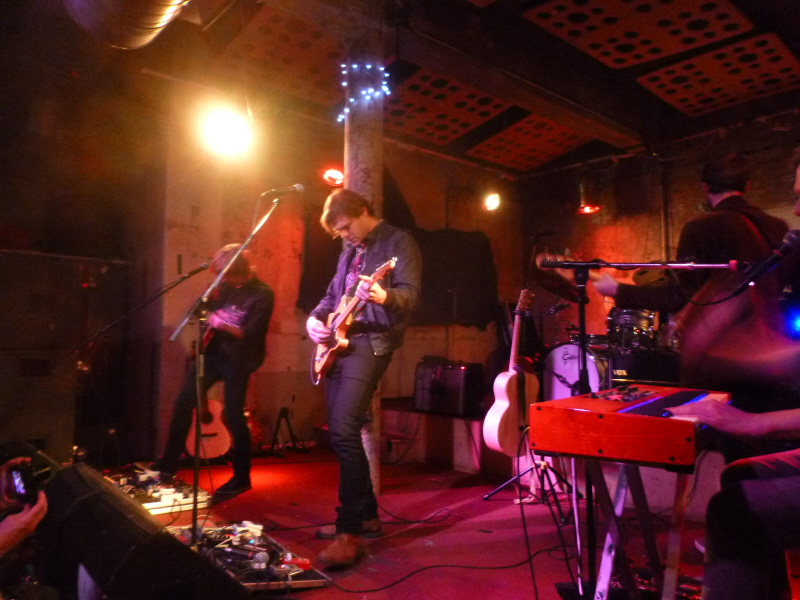
The first promotion of the year from Glasgow’s Fallen Angels Club was a rerun of an event featured last year as part of their tenth anniversary celebrations. Same two bands, same venue, pretty much the same crowd although tonight was fuller than last year so word must be spreading.
P1030301

First up was Edinburgh’s Wynntown Marshalls with a seven song half hour set comprised of numbers from 2013’s excellent The Long Haul and three new ones from their forthcoming Blue Rose Records release, The End Of The Golden Age. Having spent several months recording the album the band seemed delighted to be back on stage and turned in a winning performance, gutsy and brilliantly played. Familiarity hasn’t dulled the pleasure one gets from The Long Haul Songs. The crunching rock of Driveaway dipped and soared with swirling keyboards before a thrilling (and loud) climax. Whatever It Takes allowed singer Keith Benzie to show he can give Jeff Tweedy a run for his money as a singer and songwriter as did Low Country Comedown which was given a fine country rock swagger with a Beatlish touch to the harmonies by the band before it segued with a wall of noise into Tide, bass player Murdoch MacLeod’s epic squall. I’ve seen the band play this song five or six times now and each time it takes on a different persona. Tonight, given the restrains of a support slot, it was tighter and shorter than it has been in the past but it remains a powerful piece with guitarist Iain Sloan cresting the waves with piercing guitar solos while the organ playing of Richie Noble steered it tonight in the direction of CS&N’s Long Time Coming. The three new songs from the forthcoming album (Red Clay Hill, Dead Sunflowers and the title song) all bode well for its release. Red Clay Hill was classic Marshals’ Americana with a fine jangled guitar chassis while The End Of The Golden Age came across as a fine slice of power pop with some barbed guitar and three part harmonies that were excellent, whetting the appetite for the new disc.

P1030303

Sons Of Bill could do no wrong from the start with the stagefront packed. While they showed that they can whip up a storm with fiery numbers such as Bad Dancer over the course of the set the balance was in favour of the softer edged harmony tinged offerings from their last album, Love And Logic. They opened with their tribute to Chris Bell, Lost In The Cosmos, a brave choice as its delicate delivery demanded attention from the audience but there was an immediate hush. Road To Canaan slowly built up into a thunderous climax before Siren Song screamed into view. Joey’s Arm has grown into a powerful arena like rock ballad but tonight it was eclipsed by the muscular rendition of Brand New Paradigm, another song that opens with lilting harmonies before whipping itself into a bit of a frenzy. With the three brothers Wilson taking turns at lead vocals and Sam Wilson proving himself adept at finger picking sensitivity and gut crunching electric lead the crowd were lapping this up. A three song encore however was almost anticlimactic with Sam and Abe Wilson turning in a guitar and keyboard stripped back Find My Way Back Home before the band launched into the chunky Turn It Up with a final number, the funereal Hymnsong ending the night on a minor note. While I felt that the set tonight was not as gripping as last year’s I was in the minority as chat in the queue for the Merch table was unanimously positive. It has to be said that the Sons Of Bill have the chops, the looks and importantly, the songs that could catapult them into the bigtime. This is their second tour in the UK, when they come back grab the opportunity to see them as they have the potential to outgrow venues like this.

Wynntown Marshals website

Sons Of Bill website

Andrew Combs. All These Dreams. Loose Music

First thing to say about this album, the second from Nashville artist Andrew Combs, is that we were expecting some kind of Roy Orbison doppelganger to come soaring from the speakers. Seems that comparisons to Orbison have been bandied about all over when folk write about the album but the similarities (if they are there) largely passed us by. Instead we were reminded of the lush arrangements of songs such as Gentle On My Mind and Everybody’s Talking as rippling guitars and sweet strings swept over the two opening songs, Rainy Day Song and Nothing To Lose. Throughout the album there’s a sense of late sixties popular country pop with Strange Bird recalling Mike Nesmith’s latter efforts with The Monkees before flying solo, poppy with hooks galore but with a sly intelligence in the lyrics (and some inspired whistling). On the title track Combs continues to deliver a radio friendly sound on another song that flows effortlessly with strings and a slightly twangy guitar in the middle eight while his slightly weathered voice, attractive throughout, has a passing comparison to Ryan Adams. We have to admit here that the song All These Dreams shares with Orbison’s latter efforts a sense of drama, however it’s the Orbison who was the senior figure in The Travelling Wilburys and of Mystery Girl who’s recalled here and much of that sound was down to Jeff Lynne. Whatever, the worst that can be said here is that Combs has the ability to write hooks as catchy as Lynne and that can’t be all bad.

The latter half of the album steps out from under the Nashville pop umbrella and is all the better for that. The ballad, In The name Of You stands tall next to similar efforts from John Fullbright while Slow Road To Jesus opens like a dusty Kristofferson song before heading into a mock baroque gospel tinged lament. Here Combs’ voice is hesitant and searching while the arrangement is wonderful, the guitars, keening pedal steel and spare percussion perfectly balanced with the swooping strings and brass that adorn the bridge. This is Jimmy Webb or Harry Nilsson territory and it’s executed brilliantly. Month Of Bad Habits has a slight bossa nova feel allied to a deep south sultriness and again it flows sweetly with a hint of menace in its undertones albeit sweetened again by the string arrangements. When the guitar and pedal steel cut loose halfway through the song toughens up and the extended outro is not a million miles away from some of Calexico’s work. Combs closes the album with another understated ballad, Suwannee County that is swathed in warm pedal steel work (from Steelism’s Spencer Cullum Jnr.) and demonstrates that while he’s a dab hand at channelling 1960’s Countrypolitan Nashville pop his stronger hand lies in darker territory.

website