The Hackensaw Boys are back in town

blog_hackensawboys

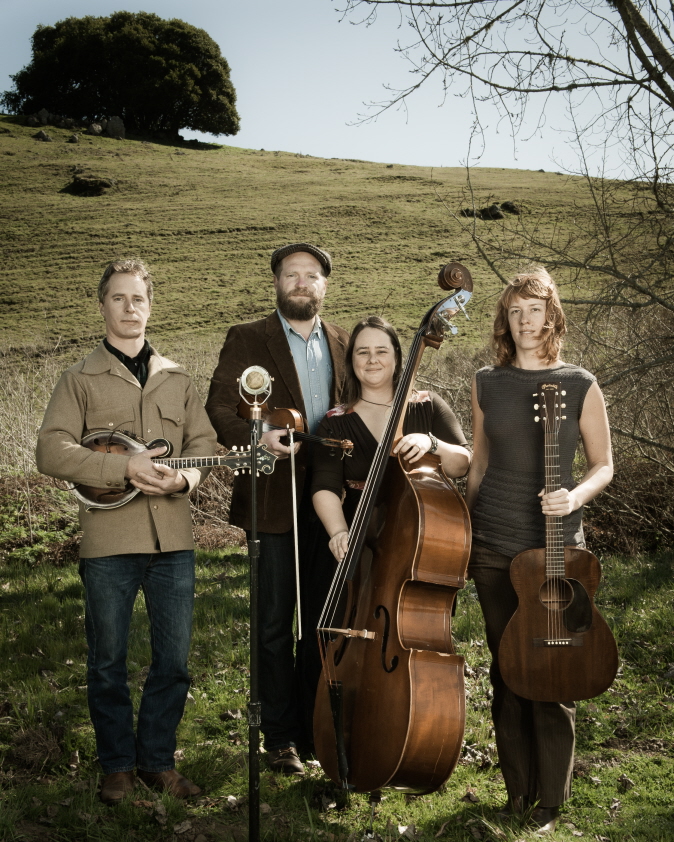
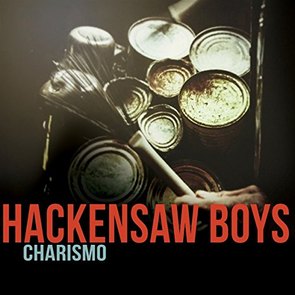
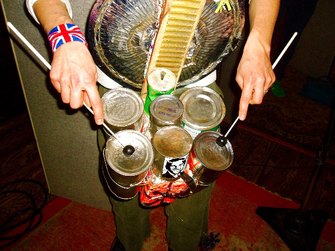
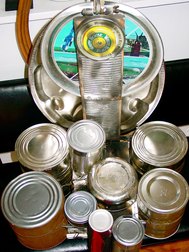
Since their formation in Charlottesville, Carolina around 19 years ago The Hackensaw Boys have gained a couple of reputations. One concerns the sheer number of musicians who have passed through their ranks over the years. Another more pertinent one is of being one of the most joyful and rambunctious live bands around, raucous and great fun, “head banging string band music” one reviewer said of their shows. This month sees the release of their latest album, Charismo (on Freedirt Records) which is named after their preferred percussion gizmo, a contraption composed of tin cans, hubcaps, car licence plates  and other “junk”. A Heath Robinson like contrivance that’s like a steam punk washboard the Charismo has been an integral part of their set up since the first one was hammered together by one time band member Justin “Salvage” Neuhardt. Coinciding with the album release the band are setting out on a lengthy European jaunt which started in The Netherlands and includes four UK shows this week including a slot at Maverick Festival.
51ilgaj1dxl

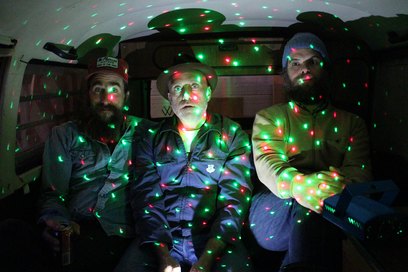
Charismo is their first full-length release in almost ten years and features the current line up of David Sickmen on guitar, Ferd Moyse, fiddle, Jimmy Stelling, banjo and Brian Gorby on Charismo and drums. Produced by Larry Campbell who has worked with Dylan and Levon Helm it has 11 songs (all written by Sickmen and Moyse) which can ripple and ring with an old time Appalachian swing, swerve into folk territory or just generally rip it up. Songs like Ol’ Nick and Limousin Lady are simply exhilarating while The Sweet is a folky number that could have been penned by Ewan MacColl. There are whoops and hollers aplenty but some reviewers have commented that the album is just that bit more mellow than they had come to expect from The Hackensaw Boys. Certainly C’Mon Baby Don’t Bet Against Me and Flora roll sweetly along, the former reminding me of The Nitty Gritty Dirt band in their heyday but even in mellow mood the Boys still have a fine rustic rawness.
hackensaw20boys202016

Blabber’n’Smoke had the opportunity to speak with original band member David Sickmen while he was in Pittsburgh in between shows. David was happy to talk about the meandering history of the band along with some discussion about the current parlous state of politics (which I’ve left out here, suffice to say we both dislike blonde buffoons peddling lies and fear) but first of all I asked him about the album and those comments on the band mellowing somewhat.

Well we had this batch of songs we took into the studio and that’s different from playing live. In the studio there’s the temptation to shine every diamond but really we just tried to make every song sound great and with Larry Campbell producing it was just a very natural and easy process. As for the songs however I’d be lying if I were to say that I’m not getting older and maybe a bit more mellow so a lot of what I think about writing about is on the softer side of things, more ballady if you like. But the live shows are definitely energetic and we want folk to come out and party and leave all the bad shit, the Donald Trump’s and that behind and come out for a couple of hours and dance and party and drink beer.

Larry Campbell’s probably best known for being Dylan’s guitarist for several years on The Never Ending Tour and for producing Levon Helm’s last albums.  How did you hook up with him?

Through mutual friends. We reached out to a friend who got some demos we had recorded in Amsterdam to Larry. He thought they were great and he agreed to produce the album.

This is your first full-length album in around ten years, why so long?

Well we’ve had EPs and such but yes, this is the first album in about ten years. Why? Well, life,  poor management, people leaving the band and then we were spending so much time on the live circuits that we just didn’t have the time. But I think it’s been worth the wait because we’re more mature now.

The band’s always been something of a shape shifter, people coming and going and then some coming back again. You were one of the original members then you left and then came back again. There’s four Hackensaw Boys right now, is that right?

Yes but we’ll have a fifth member when we get over to Europe, we’re currently looking for an accordion player. I helped start the band in 1999 and then in 2005, well, I guess the pleasant way to say it is I couldn’t think straight anymore so I had to step out for about five years and then some of the other guys had to leave and I came back in, by then I was a lot healthier.

I read that at one point you had about 12 people on stage.

Well we started off as just four guys but within a week or so a friend of ours jumped in on harmonica and then we started doing thses shows in Charlottesville, in a place called the Blue Moon Diner, another guy would come up and say, “I play banjo can I come on up” and we’d say sure and it just kept on growing. We embraced anyone who wanted to play, we just said come on.  So yeah, at one point we had 12 guys playing. We did our first tour in a 1964 GMC motor coach, an ex Greyhound bus.  12 of us on the road and we did that for about a year, then people would fall away over time. Some would act up too much, we did fire some people, one of the guys passed away, so yeah, we have a kind of wild history with the line up but I don’t shy away from that, it’s part of the beauty of it all. The thing that’s kind of risen to the top is that the spirit of what we try to do musically has always been there no matter who’s playing in the band.

That’s the spirit of the band but how would you describe the sound of the band?

It’s not truly old time music. If it’s old time at all it’s in the spirit of encouraging people to dance, to come out to the barn if you will and have some fun. It’s maybe our interpretation of what guys in the 1920s might have been like, you know, travelling around, going to different places in like a three county area doing barn dances. Obviously it’s folk music but a lot of us grew up on rock’n’roll and punk and that is filtered into it but really, even after all these years I still don’t know what to call it to be honest. Maybe just say it’s hard rock and folk music that rolls. Some songs rock hard, some are quieter and some just roll along. I mean what do you call it?

Well we talk about old time music, string bands, bluegrass and folk but with a lot of bands it’s all mixed into one. I’m trying to avoid the word Americana here.

Yeah, we get the bluegrass moniker and that’s mainly based on the instrumentation but honestly I don’t think we’re a bluegrass band, traditional bluegrass might share the same instruments but it sounds different from us. We don’t sound like the Stanley Brothers where there’s no percussion, there’s certainly no “badam badam badam!”, the drive is different. When we started out we were listening to traditional music. Our original banjo and fiddle player was into old time music, he was taught by a guy in Harrisonburg called Two Gun Terry.  Tom (Peloso) was coming from a background where he listened to Tommy Makem and The Clancy Brothers, his grandfather was an old Irish guy who listened to that stuff, he can probably to this day sing you every one of the Clancy Brothers songs. Me, I grew up around my uncle and he had a lot of records of gospel bluegrass so I heard a lot of that. In addition, my mother was from the coalfields of West Virginia and when we went there to visit family I would hear the Baptists singing in the church. Of the original four of us Robert Bullington, well, his great-great uncle played in a jug band that actually recorded back in the twenties, they were called the Roanoke Jug Band out of Roanoke Virginia and Rob still had his uncle’s original mandolin. So we all had this background but then we were all also into punk and rock’n’roll so that’s really the origins of the band. Another original member was Robert St. Ours who was good friends with Ketch Secor and Critter from the Old Crow Medicine Show, they were in a band together in Harrisonburg called the Route 11 Boys before he joined up with us. We had a guitar, a mandolin, a banjo and fiddle and an upright bass and we learned some old songs like John Hardy and that but we were also all songwriters and we wrote in that direction. It wasn’t fake or contrived, we were trying to honour our perception of Uncle Dave Macon, Doc Boggs, Roscoe Holcomb or Tommy Jarrell and of course the Blues guys, Howlin’ Wolf and such. We were into all of that and we all loved Bob Dylan and we all knew about folk music.

There’s a long list of past and present members of the band on your Facebook page, some 25 folk I think. How do you keep the essence of what it is to be a Hackensaw Boy?

Well the psyche and the story of the band are all these different souls coming in and out of it and while we used to shy away from it somewhat, I mean it was like well who’s in this band, well, the world. It’s a world band.

I sometimes think that if we discovered America today and found all these guys playing banjos and fiddles we’d find it exotic and file it under world music.

Deep down we’re all human beings, genetically we’re all the same but through time and history we’ve all developed different characteristics and I kind of see what we’re doing as similar to that, it’s all one style of music but played in so many different ways. We’re a multi dimensional band, musically, spiritually, even politically, I mean I’m more political than some of the other band members but ultimately you can get trapped by words and descriptions. In many ways we’re still trying to figure out who we are. I’ve found that in my writing sometimes.  I’ve written something and I start to think, “is this a Hackensaw Boys song?” and that’s a really stifling, limiting feeling. It’s anti music in a way because it’s all about growth and I feel that this band, 19 years and 25 members later, well, we’re still trying to see who we are. I mean we’ve played everywhere from The Ryman to the shittiest bar in America, we’ve done it all but we’re still searching and I think that’s why we’re still a good band.

The album’s named after the band’s unique percussion instrument, the Charismo which was originally built by Justin Neuhardt who hammered together some tin cans and hubcaps which he then beat with wire-brush sticks.

Yeah, again back in the early days when we were playing in the diner  Justin joined in and he was playing spoons and when we were about to go on that tour I mentioned earlier  he was like, “I don’t want to play spoons for six weeks”.  He’s an artist and sculptor so he showed up a couple of days later and said “check this out”, this contraption and so that was the first one. It’s great, it has the qualities of a washboard but so much more and so we called it the Charismo because it had so much charisma. It really fit in with our sound, pretty soon the audiences in the diner grew until there were folk queuing up outside who couldn’t get in.
7397598928_9c949f6b4e_z

I hear that it’s been rebuilt, hammered together, taken apart over the years.

Well I believe that he’s actually built about a hundred of them by now.  A lot of them are actually on Justin’s wall back in LA where he’s a full time sculptor.
7397606412_1738e8813c_b

By the time this is published you’ll be in the early stages of a lengthy European tour.

We’re doing the lot, Belgium, Germany, Netherlands, Czech Republic, Italy, Switzerland, France and The UK. We’ve been over several times and I really like playing to the European audiences, they seem to get really excited about the music. Sometimes in the States we play and people just stand around but in Europe maybe we seem more… exotic, perhaps that’s the word. There’s a festival over here, Floyd Fest in Virginia, which was originally a world music type festival and I went to the first one, 10 or 12 years ago and there were these African musicians and I just stood there in awe because I’d never seen or heard anything like that, so maybe that’s how some folk in Europe see us.  We go down really well in Germany and Spain; in the UK we’re not as well known. When we play a place like the Cluny in Newcastle it’s packed but in London the crowds are smaller. We’d really like to crack the festival circuit there. We played Clonakilty in Ireland and it was crowded but in Dublin there was only a couple of dozen there. It’s hard, I mean it’s not hard like a Syrian refugee’s life is hard or how life can be hard in the real world but to keep on doing this and be creative is a struggle. Maybe the UK are still mad about the revolutionary war!

It amazes and also dismays me that bands like yourselves, unless it’s part of some big festival or there’s been some kind of hi-res publicity like a TV show, can play to audiences of less than a hundred over here.

That happens to us in the States as well but we’ll play to small crowds and then big crowds, we’re still slugging it out. We play the exact same show no matter how many people are there, if it’s a really small crowd we might just forget the mics and stage set up and just come down and play on the floor. That’s usually a part of our show anyway. We’ll come off the stage and just break it down to its rawest form and people really like that. It all boils down to making a living and we’ll have some merchandise at the shows, Tee shirts, records.  Charismo is out on vinyl and we’ve got a 7″ single we recorded in Amsterdam which is two of the demos from the album. It’s our first foray into vinyl and we’ve actually been selling as many of those as we do CDs.

Finally, can I ask a dumb question?  Where does the band name come from?

It started almost as a joke. When we started playing at the Blue Moon Diner the guy who ran it took us on as our manager for a while and we didn’t have a name and he wanted to know what to call us. And then Bobby and Tom said well we’re kind of like hacking and sawing away here, hacking on the guitar, sawing on the fiddle and I think it was Tom who said Hackensaw and then Boys was just a sort of traditional moniker for a lot of Appalachian bands. So that was that but I sometime wish we had left the Boys bit out.

UK dates.

Tuesday June 28 Boston Music Arms London
Wednesday June 29 The Moon Club Cardiff
Thursday June 30 The Cluny Newcastle
Friday Juyl 1 Maverick Festival Easton

All European dates are here

Website

Free Dirt Records

Pictures of The Charismo courtesy of Justin Neuhardt. Thanks to Free Dirt Records and Ark PR for facillitating the interview and many thanks to David Sickmen for a really enjoyable chat.
 

Talking about imaginary westerns and Doghouse Roses with Paul Tasker

avatars-000196321757-tq77s1-t500x500

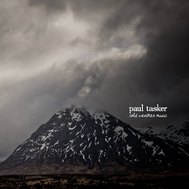
It’s been a while since we’ve heard from Doghouse Roses, the duo of Iona MacDonald and Paul Tasker whose two albums and several EPs showcased Tasker’s mastery of the acoustic guitar and MacDonald’s sublime singing voice. Collaborations with The Willard Grant Conspiracy and shows with acts as disparate as Raul Malo and Pokey LaFarge culminated in the excellent 2010 album This Broken Key, described by one reviewer as, “Perfection, or as near to perfection as we might reasonably expect.”  Since then however the band have kept a low profile, only surfacing for the occasional gig until, galvanised by a support slot for US cult rockers, Television, they went back into the studio in 2015 and also embarked on a tour of Germany. A tour only EP was released but now they have a new album (Lost Is Not Losing) in the can and will be playing a set of dates in April. In addition, Tasker is releasing a solo album, an all instrumental record called Cold Weather Music, at the end of this month. In anticipation of this flurry of activity Blabber’n’Smoke managed to meet up with Paul Tasker to speak with him about his album but we kicked things off by asking for an update on the Doghouse Roses album.

drpress01small


It’s been nearly six years since Broken Key. What have the band been up to in that time?

We worked really hard from 2007 through until about 2011 and we really just burned out, we weren’t really enjoying it anymore. We didn’t stop as such, we still did small gigs here and there. There was never a plan to start it up again but then some serious gigs were offered to us including a BBC television slot and we enjoyed rehearsing and playing again and some new songs came out of that so we decided to give it another go. As I said, we never stopped but we didn’t have the heart back then to go through the stuff to make another record because if you’re going to do that you really need to want to do it. It’s a lot of work and there’s a lot of obstacles. So we eventually decided to go into La Chunky studios in Glasgow’s Hidden Lane and we worked with Johnny Smillie for four days, we had a German tour booked at the start of 2015 so we did a tour only EP for that. After that we recorded the album with some guests on it, Laura Beth Salter on mandolin and Dejan Lapanja from Slovenia on guitar. We have bass and drums from Steff and Craig from the New International and Jo Shaw and John Alexander are also on the album. Playing as a duo live is one thing but on a record, well, the pinnacle is Gillian Welsh and Dave Rawlings but look how much they’ve played live together and yet they only do an album every six or seven years. I think it’s difficult to hold interest throughout a duo type album.

Is there a release date for Lost Is Not Losing?

It’s finished but because I’ve got my album coming out we don’t want to release this one until later in the year and we want to have a properly  thought out plan leading up to that. That was one thing about Broken Key, we didn’t really have a plan. We just put it out and hoped for the best but it’s a hard world out there and things just get lost. You really need to start the ball rolling, the PR stuff from the moment you get into the studio. I really don’t check out stuff like Facebook as much as I should but you can see bands there who are constantly updating what’s going on, what they’re doing and, needless to say we didn’t do that. Now we have a news page on the website but people have to find that whereas Facebook finds you. We’re hoping for a November release but a lot depends on our touring plans as we want to be able to promote it properly.

So after six years can we expect a different sounding Doghouse Roses?

Well, when me and Iona recorded this we did it live, sitting next to each other and it worked out really well. Before, when we recorded, we were separated, we could see each other but we weren’t close together and I think that’s made a difference. The majority is acoustic guitar and voice with four songs featuring a band. It’s still us writing the songs but I think it sounds a bit different, a bit fresher. And we recorded it using all sixties gear so that adds something to the sound.

I thought the song you’ve previewed from the album, Diesel Engine, had a “retro” feel to it, a nice early sixties, even fifties snap.

I bought a 1958 Harmony Rocket and I used it on Diesel Engine and it has that sort of sound. It was a really strummy number when we did it live but when we were recording it we slowed it down so it had a kind of groove rather than a drive and I put probably far too many guitar layers on it.  But there’s some nice harmonies in there. I’m working with another band, Colour Of Whisky which is like a vocal band so we got all them in to do harmonies. It turned out quite nice.

While we’re waiting for the April shows from the band and the release of Lost Is Not Losing there’s your solo album, Cold Weather Music, to look forward to. Can you tell us about that?

It’s been a couple of years in the making. I’ve basically made the album three times now. The first time was in 2010 but it I really didn’t get down what I was hoping for although it was a good learning curve of sorts. So I tried again in 2012 with Luigi Pisquini, a recording engineer, and we hired this place called the Recording Cottage in Inveraray. This time it was closer but still not quite there although a couple of the tracks from this session are on the album. Eventually I ended up at Green Door studios, an old analogue recording place and it was just the right space so essentially I’ve made the album three times before being happy with it. It’s all instrumental, two of the tunes, Husker’s Theme and Tundra Plane feature banjo, Sky Train and Ne’er Day are duets with flute and guitar, Blooms in the Autumn and InE are guitar duets, that’s me and Dejan, and the others are just me on guitar.

I believe that you’ve said that it’s like a soundtrack for a movie that hasn’t been filmed.

Well when I was working on some of the pieces, James Morrison at Whisky and Milk was writing a screenplay for a Western and he asked me if I had some music that sounded American as well as Scottish so I tried a few things on the banjo and one of them turned into Husker’s Theme. I worked from some pictures James had taken and I tried to evoke the scenes and we took a little road trip up to the Highlands and that’s where most of the artwork in the album comes from. So yes, it’s a bit like a soundtrack for a film that, as you say, hasn’t been made yet.

a2960792692_16

Why’s it called Cold Weather Music.

When we were away in 2009, I think it was in Denmark, someone came up and said, “You guys play cold weather music, no one would ever think you come from a place like Spain” and I quite liked that. A lot of the music I like, people like Ólafur Arnalds, you can tell it’s from a cold country. Although I like Samba and Tango and such I can’t really relate to it.

Aside from the album being available as a CD and digital download you’re also releasing it on vinyl. I take it that you’re a fan of the format.

I actually got into records just when it was changing over to CDs. There was a place called Borderline in Galashiels and one day I went in and instead of just having the odd piece of vinyl they had boxes and boxes of it. Someone had traded in their collection and there were some classic records there.  I remember there used to be a ton of records shops on Byres Road, you could do a record shop crawl. Those days are gone although they do seem to be coming back in a small way.

The album’s a wonderful evocation of the landscapes featured in the photographs, the banjo and pedal steel adding, as you said, an American touch to the Highland mists. It will probably surprise folk who always compare your playing to the likes of Bert Jansch.

Well Jansch was my first touchstone. That’s who I wanted to sound like when I first started playing but these days I’ll find myself playing something and I’ll think, “Oh, that’s just like third rate Jansch,” so I’ll cut that bit out. When I started to play it was the height of Brit Pop and I thought that was god-awful and then I saw Jansch at The Press Club on West Nile St. and I thought he was brilliant. Before that I had no real direction to follow on the guitar but after that show I tried to find his albums. Back then Bert and a lot of others like him were having a real dip in popularity, I mean there were only about 30 people at the gig and his records were hard to find.  But I got as many as I could find and to me it was a whole new mysterious world of playing the guitar, trying to figure out how he did that and then trying yourself to do it. And so when I started writing songs I wasn’t actually lifting his stuff but I was “borrowing” things so that the first Doghouse Roses songs did have that Jansch type sound to them.

What guitarists do you listen to these days?

Well these days I think I listen to more piano players than guitarists. I really like Nils Frahm and Oscar Peterson. When I play guitar these days I try to think of it more as a piano than a guitar

So 2016 is looking to be a busy year for you.

Well first off, we’ve got Joseph Parsons coming over from the US and we’re doing four shows with him in April.  It will be nice to get out and get back to playing; Iona’s really looking forward to the shows.  I’m so glad to have the solo album done, it had become a bit of a millstone, but I’ll be playing some of the tunes from the album at these shows. I’m also doing a solo show on the 15th at Woodend and then hopefully later in the year I’ll be able to gather all the players for a show to play the album in full. After that we can concentrate on the run up to the release of Lost Is Not Losing.

Dates for Doghouse Roses April shows are here. Blabber’n’Smoke’s review of Paul Tasker’s Cold Weather Music will be here soon, in the meantime he’s playing at Woodend  Bowling Club for Sounds In The Suburbs tomorrow, 15th March supporting Locust Honey. You can buy his album here

Doghouse Roses website


Findlay Napier. A Very Interesting Conversation.

a2170981267_16

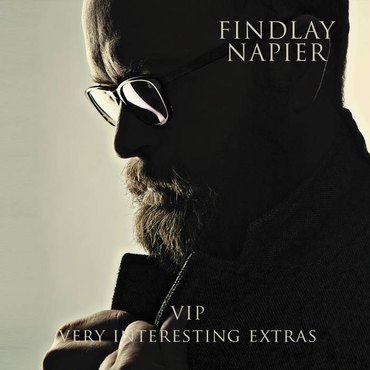
It was a tired but happy Findlay Napier who met up with Blabber’n’Smoke in early February to talk about his latest release, an EP called VIP Very Interesting Extras. As the title implies this is a companion piece to his 2015 release VIP Very Interesting Persons, an album that was given the accolade of second best folk album of the year by Martin Chilton, music critic of The Telegraph. We had meant to talk in January but there was the little matter of Celtic Connections to contend with, Findlay’s workload there, hosting the late night sessions at Drygate (seven shows in all) along with his work curating Hazey Recollections just too much for his diary.

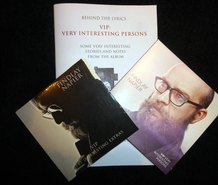
Very Interesting Extras, released this week, is a five song EP that complements the 10 songs on Very Interesting Persons. That album, a result of a mentoring project funded by Creative Scotland which saw Findlay teaming up with Boo Hewerdine, is a collection of songs about people who lived “interesting lives,” some famous, some not so. Favourably reviewed on release these songs about folk such as Hedy Lamarr and Mickey Mantle were fine poetic encapsulations with some biographical detail included but it was the imagery and allusions that stood out along with the quality of the playing and Napier’s strong vocals. Much of the biographical material was gleaned from the likes of Wikipedia in the first place with Findlay and Boo then taking the raw material and shaping it into song. Their success in bringing these characters to life in a musical setting was enhanced by the short notes which accompanied each song on the album sleeve. Tantalisingly brief they begged the listener to carry out their own Wikipedia expedition to find out more regarding these intriguing folk, folk like the Japanese soldier who refused to surrender until 1974 and Jimmy Angel, the pilot who accidentally discovered Angel Falls in Venezuela. Happily, Findlay has produced a book (VIP – Behind The Lyrics) which offers more detailed information on the subjects along with his inspirations for the words.

0006049862_10

The EP was recorded at the same time as the album and opens with another song about an historical character, this time Harry Houdini, and closes with another true story. The other three songs however are fictitious creations, dreamt up by Findlay from observations and situations he’s encountered. We started off by talking about the EP. The songs here are as strong as those on the album, there’s no sense of them being outtakes or demos so I asked Findlay why none of the five songs made the cut for the album.

Well, they were all recorded at the same time. We had 15 songs recorded but we only wanted to put 10 on the album, a self-imposed limit, so we had to consider which ones to leave off. After The Last Bell Rings, Princess Rosanna and 52Des aren’t technically about real people so they were the first ones to be left off. With How Will You Escape, well, we just thought there were too many songs in 3/4 time, Boo in particular was listening to the songs and making sure there was a certain amount of variation in the running order. So on the last day we recorded Eddie Banjo and Sweet Science simply because we had too many waltz time songs. The Houdini song actually was one of my favourite co writes with Boo. I wrote the three verses and sent them to him and he wrote the chorus and the music, he wrote it on a ukulele actually. And while it’s about Harry Houdini I was actually thinking of Amy Winehouse when I wrote it, that thing about having to please your audience and having to push yourself one step further. Houdini I think had to do that, in fact I think he died after challenging someone to punch him in the abdomen. And Winehouse, I mean Rehab was just perfect and then Back To Black came out and it was like, how can she top that? And when her drugs stuff was going on a bunch of us were drunk up in the Shetlands and we thought we should just get a van, go to London, grab her and bring her back to some croft and dry her out so she can get on with her music. Daft, but looking back maybe someone should have done it. However, back to the song and your question, as I said we just had too many in 3/4 time so it didn’t fit into the running order.

Can you tell us about these fictitious folk, Princess Rosanna for example?

I was underneath Jamaica St. Bridge, it was part of my running route and on the north side, under the bridge, someone had spray painted in luminous pink, “RIP Princess Rosanna” and I took a note of that on my phone and it just grew out of that. I haven’t found out who Princess Rosanna was, nothing on Google or anywhere so I liked the idea that it’s a bit of a mystery, was she murdered, did she drown, was it suicide? It’s a wee bit like Taggart, I wanted to leave that unknown and then I liked the idea of her body being taken out by the tide and then coming back in, I can see it as a wee black and white film. I used to hill walk with my dad on a place called Ben Rinnes and close to that is a smaller hill called Babby’s Moss. It’s named after a woman who killed herself and was buried there because as a suicide she couldn’t be buried in a churchyard or cemetery and that had always stuck with me, I mean, what an unchristian thing to do to someone who was so unhappy they killed themselves. At least let them actually rest in peace because they weren’t at peace when they were alive. So that was woven into the song.

And what about 52Des?

Well Des is not a real character but it was a real number plate on a car, a BMW I saw in Haghill when I was out running. In Haghill there were doorways were people were dealing and I thought, “Oh Man, don’t park a brand new BMW outside an old tenement,” because that’s giving the game away, telling the police a drug dealer lives here. The last line, “your beautiful things always give you away,” it’s like in crime films where there’s always one idiot in the gang who can’t wait to spend the money instead of sitting on it until the heat fades, so Des is that guy.

Folk will know who Harry Houdini, who you sing about on How Will You Escape, is but can you tell us what inspired the closing song, Showfolk?

Boo wrote that one and it’s a kind of complicated story. The album was a Pledge campaign and a guy called Jono McLeod who is a filmmaker was one of our major backers at the level where we would write and record a song based on his idea. He then sent us a story that was just perfect for VIP all about his uncle, a Scots’ comedian called Jimmy Mac. I had several goes at writing it but they were awful, just dreadful attempts and then Boo just called me up and said I’ve done it and sent it to me and it was just right. It’s a great story. Jono’s uncle was a comedian in Glasgow working in music hall and he then fell in with a troupe called Fred Roper’s Performing Midgets down in London. Roper had this trick of promoting his show by organising midget weddings and he thought it would be a great idea to have Jono’s uncle, a tall, slim guy, marry a midget. Her name was Winnie and even though it was a publicity stunt she fell in love with Jimmy, Jono’s great uncle. It’s a bizarre story, in fact there’s a whole album of songs or even a movie in there all about Fred Roper’s Performing Midgets but you can’t really say midget these days, the term now is little person. Anyway the song’s about Winnie and her having to come to terms with it all being a publicity stunt and it’s full of killer lines from Boo like, “the angel on my shoulder lied, perhaps the lie was mine,” and really I can see Boo just running through this minefield of political correctness trying to write this song without using THAT word. It could be too easy to turn it into some funny circus type song but it’s turned out really beautiful. And another great thing about it and something I totally forgot to mention on the EP credits is that Jono sang the backing vocals on the song. He came in to film us recording and we managed to persuade him to do it so there’s a nice connection to the story and the performance as it was his uncle and he sings on the song. It’s even weirder how Jono came to find out about the story. He was at some exhibition in London and saw this photograph and recognised his uncle in it. So he went to his family and asked them and gradually got all the details. His uncle, Jimmy Mac, appeared at the Panopticon with Stan Laurel back in the music hall days and then years later he was actually in Dad’s Army as one of the Home Guard platoon!

Going back to the album, you mentioned Eddie Banjo and it’s a song that really stood out for me when I first heard it, it reminded me of Gerry Rafferty’s Can I Have My Money Back.

My dad told me about Eddie Banjo and Boo said, “let’s try to do a song with only one chord,” so up until the bit from You Are My Sunshine kicks in it’s only one chord. But, I can see what you mean about Can I Have My Money Back, I love that album. In fact one of my early memories was a birthday party, I must have been about primary one,  and my parents played that song while we were doing musical bumps, you know, everyone has to sit on the floor when the music stops and as we all jumped down the needle was skipping and jumping on the record. My dad, I think a lot of his records were stolen at one point but he had Penguin Eggs and Can I Have My Money Back and Do You See The Lights by Rab Noakes, maybe a Hamish Moore album as well. There was also an album called The London Hootenanny (recorded live in 1963 with martin Carthy, Alex Campbell and Nigel Denver among others) and I learned every song on that album and then later we got Rab Noakes’ Standing Up which was a big influence on me, I learned how to do all the songs on that album. Standing Up is a real good solid album, it’s like, “here’s how to write a song and here’s how to put a bunch of them together and if you do that it’s going to be great.”

Is it true that you used Wikipedia to find out about these characters?

We used Wikipedia for some of the songs, Hedy Lamar, The Man Who Sold New York, Angel Falls, Rising Sun, Idol in Decline. Sweet Science was mostly taken from an article in The New York Times. Eddie Banjo was a story from my dad about a guy who used to tramp around Wick, What A Shame About George, well, that’s just me because I love George Jones. Valentino I got from Tumblr when I saw a picture of her there. The Sport of Kings was mostly from a Guardian obituary of Sir Henry Cecil which I tweaked a bit

So, out of these twelve characters which one is your favourite or the most intriguing?

It’s probably Hedy Lamarr. It was again really weird how I found out about her. I was watching a documentary on The Adverts and they said that Gaye Advert, the bass player, looked like Hedy Lamarr. I’d never heard of her so, onto Wikipedia and it had this stuff about her inventing Bluetooth, “Aye right, typical Wikipedia,” I thought, but I looked a bit further and sure enough, she had developed a forerunner of the technology. I was playing a gig and when I was introducing the song some guy shouted out, “Oh, she didn’t actually invent Bluetooth,” and I was like, “Okay, this is a gig, not a lecture, let’s just say she did for the sake of the song.” But there was so much more about her, married six times, done for shoplifting, just a fascinating life but such a hard one. People think; Hedy Lamarr, rich and famous, but she was beaten up by her husbands, she wanted to be a scientist but the guys in charge said no, they didn’t want that, they just wanted her for her looks and that’s what that line, “every time the lights shine down you disappear,” means, Hedy Lamarr vanishes and all we see is the character she’s playing.

a31bbe_c8e3841639a642e1abf1215cae3f5c48

Picture copyright Shaun Purser

You’ve said the release of the EP wraps up this VIP phase so what’s next on the cards?

There’s a tour coming up for late February and March, all over the place right down to Torquay and back up again. In London I’m doing a show called Boo Hewerdine and Friends along with Chris Difford and Brooks Williams, we did it last year at the Ely folk festival. We all do short sets and then bits together and it went down a bomb so I’m really looking forward to doing it again. It’s an honour to play with Boo and Brooks and especially with Chris Difford, he’s one of the greatest lyricists in the world in my opinion, him and Nick Lowe and Elvis Costello.

Then I’ve been thinking about a couple of projects. I’ve been living in Glasgow for 20 years come October so I’d really like to do something around that, 20 years in Glasgow, although it might need a snappier title. I’m also really keen to do a folky type thing with some of the hip hop artists around, folk like Loki and Solareye from Stanley Odd, I’ve got this thing in my head that’s a folk hip hop thing that I want to sort out. And then there’s a song writing workshop with Karine Polwart. That’s already sold out and it’s pretty exciting. Teaching or tutoring has really blossomed over the past few years and I’ve been really lucky because I’ve been doing it for some time so I’ve got the skills needed. Apart from the workshops with Karine I’ve done stuff at the Scottish Music Centre and some really interesting work with Vox Luminis who work with prisoners and their families. I went to Castle Huntly prison with Louis Abbott and Donna Maciocia for three days and we wrote songs with the guys in there and it was fantastic.

There’s also a couple of commissioned pieces I’m doing. One for the Hartlepool Folk Festival writing about East Durham and that was really interesting. East Durham is where the final scene in Get Carter was filmed, the black beach and the coal being tipped out to sea. Well now it looks like the Mediterranean, the sea is blue, so clear you can see the rocks below. It’s a beautiful place now but its surrounded by all these old colliery towns that have problems, no work and lots of drugs. A really rich history to write about. I’ve also been asked to write a song for the 250th anniversary of my hometown Grantown on Spey.

Finally, how did it feel when The Telegraph put VIP in second place in their folk album of the year list?

Fantastic, really really fantastic. Stuff like that, well it helps when you try to get a gig, they might not seem too interested but when you point that out they perk up a bit. It’s like a passport and it’s helping to open doors in America and hopefully Europe, I’d really like to do more tours over there.

napier

So there we have it. The album, EP and book are all available via Findlay’s Bandcamp page  and his tour dates are all  here including a show at The Glad Cafe on March 2nd. All very interesting indeed and, who knows, the knowledge contained within might just include that esoteric piece of information that will win you the tiebreak in your local pub quiz. If not, well, just enjoy some very fine and very interesting  music.

Daniel Meade Interview/Redneck Dinner Party

cover170x170

Regular readers will be familiar with Daniel Meade whose album Keep Right Away was released way back in January . Produced by Old Crow Medicine Show’s bassist, Morgan Jahnig and featuring Diana Jones on one song the album was well received with one Texan based producer getting in touch with Blabber’n’Smoke asking about “this guy from Glasgow.” Fast friends with Sturgill Simpson, Ms. Jones and the Old Crow boys, when he’s not gigging away (this year saw two tours in Europe and shows in England with Pokey Lafarge) Meade can be regularly seen at several regular pub and club residencies in the Glasgow area either in a duo setting with his wizard guitar buddy, Lloyd Reid, or with his four piece Flying Mules. In fact when I interviewed Pokey LaFarge at his last Glasgow gig he asked the first question, “Do you know if Daniel is playing anywhere tonight?”

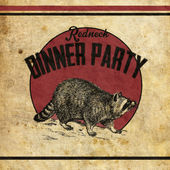
So it was great news that Meade has a new release available, Redneck Dinner Party. A new release but not a new album as such. Recorded in 2008 when Meade’s band was then called The Meatmen it’s an eleven song burst of rockabilly and country thrash, all penned by Meade, in a similar vein to Keep Right Away’s lead single Long Gone Wrong. Inevitably it’s not as polished (although polished is not a word one would generally use here) as Keep Right Away although the sound is clear and vibrant, the bass thudding from the speakers as the band seem to be having a ball. This is evident from the start with the raucous title song, an uproarious paean to hillbilly cooking where it seems everyone in the studio (and the street outside) are involved in the backing vocals and general noises that punctuate the song. It’s like a Glasgow version of Robert Earl Keen’s Merry Christmas From The Family taken at a faster pace with the family hyped up on Buckfast (and without the Christmas element of course).

This souped up take on country music permeates the album as Meade delves into familiar themes (drink, love, infidelity) and brands them with his own mark. The songs barrel along with some ferocity, the Killer piano on My Band’s Better Than Your Band worth the price of admission alone. Songs such as Pie Eyed Joe, Sod’s Law and That Girl’s Old Enough To Be Your Mother are tremendous slices of old fashioned Sun Records rockabilly although it’s a fair bet that had they been recorded back then they would have sat in the vaults for years as Meade is earthier than those God fearin’ folk back then would have allowed with lyrics like “so get your hat on your head and your ass on home.” God knows what they would have made of Shitkicker Blues, the frenzied album closer which sounds like a demented Nick Cave hallucinating in a Gospel tent.

Aside from the Jerry Lee Lewis inspired rockerama Meade finds time to visit another touchstone, Hank Williams, on the graceful country of She Lost My Heart In New York and the tumbledown heartbreak of Sweethearts and Broken Hearts, the latter having the potential to become a classic of the genre.
For an album that was hastily recorded to sell at gigs Redneck Dinner Party is simply superb and more proof, if needed, that Meade has his finger on the pulse of classic roots American music. Happily he was available to spend some time with Blabber’n’Smoke to talk about the album and bring us up to date.

11056539_675962065872900_3511545192124466341_o

Redneck Dinner Party dates back to 2009, why have you decided to reissue it?

It’s not really a re-issue as such as it was never issued at the time it was made, it only ever made it to crudely home-burned CDs that we would sell at gigs to fund getting to the next gig. I came across it again by chance earlier this year when my parents were moving house and it was in amongst a box of old CDs. I hadn’t heard it in years but it still sounded great (to me), so I thought I’d just release it properly for old times sakes really.
The majority of it was written when I spent a few months in L.A when I was 22 or 23, and I was introduced to all this great country music over there. I was already getting into Old Crow Medicine Show and there was a lot of similar cool stuff happening, it was great to be around and I guess I brought some of it home with me.
We recorded it at TornFace Studios with our good friend Chris Gorman. I don’t remember too much about the session but I hear it was a lot of fun! It somehow managed to get into Mark Lamaar’s hands and he played ‘I Remember Now’ on BBC Radio 2, and I just remember thinking that was it, we made it! Oh to be young…

So who’s playing on the album with you?
We have Richard Anderson on bass, now of the Shiverin’ Sheiks, Danny Shepherd on drums and on electric guitar we have Lloyd Reid, of course. This was actually the first thing we ever worked on together, still going strong!

Listening to the album today what sort of memories does it conjure up?

Just good ones really, we were just young guys having a very good time and I think it comes across like that. It’s hardly the most accomplished album you’ll hear, lyrically or musically, but that doesn’t matter, it’s just a lot of fun. I think the album/song titles and content would suggest that it’s not going to be one to ponder over, just get a few tipples down your throat and go for it, and I’m glad to say a lot of folk did just that, on a weekly basis. We used to play two gigs every Saturday in Glasgow for a couple of years, Maggie Mays, 6-8, then The Butterfly and Pig, 10-12, and it was always a party. Good, mad times.

Back to the present is there any news on a follow up to Keep Right Away?

Well myself and The Flying Mules do in fact have a new album recorded and good to go, it should be with you in the Spring. More details to come soon.

As usual you’ve been busy this year, touring with Diana Jones, Pokey LaFarge and about to go out with The Proclaimers. You’ve been abroad in Europe, how did those shows go?

I’m glad to report they’ve all been great, different in their own ways and never two crowds the same. That’s why it’s so much fun heading out with other acts like Pokey, Diana and The Proclaimers, you never know what to expect from night to night, fair keeps you on your toes. Plus you get to watch them every night and that’s a privilege, especially with acts of their calibre. I mean last night we were watching ‘Sunshine on Leith’ being sang back at The Proclaimers by 1600 punters in Motherwell from behind the stage, that’s something special!

Last time we talked you said Jerry Lee Lewis’ Live At The Star Club was your favourite album. I believe you saw Jerry Lee Lewis when he played in Glasgow this year. How was that and are there any other performers you would fight your way through to see?

It was great, strangely emotional knowing that I probably won’t have the chance to ever see him play again but he was still amazing at 80 and I managed to briefly meet him, shake his hand and say thank you, and he said it right back! I’d waited a long time for that, if it wasn’t for him I probably wouldn’t be doing any of this so I’m glad I got the chance. My brother and I also met James Burton and Kenneth Lovelace, it was just one of those days..
I’ve been lucky in that I’ve seen most of my heroes live, but I’d still like to see Tom Waits and probably Tom Petty, there are probably more but not that I’d have a fight for, I’ve got soft knuckles and a softer nose so it would have to be someone ridiculous, probably someone raised from the dead, Big Bill Broonzy or Hank! Let me know if that happens cheers and I’ll gladly get in the ring.

Any plans for the New Year?

Taking a few weeks off actually, recharge and get to working on whatever’s next, whatever that may be. Any requests?

Redneck Dinner Party is available on CD although its a limited edition, you can purchase a copy from Daniel here while stocks last. It’s also available on itunes here

Israel Nash – Reopening the Cosmic American Frontier

Fans of that old Hollywood hippie sound, the days of the blissed out David Crosby, tetchy Steve Stills and brooding Neil Young and the glorious nugget that is Gene Clark’s masterpiece, No Other, have recently had the opportunity to vicariously relive those days simply by purchasing a copy of Israel Nash’s latest album. Silver Season, released on Loose Records is a sun-blistered swathe of Topanga Canyon like songs, teased out on record, itching to be let loose live, the guitars crackling while pedal steel soars and swoops. Nash sings in a similar vein to a young Neil Young but it’s the music that is rooted in those bygone days, not a nostalgia trip but a feeling, espoused by Nash (who by the way is no relation to the fourth member of that supreme LA supergroup) that music can change, if not the world, then at least those who are listening to it. Recorded in his newly built home studio the album takes aim at gun crime (on Parlour Song) and delivers a wonderful hymn to the narcotic pull of Los Angeles on LA Lately and is a worthy follow up to Nash’s acclaimed 2013 release Rain Plains.

We caught up with Israel as he was heading to New York in the back of an RV. The phone line was tenuous to say the least but the following hopefully carries the gist of the talk which I opened by apologising in advance for the possibility of mentioning Neil Young et al ad nauseam. I asked him if he got fed up with the comparisons.

No, I’m alright with that. People like to talk about Neil Young anyway, he’s one of the big ones so go ahead.

Rain Plains and Silver Seasons seem to be much of a kin but Seasons is somewhat denser with a more psychedelic shimmer to it, would that be a fair enough description?

Well it wasn’t a major goal as such as it just developed that way. After Rain Plains we were playing the album live and it just got us into the way of looking at the album and taking it to another level so it’s like a transition. I look at the album and the music as a presentation. I think that I tried to blend myself as a listener and a writer with all the things I’ve been influenced by and that I’ve tried to grab the listener with everything I can – the artwork, the songs, the whole opportunity you have to suck a listener into this place for an hour.

It’s a huge sound, stratospheric one could say. I really dig the way the pedal steel plays around the electric guitars gliding here and there while the songs shimmer with a sort of heat haze.

That’s a big aspect of what we were working on, the balance between the melodic instruments, they just dance together throughout the record. Gram Parsons had this idea of cosmic American music and I guess the pilot’s just got a little more cosmic.

Parlour Song in particular reminds me of a couple of early Neil Young moments, the orchestrated Expecting To Fly from back in Buffalo Springfield days and towards the end the anger that was evident on Ohio with you shouting out. It’s quite visceral.

Yes, I think that over my years as a musician the songs have become more than just songs, I want to create a space that not only lets you listen to them but makes you go whoa! The beginning of that song is supposed to mimic a funeral precession and it’s really trying to get people in there and see what’s going on in their minds and what they feel like.

I was going to ask you about the introduction, it’s got a cinematic feel, like something from Morricone.

Well it’s inspired by The Godfather II. There’s a scene in it with young Vito in Sicily at his father’s funeral and Copolla does this cool shot with the sound of crickets and in the distance this rag tag band meandering through the hills. Those hills reminded me of the Hill Country in Texas and so I wanted to do something like that. So we recorded the crickets and then we tried to mimic the movie’s panned shot, we tried a bi aural set up, we put two microphones outside and played the track through speakers we carried as we marched about.

LA Lately is simply stunning and again there’s a short introductory passage which sets the scene.

That’s trying to introduce the emotional impact of leaving Texas and going to LA. It’s like, “where did all the hope go?” It’s trying to represent that feeling, a kind of brooding about getting ready to go out there but also the excitement of going away. And then LA represents that unease and unpredictability, again it’s an emotional journey. The song’s about our experience in LA. We played our first headline show there and we had a moment. It’s always exciting that I get to play music but I was overwhelmed that we had such a great show there. LA just has this thing, this history, like Steve Stills and Neil Young meeting on the freeway.

At the end of the album, on Rag and Bone you slip into a chorus of We Shall Overcome. Can I ask you why?

Well the rag and bone man, that’s a real British thing I read about. They seem to be like the least of us in society and to treat people like that, well for me there are a lot of themes across the album and one of them is the idea that there are so many things, man made conventions that we assume are important to society but which are actually not important at all in the grand scheme of things. Like money is made up, time is made up, all these things, they’re restraints that we’ve put on ourselves. The rag and bone men, well we just put them down but we should just change this with a little love, take a step back and make it a little simpler. It might seem like this is a hippie ideal but the older I get the more adamant I am about it, it’s not youthful foolish thinking because I’ve lived it. I’ve seen live shows with people around me catch this contagious atmosphere and as for the closing of the song the idea is that we can have a singalong at the end. I mean what’s wrong with a roomful of people singing we should love one another. It’s just another element of what I feel about music – it’s not just another guitar solo or some badass thing, it’s way bigger than that, it’s way bigger than just rock’n’roll, it’s relationships and it’s people

You recorded the album in your own home studio. Can you tell us about that?

Well we’ve got about 15 acres at Dripping Spring so that was always the plan to build a studio and it finally happened. I got a Quonset hut which is a metal building which has 20 arches and is held together by 3,500 bolts. The plan is to record my own music and produce other people’s records, a place where I can walk from my house straight to the studio to work on material.

That and your story of walking outside recording Parlour Song reminds me of Graham Nash’s story of Neil Young listening to the playback of Harvest using his house and his barn as speakers and yelling out More barn!

Yeah, that’s a cool Neil story.

I believe there are plans to come back over to Europe soon.

We’re going to go out, playing the album front to back, that’s what we have in store for Europe, playing the album as one full piece of music and we’re doing a London show early next year. Hopefully we’ll be back in the UK again after that.

Isreal Nash will be playing a set of European dates commencing in January 2016 with a London show on 15th February, all dates are here. Silver Season will be available on vinyl in November. You can read my review of the album here

Israel Nash website

Loose Music website

Glasgow Americana Festival 2015 : 7th to 11th October.

This week sees the ninth annual Glasgow Americana Festival and as always it’s an excellent opportunity to see and hear some top notch acts in an intimate setting far removed from the arenas and concert halls that often act as a barrier between audience and artist.

Festival director Kevin Morris will be no stranger to readers here as he is responsible for The Fallen Angels Club who promote shows throughout the year, his keen ear responsible for bringing the likes of Sturgill Simpson to Glasgow well before his star was in the ascendancy. The past week’s been a bit of a blizzard of last minute preparations for Kevin but he was kind enough to take some time to speak to Blabber’n’Smoke. We started by recalling the first festival back in 2007 which Kevin organised as a tribute to Billy Kelly, a key player in the local and national scene going back to the days of Mayfest and who was responsible for Big Big Country, Glasgow’s first Americana festival. Mary Gauthier appeared that year and was recorded in The Herald describing Kelly as “an angel,” his patronage among the significant stepping stones on a career that has taken her to Nashville as a major label recording artist.

Kevin: The Glasgow music scene sadly lost Billy in 2007 and he has been hard to replace ever since. Glasgow Americana has tried to fill the gap that was left after Billy’s sudden passing, and hopefully Billy is looking down us with an approving look at what we have achieved since we started in 2007. We always have a wish list year on year and go about trying to make it happen, we are lucky to have these amazing artists making the festival as part of their tours. We already have some ideas for both 2016 and 2017, so we will see what develops, but probably best to get the 2015 festival out the way first.

KM

Over the nine years there have been numerous artists performing but we wondered if there were any particular moments that stood out for Kevin

There have been loads and that it is a very good and a tricky question, I suppose one that does stand out was Alejandro Escovedo at The Arches in 2011. Also our Americana Saturday in 2012, we had Sam Baker playing the matinee show in The CCA and then Eliza Gilkyson play the evening show that year, that was a very special day indeed.

Kevin and his team are well known for their hospitality for the acts he puts on with many returning time and time again and who regard Kevin as a friend and not just the promoter. He told us a little bit about a special occasion for him earlier this year.

I have been very lucky with the people I have met through putting on shows, and have made so many friends from across the pond. Myself and my wife Lauren got married in Austin, Texas in June of this year. While we were there we met up with some musician friends that have played for us over the years, including Sam Baker, Eliza Gilkyson and Chip Dolan. On our wedding day we were very fortunate enough to have Alejandro Escovedo as a witness at our wedding ceremony over looking Barton Springs. Not your average day for a wee boy from Bothwell.

With that Kevin was back attending to business for what will be a busy week for him. The Festival kicks off on Wednesday 7th October with Bruce Cockburn playing at St. Andrews in the Square while Tom Russell plays the same venue on Friday 9th. Other venues are The Glad Cafe which has Danny Schmidt and Betty Soo on a matinee show on 10th October and Lewis & Leigh and Curtis McMurtry (son of James) that same evening while The CCA has Kathryn Williams and Michele Stodart (The Magic Numbers) on Thursday 8th October and a matinee show from Sam Lewis and Krista Detor on the11th.
The festival ends with Findlay Napier’s Hazy Recollections, his peripatetic event that showcases several acts and is hosted by Napier himself, the man responsible for one of the finest Scottish albums this year in his disc Very Important Persons. His VIPs for the night will be Sam Lewis, Dark Green Tree and Kera Impala and it’s shaping up to be a very interesting evening.

We’ll leave the final words to Kevin as we tried to get him to spill the beans on whether he had any particular artist or group who would be his ultimate Glasgow Americana catch, his “bucket list” as such. Kevin pondered on this before replying… Yes, but I’m not telling you anything else about that.

Full line ups and dates are here http://www.glasgowamericana.com/

Reviews of the latest albums from some of the acts are here
Sam Lewis
Lewis & Leigh
Tom Russell
Findlay Napier
Dark Green Tree

And finally here’s a clip of Sturgill Simpson closing last year’s Glasgow Americana Festival.

Catching up with John Murry

JM beach 2


Way back in 1971 Kris Kristofferson wrote a song, The Pilgrim; Chapter 33 , the lyrics of which could be applied to a man who was to come to folk’s attention some 35 years after the song was written.
He’s a poet and he’s a picker/He’s a pilgrim and a preacher/ and a problem when he’s stoned/He’s a walkin’ contradiction, partly truth and partly fiction/Takin’ every wrong direction on his lonely way back home.

If nothing else John Murry is a poet and a picker and he’s documented his drug habit in some harrowing songs. As for the rest; well he has confessed to making up some absurd tales for his pal Chuck Prophet’s newsletter and at times he does seem to be a bit of a lost soul casting around for some stability. The latest chapter in his life sees him living for the time being in County Kilkenny, Ireland and setting out this week on a tour of UK dates accompanied by Grum Gallagher, guitarist with Kilkenny rock band, Duende Dogs. John was kind enough to take some time out to speak to Blabber’n’Smoke about his latest adventures.

I believe that you’re living in Ireland for the time being. How did that come about?

Well, Willie Meighan (promoter and record shop mogul in Kilkenny) set up six or seven dates here for me back in March and back home well, I’m getting divorced. I guess things just became so contentious I felt the best thing to do was just to stay away for a while. I don’t know if I intended to stay here but communications were going wrong, getting mixed up. There were recordings I had made in Australia and Oakland and here and even if I could have salvaged them and put them together I don’t think it would have made any difference because the feelings about them were just too claustrophobic and I didn’t think that anyone cared about getting them finished.

So, in terms of your recordings does that mean that you’ve scrapped them and are having to start over again?

Yes but I’m OK with that. Well, no I’m not. I’m not OK with how difficult it is to have to do that and I’m pretty frustrated with how the whole thing has played out. It’s all a bit confusing for me. The way support from labels and management was supposed to be, I thought I could finish the record but when I met with the people it became clear that there had been kind of, bad blood happening. I mean if I could do anything else I swear to Christ I would, anything other than make up songs and play them. I had no idea it would become as difficult as it’s become.

You’ve been living in Kilkenny then since March. How have you been finding that?

It’s an amazing place, I mean it’s smaller than Tupelo Mississippi where I grew up and there’s so much going on all the time. People have been so supportive and it’s amazing that even with the way the Irish economy, the whole European economy, being the way it is that they put on things and people go to shows. They really do support the arts here, it’s really phenomenal. From 2007 when Bob Frank and myself first came here, there’s something about the place that does feel like home. It wasn’t a bad place to land up in.

You’ve been playing quite a few shows in Ireland, how has that been?

It’s been good, I’ve met Grum Gallagher whose been playing with me and who’s going to be doing the tour with me. It’s given me time to find people around here that I really like playing with and who do it for the same reasons I do, especially Grum. So it’s a bit like getting to start over again and that’s not necessarily a bad thing. It’s given me a chance to go through the songs and hear for myself which ones actually stand up on their own as songs as opposed to what I was doing, getting locked into creating something and then continuing to work on it without thinking about what it would sound like if I was just playing it on my own or with just one other musician. That’s really what I wanted to do, effectively write things I could play alone or with one person and that would be enough. So that’s weeded out some songs. It actually feels a bit like when I was younger when I used to play a residency at the Hi-Tone in Memphis.
You see, things like record labels, well, I don’t think they really matter. You have to think to yourself, what am I actually getting from this relationship and what are they getting? I think there’s a kind of desperation in the industry right now to define itself and when that kind of desperation kicks in it shapes what people are willing to do, there’s a lot of games that actually get in the way of getting anything done. I think I’m blessed to have made the record with Tim (The Graceless Age), it’s let me play dates in the UK and eleswhere in the world, OK it may not be with an agency but I can still do it. Ultimately it’s not agents and managers I need, it’s the people they hate that I need. Every middle man that comes between an audience and the music is effectively nothing more than a distributer and the way that people listen to music these days has changed things. So there’s a desperation in the industry to maintain a place that they’re not able to control anymore.
I mean if you’re born cursed to make music then you’re going to do it and if people are damned enough to have to go to shows then they’re going to go. It’s always been that way. Booking agencies and record labels be damned.

That’s a terrible curse, being damned to listen to good music.

Yes, it’s a horrifying curse, especially if it rains and you’re outdoors in Scotland. Why do they have outdoor things in Scotland? I mean Ireland’s that way too but they just throw up a lot of tents, and the Norwegians, they just pass out in the mud and then they come to and they realise there’s more music and they go for it again until they pass out again.

Talking about new songs, you released a video of one called The Wrong Man, just you and your guitar. Is that the direction you’re heading in?

Yeah, that’s one I wrote that stands up as a song that can be played with very little accoutrements, it works in that way. The others I’ll be playing on this tour are all in that vein. I mean people keep saying shit about Bruce Springsteen’s Nebraska but I don’t know if I necessarily hear it that way, I can hear the anger and frustration in it and maybe that’s what people are comparing but I think it’s just a soul song in half time.

To me Springsteen is more blue collar, workmanlike

Well right now I’m kind of trapped in influences from way back, from when I moved to Memphis and had access to all that Stax stuff, Carla and Rufus Thomas, Otis Redding, Dan Penn and Spooner Oldham; I fell in love with that stuff. And that’s what I’m trying to do and it seems to come naturally to me and that’s what disturbs me. I mean that song came so quickly and easily that I thought, oh, this can’t be good because I didn’t have to try very hard.

Maybe that’s what we call talent

Well, we’re all talented I guess in some ways but it’s the only one I’ve got that’s stuck in my craw since I was a little kid. It’s the thing I can’t get away from because I love it too much and if that’s the case then that’s what I’m going to do. A lot of what I did before was experimentation, playing around with a lot of ideas to then create a song or to layer things into a song. I’m really curious about sonics but I’m equally curious about songs and about pushing myself as a person who writes them. I don’t like that word songwriter though. Did you know that’s the number one claimed occupation on tax returns in the United States?

No I didn’t, maybe songwriters are the only folk who pay their taxes over there! Anyway, you’ll have Grum Gallagher with you on the tour.

Yes, I’m coming over with Grum, he’s playing guitar and keys and he’s just brilliant. When we first met we became friends really quickly but I had no idea that we would sort of, get each other the way we did. We played a handful of shows together at Carroll’s Bar in Thomastown, a great place, John Martyn used to play there a bunch. They revamped the place and we opened it up and it was a great honour for me that they let me do that. Anyway, when we played the shows it just kind of felt like I had found a Warren Ellis, someone completely on the same wavelength. There’s very little we need to talk about, it’s something that we both hear and get and don’t really have the language to discuss it. It’s really been a blessing as it’s the kind of thing I’ve lacked in my life and musically for a long time, someone who isn’t outside the music being created but an integral part of it, in the middle of the battle.
We’re touring at the end of September and then we’re back in November and there are still dates being added. I’m going to be seeing places in Scotland I’ve never seen before as I’ve only played Glasgow and Edinburgh in the past so I’m really excited to be able to see the islands and things like that. We’re going to, how do you say it, Stornoway?

Make sure you take your winter woollies, it’ll be cold

Yeah, I really need to get a good jacket, I didn’t think this through. I did intend to go back to the US but then it just occurred to me that the safest thing to do was to stay here. I don’t know if I was right or I was wrong but I’m here for better or worse. I need something rainproof.

You can catch John and Grum at the dates below and apparently there will be a limited edition live album of John’s show at the 2013 SXSC Festival available at the shows. The disc will also be available for a limited time via The Swiss Cottage Sessions, contact them via Facebook for details John has also been working on a new EP in Ireland.
September
25th – St Mary’s Church, Guildford
26th – Private show, Winchester
27th – Upstart Crow Festival, – London
28th – The Prince Albert, Brighton
November
3rd – The Fox and Newt, Leeds
4th – The Cluny, Newcastle
5th – Admiral Bar, Glasgow
7th -The Ceilidh Palace Ullapool

Thanks to Garrett Kehoe for his assistance in setting up the interview

Tom Brosseau


Tom Brosseau has been quietly picking up plaudits for his latest album Perfect Abandon which he recorded in Bristol with producer John Parrish. Raised in North Dakota Brosseau has been tagged as a folk singer by most reviewers and there’s always been a hint of the unorthodox about him with some of the songs on his last album Grass Punks recalling the likes of Ed Askew, a cult folkie from the sixties (who incidentally shares a record label, Tin Angel, with Brosseau).

Blabber’n’Smoke reviewed Perfect Abandon here and on hearing that Brosseau is undertaking a short tour of the UK (including a date in Glasgow) we managed to have a short conversation with him.

Hi there. Can we start by asking about Perfect Abandon. The album seems to be a bit of a departure from what I know of your previous style which was I think almost a sixties folk feel. You recorded it in Bristol with John Parrish. How did that come about?

The idea for the sound of Perfect Abandon really came about while I was on tour in the UK in 2014 with a band of superb musicians supporting Grass Punks. I have only been the head of a touring band a few times. It’s a thrill. The experience reminded me how much fun, and rewarding, performing with others can be. Though my manager Mary Jones is with me always and I could never imagine being able to get through my career without her, I now had others to share with me the pressures and all the joys of the touring life and performing. Joe Carvell on double bass, Ben Reynolds on Stratocaster and young David Butler on two-piece drum kit.

Were there any particular artists that influenced the sound of the album?

Particular artists, no, but sound, yes. I wanted to make the kind of record I like listening to. Modest recordings, recordings that were always gonna be what they were gonna be. Nothing more. The Bristol Sessions. Sun Records. I grew up playing songs in my bedroom, writing songs in private. It was my own way to escape. I used a Dictaphone to record. Cassette tape recording was always good enough for me- I never needed anything more. Studio production can get to a point where it starts to eat away intimacy. I want my recordings to retain the sense that it is what it is and whatever it is hopeful it is real, genuine.

There’s a sparseness to the album that allows you and your lyrics to stand out. How much of the album is about you trying to find your way in the world?

Respectfully, I’m likely the wrong person to answer this question. Wrong person or at least not the best person. The album material always moves on past me and becomes out of my hands. Personally, what I do know is that I am trying to find my way in the world constantly. I may be a worker but I am also a wonderer. So many avenues I pursue, so many lives it seems I then spend. My stances are traded like a see-saw. I used to think I knew everything. Now I don’t. I used to have confidence. Now I fight to let it out. This one might not be as obvious- I used to want to hold onto my youth. Now I just feel like a kid. Maybe the reality is we are ever changing and at the same time don’t change at all. Some of us go through life pretty even-keeled about it. Some of us go insane. Some of us are simply aware that it’s happening.

Being lost or abandoned seems to be a theme throughout. The opening song, Hard Luck Boy is a narrative that sounds as if it could have been delivered by someone like David Sedaris. Did you deliberately try to make this song different in its delivery from the remainder of the album?

When I wrote Hard Luck Boy I just set down at the kitchen table. No expectations. No pressures. Just see what happens. When I finished there was very little to edit. Landlord Jackie was the same way. I was at a hotel on the outskirts of Nashville, Tennessee. It was a misty-muggy sunny day. I stayed in. The room was dark and dry and cold. I remember ironing my shirt and slacks. Next to the ironing board was a table, a few sheets of complimentary stationary and a pencil. I was overcome with the need to do some longhand cursive in that environment. John Parish and Ali Chant were in the control room. We did two takes of Hard Luck Boy. The version on the album is take one. I remember thinking to myself, “Don’t worry. Just finish this first take and do another one” because I felt that I wasn’t yet ready. Aside from the fact the song is in the talking format, which makes it stand out from all the other songs on the album, perhaps what you are sensing when you say different in its delivery is my unpreparedness.

Can I ask about your past, where you’re from and how you got into music?

I’m from the Red River town of Grand Forks, North Dakota. I was taught music in my family and community. The importance of tradition was passed down to me from my grandmother, Lillian Uglem. Tradition which among many things included folksongs. At church and in school I received much encouragement to enjoy singing, develop my voice, listen to music.

You’re coming to the UK in September. Will you be performing solo or with a band?

I will be solo this go round.

With songs from Perfect Abandon getting some radio play including several from Cerys Matthews on BBC Radio 6 Tom Brosseau will be playing several dates in the UK from next week. Dates are

Sept 17: Brighton: One Church Brighton w/Jools Owen & Kristin and Mary Hampton
Sept 18: London: Moka East
Sept 19: Stoke-on-Trent: Private Event
Sept 20: Hawarden Flintshire Wale : The Good Life Experience Festival
Sept 21: London: Songkick HQ: free performance but seating very limited
Sept 22: Manchester: The Castle Hotel
Sept 23: Glasgow: The Hug & Pint w/Ben Reynolds (Two Wings)

There’s more information on Tom Brosseau and the recording of Perfect Abandon here

The Foghorn Stringband Interview

The Foghorn Stringband (portrait, photo by Mike Melnyk)

With a hot new album, Devil in The Seat, (reviewed here) safely delivered Portland’s premier old time crew, The Foghorn Stringband are currently touring the British Isles to promote it. After a week of shows in Ireland they arrive in Glasgow tomorrow (Sunday) for a show at the CCA and in advance of this they took some time out to talk to Blabber’n’Smoke. We started off by asking about the unusual locationfor the album’s recording.

You recorded the new album in Kauai in Hawaii which seems an odd place to record an old time string band album. How did that come about and how did it compare to sitting around a microphone in rain swept Portland?

Some of us had visited friends on Kauai on our way back from an Australian tour and thought it would be a great idea to record there. We travel so much with the touring and never get to spend more than a day or two at one place. With this recording idea, we thought it would be really healthy and productive to spend a whole week in a gorgeous setting, surrounded by a few great friends, enjoy the odd game of croquet between takes, a walk and a dip in the ocean every day. We were full of energy and so grateful to be there. Who knows where the next album will be recorded!

Some of the songs appear to have a closer connection to Celtic or English folk music than I recall from your previous albums. The notes say that you learned What Will We Do from Cathy Jordan. Do you see this as a direction the band will pursue?

We choose music that we love, regardless of the origin. On the two previous recordings, we decided to add a few Cajun selections but didn’t include any on Devil in the Seat. We were looking for a girl duet and Sammy remembered hearing Cathy Jordan singing What Will We Do in a session somewhere in Ireland and we tried so hard to find a recording of her, with no success. We did find a recording of The Silly Sisters singing and learned it in Hawaii just before recording it!

You usually note the sources for the songs and tunes on each album, a habit which has caused a great deal of Google searches in this household as I try to hear the originals. Where do you hear the versions that inspire you, do you have a trove of old albums or access to an archive?

We collectively have a great quantity of field recordings and have shared various collections with peers at old time music gatherings and on the road. We also get to play sessions with a ton of musicians every year and some tunes stick with us days after the jams! It’s an amazing community out there of folks who share the love of the music but also the love of good company, food and simple living. It’s almost a way of life as much as it is a style of music!

How do you decide what material you’re going to put on each disc?

We wanted to make sure everyone was featured and that it represented us well. We ended up recording 36 songs in Hawaii and kept 16 for the album. We wish we could have fit all of them but made though choices and ended up with a good flow we think. Maybe we’ll release the other tracks in the future!

Are there any essential primers you would recommend for anyone wanting to delve into the world of old time music, books or records?

As far as old time and traditional music goes, you have to go for the classics such as Tommy Jarrell, The Skillet Lickers, John Ashby and The Free State Ramblers, The Carter Family and the list goes on!
A big fiddle hero of ours who just passed away who influenced the band greatly is Garry Harrison. He travelled throughout the Midwest (not a region you’d first think of for old time music) and collected hundreds of tunes and songs and published a book called Dear Old Illinois.

With the current line up you can range from Bluegrass to country to Honky Tonk to Cajun at the flick of a switch. Do you play all of these styles live?

Yes! We have loads of freedom playing live shows. We typically don’t use set lists and decide the next song as we go. We like to cater to each audience and honour their requests. It’s fun for them and artistically interesting for us to play as much material as we can without too many repeats. We made a list of our repertoire and with over 700 titles we can do days without playing a number twice! Each person in the band came from different backgrounds and with this line up, we cover lots of ground!

You’re touring Ireland this week before two dates in Scotland and another five in England towards the end of the month. How do you find the audiences are over here, do they react differently from North American audiences?

We love being here in UK and Ireland. The similarity in instrumentation seems to help the audiences identify to the music we do. Some tunes are played on this side of the ocean but have different titles than us or a ballad we sing has another ten verses we were not aware of and that always makes up for good conversations! The crowds here in general are very respectful and really listen to the lyrics. But it doesn’t mean we don’t like a good rowdy crowd!!!

The Foghorn Stringband are at The CCA, Glasgow, Sunday 17th May at 8pm.
05/18/15 Edinburgh Traverse Theatre Bar
05/20/15 Newcastle Cluny2 Theatre – Jumpin Hot Club
05/21/15 Liverpool The Caledonia (Free show!)
05/22/15 London Kings Place
05/23/15 Kent Cajun Barn – King Charles Church Hall Tunbridge Wells Kent
05/24/15 Towersey (10 miles from Aylesbury) The Three Horseshoes
Full info here

Howe Gelb interview

 
2015 marks 30 years of Giant Sand, the protean band that has been the primary vehicle for Howe Gelb’s restless sonic journey over three decades. Through various incarnations from duo to 12 piece (aka Giant Giant Sand) Gelb has steered the band’s unique path and also found time to release solo albums and recordings under various names (including The Band Of Blacky Ranchette, OP8, and Arizona Amp & Alternator). Heartbreak Pass, released on New West Records on 4th May is the latest Giant Sand offering with Gelb explaining that the album is an attempt of sorts to celebrate the band’s twists and turns. “There are three volumes of 15 songs here representing living two lives for 30 years” adding “Don’t do the math. It doesn’t figure.” Featuring the current Giant sand line up along with contributions from artists scattered across the globe (Tucson, Portland, Italy, Germany, Belgium, Bristol) much of the album was recorded at pit stops as Gelb criss crossed the Atlantic over the past year before being mixed by John Parish in Bristol. Over the course of the album Gelb is joined by the likes of Grant Lee Phillip, Steve Shelley, Jason Lytle, Maggie Bjorklund, Sacri Cuori and The Voices Of Praise Gospel Choir. Gelb was back in Bristol earlier this month for a preview showing of another project he’s involved with, Out Of The Desert, a documentary of the last Giant Giant Sand tour filmed by Peter Triest. We managed to hook up with Howe by telephone as he travelled back to London by train the day after the screening. Despite a poor connection and a lot of background noise Howe began by talking about the film screening the previous night.

It was really good, it went down well. It was a preview, testing to see the audience reaction….how well it’s coming along. He’s (Peter Triest) put it all together with his own money, his own investment before he does a kickstarter or whatever you do now to finish it properly, get a final edit. The first half of last night was me doing a solo set with John Parish on drums and the second half was the film screening. It’s a film of the tour we last did with the big band and then there’s my narration over it. He took excerpts of me reading my tour journal, each passage relating to a show. Now he has to see how it works, maybe trim it down a little bit. I think if he wants it to have a broader scale he needs to make it a film that doesn’t just preach to the choir. I think it’s a hard job to make a film like this entertaining.

Heartbreak Pass is being billed as a celebration of 30 years of Giant Sand. Was that in your mind when you were recording it?

Well I think it was in my mind in the way that I was thinking of how much time I’ve put into it, how much time has passed. I don’t think it’s obvious but I was trying to assemble it with material that warrants three decades, I didn’t want to put in stuff like I did in the beginning. Back then I would put in stuff that was unwarranted so to speak, more playful. I didn’t mind killing time, wasting some time to go to battle with the eighties for example but now I have a shorter story to tell, it’s more to the point

The album was recorded in several locations, often as you passed through on tour.

Yeah, I think that’s the natural way to do things. It might make a lot of sense to just spend two weeks in a studio to make an album, it worked maybe many years ago but I don’t see the merit in it now. That’s the beauty of it, recording wherever you are lets you capture the lightning bugs in the jar at the moment they’re around.

Lightning bugs?

Yeah, those little insects that light up in the night, fireflies. The songs are the fireflies and the album’s the jar.

I get a sense in some of the songs on the album that it’s describing you as a global traveller, missing out on things like family, kids growing up etc. Is it time to do less of the travelling and spend more time at home?

Well the thing is you can’t afford the family without going to work so this is the impossible nature of trying to this… this particular job. It’s a job without retirement or security so all I can do is reflect on the impossible nature of it, not with regret or even celebration that it happened at all or that I’ve been able to do it for thirty years and that three children can be raised up. I think I’m able to pause and consider all the ramifications but at the same time I don’t think I’m ever that obvious in my lyrics, I understand what those songs are about but the listener can just take from them whatever they need

Do you see yourself then as being on some never ending tour, a bit like Dylan?

Well I think he stands as a symbol for just being around so long. I think he decided to just stay on the road to keep him from going senile. If you’re forced to be sharp by staying on the road then with that kind of challenge then you’re not going to get dementia. I think he needs it for an exercise. For me, I’ve taken the blue collar route. You have to tour in order to make a living, I enjoy it more than ever but you have to recognise that travel takes its toll but then if I worked in construction I’d have congested lung.

You spent much of last year on tour with Grant Lee Phillip

Yeah, we just finished a couple of days ago in Florence, Italy, after a year of doing it. We’ve talked about getting together again to record some songs.

Talking of Italy, Sacri Couri appear on one of the songs on the album.

Yeah on that song, Hurtin’ Habit. Well I was in Italy and I just started to write it and they were there so they helped me out.

Getting back to the 30 years anniversary I noticed that at SXSW you joined up with some previous collaborators, The Psycho Sisters, Winston Watson and Scott Gerber. How does it feel when you’re catching up with folk like that from the distant past?

Well life gets so crowded that you can’t spend as much time or at least the time you would want to with people you’ve met along the way. Like with Winston, it was so great to play with him again, it feels so familiar but it gives you a new pulse.

Can I ask you about Lonna Beth Kelley who does a wonderful job on the vocals on Pen To Paper?

Lonna and I have been very good friends for a long time. I adore her, I love her voice and the way she carries a song.

The album’s out in May and I believe you’re coming back to the UK to play some shows with Giant Sand.
In May we’re touring through Europe, Switzerland, France, Germany, Spain and Italy. We’ve got some UK dates lined up in June . Liverpool, I’ve never been to Liverpool so it’ll be good to be there. The others are at The Brudenell Social Club, a great venue in Leeds and Union Chapel in London, one of my favourite places.

With that Howe’s train sped on and we gave up battling with the onboard announcements. Since then Giant Sand have been confirmed to play at The End Of The Road Festival in September. Heartbreak Pass is released on 4th May on New West Records and the progress of the film Out Of the Desert can be followed on its Facebook page

Giant Sand website

Tour dates