
Tony Poole, Faith In Us, Aurora Records

Releasing your first solo album 51 years after you first committed to vinyl might not be worthy of a mention in The Guinness Book Of Records (or maybe it might) but Tony Poole’s “Faith In Us”,  recorded with Poole now in his eighth decade, is certainly worthy of celebration.

For those not in the know Poole was the jangly 12 string Rickenbacker player in the early 70s band Starry Eyed & Laughing, a band who inhaled of The Byrds and Crosby Stills Nash & Young and who delivered two superb albums, sadly never making the big time. Thereafter Poole was hidden from sight for a couple of decades, working behind the scene producing albums and gaining a reputation for his mastering and engineering skills before springing into prominence as one third of Bennett Wilson Poole, a band which took the UK Americana scene by storm in 2018. A revived Starry Eyed & Laughing (Poole paired with original member Ian Whitmore) released a long awaited third album in 2021 to accolades and now Poole has decided to wave his very own freak flag high on this superb outing.

The album opens with a Byrds like flourish on the title track, Poole’s jingle jangle Rickenbacker to the fore on a song which is joyous in its optimism and hope for the future generations. Next comes a hefty thump of nostalgia as Poole recalls his own youth on the 60s psychedelia of Chelsea Girls (1965) as he reimagines a bus trip in London’s swinging sixties, name checking the icons of the time and indulging in an unashamed pastiche which ropes in many of the tropes of the then nascent experimentation of bands such as The Beatles and The Yardbirds. Great fun.

It’s important to note that this is not an album suffused with nostalgia. On several of the songs Poole addresses current issues (as he did on the epic Bennett Wilson Poole song Lifeboat (Take A Picture Of Yourself)). Chief amongst these is the powerful Imagine This which addresses the plight of children separated by border controls and posits that such policies are a small step away from actual fascism with Poole referencing Martin Niemöller’s famous poem, First they Came. With hints of Indian drones amidst the driving beat along with several scorching solos the song soars with Poole’s multitracked harmonies lifting it to the heavens. In a similar vein is the ecological plea which is This Slice Of Time, chock-full of chiming guitars as Poole offers a new take on a song originally penned by Nelson Bragg which, with its lengthy coda reminds one of Crosby Stills Nash & Young. Going back to his own childhood, Poole recalls his yearning for the nirvana which was American culture as he suffered the (often brutal) public schooling meted out to kids back then on Dream Of Life but, on the baroque pop of Marcie Dancing, he is optimistic again (as on the title song) on a song dedicated to the children of some of his collaborators on the album.

While Poole’s 12 string guitar mastery always reminds one of McGuinn, there’s another Byrd who inhabits several of the songs contained here, the late David Crosby. His spirit looms large on Love Or Something, a languid note which amps up Crosby’s Everybody’s Been Burned  but it’s the slow burn epic album closer, Film Noir, which truly revives the hazy days of Crosby’s magnum opus, If  I Could Only Remember My Name. Full blooded crunchy guitars and organic sweeps on keyboards ebb and flow as Poole, uncannily, delves into that smog and dope fuelled miasma which Crosby laid down all those years ago, assisted here by a guest appearance from the legendary Glenn Phillips who adds some scintillating guitar solos.
Website

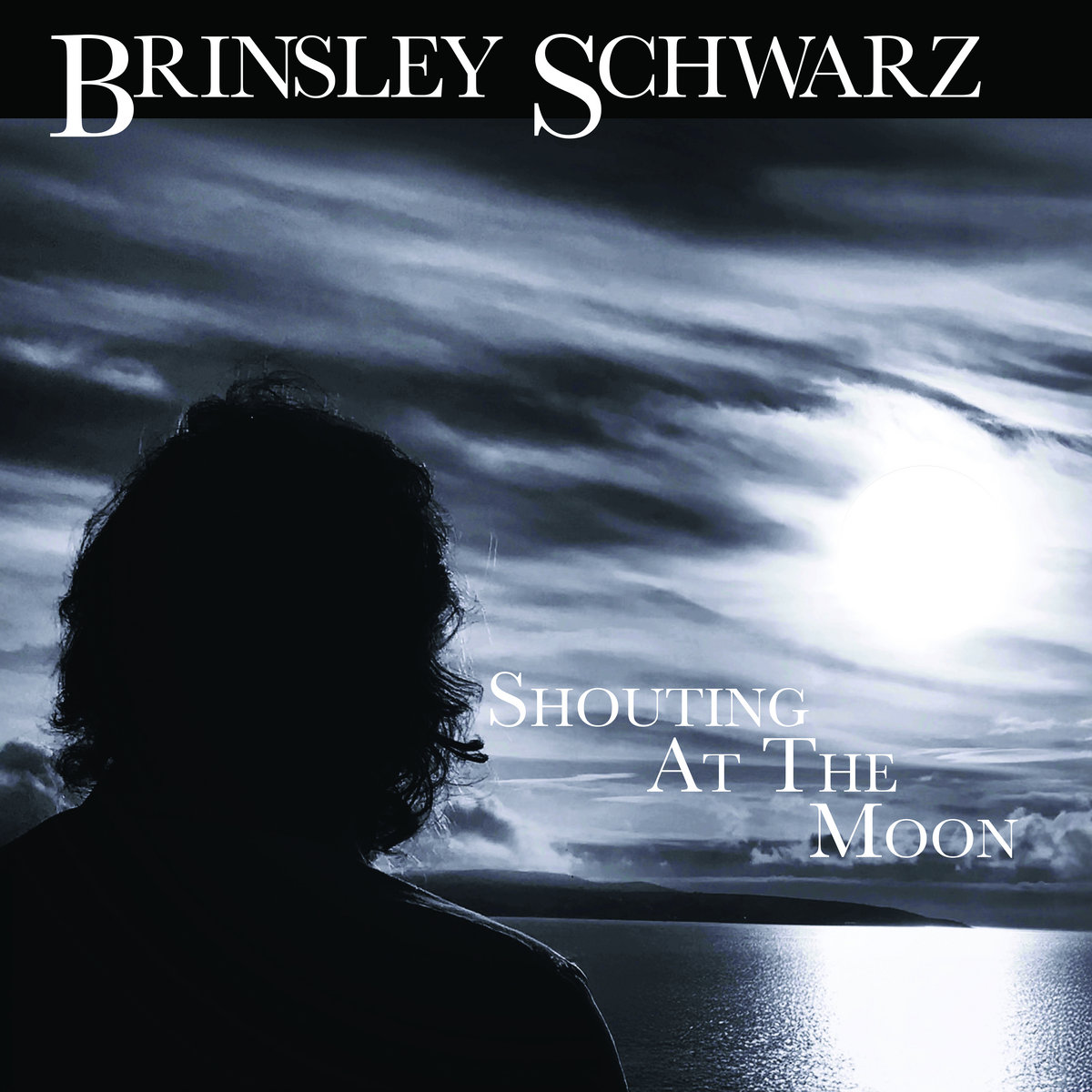
Brinsley Schwarz. Shouting At The Moon. Fretsore Records.

A third solo album from the legendary “pub rocker” who gave his name to perhaps the premier “pub rock” band and who was an integral member of The Rumour who started off as Graham Parker’s backing band finds this veteran in a soulful and bluesy mood. Shouting At The Moon follows in the footsteps of its predecessors, 2016’s Unexpected and 2021’s Tangled when Schwarz returned to recording after a lengthy lay off. It’s rooted in a laid back, almost world weary, nod to classic rock music, the good stuff mind you, the laid back grooves of Van Morrison, Peter Green’s brief return to recording, snatches of J.J. Cale and a brief nod to the sly funk of Steely Dan.

The combination of Hammond organ and Rhodes piano (played by album producer James Hallawell) and Schwarz’ fluid guitar are the bedrock of the album, heard to best effect on The Chance, a gloriously infectious slice of funk although it’s almost eclipsed by the Little Feat like syncopation on Hard To Change (About Things Not Likely To Ever Happen), a political fable which imagines foes finding common ground.

The album opens with a song which captures the sunnier side of Van Morrison on Every Day, a fine strum along song with some inspired sax solos from Simon Taylor while the following What In The World is the song which has inspired the Steely Dan comparison we noted above, However, we’d add that there’s a fine hint of Mose Allison and also Ben Sidran in its groove. Falling Over Backwards warms the soul with its hint of sophisticated blues, think of B.B. King with The Crusaders and you are halfway there.

As on Tangled, Schwarz covers a song by his long time companion Graham Parker. Watch The Moon Come Down. Warmer than the original, Parker’s original sense of isolation is now somewhat elegiac and graced with a fine dose of nostalgia. The album closes with It’s Been A Long Year, a yearning guitar and organ inflected elegy which addresses the issue of climate change in a heartfelt manner.

Website

Glen Peters. Where Do You Come From?

This is an intriguing album. On the face of it it’s a collection of expertly played songs which hark back to singer/songwriter folksiness of the seventies in their manner and delivery. Indeed, there are occasions when the ghost of Jake Thackray seems to be hidden within the grooves although much of the album tackles fairly heavyweight themes including identity, race, immigration and empire.

Glen Peters is an Anglo Indian who was born in Calcutta. His family moved to England in 1967 just as Enoch Powell was igniting racial hatred with his infamous rivers of blood speech. The 17 year old Peters was fortunate enough to make friends with a pal who told him “Don’t worry, we’re not all like Enoch” and introduced him to the then cosy world of folk clubs, a world Peters has inhabited since then, initially as a performer and then running various clubs himself while also establishing a successful career as an advocate for and pioneer in eco friendly green energy.

A latecomer to recording (Where Do You Come From? Is only his second album) Peters proves himself a more than able writer while his voice is calm and laid back, none more so than on the rolling Caribbean lilt which suffuses the opening song My Face Don’t Fit.  Sounding somewhat like Jeb Loy Nichols, Peters here pays tribute to a man called Paul Stephenson, a Trinidadian born native of Bristol who organised a Rosa Parks like boycott of Bristol’s buses back in the early 60s as the bus company refused to employ black or Asian staff. He won that war and his boycott helped pave the way to the 1965 Race Relations Act, the UK’s first attempt to address racial discrimination.

It’s an arresting opener, made all the better for the quality of the musicians Peters has employed. The album was recorded in Glasgow with Boo Hewerdine producing and the cast of players is a roll call of top notch Scottish musicians including Kris Drever, Euan Burton and Yvonne Lyon while Sweden’s Gustaf Ljunggren plays several instruments throughout. Hewerdine himself plays guitar and piano throughout and even disinters Ivor Cutler’s harmonium on a couple of occasions.

It’s Cutler’s wheezy harmonium which introduces Patel’s Corner Shop, a celebration of the ubiquitous local corner shop, many of them set up by Asians fleeing Idi Amin’s Uganda in the early 70s. From then the album seesaws between songs with a historical bent and several which are more personal. Of the former, Khan Of the Wire is based on the true story of Noor Inayat Khan, a Muslim woman who joined the Special Operations Executive and was killed by the Nazis in occupied Europe. Based around Peters’ visit to her memorial statue in Bloomsbury Square it’s affectionate and moving and a reminder that it wasn’t only white males who fought the fascists. Sepoy’s Lament meanwhile imagines the conflict experienced by an Indian soldier commanded to participate in the murderous Amritsar massacre. It’s the most “folk like” song here, sung to a martial beat and quite rousing.

On the personal front Peters introduces a note of jollity on the music hall like Oh To Be An Aries, a nod to the astrological influences to be found in India (much more profound than here) but he is more serious on his reflection of what home means on Home Is, a plaintive piano led ballad with a gorgeous string arrangement. When You’re 16 is perhaps the most autobiographical song on the album as Peters, singing along to a 50s like rock’n’roll pop backing, recalls the uncertainty and excitement which coexisted within him when he migrated to London. That melting pot of east and west, the collision of cultures and the eventual realisation that, to use a Scots term, “We’re all Jock Tampson’s bairns” is summed up in the closing song Where Do You Come From? Jettisoning his backing players, Peters begins the song by singing “57 flavours in my family tree,” perhaps making the point that we are all just human “beans.” Anyhow, here he takes to task the essential absurdity of the question posed. After all, who of us really knows where we truly come from?

Packaged in a sumptuous manner with notes to all the songs in a 64 page booklet, Where Do You Come From?  is not only very entertaining but thoughtful and provocative and well worth a listen.

Website

Geckøs, Geckøs

An inspired grouping of three like minded characters, Geckøs features the line up of Howe Gelb (Giant Sand), M Ward and McKowski (Mark McCausland of The Lost Brothers). Gelb has collaborated with Ward and McKowski over the years but it was an invitation to a mutual friend’s wedding in Tucson that led to the trio’s formation. Invited to compose and perform a wedding waltz, Gelb and McKowski felt their effort was just too low key so Ward stepped in and added, as Gelb says, “That guy, he’s got celebration up the ying yang. He added all this wonderful melody and spark to it.”

Galvanised, the trio recorded several more songs in Tucson with Gabriel Sullivan producing before going their separate ways but the project continued with ideas pinging back and forth before recording sessions in Ireland, London and Bristol with producer John Parrish eventually tying all of these into this singular album. According to McKowski “I recorded the bulk of the backing tracks in my home studio in Ireland and then we met up in various places and finished the songs off together. The main formula was Matt and/or Howe would take one of my instrumentals and write to it, adding their vocals and instrumentation. It was all done very quick and fun!”

The album opens with that self same Wedding Waltz which kicked off the project. It’s a gorgeous tune, redolent of the romance of the Tex-Mex border, Ward’s voice perfectly pitched amidst the bustling stringed instruments, saloon piano and Mariachi horns. Indeed, most of the album inhabits a space which is undoubtedly indebted to the sounds of the USA/Mexican borderlands but McKowski, who arranged much of the music, speaks of a semi mythical world which he calls The Boneyard, and which allows many of the songs to sound as if they exist on a spectral plane, a borderland without borders if you wish.  Having said that, Ward, who is of Mexican heritage, sings in what he calls “Spanglish” on several of the songs. There are elements of Leonard Cohen, gypsy music and ambient sounds all in the mix and, quite inspired, all eleven songs run seamlessly into each other with short instrumental bridges connecting them.

While there’s a whiff of Giant Sand on the Gelb helmed songs (Dance Of The Gecko, Black Diamond and Blame It On The Ocean) he certainly doesn’t hog the limelight. Lo Hice is a spindly slice of Mexican romance with Ward’s light voice tender and loving in contrast to his rich gravel on El Techno, a superb song which begs translation. There’s a cinematic quality, Morricone like, on the fabulous fable which is River Song while Botos Negros is like Leonard Cohen traversing the Mexican border. The album closes with Red Spade, a languorous and delicate border lament, reminiscent of Ry Cooder’s music for Paris, Texas, which features lyrics spoken in Japanese by Kiki Ohara (who did the album artwork), adding another layer to the worlds within worlds atmosphere of the album and closing it in a gloriously magnificent manner.

Website

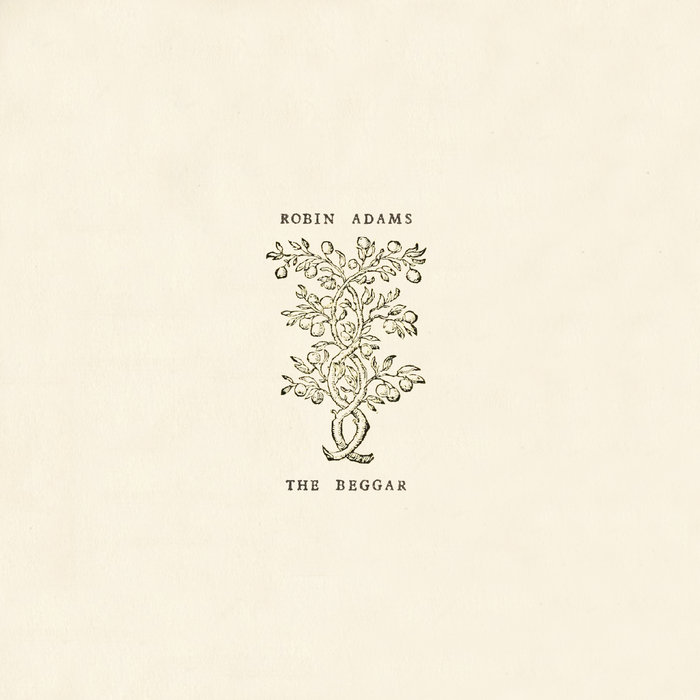
Robin Adams The Beggar Hamework Records

Robin Adams’ latest album The Beggar maintains a habit which has occasionally crept into his previous recordings, that of revisiting older songs, often just demos or curiosities, sometimes available to download but essentially somewhat ephemeral in comparison to his official releases. That’s not to say that these back pages are in any way inferior, it’s more that Adams seem to be forever on a song writing quest and some of his writings can be waylaid or left behind, only to be picked up again and re examined.

Such is the case with The Beggar, a short collection of nine songs which Adams originally recorded solo back in 2018. At that time he was recovering from a lengthy illness which had led to him being housebound for several years. The songs were briefly available then on Bandcamp but several of them found their ways into Adams’ live sets as he began to play in front of audiences again. This led to the decision to record them again, this time with band arrangements with Adams recruiting a strong set of players who envelop the songs in a deliciously delicate folk like sheen.

Somewhat akin to his 2015 album, The Garden, the album is seriously introspective, the song titles alone giving a glimpse of what to expect (Lost, In The Darkness, Bad Seed). At times there’s almost a sense of dread in the lyrics (When the body Starts to fail/ The heart fades/ And the eyes pale In the darkness/ In the darkness/ I will be) and one is just astonished to imagine what depths were plunged when such words were written and so grateful that their writer is able to reclaim them in such fashion as he does here and throughout the album. In The Darkness is dark, of course, but its spare arrangement, delicate piano, a bowed bass and trembling strings, and Adams’ pleading voice all make for an emotional listen as does Lost which, while not as stark, still managers to evoke a shiver.

It’s not all dark as a dungeon however as many of the songs actually take flight, inspired by the arrangements which, on several occasions, remind one of the set of musicians who peopled Joe Boyd’s Witchseason recordings in the early seventies. This was an extremely attractive and highly influential blend of folk and jazz, usually helmed by the late Danny Thompson’s bass playing and many of the songs here adopt that style, chief among them Ride On and Bad Seed, both of them quite terrific as is The Rover, the opening song which references the “black dog” of depression along with the lonely roads the song writer chooses to travel on. The title song is a limpid and spare ballad which conjures images of an ill fated pre Raphaelite heroine trapped in a dream, a sense repeated on the closing Blue Flower Slumber, an achingly gorgeous song.

Website

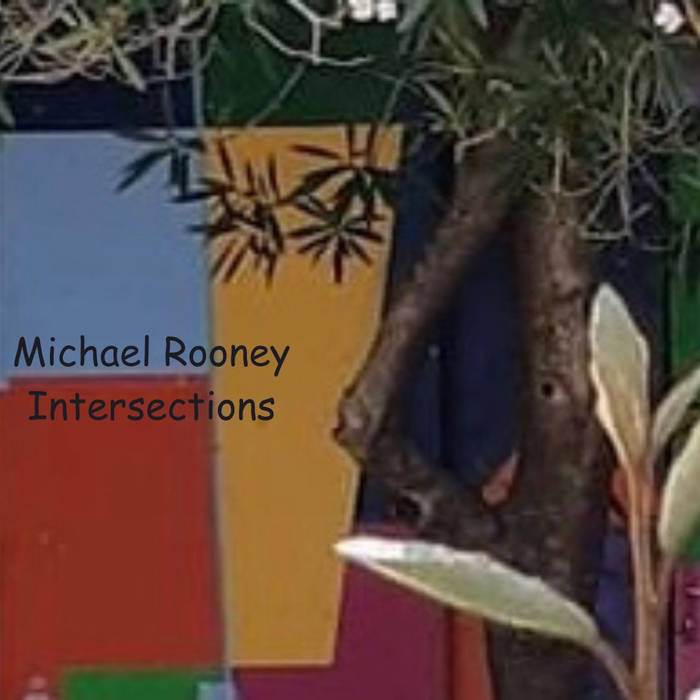
Michael Rooney. Intersections

While The Primevals, Glasgow’s premier garage rock psychedelic free jazz grunge band  have recently had a brush with fame due to a link up with Stuart Lee (““the world’s greatest living stand-up comedian” The Times”, as Lee always gleefully points out) via their song I’m The  Man-Wulf, their front man Michael Rooney has stealthily released a solo album.

Intersections is not a great departure from recent Primevals albums, primarily because Rooney’s dead pan, dead cool vocals are to the front and centre, but across the seven songs here he has the opportunity to spread out a bit while his band mates (assorted Primevals and like minded associates) contort themselves to accommodate the shifts. Thus we have the opening elemental skeletal blues of Rattlin’ Like A Ghost Train, surely a nod to the late Jeffrey Lee Pierce of The Gun Club. It’s a rattling good start to the disc but Rooney’s not constrained to post punk voodoo rock’nroll as exhibited by the closing number, Prisoner Of The Mind which sees his existential lyrics backed by the band vamping an excellent mix of a Doors’ like groove while the sax is halfway up the scaffold ladder alongside Miles Davis with Pharaoh Saunders looking in.

In between these there’s a wealth of juicy nuggets. Let The Past Go surges on a Stooges’ like blitzkrieg of guitars while a drum roll introduces the trance like undulations of Laughter And Fun, a song which just gets more twisted and discombobulated as it creeps on like some deadly slouching beast. Aside from its viper like guitar groove, Outside has a tenor sax pumping out the adrenalin as Rooney roams like a nightmarish night stalker and this sense of being an outsider is continued in the best song here, Leave The People Behind. Here Rooney is declaiming as opposed to singing as the band delve into grooves which characterised late 1960s black protest rock, soul and jazz.

It’s a short album (seven songs, 27 minutes) but Intersections contains multitudes which unfold on repeated listens and, in a just world, it would command some attention.

Website

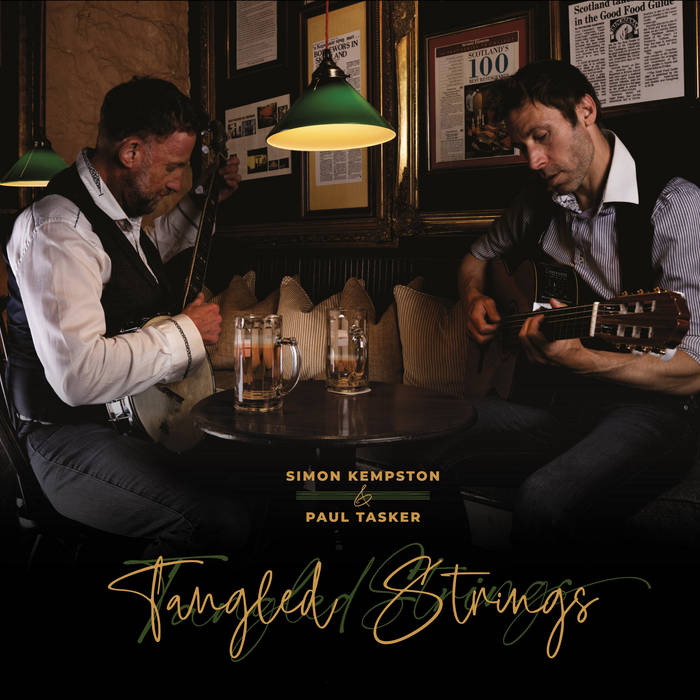
Simon Kempston & Paul Tasker. Tangled Strings

Since 2022 guitarists Simon Kempston and Paul Tasker have appeared annually at the Edinburgh Festival Fringe for their Songs Without Words residency at Edinburgh’s venerable folk venue The Royal Oak, an oasis of calm amidst the hurly burly of the carnival atmosphere on the nearby Royal Mile. One thing that was missing however was a souvenir for the audience to take home with them, a recording of the pair playing together.

Now, after their third stint at The Fringe, Kempston and Tasker actually have got together in Glasgow’s La Chunky studios to record an album of eight instrumentals which they have called Tangled Strings. They are both superlative guitarists with Kempston described as a master of finger style guitar by The Scotsman, as evidenced over a slew of solo albums, while Tasker has won acclaim both solo and as one half of Doghouse Roses, a duo who have been described as the UK’s version of Gillian Welch & David Rawlings.

The album finds the pair in tandem on all the tunes, playing on nylon and steel strung guitars with Tasker adding some banjo on occasion. Excellently recorded, the strings spark and hum and the gliding fretwork is audible, adding to the sheer vibrancy of the recording. The tunes are separately composed but there’s little to differentiate between who wrote what when listening as the pair blend together while the titles are somewhat “enigmatic,” as on The Winter Chimes of Romainmộtier. There are (very) brief liner notes regarding all of the tunes herein but (unless you want to spend a day on Wikipedia) it’s perhaps best just to wallow in the exquisite sounds these two finger wizards have come up with.

They range from explorations into classical guitar as on Kempston’s So Sad, A Sorrow Not Yet Felt and Tasker’s Firefly, to the Appalachian echoes of Tundra Plane and Sula’s Song, and the intricate weavings of The Winter Chimes of Romainmộtier/Onwards We Travel and The Resolution Torn Asunder. Overall the album is spellbinding. It’s a comfort and a joy, an album which can sit quite comfortably alongside the likes of John Fahey, Leo Kottke, Bert Jansch and John Renbourne.

Website

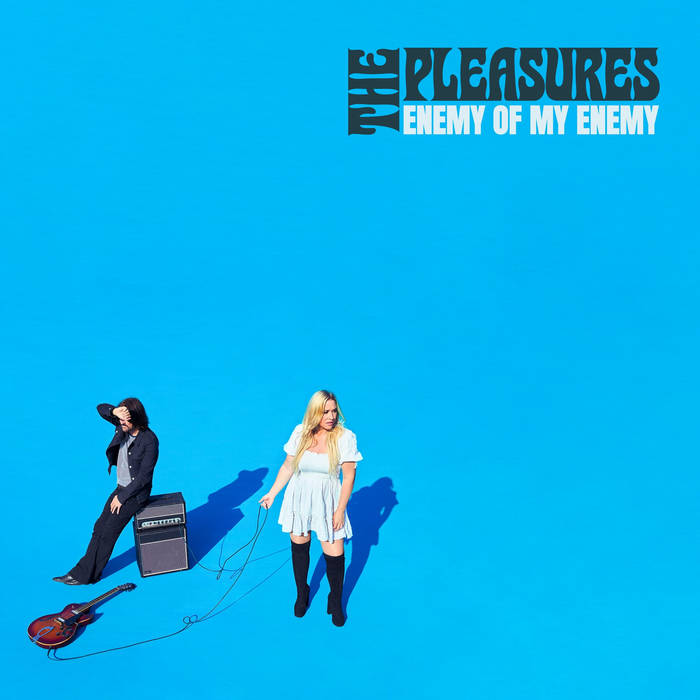
The Pleasures. Enemy Of My Enemy. Űber Savvy Music

Most country themed male/female duo acts are compared to classic forebears such as George and Tammy or Gram and Emmylou. The Pleasures, a duo comprised of Australians Catherine Britt and Lachlan Bryan are a shade darker, more gothic if you will, and not afraid to shake the rafters with some rattling rock’n’roll when it suits them. They are more akin to departed bands such as Blanche and Twilight Hotel, both of whom were gloriously dark and messy.

Enemy Of My Enemy is the pair’s second album and it finds them, at times, in a foul mood. There are swathes of growling guitars and riffs galore on several of the songs here. Most ferocious is the gritty rocking blues wail of This Might Hurt A Little Bit which rolls in like a tsunami with its relentless groove as the pair howl together, “C’mon honey don’t lose your shit, I’m warning you this might hurt a bit.” Maybe George and Tammy spoke to each other like that at home but I can’t imagine them singing that.

There’s more mayhem on the grungy Wild Things which finds the band locked in tight amidst wailing guitars and groovy organ riffs with Britt and Bryan wrestling each other vocally while Love Relapse struts with a sixties like R’n’B guitar riff as the pair’s vocals remind one of the vocal sparring of Exene and John Doe on the early X albums. This vocal sparring, as opposed to lovelorn duetting, is to the fore on the opening title song which finds them in tandem proclaiming “I don’t like you but I need you,” setting the scene for the rest of the album basically. That they sing this over a pile driving slice of funk is the icing on the cake.

Aside from the conjoined wails the pair do slip into more traditional duo singing, swapping verses and calling out each other out.  The first of these is the swampy tale of marital betrayal on Was It Something I Said which is perhaps the outstanding performance here. Step Away is a another fine instance of Bryan’s ability to write a wonderful tear stained country waltz and it’s the most traditional sounding song here, but there’s also the banjo stained lament of Where The Money Goes while the very fine duet of It’s OK (I Knew What You Meant) does find the pair deserving of a comparison to Parsons and Harris, a comparison reinforced when The Rules, a reined in song, weighs into sight. They close the album with another minor gem on We’re All A Little Blue which has a slight Muscle Shoals southern country vibe to it as Britt and Bryan entwine their voices quite wonderfully.

Website

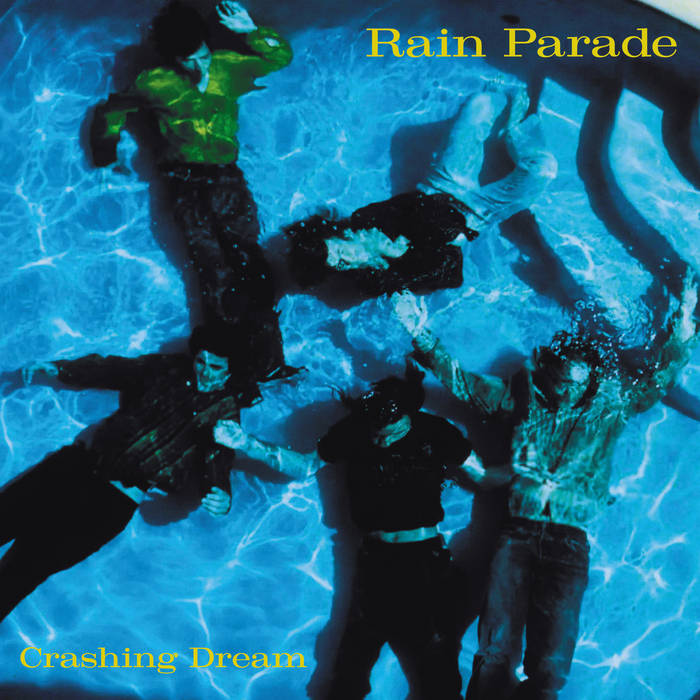
Rain Parade. Crashing Dream – Deluxe Edition. Label 51

We’re a bit late to the party with this disc which was officially released at the end of May. In our defence it was only a few weeks ago that the mail man delivered it; post from the States these days is a bit of a hit and miss affair. Anyhow, there was huge excitement at Blabber’n’Smoke as we tore open the package and delved into this remastered, deluxe edition of Rain Parade’s second album. It follows on the heels of the excellent reissue of their seminal debut album, Emergency Third Rail Power Trip, perhaps the pinnacle of the Paisley Underground sound.

Back then hopes were high for the follow-up but an unholy combination of bad luck, corporate music bigwigs, fickle press and line up changes led to Crashing Dream being considered a pale shadow of its predecessor. It did have its champions however and by and large they are vindicated when one listens to this remastered and extended edition.

The band were lauded on the release of their debut album, followed by a live disc and a mini album, all released on the independent Enigma Records, and so Island Records waved their cheque book at the band but with some stipulations. Jim Hill, their regular producer was sidelined, Island preferring their in house man, a situation  of which Matt Piucci said, in an interview with Americana UK , “Although our producer was a nice guy he didn’t really get us.” This situation has been oft posited as the main reason that the album failed but we reckon it’s much more nuanced than that. The remix offered here is little different from the original with the primary changes consisting of adding two live songs to the original album set list and substituting a different version of one song, Sad Eyes Kill, taken from an earlier session, produced by Jim Hill and originally released on a flexi disc by the great magazine Bucketful Of Brains (and generally preferred by the band).

Taken as a whole, Crashing Dream is only a smidgeon away from Emergency Third Rail Power Trip. There’s trippy psychedelia on the title song which, strangely enough, was not included on the original album but is inserted here midway through, a live recording. Then there’s the Hendrix like introduction to Shoot Down The Railroad Man while Don’t Feel Bad contains the full smorgasbord of the tidal wave of psychedelic rock which peaked around 1968 with its hint of exotic Eastern guitar tunings which rival The Byrds’ freakier moments. Listening to the starry eyed Fertile Crescent is a fine reminder that Rain Parade were hailed as heroes by a host of later bands including many of the Scottish jangle pop brigade along with the likes of The Stone Roses.

Crashing Dream wasn’t a success and the band were set adrift by Island Records, eventually splitting up although various members of the band continued to record together. The aftermath is well collected on the second disc of this Deluxe reissue. It features some live cuts (Rain Parade covering Television and Cream), some demos of songs which featured on Crashing Dream and, more excitingly, a brace of songs recorded for what would have been their third album. Of these The Sniper is a pulverising acid trip of a song which weighs into the heavier side of psychedelic rock and Novocaine is an edgy and kaleidoscopic freak out while Tranquillity Base slouches toward Bethlehem with an unnerving sense of dread woven within its hypnotic delivery.

We had to wait 38 years for the third Rain Parade album to come out but this collection offers a rare and rewarding glimpse into what a third album might have sounded like back in the days. Altogether, and it goes without saying really, this finely packaged reissue of Crashing Dream is highly recommended.

Website

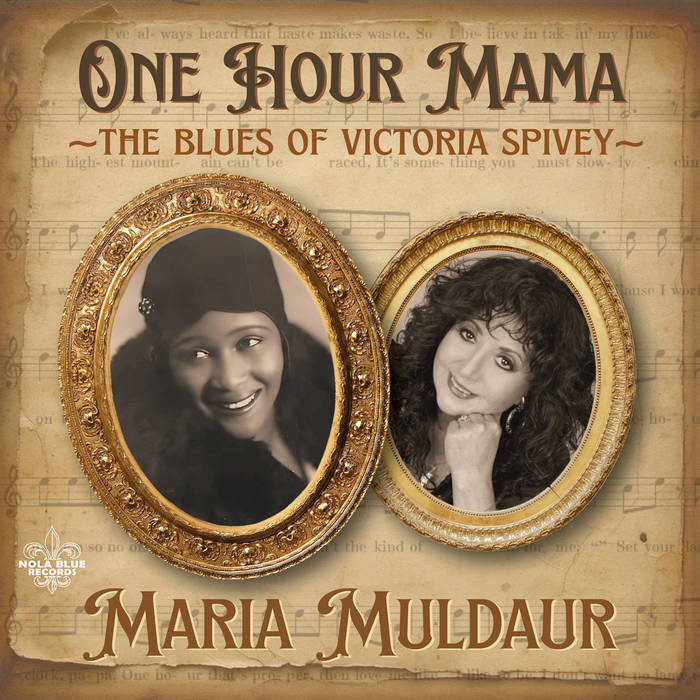
Maria Muldaur. One Hour Mama: The Blues of Victoria Spivey. Nola Blue Records.

Blabber’n’Smoke last encountered Maria Muldaur when she released the excellent Let’s Get Happy Together, recorded with the New Orleans band Skinny Tuba, an exuberant celebration of New Orleans styled old time music, syncopated and swinging. It was the latest in a lengthy catalogue of albums which have showed that Muldaur, a genuine one hit wonder with her 1972 song Midnight At The Oasis, contains multitudes well away from that radio staple.

Muldaur was in there at the birth of the Greenwich Village folk boom, singing jug band blues with the Jim Kweskin Jug Band before marrying that band’s Geoff Muldaur and releasing two albums with him. Her 70s’ albums featured the cream of L.A. musicians with the first, self titled album, containing that hit single. It also featured the risqué blues of Don’t You Feel My Leg (Don’t You Get Me High), a song by Blue Lu Barker, a pre war blues singer and this is an avenue Muldaur has pursued in her most recent releases including tributes to Memphis Minnie and to that self same Blue Lu Barker. The title of the latter album, Don’t You Feel My Leg: The Naughty Bawdy Blues of Blue Lu Barker, is a pointer to this latest album, a celebration of another vintage blues singer, Victoria Spivey.

Spivey, unlike many of her contemporaries, was a survivor. She first recorded in the 1920s’ and in the 60’s she was managing her own record label with a 1962 album of hers featuring a then unknown Bob Dylan on harmonica (Dylan included a photograph of him and Spivey at the sessions on his New Morning album). Like Dylan, Muldaur was drawn into Spivey’s orbit, nurtured and tutored by the grand dame as her early career took off, she describes Spivey as a mentor and on One Hour Mama she repays her debt in spades with much of the backing provided by the aforementioned Skinny Tuba.

The songs here are risqué and ripe, redolent of the earthy and racy entendres which so scared the authorities of the time, way before rock’n’ roll became the Devil’s music. Muldaur slips so easily into the role, her voice, now much matured, seductive and slippery while her band gloriously revive old times. She kicks off with the wonderfully louche My  Handy Man, a song so fuelled by double entendres that would make Benny Hill blush, a sense that is continued in the woozy New Orleans blues of Organ Grinder (“when you grind it slow I like it the best… you’re the grinder I’ve been waiting for”).  The album features two songs with guest vocals from Elvin Bishop and Taj Mahal, both of whom duet with Muldaur in fine fashion, Bishop, sounding wonderfully weathered on What Makes You Act Like That while Mahal is quite gloriously hammy on the minstrelsy vaudeville of Gotta Have What It Takes.

However, it’s Muldaur who commands attention from start to finish as she revives songs as varied as the rolling piano night club styled Dreaming Of You or the Billie Holiday like lament of Don’t Love No Married Man, a song given a fine sepia toned rendition here. She closes the album with another blinder on T-B Blues, a blues moan which is redolent of past times and, as with all of the songs here, finds her surrounded by a sympathetic arrangement and magisterial playing.

Muldaur has been nominated for a Grammy on six occasions. One Hour Mama really should be the album which gets her that award.

Website