Buffalo Blood, Buffalo Blood, Eel Pie Records

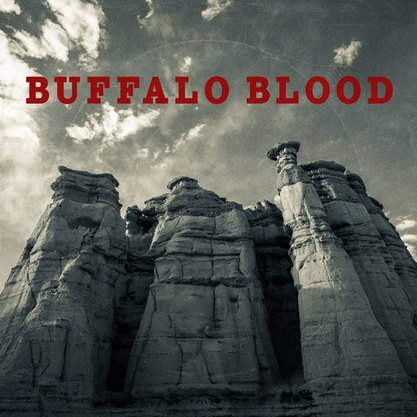
album-cover-pic-smallBuffalo Blood is the collaborative work of three American musicians and a Scot who set out to capture some of the legend and history of Native Americans, victims of a genocide which rivals that of the Nazi’s against the Jews. The collective – Dean Owens, Neilson Hubbard, Joshua Britt and Audrey Spillman – were drawn to the project after Owens, a man from Leith, raised on cowboy movies but lured to the plight of the Native Americans after visiting their sacred lands, mentioned a batch of songs he had written as a result of his fascination, to Hubbard. Hubbard, a Grammy nominated producer and, along with Britt and Spillman, a member of The Orphan Brigade, a band who seek out unusual recording opportunities, got on board and the newly formed quartet decided to collaborate in the writing and recording of what became Buffalo Blood. A project long in the making, it eventually saw all four decamp to New Mexico, along with sound engineer and photographer, Jim DeMain, to record the album in several iconic locations. Aside from the recording, they captured the outdoor performances on film as they followed what is known as the trail of tears, the historical forced marches of Native Americans from their ancestral lands to reservations. The resulting album is heavy on atmosphere with ambient sounds trickling into the songs, many of which reflect the arid conditions of the New Mexico desert.

There’s no narrative as such although some numbers mention the likes of Custer and Crazy Horse (Land of Broken Promises) while others portray the repressive regime which tried to wipe out their culture as on Carry The Feather, inspired by the habit of forbidding Native Indian children to speak their own language at schools which taught a white curriculum. There are a couple of mood pieces. The excellent Ten Killer Ferry Lake (named after a reservoir on Cherokee land) opens the album and sets the scene perfectly combining a ghost dance like lament and mournful whistling. The whistling (by Owens) returns on Ghosts Of Wild Horses, a tune redolent of spaghetti western soundtracks, a sly nod perhaps to what, for most of us, was our first exposure to the American west via the movies. Whatever, it’s another strongly suggestive piece of music casting up images of sun blasted parched lands, bleached bones and the unique strangeness of the frontier. Similarly, Buffalo Thunder, a wordless chant with ambient wind sounds throughout, transports the listener to late night campfires among the tepees.
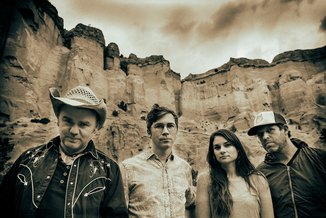
dean-josh-audrey-neilson-photo-by-jim-demain

There’s an inherent sense of drama throughout the album. War Among The Nations is portentous, warning of calamity ahead and Reservations bristles with indignity singing of the white men’s lies. Comanche Moon captures the fury of the tribes as they fight back against the white man who considers them “all just savages,” while Buffalo Blood is a powerful number which rings out with a fierce sense of pride amplified by the native chant which surrounds Owen’s strident vocal delivery. There’s a resigned air to Daughter Of The Sun, White River and Bones, songs which reflect the sense of loss and identity suffered by the Native Americans while Land Of Broken Promises just about sums up the series of injustices dealt to them as treaties were torn up and they were moved further westward.

Throughout the album the quartet perform excellently. The primary sound is of acoustic guitars and mandolin with percussion and keyboards filling out some of the numbers. The harmonies are wonderful as the band inhabit the spirituality of well-worn chants brilliantly. Owens says that as they recorded in the desert, under clear skies and amidst stunning red rock formations, they felt the presence of the spirits which permeate the locations. They capture this perfectly on Bones, an excellent song with a mournful organ base which is suffused with suffering and a simmering anger. Overall, Buffalo Blood is a bold venture which sets out to portray a particular injustice but it burns with a contemporary relevance as one realises that the plight of the Native Americans is not far removed from the forced migrations and exploitation of indigenous people which continues to this day. From the pipeline protests at Standing Rock to refugees fleeing brutality in Africa and South America, the story continues.

Buffalo Blood is released on February 15th as a download and, in the UK, a double vinyl album. £1 from the sale of each vinyl album will be donated to the Redhawk Native American Arts Council , an organisation which is dedicated to educating the general public about Native American heritage through song, dance, theater, works of art and other cultural forms of expression.

Celtic Connections will present the live world premiere of Buffalo Blood in performance tonight at The Mitchell Theatre. Details are here while the project’s website is here. For more information on the project check out this interview.
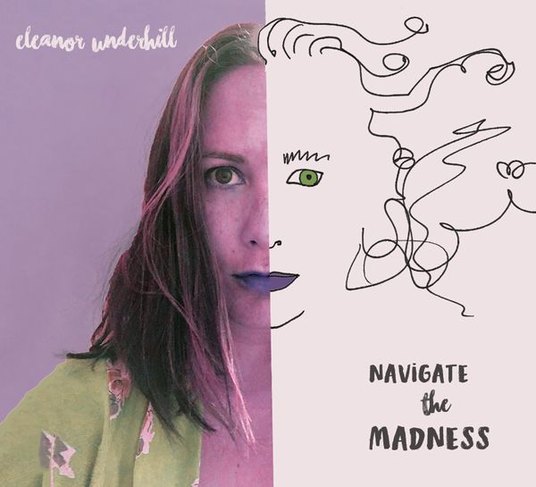


Eleanor Underhill. Navigate the Madness

soloalbum-wtitleSome folk here might be familiar with the rootsy charms of Underhill Rose, a fine banjo and guitar duo who we have written about before and who we saw play an excellent set at last year’s Celtic Connections. Late last year Eleanor Underhill released a fine solo disc which really has slipped below the radar but it certainly deserves mention so here we go.
Navigate The Madness is a world away from the folky homeliness of Underhill Rose as Underhill uses an array of instruments along with her signature banjo over an inventive and intriguing musical backdrop. Along the way she is beguiling and hypnotic, some of the songs dark mysteries while others are infused with an almost Portishead like trippiness or come across like a new breed of folk rock similar to that of The Mammals. There’s a sense of the experimentation of Joanna Serrat and even John Martyn in the opening Imperfect World which acts as a doorway into this Eleanor in Wonderland album and by the time of the second song, Stranger Things Have Come,  a voodoo infused chant with a rumbling and spooky bass line, we know we’re not in North Carolina anymore. A discordant piano appears midway through taking the listener further down this rabbit hole while a host of incidental instruments including celeste remind one of sixties spy movies and David Lynch like weirdness. Across this peculiar and ominous backdrop Underhill intones some bizarre and weirdly unsettling scenarios and this sense of being somewhat off kilter in the modern world is repeated elsewhere in the lyrics across the album.

Stranger Things Have Come is certainly the most unsettling song here but Underhill continues to confound expectations as the banjo led Hard To Find is suffused with wisps of synthesiser zooming around. Captured In Arms, another banjo led number starts off as if it’s Appalachian in origin but it soon kicks off with a thumping bass line driving it along and the impressive tale of life on the road on Before I Head West Again soars away in a sophisticated folk rock manner with Underhill’s voice here particularly impressive. Never Meant To Say Goodbye is another impressive ensemble piece with the double bass standing out while Underhill’s voice performs some acrobatic leaps but best of all is the cinematic torch song Cold Wind Blues where a blowsy saxophone and exotic Latin tinged rhythm section merge into a kaleidoscopic swirl which recalls the work of the Italian band Sacro Cuori delving into the sixties heritage of Eurobeat. Finally, Into The Unknown is another song which defies expectations as it folds old time banjo, field hollers and jazz and blues signatures into an almost lysergic amalgam.

It might be a far cry from the porch front style of Underhill Rose but here Eleanor Underhill has delivered a magnificently eclectic album which pushes the boundaries of what we usually call Americana

Website


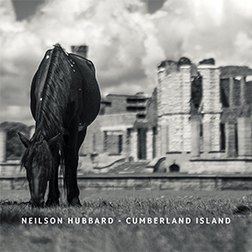
Neilson Hubbard. Cumberland Island. Proper Records

We continue the sweep up of albums from last year we unfortunately missed at the time…

prpcd152-300px

Neilson Hubbard is perhaps best known as an in demand producer with Mary Gauthier’s Rifles And Rosary Beads his most recent triumph. He’s also been involved over the past couple of years in what has been a burgeoning cottage industry, working with Ben Glover and Joshua Britt in The Orphan Brigade and with Britt and Dean Owens in a new venture called Buffalo Blood. Cumberland Island, his first solo album in 12 years, has Glover and Britt again involved along with Will Kimbrough but it’s a rare opportunity to hear Hubbard himself over the course of an album.

As with The Orphan Brigade albums, Hubbard has a hook to hang the album on, in this case, a visit to the titular Cumberland Island, an island off the coast of Georgia. Redolent with American history – native Americans, conquistadors and slavery – and with the ruins of a mock Scottish baronial castle (built by the brother of Andrew Carnegie and called Dungeness), the island is now a national park and the visit by Hubbard with his new (and pregnant wife) inspired this collection of low key and beautifully measured songs.

For the most part it’s a contemplative album with only the brisk rockabilly attack of That Was Then raising the pulse while there’s a grand old time country feel to Old Black River with Eamon McLaughlin’s fiddle sawing away over a tugboat rhythm. Elsewhere some of the songs almost stumble from the speakers. How Much Longer Can We Bend, graced with weeping fiddle and restrained piano, shimmers with a spectral beauty while the title song is a haunting evocation of the natural beauty of the island with its feral horses invoked as free spirits. Love, in its various permutations, features in several numbers as on Save You which slowly builds to a climax from its tentative tiptoeing opening as Hubbard’s finely cracked voice offers salvation to his soul mate. My Heart Belongs To You is a tender love ballad reminiscent of a sweeter Tom Waits while Don’t Make Me Walk Through This World On my Own is a magnificently mournful supplicant’s prayer. The spare, piano led songs, Let It Bleed and Oh My Love, stand out in the sense that Hubbard here is baring his soul. The former aches with loss while the latter finds him seeking and perhaps finding hope. Two sides of the coin perhaps but both songs are delivered with a wonderful sense of vulnerability and the musicians excel in capturing this.

Website


M.G. Boulter & The Froe. Blood Moon. Hudson Records

Clearing the way for a new year, some discs were retrieved from a dusty shelf which we really should have mentioned before. So, the next few posts won’t be topical but might remind folk of some albums which were and still are, well worth getting.

packshot-dp_180725_212625

First off is this excellent EP from the esteemed chronicler of the Thames estuary, M. G. Boulter, recorded with Birmingham string quartet The Froe in tow. Recorded in the historic Fishermen’s Chapel in Leigh-on-Sea, the disc finds Boulter’s delicate tenor vocals tenderly supported by darting violin and the woodier timbres of viola and cello. As on his well-acclaimed album, With Wolves The Lamb Will Lie, Boulter beguiles the listener with the beauty of the arrangements while he writes with some finesse on darker themes than one would expect from the bucolic settings.

Blood Moon swoons with a stained romanticism which bundles together Blake’s Albion, late night Texaco garages and the lure of the moon. It’s a wonderfully baroque song in a sixties folk manner which leaves the listener wondering if the protagonist is prowling the streets with murder on his mind. Frances Forlorn is darker in tone musically with the title character ploughing a similar furrow to that of Eleanor Rigby while Giving Up The Ghost is a most crepuscular song, the pizzicato strings creating a dusky insect chorus. The strings tiptoe delicately throughout Night Driving, a wonderful paean to driving on starlit ribbons of motorways in the pitch black with Boulter’s lyrics as evocative as some of W.G. Sebold’s ruminations. The EP closes with Boulter’s guitar and lap steel more upfront on Soft Light but again he evokes the allure of darkness with only distant circus sounds and moon reflected waves able to guide him. It’s a wonderfully fragile song which almost defies gravity.

website


John Kilzer. Scars. Archer Records

61BLOyK6jJL._SY355_Blowing in from Memphis, John Kilzer has a ton of baggage tailing him. An academic and a Minister of Divinity, he’s known hard times with substance abuse but has also had some success with several of his songs covered by various luminaries. Scars finds him in pensive mood, reflecting on his past and ruminating on the current state of affairs in his homeland, in a manner which reminds one at times of a combination of John Hiatt and Paul McCartney.
The album opens with the well mannered sixties pop sensibilities of Flat Bed Truck, a song which sounds as if McCartney was reminiscing about a Texas truck stop as opposed to Penny Lane all those years ago, a trick repeated on Woods Of Love. However, there’s some meatier stuff to be heard here as Dark Highway boogies along with some fine piano playing and The American Blues slopes in slyly as Kilzer gets a bit snarly when describing the state of his nation with a fine note of paranoia thrown in. On a more introspective note, the title song is a tender number laced with acoustic guitar and subtle keyboards as Kilzer accepts and acknowledges his past while the trenchant Time, with stark piano and biting guitar, seems to point out that he’s there to guide others stuck in a dark past.

Kilzer closes the album with a lopsided love song, Rope The Moon. Here he remakes/remodels George Bailey’s declaration of love in It’s A Wonderful Life adding a degree of modern angst and an excellent arrangement as the song builds to its climax. Overall, an interesting album which grows on repeated listening.

Website

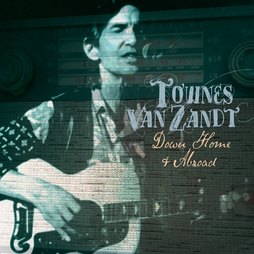
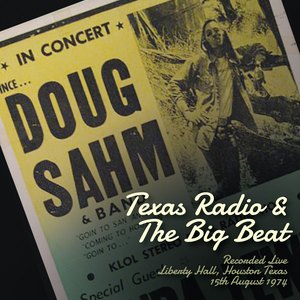
Townes Van Zandt Down Home & Abroad/Doug Sahm Texas Radio & The Big Beat. Floating World Records

These two albums of vintage recordings from late Americana legends, both double disc CD sets with impressive liner notes, certainly serve a purpose as more and more live gigs and radio sessions from the past make it into the public domain. The question is, “Do they deserve to appear and is it worth forking out for them?” Well, in the case of Townes Van Zandt here, the answer is definitely yes. As for the Sahm set, it’s a bit more woolly.

Townes_hi-res_2000x

Down Home & Abroad consists of two live shows recorded in 1985 (at The Down Home in Johnson City, Tennessee) and 1993 (in Helsinki). In both shows Townes is in fine fettle, relaxed and chatty as he rambles through his stellar catalogue of songs, most of the classics are here with only four duplications across the discs. On the Tennessee set he is accompanied by guitarist Mickey White and flautist/saxophonist Donny Silverman, the latter’s contributions reminding one of the early Van Zandt studio albums. His talking blues on Talking Thunderbird Blues and Fraternity Blues both raise some hoots from the audience and some of his introductions raise a chuckle but when he delves into a song such as Rake, you know this is a guy who has faced darkness in his soul. The accompanying players give Snake Mountain Blues an additional heft and there’s a neat combination of Colorado Girl and Just Like Tom Thumb’s Blues which is just outstanding. By 1993 Townes is much more weathered, his voice more stained but still capable of dredging up deep emotions. Here he’s solo and his guitar is just a bit more ragged but again he has those great songs to back him up. He sounds tentative at first on this first visit to Finland but as the show progresses he relaxes, his chats loosen up and by the end of the show (which, going by his repeated assurances to the crowd that the main act will be on soon, goes on longer than planned) he’s flying, playing audience requests and goofing around as when he kicks off Brother Flower saying, “If I start humming it’s because I’ve forgotten the words.” A raw rendition of Flying Shoes and a halting Don’t you Take It Too Bad (and here you can compare the performance to that of eight years earlier) close the show. With both shows well recorded (aside from some minor tape hiss on the Helsinki show) this release is bound to attract devotees of Townes Van Zandt and for more fair weather listeners is not too shabby a way to hear what all the fuss is about when it comes to the peculiar genius of Townes Van Zandt.

Doug_hi-res_2000x

Texas Radio & The Big Beat (aside from the title the discs have no relationship with The Doors) consists of two shows recorded for radio transmission in 1973 and 1974, in Philadelphia and then in Houston. Recorded in the wake of Sahm’s Atlantic album, Doug Sahm and Band, which had the likes of Dylan and Dr. John sitting in, the shows don’t reflect that disc with only two songs, Papa Ain’t Salty and (Is Anybody Going To) San Antone represented. Instead, Sahm and the bands behind him offer some of his older hits such as She’s About A Mover and At The Crossroads along with numerous covers of blues and country standards. It has to be said that both recordings are thin, the band muffled for the most part with instrumental solos either too loud or lost in the mix. Sahm himself is fiery and passionate, having fun but with his vocal track way up high on most of the songs. The Philadelphia recording wins out in terms of its variety and Sahm’s between song chat but on both shows the majority of the songs are blues shuffles with little of the variety that was on show on that Atlantic Records studio album. That said the versions of (Is Anyone Going To) San Antone and Wolverton Mountain, both from the Philly gig, are pretty cool but it’s difficult to recommend this to anyone but die hard collectors.

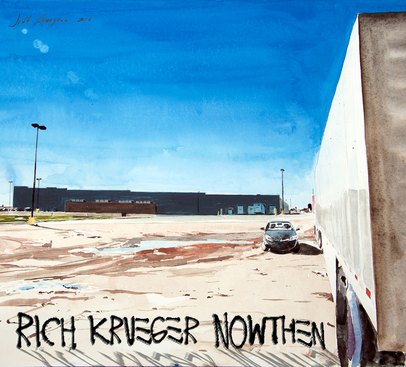
Rich Krueger. NOWThen. RockinK Music

Final_NOWTHEN_Final_cover_hi_resIt’s just over a year ago that Blabber’n’Smoke stumbled across Rich Krueger, a man who has become our second favourite singing doctor (Hank Wangford is still No. 1, sorry, Rich). Krueger is a working medicine man in Chicago but he’s had a contemporaneous career as a musician with his band The Dysfunctionells (with the album title relating to this weird yin/yan) and in the past 18 months he’s launched himself solo with a vengeance, even attracting the attention of the self styled “Dean of critics, Robert Christgau. NOWThen is his second album in less than a year following on from the splendid Life Ain’t That Long and, as with its predecessor, NOWThen is a wonderfully meandering set of grand songs.
Krueger is an astute observer of human behaviour and he writes about it much in the way of wayward souls such as Randy Newman and Terry Allen. And although he fits somehow into the American folk scene being a winner at the 2018 Kerrville Folk Festival, the album veers through rootsy numbers spiced with Dobro and swirling organ, piano based jaunts, Asian exotica and Mariachi stylings. At heart however is his razor sharp observation which he translates into wordy yet incredibly enjoyable songs. The best example might be the coming of age tale Don where Krueger weaves a fantastic(al) tale of a teenage buddy who was a “contrarian,” an admirer of Nietzsche and Hitler although most of his classmates were Jews. The song flows along with a fine fiddle fuelled country swirl as Krueger’s words spill out – almost a screenplay in miniature – as he just about diagnoses Don as a sociopath before breaking down what one should imagine as an aural equivalent of theatre’s fourth wall as he asks, “Did I entertain you?” as the song ends.

Krueger can delve into history, singing about the Wright Brothers or Huey P. Long, the songs part story, part surreal. Then there’s his own experiences as on the opening song, Kenny’s (It’s Always Christmas In this Bar), dedicated to his local watering hole and delivered in a manner which, should Billy Joel ever hear it, have him weeping, as Krueger plays a doo wop flavoured piano led pop song which knocks Mr. Joel for six. The Cajun flavoured O What a Beautiful Beautiful Day is a warts and all depiction of the trial and tribulations of giving birth with Krueger noting that, on a chance encounter with Tom Waits, Waits’ advised him to, “Write about what you know,” and Krueger, being a neo natal doc, knows all about the bloody mess which surrounds a delivery. Elsewhere, Wittgenstein, Pope and Robert Browning are springboards for songs but pride of place here might go to Girls Go For Arse’oles, an apology of sort for most males’ behaviours towards the opposite sex with the title borrowed from Robert Crumb.

With a cast of players which include Robbie Fulks, Gary Lucas, John Fulbright and Peter Stampfel, the album is expansive and eclectic (there’s even a mock advert with the Colbert Report’s Erik Frandsen voicing Krueger). When Blabber’n’Smoke first noticed Krueger we said he was a maverick and NOWThen kind of confirms that but it’s important to say here that he’s an incredibly talented maverick.

website

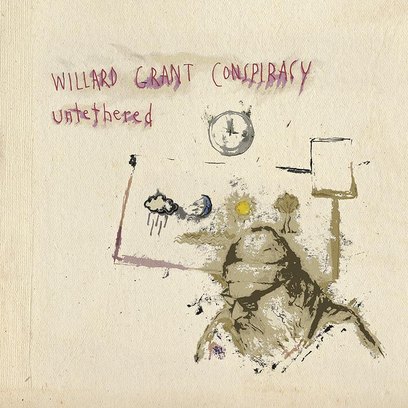
Willard Grant Conspiracy. Untethered. Loose Music

wgc_untethered_loresIt’s impossible to listen to Untethered without a heavy heart, the album being the last recordings made by Willard Grant Conspiracy’s mainstay, Robert Fisher, before his death from cancer in 2017. Throughout their 25 plus years of recording Fisher and his ever-changing Willard Grant line-ups were always somewhat portentous, his sombre voice offering a spectral foreboding to many of his songs. Although the songs here were recorded after his diagnosis there’s only one written in the wake of it. Nevertheless, it’s difficult not to see the album as Fisher’s farewell to the world. The songs have been “dusted down and brought to life with the care and attention of his longtime compadre David Michael Curry” and Curry has certainly done a magnificent job as there’s no sense of this not being a finished product which would have accompanied the band on their next tour.
Most of the album is stark in its acoustic beauty, the one song which kicks against the prevailing mood being the opener, Hideous Beast, which snarls with bared teeth in a manner not unlike a feral Nick Cave. The remainder is a creaky voyage with viola and cello, a musical saw and occasional guttural guitars driving the songs over laid back rhythms. None more so than on Do No Harm (with Steve Wynn on guitar) as Fisher seems to gather euphemisms for passing on and refers to the titular medical oath as the song progresses as if Charon was piloting the band across the Styx. There’s a tremulous tenebrosity in the saw and sawed instruments of All We Have Left, an instrumental which recalls the melancholy of Nick Drake and the solemn quality of an elegy. It’s a quality the album returns to over its course with  Let The Storm Be Your Pilot casting Fisher in a vulnerable position, his voice lowered to a whisper as guitars slither and squirm while I Could Not almost weeps with a list of unfulfilled ambitions, its ramshackle structure as frail as a dust bowl shack as the storms gather. Untethered, written post diagnosis, recalls Johnny Cash’s glorious bowing out on songs such as Hurt as Fisher delves into portents of death while the closing Trail’s End, another instrumental, comes across as if it were a soundtrack for an apocalyptic Western movie, Morricone mixed with Jodorowsky with juddering guitars and sombre strings.

Amidst the above there’s a brace of songs which are classic Willard Grant Conspiracy fare such as Chasing Rabbits and Saturday With Jane. That we get to hear these is a blessing and a sure indication that Fisher was still at the top of his game as his time here grew to a close. Untethered is a wonderful obituary for the man but in its own terms it stands up with the rest of his catalogue.

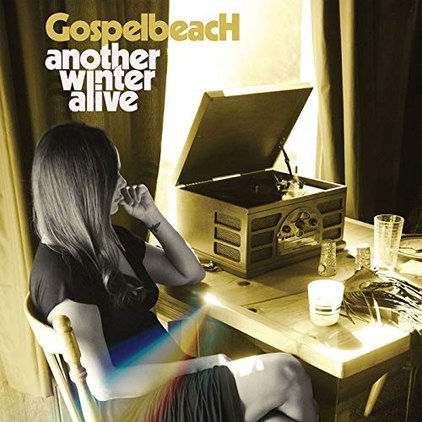
GospelbeacH. Another Winter Alive. Alive Natural Sound

51dnpq5qkhl-_ss500What with the price of coal being what it is, here’s another way to keep warm this winter, a new album from the sun dappled GospelbeacH, purveyors of prime California sunshine jangled pop. Another Winter Alive is not in fact, a full-blown follow up to the excellent Another Summer of Love, rather it’s a collection of songs recorded for that album which didn’t make the final cut, supplemented by a short live set, recorded at The Betsey Trotwood in London. Some might suspect that this is a quick cash in by the band or record company to hoover up some bucks before Christmas but we’d consider it more in the tradition of releases such as The Smiths’ Hatful of Hollow, an attempt to allow fans to hear songs which otherwise would languish in a vault somewhere.
Anyhow. The album kicks off with the five studio recordings beginning with an excellent version of fellow traveller, Neal Casal’s Freeway To The Canyon. This is just perfection, from the jangled guitar intro and the slightly wearied harmonies to the organ fills and trippy guitar solo the song flows as sweetly as a Topanga Canyon stream summoning up visions of latter-day Byrds. Down South is somewhat more baroque with its signature changes and closing honky tonk piano knees up with the guitars here having a George Harrison touch to their slips and slides. Running Blind takes a left turn in a more turbo charged direction with a fuzz toned organ riff leading the charge until halfway through the song spaces out into cosmic Americana territory with pedal steel gliding adrift amidst sound effects and heavenly harmonising. It’s back to the main drag however for the perfect power pop of Change of Heart, a Petty like number which will knock the socks off of you while Dreamin’ is more laidback, an attractive slice of harmony soft rock which is, indeed, sun dappled.

The live songs feature Brent Rademaker, Jonny Niemann and Jason Soda playing in a London pub in a kind of unplugged set up on guitars and keyboard (although one of the guitars is plugged in). There’s a splendidly ragged version of California Steamer, and then a fine reading of Out of My Mind (On Cope & Reed) with Rademaker doing his best Lou Reed impression and the trio out doing the studio version for sheer energy and passion. Miller Lite (originally called Sunshine Skyway on the first album) is a light hearted tale of a bohemian surfing jobs on the road in Florida with Rademaker urging the audience to join in with the great line, “is this a pub or a morgue?” They nail the romance and mystery of In The Desert and finish off with in a similar manner on You’re Already Home, another song which reeks of seventies long haired freedom with the trio harmonising well in the live setting.

As football commentators might say, it’s an album of two halves. The studio songs are excellent, the live songs a very welcome addition. Those new to the band might best be directed to either of the two previous albums but for fans, this is an excellent stocking filler.

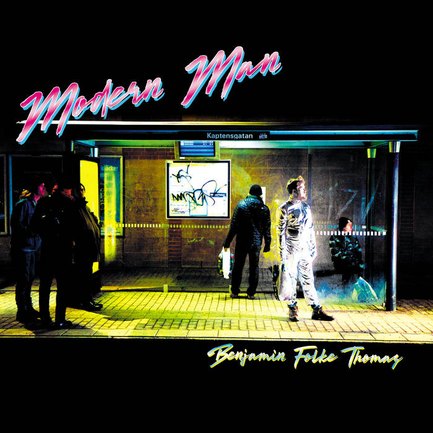
Benjamin Folke Thomas. Modern Man. Aveline Recordings

a2015374076_16What’s inside the mind of the modern man? Well, according to Benjamin Folke Thomas, this fellow is a bit of a dreamer, somewhat insecure in his love life (and even prone to occasional fantasies) but deep down he’s a good guy who worries about the environment and rails against injustice. Importantly he also has a sense of humour, witness the back cover art which has Folke Thomas in a space suit patiently queuing with his shopping in a mini mart – an outsider tasked with mundane tasks.

Recorded in his native Sweden, Modern Man bobs and weaves its way through several styles- Neil Young like guitar tourneys, jangly pop rock, and introspective folk  all raise their heads here- with Thomas’ winning voice and his well crafted words the glue which binds the album together. He says of the disc that he “Wanted to get away from just writing about myself and my broken heart… or at least to do it by taking the piss out of myself with sardonic humour.” There is a touch of biography in some of the songs with One Day a poignant number where he recalls his early troubadouring and dreams whimsically of the day he becomes a star. Stuff of Dreams is another night time fantasy with Thomas, an avid pool player, dreaming of meeting Paul Newman in his Fast Eddie Felson persona to play a few breaks and “chew the shit.” Here Thomas’ impish humour is apparent in the heavenly refrain which floats out throughout the song in contrast to Thomas who sings it as if he were Johnny Cash. There’s more oohs and aahs backing the opening song Tasteless and Complacent, a fine jangled number which introduces Thomas’ querying of the human condition (which reappears throughout the album) as he employs a somewhat misanthropic protagonist who has a glimpse of salvation if he can only find some folk who like him. Likewise, Some People has guitar jangles and a driving beat although here Thomas sounds almost like Gene Clark at times as he casts around various belief systems trying to make sense of them.

One More Chance is an affecting portrait of a man pleading for, yes, One More Chance, as his partner packs her bag and sets her ring on his table as she goes off to seek someone with a “better insurance policy.” As a break up song it works magnificently although one can’t help but suspect that it’s written and sung somewhat tongue in cheek. More unnerving is the title song which starts off describing a stalker who follows his prey before zooming out allowing the listener to acknowledge that this man could be any one the male population. The song is set to slow burning electric guitar over a sludge like rhythm, eventually picking up pace before climaxing in a frantic burst of noise, the irony felt in every note. There is some sweet revenge in the murder ballad, Lily Like A Gunslinger, where an abused woman shoots her husband after 14 years of abuse, the words as hard-boiled and lean as in a Jim Thompson story.

Finally, there’s the magnificent guitar epic, Dead Horizon, which has Thomas and his band (The Swedish Folk Mafia) invade Neil Young and Crazy Horse territory as they growl and wail for seven minutes. Thomas points his finger towards populist movements with his words here reminding one of the late Phil Ochs.

With Modern Man, Benjamin Folke Thomas has delivered a mature album which is both personal and significant as he investigates the modern malaise. It’s a grand listen with some humour involved but it’s also deadly serious.

Website