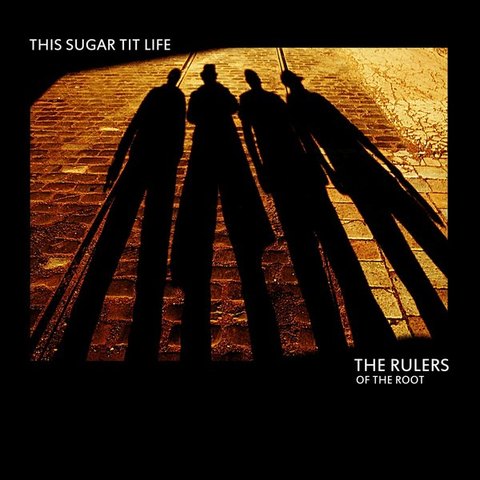
 The debut album from Glasgow’s The Rulers of The Root was an excellent disc which saw the band roaming around territory populated by the likes of Ian Dury, Captain Beefheart and Nick Cave although they played as if they were a bunch of Martians who had learned their licks via satellite transmission in between watching reruns of Taggart. Some songs were couched in a surreal simulacrum of Americana music with odd snippets of Glaswegiana thrown in, the Broomielaw and The Scotia Bar featuring in Rose of Jericho for example. The follow up album, This Sugar Tit Life, presses on in this direction although it’s a much more focussed album with the majority of the songs rooted in bluesy rock or neon lit late night wierdness with some sixties garage band snottiness thrown in for good measure.
Patrick Gillies, their gravel throated singer and late blooming songwriter, remains at the helm of the ship. His flights of fancy, lyrical conundrums and plain old absurdity command attention throughout while as a singer he is much more in command here – growling, lascivious, lashing the words for all they are worth. Meanwhile his colleague, guitarist John Palmer, paints the songs with splashes of colour with corkscrewed blues, growling rock’n’roll and reverbed twang guitar dashing throughout the album while the rhythm section of Chris Quinn and Stewart Moffat ably adapt to the myriad of forms the songs take on.
At their simplest the band come across as an excellent tight knit combo as on the boogie of Cain Made This Town which belts along as if it just skipped out of Memphis while the title song is a hard stomping blues number with Gillies sounding like Beefheart roaring out on Hard Working Man from the movie Blue Collar. Give The Dog a Bone is a Bo Diddley buzz cut of a song with the guitars slashing and burning across a ferocious beat while Yoker Tam is powered by a taut and driving bass and drums which are almost Krautrock in their precision with a glistening guitar sheen running throughout it.
However, it’s when Gillies lets fly his imagination when the band really take off. Govanhill Lullaby kicks off with a Morricone like spaghetti western sweep as he gathers up the media painted detritus of this much-maligned neighbourhood and spews it out in a Technicolor dream with regular keyboard player Alan French adding some excellent garage band Farfisa stabs. Meanwhile The Lubyanka Blues is an Aesop fable from hell with the band coming across like The Band fronted by Screaming Jay Hawkins. On several of the songs the band slow down and slither through a twilight zone as if they were in a David Lynch soundtrack. The Gap creeps along with a louche touch of evil and Night of the Hunter has some Dr. John voodoo hoodoo about it but the best effort here is the magnificent Face of an Angel. Think of the magnificently stained noirish quality of Orson Welles’ Touch of Evil and transport it to Glasgow and you are halfway there. Here Gillies inhabits perfectly a loathsome character who is perversely attractive, narcissistic to the extreme and who, “Feeds amphetamine to his pigeons/yes he’s guilty of that deed/but the doos are his religion and they seem to like their seed.” Just awesome.
The album is released today with a launch gig at Glasgow’s Glad Cafe. Tickets here.
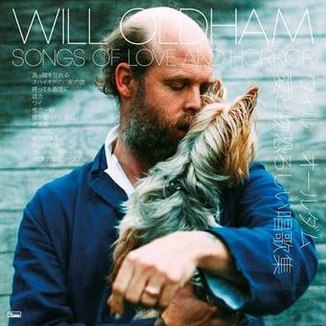 It can be a daunting task trying to compile a definitive discography of Will Oldham, the Kentucky born Americana polymorph who records as Bonnie “Prince” Billy, Palace Brothers, Palace and several other monikers. He’s an inveterate collaborator and has a host of singles and EPs to wade through along with his now lengthy album back catalogue. As far as we can ascertain he has only recorded under his own name on 1997’s Joya so this new release, reworkings of old songs, might be seen as a recap of his quarter century of recording were it not so brief. The true recap is actually in the form of a book of the same name which gathers the lyrics of over 200 songs together with comments from Oldham on their origins and meanings. However, this aural peek into his past is a delightful collection.
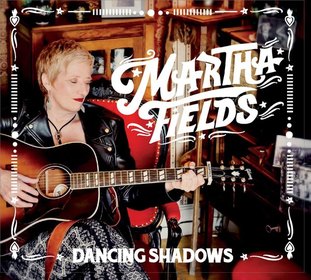 She may be an adopted Texan who spends much of her time in southern France but Martha Fields grew up in the shadows of the Appalachian mountains and there’s a rich stream of southern soul running through her veins. Her first album, which saw her billed as
 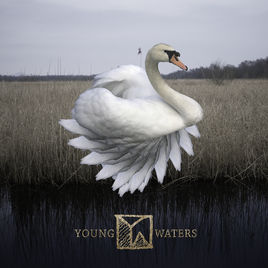 A five piece acoustic band from Bristol, Young Waters were previously known as Snufkin, a name which to our mind is perfect for a folk group who cite The Incredible String Band and Fairport Convention as influences. However listening to this excellently played and well mannered collection of chamber folk music it’s probably for the best that they underwent the name change. Indeed there’s little here which would remind one of the aforementioned bands as Young Waters seem more enamoured of the tight song structures one recalls from Pentangle (without the jazz and blues influences) and leaning more towards Renbourn rather than Jansch in the guitar stakes.
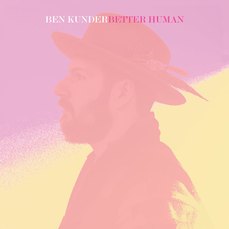 This second album from Toronto based songsmith Ben Kunder is an enjoyable slice of breezy pop inflected songs which comes across at times as if a more upbeat than usual Ron Sexsmith was the scribe and performer. Kunder’s attractive tenor voice rides over some very sympathetic settings with some arrangements recalling the heyday of LA balladry as practised by Jackson Browne ( as on Fight For Time) while the fizzy Jessi is enlivened by electric keyboard and a cheesy synth zipping around over the rock steady backbeat.
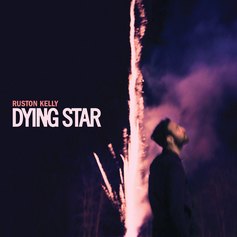 Best known for his marriage to country star Kacey Musgraves and for having written hits for the likes of Tim McGraw, Ruston Kelly’s debut album Dying Star indicates that he has the potential to become a star in his own right. He can write songs which recall the musings of Steve Earle or Ryan Adams and sing them in a finely grained voice with an attractive lack of polish. In addition, the songs are delivered for the most part in classic California country rock with keening pedal steel (played by Kelly’s father). They are bathed in melancholia and regret, stained with a faded grandeur as they surround you.
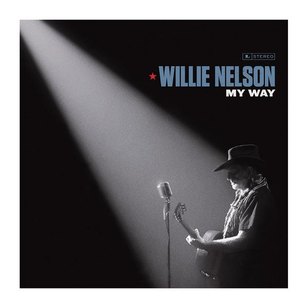 Lest we forget, it was Willie Nelson’s album of standards, Stardust, released back in 1978, which saw him becoming a household name. Of course by then he had a chequered career, writing huge country hits for Ray Price and Patsy Cline (with what is perhaps his most famous song, Crazy) in the early sixties before becoming a country star himself and then fading out somewhat towards the end of the decade. He reinvented himself in the seventies, abandoning Nashville for Austin, Texas, releasing albums which eschewed the Nashville sound and signing up to the Outlaw Country movement with buddies Waylon Jennings, Tompall Glaser and Jessi Coulter. 1975’s Red Headed Stranger was the pinnacle of his wayward battle with Nashville but it was the following year’s Stardust, a 10 song collection of standards, which saw him burst into the pop charts.
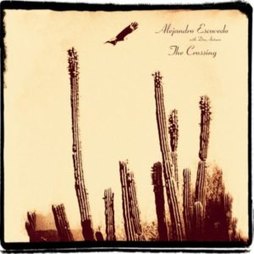 Sometimes a record just accords with the times and so it is with this sprawling and epic collaboration between Alejandro Escovedo, a Mexican-American who was named by No Depression as the Artist of the Decade at the end of the nineties, and Antonio Gramentieri, AKA Don Antonio, the Italian leader of the awesome Sacri Cuori. Both outsiders of sorts who manage each in their own way to capture the spirit of American music while retaining elements of their native culture, the pair teamed up last year when Gramentieri supplied the live band for Escovedo’s European tour and having hit it off they repaired to Italy to record The Crossing.
 First up, here’s another album added to the list of contenders for best of the year when we start to tally up soon. In addition, we have to add Carson McHone, from Austin, Texas, to the list of female artists who have really injected some fire into the Americana scene of late. McHone, who was playing in Austin bars at the age of 16 has had two previous releases (an EP and an album) but Carousel is her first fully fledged outing which captures in several of the songs an Austin honky tonk sound but in others shows that she is straining at the leash to catapult herself into the top echelons of singer/songwriters working in a country vein.