Rab Noakes. Welcome to Anniversaryville. Neon Records

welcome-to-anniversaryvilleAt the grand age of 71 Rab Noakes‘ profile is probably higher now than it has been since his days as one of the UK’s premier folk and rock artists back in the seventies when he was recording with Gerry Rafferty, providing songs for Lindisfarne and having his own albums  produced by the likes of Bob Johnston and Elliot Mazer in Nashville with various Dylan veterans in tow.

Noakes went behind the desk to become a respected producer of radio programs but a reissue program  of earlier albums and a double CD, I’m Walking Here, along with regular appearances at Glasgow’s Celtic Connections Festival had raised his profile in the first half of this decade but this was almost derailed when he was diagnosed with tonsillar cancer. Following successful treatment Noakes released The Treatment Tapes in 2017, a six song EP inspired by his journey from diagnosis via treatment to recovery. 2017 was indeed an auspicious year for him as it marked his 70th birthday and 50 years of performing and to mark this Noakes appeared at Glasgow’s Celtic Connections with a band he called the 70/50 in 2017 with many commentators noting the show as a highlight of the festival. Since then Noakes has been on the road much of the time, often in tandem with Jill Jackson, one of the prime movers of the 70/50 band with the pair playing a sold out show at Perth’s Southern Fried Festival and now he offers us this splendid album which is a culmination of sorts of the many celebratory aspects of last year.

In his informative sleeve notes Noakes describes the album much better than anything you will read here but its genesis was in the Celtic Connections concert as Noakes, having a well rehearsed band on hand, decided to go straight into the studio and bang out some songs, as he says, on the Nick Lowe principle of bash it out now, tart it up later.  They laid down 15 of the 17 songs we have on hand here and it has to be said that the band – Stuart Brown (drums), Christine Hanson (cello), Jill Jackson (vocals, guitar), Innes Watson (guitar, fiddle), Una MacGlone (double bass), Lisbee Stainton (banjo, guitar), and Kathleen MacInnes (vocals) – conjure a finely loose limbed sound ranging from folk infused melodies to almost skiffle like strum-a-longs. Further recordings saw band members and others refining the songs over a fairly lengthy period of time but the end result is a very cohesive and eminently enjoyable listen.

The 17 songs are a mix of old and new written by Noakes along with some interpretations of others which have had some significance to him over his adventurous lifetime. Again, Noakes explains in the notes why each song was chosen with some of the entries mini essays which are most enlightening with his explanation of Tramps and Immigrants our favourite. Some of the anniversaries are fairly straightforward as in his choice of the number one song in the sheet music charts for his birthday in 1947.  Coincidentally enough it was Anniversary Song, written by Al Jolson and riding high in the charts back then performed by The Billy Cotton Band and Noakes and his band turn in an excellent gypsy like waltz version of the song. It all Joins Up (in the End) meanwhile was written by Noakes when he outlived the age his father was when he died and it’s a finely understated reflection on  the vagaries of life with Noakes recalling his rock’n’roll touchstones and reminding us to live our life by the full. With Watson’s fiddle leading the ensemble and Jackson adding fine harmonies the song is given a sublime reading while it is a reminder that at his best Noakes can write as well as McCartney or Rafferty.

Listening to many of the songs one is reminded of the spirit of Ronnie Lane’s Slim Chance in the band’s playing especially on the opening numbers. Together Forever is a song Lindisfarne covered on their second album and it’s a welcome opportunity to hear it again in this new version. Let The Show Begin and Oh Me, Oh My and London Town stroll along in similar fashion, all of them eminently listenable.  Lost friends are eulogised in the stripped back Gently Does It with Noakes in singer/songwriter mode recalling Alex Campbell while A Voice Over My Shoulder returns to the fiddle and banjo fuelled ensemble sound on a tribute to Robin McKidd, a musician friend who accompanied Noakes on his first professional engagement back in 1967.

TCB (Working Man and Working Woman) finds the band in slight rockabilly style as Noakes kicks out at politicians and  celebrates the working class, the song influenced by a visit to the RCA studios where Elvis recorded (TCB being an Elvis catchphrase – Taking Care of Business). There’s some more politics as he revisits another earlier song, Jackson Greyhound, a reminder of the civil rights movement in the 60’s as several freedom riders were arrested and beaten as they boarded buses in defiance of the Jim Crow laws. Here Noakes is just astounding as this Fifer totally inhabits the spirit and sound of the times, the song imbued with the sweetly sticky sounds of the south as he comes across like Loudon Wainwright. Adding another string to his bow Noakes avails himself of his collaborations with  Kathleen McInnes in the more traditional field of Scots music on several songs. The Handwash Feelin’ Mairket finds him using a Rabbie Burns like idiom to describe a local carwash which runs on hired immigrant labourers while The Twa Corbies/ An Dà Fheannaig allows him and McInnes to delve deep into Scots traditional music on a song which is as haunting as anything one might hear on any collection of murder ballads. Following on is Tramps and Immigrants which Noakes sings in broad Scots emphasising its origins while incorporating the Dylan song, I Pity the Poor Immigrant which poached the melody and is here sung here by McInnes thereby joining up all the dots. It’s simply fantastic. McInnes also has a starring role in the closing song, that old chestnut, Tennessee Waltz, which she first sings in the Gaelic before reverting to English. Noakes explains that the song is, “a piece of first class songwriting… with something truly deep at its heart wrapped in the lightness of a waltz with a sing-along form.” He’s right, McInnes sings wonderfully and the band play as if they were perched on an Appalachian porch.

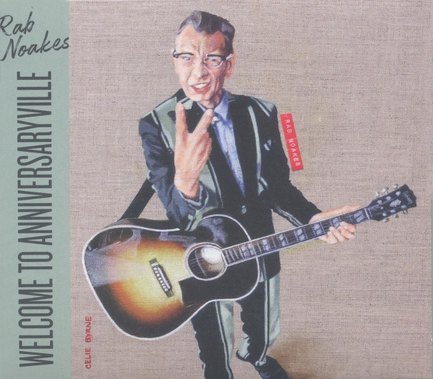
Hand on heart this is one of the best albums we’ve heard all year and it should be issued to anyone with a pair of ears and a beating heart. When we reviewed The Treatment Tapes we wrote, “Overall the EP is a two fingers to the big C delivered with a life affirming sense of spirit,” and it’s spiriting to see that on the cover art here Mr. Noakes, resplendent in his two tone suit, is indeed offering that two fingered salute. He’s on top form here and hopefully there’s much more to come from this venerable Scots musician.
Website


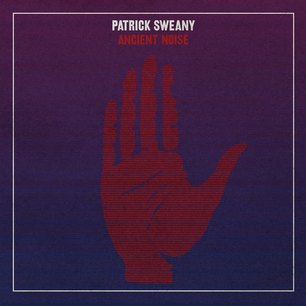
Patrick Sweany. Ancient Noise. Nine Mile Records

a0458375684_16A Nashville artist who is more steeped in the blues and soul than many of his townsfolk, Patrick Sweany gets down and dirty on Ancient Noise, an album which saw him head to Memphis to record in Sam Phillips’ Recording Studios which has been recently refurbished and which is popping up in several sleeve note mentions of late. Produced by Matt Ross-Spang (who helmed Margo Price’s Midwest Farmer’s Daughter) Ancient Noise is steeped in southern styles, raucous blues and swampy rock numbers the deep filling while there’s a delicate dollop of Memphis country adding some sweetness to the whole.
Sweany lurches into the album with the gutbucket kick of Old Time Ways, an evil sounding swelter of slide guitars before diving even deeper into the Devil’s music with the growling Up and Down where he sounds as if Howling Wolf’s spirit was inhabiting Tom Wait’s larynx while the guitars and percussion clatter around like a pneumatic drill let loose inside a scrap yard. A thrilling start to the album.

There’s a brief respite as Sweany allows piano player Charles Hodges (Al Green’s go to keyboard man) to lead the band on Country Loving, a song on which Sweany mines seams previously explored by the likes of Dan Penn and Donny Fritts. This more delicate side of Sweany is further explored in the shimmering slow burn of Steady where the guitars quietly fizz away like distant fireworks as he sings of the ties which unite his relationships. However the pull of the Memphis mojo drags him back into swampy waters for the remainder of the album. No Way No How is a brilliantly muddy foray into syncopated southern rock a la Alan Toussaint or Little Feat and its repeated on the slinky grooves of Cry of Amédé, a song based on a true tale of a Creole musician beaten up by a vigilante mob after a white woman loaned him a handkerchief to mop his brow. Get Along hits a more soulful groove with Hodges’ fluid organ keys burbling over a propulsive beat with Sweany’s vocals  supplemented by some gospel harmonies and Play Around is reminiscent of sixties Brill building pop forays into southern soul culture.

Ancient Noise is perhaps Sweany’s most rounded album so far and is heartily recommended.

Website


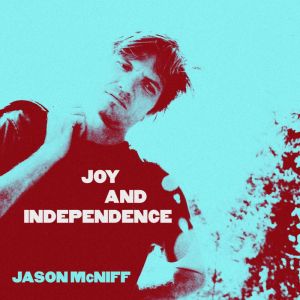
Jason McNiff. Joy and Independence. At The Helm Records

92c7aaaf254fbffea22531ec5e1fa7edLast year Jason McNiff released Rain Dries Your Eyes, a two disc compilation which charted his course over 15 years and six albums of relentless troubadouring and which proved that he is a bit of a gem when it comes to our native singer songwriters. Joy and Independence finds McNiff alone in the studio with just his guitar for company stripping away all the band trappings which have adorned many of his songs. As he says, the album is intended to be, “a homage to a golden era of the coffee house troubadour.” And while we agree with that notion it has to be said that Mr. McNiff could perhaps have added bedsits alongside coffee houses as Joy and Independence could easily sit beside albums by L Cohen, Al Stewart, Nick Drake and Bert Jansch in any self respecting student’s gloomy abode.

As with Dylan, McNiff’s distinctive voice may  inhibit the casual listener but as with many of the troubadours he admires his voice is an instrument which floats above his excellent guitar playing sounding at times like an innocent abroad, full of wonder and grace, almost like a male chanteuse. It’s perhaps heard at its best here on the tumble of words and flurries of guitar which is (There are no) Ordinary Days, an extraordinary song which is steeped in the sixties songwriter tradition mixed with the Gallic sensibilities of Momus. The storytelling element of those troubadours is to the fore on the lengthy Amanda, McNiff’s retelling of the trial of Amanda Knox in Italy which bears comparison with several Dylan songs from The Ballad of Hollis Brown to Hurricane and Joey. Midnight Shift meanwhile is a personal reminiscence of McNiff’s days playing the late night slot in the now closed Soho spot, the 12 Bar club while the title song is a picaresque tale of two lovers travelling through Italy in search of their dreams before going their separate ways with the song adorned by some gorgeous guitar playing.

McNiff hits the nail on the head with every song here. There’s a real sense of longing on Wind of Zaragoza and his reworking of Stuck in the Past is plaintive and moving with the sole use of piano here adding to the sense of nostalgia and loss. Been a Bad Day is a perfect down in the dumps song, McNiff the wounded lover stranded with his memories and regrets, but there is  joy of sorts in the uplifting Thoughts which has McNiff singing along with Lily Ramona. Finally McNiff offers us the magnificent And the Sun Comes Up on My Dreams which sits beside the aforementioned (There are no) Ordinary Days as the standout songs here. We’d previously reckoned that an earlier McNiff song, I Remember You, totally inhabited the freewheelin’ spirit of sixties Dylan and to our mind that’s also true of And the Sun Comes Up on My Dreams. It’s a joy and a wonder to listen to.

We need to mention the guitar playing here which is excellent and which befits a man who sat for six months watching Bert Jansch play in the 12 Bar club. McNiff in fact offers a fine recollection of his various guitars in the liner notes calling them, “these curvy shaped bits of wood…imbued with romance.” So true as a listen to this album will testify to.

Website


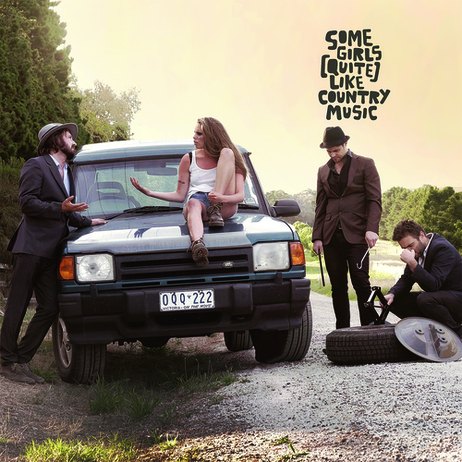
Lachlan Bryan and The Wildes. Some Girls (Quite) Like Country Music

300052Ever since hearing Lachlan Bryan’s solo album, Shadow of the Gun, back in 2012, Blabber’n’Smoke has always welcomed new music from this Australian troubadour. Schooled as a kid in Hank Williams by his uncles who played in bar bands and then inspired by the “alt-country” bands of the eighties along with a hero of his, Tom Waits, Bryan and his band The Wildes are one of Australia’s premier roots music outfits winning a prestigious Golden Guitar award for Alt-Country Album of the Year back in 2014 with their album Black Coffee.
Some Girls (Quite) Like Country Music is the band’s fourth album and it’s released here this week to coincide with a UK tour. It’s very impressive. Bryan and his Wildes (bass player Shaun Ryan and drummer/producer Damian Cafarella ) turn in an excellent set of songs, some dry and dusty, a few country waltzes tinged with a hint of sadness and some Willie Nelson like ballads. Several of the songs feature harmony vocals from Imogen Clark while Bryan’s warm voice duets with Shanley Del and with Lindi Ortega on two of the songs.

You kind of know that an album is pretty special when it kicks off with four spectacular songs and that’s the case here while Bryan adds to the tension as he tackles some weighty subjects on the first two numbers. The opening I Hope That I’m Wrong was inspired by the #MeToo movement with Bryan introducing the song singing,

“Women do what you must for there ain’t a man in the world you can trust to go into battle for the things that you need, things that you got a God given right to receive. And I’m afraid that it’s all to you I believe but I hope that I’m wrong.”

Sung over a simple acoustic guitar strum with a baleful bass line and slight washes of telecaster string bending it’s a protest song for today as Bryan goes on to add a litany of dismay on the environment and various injustices visited upon many of us these days. Things then get sinister on the creepy A Portrait of an Artist as a Middle Aged Man which slouches like some beast borne aloft on a cranky banjo with swathes of atmospheric electric guitar as Bryan sings of a guy in some mid life crisis and his Lolita like attachment to a much younger girl, the song suffused in premonitions of doom. The mood then lightens on the breezy Careless Hearts, a song which ticks all the boxes in how to write a country love song with Bryan singing the yearning words wonderfully while the band chug on, Bryan on piano guiding them while a wheezy harmonica puffs away. Next up is a delightful duet with Shanley Del on The Basics of Love, again a master class on how to write a country love song based on the template of George Jones and Tammy Wynette as two barflies join up while Bryan and Del swap this wonderful chorus,

“On the radio Waylon is preaching the basics of love, like pillars of wisdom descending on them from above, like gentle reminders of all that the things that they love, basics of love.”

These four songs are worth the price of admission alone but there’s so much more to enjoy here. Don’t you Take it Too Bad finds Bryan singing with Lindi Ortega on a wonderful tear stained waltz written by Townes Van Zandt and Van Zandt is recalled on the chilling Peace in the Valley. The spirit of Willie Nelson hovers closely around the piano led ballad of Sweet Bird of Truth, the downbeat Dobro driven tale of troubled teenage girls on Stolen Again and the closing Someone You Know So Well where Bryan and an out of tune piano limp along wonderfully. Finally there’s the hugely impressive The Cemetery Near my Hometown, a slowly unwinding cinematic song stained with the patina of Sam Peckinpah. Listening to this one can just imagine the stony visage of Warren Oates gazing on a lonesome hilltop of crooked wooden crosses as he prepares to meet his doom.

It really goes without saying that Some Girls (Quite) Like Country Music is an essential listen. We’d say it’s his best yet and here in the UK there’s the chance to see him and The Wildes over the next few weeks including two Glasgow gigs this weekend and two slots at Maverick Festival.  All dates here.

Website

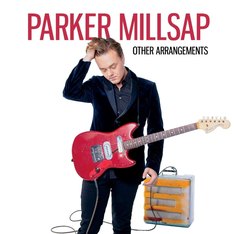
Parker Millsap. Other Arrangements. Thirty Tigers

613t20bttl-_sl1200_When a tremendous crash of electric guitars rang out as this CD began to spin I thought it was the wrong disc playing. Where was the folkie Okie one was expecting? The song, Fine Line, thrashes about with Millsap ripping ferocious chords from his guitar and snarling the words coming across like Jack White. It is surprising but there’s some wild fiddle flailing away throughout the song reminding us that this is supposed to be country as opposed to rock. As the opening song (and the lead single) of the album it’s mildly misleading however as the remainder of the album, although pretty chunky as it shows off its muscle, is nowhere as wild as this.
Careful perusal of the disc allows that Millsap is still writing and singing about his deep rooted southern concerns much as he did on his first two albums but here the songs are dressed up. For the most part this works. There’s a wonderful southern soul feel to Your Water while Tell Me is a fine and fluid bluesy workout which adroitly avoids becoming a 12 bar lumber adorned as it is with fiddle and a string section. Coming On, with its female backing chorus, harks back to Leon Russell days and She, a delightful salute to a perfect partner, sashays wonderfully with inventive guitar parts twinkling from the beginning as Millsap performs some fine vocal acrobatics. Let A Little Light In meanwhile is a whip smart power pop song which is quite exhilarating in its light and shade dynamics and the title song is a tremendously sinewy slice of country tinged rock with fiddler Daniel Foulks stamping his mark over the muscular guitars on a song which approaches a Little Feat like discipline.

It has to be said that Singing To Me, which opens promisingly with Millsap singing over a simple acoustic guitar, loses its way somewhat with a somewhat syrupy arrangement. And right now the jury here is out on Gotta Get to You, a frenzied thrash which to our ears sounds like a juvenile Springsteen although there’s no doubting the powerful bass and drums which drive the song.

Millsap sounds like Millsap as we know him on Good Night and on Come Back When You Can’t Stay but they are relative islands of calm within the stormy waters he churns up elsewhere. This is an album which we initially struggled with but over time it’s grown in our affections and it would be interesting to hear it in a live setting given that Millsap and his band are reputed to be the bees knees on stage.

Website


The Jellyman’s Daughter. Dead Reckoning. Boat Duck Records

a2210496979_16This second album from the Edinburgh duo comprised of Emily Kelly (vocals, mandolin and guitar) and Graham Coe (Vocals, cello, mandolin and guitar) is a huge step onward from their debut release of a few years back. The pair here have at times an expansive sound, bolstered in the studio by various players who add assorted guitars, banjo, fiddle and double bass to the mix while an entire string section is employed to great effect on several of the songs.
The open with the sweeping melodrama of Quiet Movie, a sumptuous string laden effort with Kelly’s voice multitracked on the chorus on an incredibly moving song which sets the bar high for the remainder of the album. They take a different tack on the following I Hope which is a much more jaunty number despite the hesitation inherent in the lyrics. It comes across almost as a Scottish bluegrass number with Coe’s cello taking an excellent solo while banjos plink and plunk throughout over massed fiddles. Oh Boy dials down the excitement although the stirring harmonies and the finely balanced cello and strings add some drama to the song while recalling some of the more adventurous string bands coming from Americana such as The Punch Brothers and Head For The Hills. This heady mix of complicated time signatures and the pairing of classical playing with a more traditional approach is exemplified on Giving Up, a song which twists and turns with Kelly adding some jazz like intonations in her vocals while Coe’s cello is wonderfully woody and abrasive. They cap this style with a somewhat amazing and amusing instrumental called The Shoogly Peg which comes across as the sort of tune John Hartford might have recorded if he had played cello instead of fiddle.

Elsewhere the pair delve into Gillian Welch territory on the plaintive lament of The Worst of it All, a song which is particularly apt in these troubled times, while the title song is a slight return to the expansive and ethereal delights of the opening number with the string arrangement perfectly complimenting the vocals. Kelly’s voice truly shines on the haunting melody of You Don’t Know Love which again has some wonderfully fibrous cello woven throughout it. A cover of Jimmy Newman’s Cry, Cry, Darling again recalls the spookier side of Gillan Welch and Dave Rawlings as does the closing delicacy, the crepuscular White Shadows which is the most unadorned song here with superb harmony singing over delicately plucked strings and just the slightest murmur of strings. A fine close to an excellent album.

Website


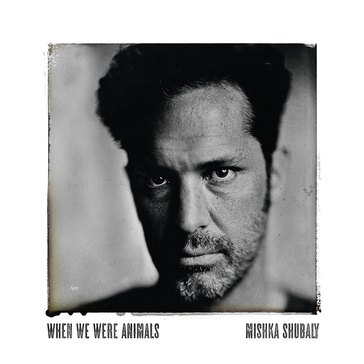
Mishka Shubaly. When We Were Animals

Art copyBack in 2015 we wrote about an album which seemed to epitomise that old Wildean quote, “We are all in the gutter, but some of us are looking at the stars.” That album was Mishka Shubaly’s Coward’s Path, a dark and at times shambolic collection of drug fuelled misanthropy compared to which the likes of Nick Cave and Mark Lanagan sounded like top 40 popsters. Well Shubaly, a man who has probably the most chequered past of anyone we’ve reviewed has done it again with When We Were Animals, another dive into the depths of despair and again delivered with a voice sounding like Barry McGuire has had throat surgery.
It’s not for the faint hearted. No radio station is ever going to play World’s Smallest Violin, a song which kicks off with a punk rock throb sounding like a testosteroned Lou Reed looking for a fight as Shubaly describes a pretty sordid carnal encounter in a bar seesawing between GG Allin like explicitness and wry humour. You just have to love a line like, “When I pulled down my pants, that look on your face like you had lost a bet, “showing that Shubaly is at least not going to boast of his penile prowess.

So, fair warned, what can one expect from the remainder of the album? Well, pretty much more of the same, the music ranging from a mutant form of freak folk to spikier rock songs but the subject matter pretty much focussed on degradation and regret. Never Drinking Again is a bluesy hangover filled with regret as Shubaly populates the song with an exhaustive list of substances that he’s never going to do again before singing, “I’m never going to talk to you again,” indicating a partner as destructive as the drugs. By the end however he’s still in thrall to this person, the relationship reminiscent of Bukowski’s Barfly. The opening song Forget About Me, another loutish punk like thrash sets out Shubaly’s take on relationships as he looks for a cross between an angel and a demon while Animal is a slow growler of a song with Shubaly joined by an anguished female singer as they sing about down and dirty coitus. There’s a hint of Jim Carroll’s Basketball Diaries in the drug fuelled night out recalled (or not as the case may be) on Death In Greenpoint with Shubaly again transforming a calamitous one night drug fuelled Odyssey via his fantastic words on the final lines, “Well I think I’m going to go with a headfull of blow, in a Polish disco, in Greenpoint.” Meanwhile there is a tender moment on the Farmer John referencing Destructible which, while remaining quite dark, reminds one of The Handsome Family.

Just in case you’re wondering how far entrenched into the drugs world Shubaly was engaged in he offers us a loaded cover version of Little Feat’s Willin. Whereas the original was a brilliant delivery of those days when smuggling drugs had a fine and breezy outlaw vibe to it, here Shubaly invests it with a menace more akin to the murder and mayhem we’ve seen via shows like Narco. Just brilliant.

Mishka Shubaly is currently touring the UK. All dates here including a show at the 13th Note in Glasgow this Saturday.


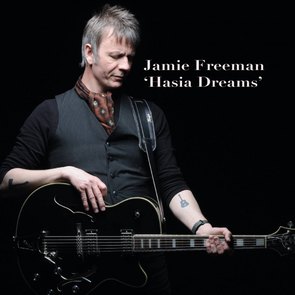
Jamie Freeman. Hasia Dreams EP. Union Music Label

hasia20dreams20cover_724x724-837a8aIt’s been a while since a Jamie Freeman disc slid through the letterbox, his last release being 2013’s 100 Miles From Home. Despite being a familiar name down south in the UK Americana world as a musician and a behind the scenes mover and shaker he’s not well kent up here which is a bit of a pity. 100 Miles From Home (recorded with his band The Jamie Freeman Agreement) roamed around jangled power pop, English folk and dark Americana creating what should really be considered as a bit of a lost classic. There are certainly elements of the first two on this EP but there’s also a healthy dash of patchouli scented psychedelia with Freeman admitting that several of the songs are influenced by his favourite sixties bands.
The EP was recorded in Nashville and the UK with The Jamie Freeman Agreement playing on the UK songs while the Nashville tracks feature Larkin Poe and The Wild Ponies but aside from the opening number you’d be hard pressed to tell which was which. Hasia Dreams is that opening song and it’s a wonderful evocation of English psychedelia, the backwards guitars and  raga rock scales reminiscent of bands such as Tintern Abbey and (the UK) Nirvana. It’s a delicious listen with Lucy Powell’s voice weaving around Freeman’s vocals and while it may seem like a lysergically influenced song it’s actually a pretty grim tale of a refugee’s perilous journey fleeing Syria as she clings to happier days in her dreams.

Shiprock is another song which visits childhood memories although here Freeman’s template is The Who as he offers a Townshend like exploration of a dysfunctional family with the prodding keyboards recalling the synth additions to The Who’s Next album. With its muscular guitars and punchy propulsion the song soars towards another psychedelic moment on its bridge before climaxing with wailing guitar and an eventual sonic breakdown. You really need to listen to this one with the volume way up. The shimmer of Rum and Smoke then wafts into view and its clear by now that Freeman is exploring in these songs the adult influences on the psyches of their children as here he  inhabits the mind of the child of an alcoholic father. Incredibly poignant, the song clothes the child’s formative memories in a bittersweet delivery which at times recalls early Traffic.

Damaged children can find redemption and it’s tempting to see the last two songs as evidence of this. Make Do With England has the protagonist finding a partner who is helping him to cope despite his frailties with Freeman singing, “Baby you taught me how to care, yeah, well I taught you how to swear.” It’s not all plain sailing as he thinks the idea that she would marry him must mean she’s crazy while their union doesn’t always lead to bliss with the title of the song (I think) a nod to that old adage of lying back and thinking of England. Whatever, Freeman again sets the song against a magnificent and rousing delivery which slowly builds in grandeur from its folky beginning to the swell of guitars and percussion towards the end. There is a happy ending as Freeman and the band throw out a rollicking almost rockabilly number on Wedding Ring and a New Tattoo which sounds like a cross between Dwight Yoakam and Ian Dury believe it or not.

The only quibble here is that there’s only five songs. Hopefully now that Freeman has divested himself of his record store in Lewes we can expect to hear more of him in the future. Fingers crossed.

Hasia Dreams is available here


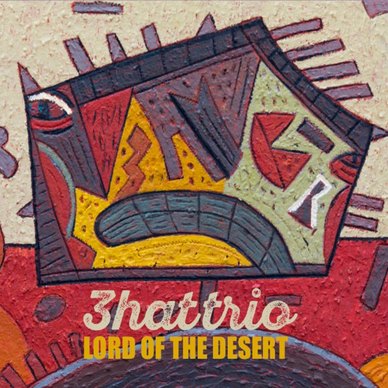
3hattrio. Lord of the Desert. Okehdokee Records

a0675962829_16The sun blasted and sand blown 3hattrio, denizens of Utah’s Southern Desert, continue to comb their way through the arid and atmospheric landscape which surrounds them on this, their fourth full length album. Their basic line up of guitar, violin and double bass is again enhanced by spectral sounds and effects while the voices are often like shamanistic exhortations with repetition used to induce an almost trance like effect.
At the heart of the band are three musicians (Hal Cannon, Greg Istock and Eli Wrankle) with various backgrounds in American folklore, creative art and classical music and who in essence are a string band par excellence but, just as Dr. John was a great r’n’b pianist, they depict their ochre infused landscape with as much invention as Mac Rebbenack did with New Orleans back in his Gris Gris days. There’s a hypnotic lure in the songs here, a temptation to succumb to the incantations and swirling dust storm of sounds the band summon up, the hallucinatory effect of the desert laid bare.

The three musicians’ distinctive styles create the contours of the album. Cannon provides the ballast, the lonesome traveller in the desert, Istock is the Shaman, the beguiler whose incantations and esoteric sounds are almost a peyote experience while Wrankle conjures up an ethereal mistral of sounds evoking the shifting landscapes sculpted by the forces of nature. Lord of the Desert is perhaps the band’s most successful invocation so far as the songs slide into one another, disparate elements fused into a whole as they shift from the banjo led introduction, Dust Devil; the traveller stepping foot into the alien territory forewarned but unabashed, to the closing surrender to the lord of the desert, gravely intoned by Cannon.  In between it’s an Odyssey of sorts amid the sand dunes. Pilgrim bustles with a spritely bass line and fuzzy electric violin and a rare mention of water, normally a good thing in a desert but here a harbinger of danger. Night Sky finds the instruments approximating the sounds of the creatures who venture forth after dark before the discombobulating babble of voices and eerie sound effects of Faith Is In Our Hands, a last cry of the faithful before the pagan desert swoops in which it does in the brace of Istock songs which follow. War ripples with Eastern influences, tabla and oud like sounds which summon up a vision of lysergicly scarred Iraq veterans recreating Operation Desert Storm while Faith can be construed as their attempts to recall an earlier normal life in flashback, all to no avail as I Am returns to the Eastern influences with Istock’s grunt of a voice invoking Imans and infantry grunts.

Cannon’s everyman returns on Wastelands of Yesterday, an extremely parched approximation of The Handsome Family’s bizarre canon before the even more parched instrumental Skeleton Tree which has a Morricone touch to it. Then, like insects buzzing around a flyblown corpse, Wrankle’s violin introduces another Istock invocation as the old man of the desert on Motel,  sounding here like an indecipherable Walter Brennan, a trick repeated on the following Won’t Help (although there’s a soupcon of Dr. John’s voodoo in here) as the spirit guide abandons the traveller who is left to rhapsodise on what could have been in the forge towards the new west on Poor Boys.

Bleached as white as bones in the desert sun, creaking and cracking like stones in the frozen desert night, infused with the memories and voices of those who have travelled and travailed across the sandy wastes, Lord of The Desert is a trip in more ways than one. It is mind expanding in the best sense as 3hattrio offer the listener an opportunity to explore, experience and enjoy their American desert music.

Website


David Starr. South and West

61v48w2essl-_ss500Blabber’n’Smoke was glad to have a sneak preview of Colorado musician David Starr’s latest album, South and West prior to him playing a show in Glasgow this week. The follow up to his acclaimed Love & Sabotage (from 2016 with a John Oates’ produced EP in between), South and West is another robust and joyful dive into those halcyon days of freewheeling and hair flowing country rock songs from the seventies with a dash of more introspective melodies giving the album just enough emotional ballast to prevent it from flying down the freeway.

Written in Cedaredge, Colorado and recorded in Nashville (hence the title) Starr and his accomplished band (Dan Dugmore, guitars, pedal and lap steel, mandolin; Erik Stucky, mandolin; Mark Prentice, bass; Mike Severs, guitars; Howard Duck, keyboards and accordion; Tommy Hayden, drums) expertly navigate the difficult waters of playing like a plethora of the usual suspects (Eagles, Poco, Fleetwood Mac) while not copying them and even occasionally wandering into unexpected backwaters as when they deliver Could Have Run Together with its churchy organ and sweet guitar outro recalling The Stones’ in their more mellow moods. Starr, who wrote or co-wrote all bar one of the songs here, has his finger on the button throughout with arresting images such as on the opening lines of Nothing Short as he sings, “There’s a jar full of nickels on a stand beside the bed. The sun hits it in the morning, shines like a million bucks.”

The album opens with a classic wide open road song on Good As Gone, the restless spirit of the adventurer bouncing out of the speakers buoyed on frantically scrubbed acoustic guitar, a propulsive rhythm and some muscular guitar breaks. There are several such numbers here. Love Won’t Make Itself starts off as a breezy Fleetwood Mac like number before Dugmore’s pedal steel weighs in and transports the song into cosmic cowboy territory. Even better is the fiery Until It’s Gone with Starr singing, “Of the ten commandments I’ve broken nine, and the tenth I’ll believe I’ll break in time,” as the band really rock out with barrelhouse piano, wicked slide guitar and caroming bass and drums, the song coming across as a brilliant mash of Springsteen and Joe Walsh.

Nestled between these rousing anthems are several more laid back numbers. The sweet accordion and pedal steel laced Don’t Give Me Hope, the yearning that is the mandolin speckled Night Rolls Around, a song reminiscent of Jackson Browne, and the closing These Damn Goodbyes, an excellent song which conveys a wonderful sense of bittersweet memories and letting go. Nestled within these songs Starr conjures up an excellent cover of Elton John’s Country Comfort, a fine reminder that the man with the funny specs (and his writing partner) used to matter. While it’s fairly faithful to the original the band swell out the song excellently and Starr sounds uncannily like John. He’s aided and abetted here by his quartet of harmony singers who sing throughout the album adding yet more texture to the fine band sound.

All in all South and West is an almost perfect collection of breezy country rock with some added muscle provided by the excellent ensemble playing. Starr is obviously well versed in his forebears and he is well able to dig a similar seam. Perfect summer listening.

Website