Brooks Williams. Lucky Star.

brooks1400x1400Mention the blues and most folk think of that 12 bar moan of misery which arose from the cotton fields of the south and became louder and prouder as its practitioners moved to cities such as Chicago. It’s a rich and rewarding seam of music to follow but it’s not all doom and gloom and woke up this morning despair. Much of the music played back then was not an echo of the daily injustices rained down but a joyous celebration of life played in juke joints where drink and dancing were the order of the day. Georgia born singer and guitarist Brook Williams kind of sums this up on the opening song here which is called Bright Side Of The Blues, a jaunty number which recalls the sunnier side of Van Morrison in a toe tapping fashion with a fine loose-limbed approach. It’s a fine introduction to Lucky Star, an album recorded in Glasgow with local musicians, Kevin McGuire and Stuart Brown on bass and drums respectively while Newcastle’s Phil Richardson adds piano.

There’s a fine degree of levity to much of the album which was recorded pretty much live in the studio with Williams’ guitar playing nimble and quick fingered and he does utilise his excellent resonator skills on several of the songs. The slight Caribbean touch on Mama’s Song, the old time swing of Gambling Man and After You’ve Gone and the syncopated shuffle in Going To New Orleans recall the likes of Taj Mahal who was never afraid to be upbeat on his albums. Meanwhile there’s a fine nod to Sister Rosetta Tharpe on the skiffle like Rock Me which features harmonica from Paul Jones. However, the album is quite eclectic as Williams offers the lounge lizard croon of Always The Same and the shark-suited sheen of Here Comes The Blues which is a soulful as anything Robert Cray has recorded. Best of all is Williams’ railroad song, Jump That Train, which rumbles along fuelled by his resonator guitar. It’s a grand addition to the railroad canon as it huffs and puffs away and one can imagine The Blasters or Alejandro Escovedo amping it up. The blues affinity to gospel music is captured on Whatever It Takes which benefits from backing vocals from Rachel Lightbody and it’s well worth saying  here that the backing vocals on several of the songs were provided by the great Rab Noakes.

Williams has an attractive voice and his take on the blues is not dissimilar to that of JJ Cale or the type of bands that Alexis Korner used to champion such as  Rockin’ Jimmy and The Bothers of The Night. Buy the album and file it next to your Ry Cooder, Leon Redbone and Danny Adler albums.

The good news is that Brooks Williams plays in Glasgow on 9th September at The Doublet Bar courtesy of Sounds in The Suburbs. Tickets here

Website


Gene Clark Sings for You/The Rose Garden – A Trip Through The Garden. Omnivore Recordings

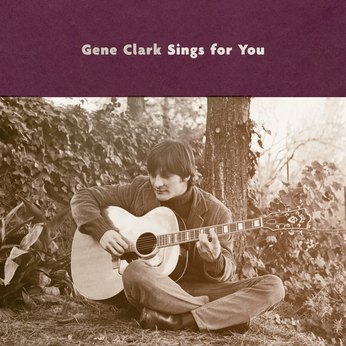
clark-sings-for-you-ov-280The past couple of years have been a bit of a bonanza for fans of Gene Clark as previously unheard recordings have crept out of hiding, songs which have been discussed and analysed in print and on the net but always tantalisingly out of reach unless one was connected. Sings for You, an acetate of eight songs recorded in 1967, is described in the liner notes (by Clark’s biographer John Einarson) as the holy grail of lost Clark songs and they are accompanied here by a further five songs from the same year which Clark wrote for an LA combo, The Rose Garden, along with one other song he offered to them.

So 14 Gene Clark songs, recorded at the height of his post Byrds fame and none of them released elsewhere or refashioned on any of his albums. Whew! However it’s important to emphasise that these songs are sketches which were never polished for general release. The eight song acetate was recorded by Clark after he was let go by Columbia Records after his album with the Gosdin Brothers failed to sell as well as they expected and seemingly was intended to be sent to various labels as Clark looked for a new recording contract. He’s joined in the studio by bass and drums and occasional keyboards including a chamberlin (which was somewhat akin to a mellotron). Stripped of the baroque folk embellishments which embroidered the album with the Gosdins, Clark is in fine fettle here with the songs pointing in several future directions. On Her Own, Yesterday Am I Right and That’s Alright with Me are prime Clark melancholia, one can imagine them gracing White Light a few years later if one strips out the somewhat overenthusiastic drummer who is somewhat obtrusive. There’s a more balanced band sound on the other songs. Down on the Pier is a fantastic song which is only let down by its similarity to Dylan’s 4th Time Around (which of course was influenced by The Beatles’ Norwegian Wood) but the addition of calliope  makes it one of the more realised songs here. Past My Door and One Way Road meanwhile offer a glimpse into Clark’s next venture with the Dillards as they venture into early country rock territory.

It’s hard to believe but the next five songs, all recorded by Clark to offer to The Rose Garden, are even better than the fabled Sings For You songs. On Tenth Street and A Long Time are just Clark and his guitar in true 60’s troubadour mode, slightly Dylanish but totally Gene and totally brilliant while Understand Me Too would have made a brilliant Byrds song in the manner of Here Without You. The addition of a band on the Jimmy Reed like Big City Girl is great fun and the band also appear on the excellent Doctor Doctor which finds Clark in proto psychedelic mode sounding like a cross between the early Jefferson Airplane and indeed the Younger Than Yesterday Byrds. The band wig out as if they were shimmying in the background of a Roger Corman film scene and the guitar solo is pure Nuggets.

rose-garden-trip-through-the-garden-ov-281

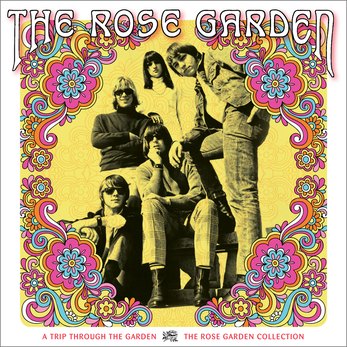
It goes without saying that Sings For You is essential for any Gene Clark fan but Omnivore Records have a neat tie in which is The Rose Garden’s album, the band for whom Gene offered several of the songs above. Despite his interest they didn’t set the charts ablaze although they had some minor hits. A typical 60’s psychedelic pop sound, the album does have a period charm as the band channel Byrds’ like jangled guitar, folk rock and Mamas and Papas vocal harmonies on various songs. They do a great version of the traditional CC Rider (here just called Rider) with glorious harmonies and Flower Town just drips with psychedelic whimsy. The original 10 song album is enhanced by the addition of a further 16 songs culled from single releases and live cuts with some of them eclipsing the album songs as on If My World Falls Through, a song which approaches Brill building pop brilliance. It’s a curio but one which, for anyone who digs the more harmonic side of 60s psychedelia, is well worth getting.

Omnivore Recordings webpage


Dan Stuart. The Unfortunate Demise of Marlowe Billings. Cadiz Music

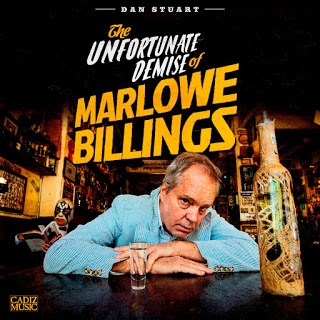
danDan Stuart finally kills off his alter ego and supposedly his recording career with this third instalment of the strange and troubled tale of Marlowe Billings. Billings, the suicidal expat who travelled to Mexico to kill himself after his marital breakup and subsequent incarceration in a psychiatric hospital, has served Stuart well over three albums and two novels (the second book published to tie in with this album release and sharing its name). The origin of Billings’ himself is somewhat foggy but is believed to be associated with the writer B. Traven, author of The Treasure of the Sierra Madre and whose own identity is still something of a mystery these days. It’s a smoke and mirrors trick allowing Stuart to stand apart from himself as he entertains, releasing his records and touring, his profession surely but one which he has often debunked as when he wrote this regarding the response to an earlier album, “…some grudging critical respect, really a sympathy fuck for days gone by… well the planet could get along without Stuart’s morbidly self-righteous world view just fine. His inability to lighten-up and endure life’s little insults like the rest of us had grown old and tired, like Stuart himself.”

Who knows if this is part shtick or really how Stuart sees himself? He said in an interview some years back that, “the creative process is largely about trust and deception… two sides of the same coin,” What we do know is that since his arrival in Mexico he’s appeared, to fans at least, as revitalised, with the Marlowe recordings welcomed and acclaimed and on The Unfortunate Demise of Marlowe Billings he delivers what may be his best effort yet. The themes are familiar but they are delivered in a variety of styles – low key confessionals, pedal steel laced laments, sixties rock’n’roll rumbles and punchy Tex-Mex blues –  his stellar accomplices playing their hearts out.

Stuart/Billings is still hurting from his cuckolding and several songs relate to this. He is despondent on Why I Ever Married You and then sneering on the Dragnet styled Joke’s on Me while You Were The Flower glistens with low slung guitar twangs recalling Johnny Rivers’ Secret Agent Man. The latter song introduces the one salvation of Stuart’s ruined relationship, his son, with whom he has remained in contact. The cycle of birth and death tops and tails the album. The opening March 5, 1961 is Stuart’s birth date and the song is a tender rumination on the emotions engendered when a child arrives (he later radiates a father’s pride on Here Comes My Boy). The closing song, Upon a Father’s Death is Stuart’s most nakedly autobiographical song to date as he reminisces about his own father and muses on the tangled twists of father/son relationships singing, “Just look at Jesus trying to live up to all that shit, impossible.”  His troubled adolesence  colours Tucson which is a splendid Tex-Mex riff of a song with parping Farfisa organ a la Doug Sahm which eventually disappears into its own rabbit hole.

In the midst of these rueful snippets of autobiography Stuart throws in some superb songs which are allied in the sounds but which roam further afield. Last Century Blues finds him singing of a Zelig like character who dodged the draft, roomed with Manson and Jim Jones and who ended up running coke for the Contras and selling it to the Crips. The Day William Holden Died is a sensitive bonding with the late actor and his sad demise while The Disappeared is an evil sounding song with rattlesnake percussion and Peter Green like Manalishi guitar solos as Stuart salutes the armies of South American mothers who still rally to this day to find the fate of their beloved long after the turbulent wars and coups which scarred the sub continent for far too many years.

Gathering this album together Stuart has relied on friends old and new. His Italian buddies Antonio Gramentieri and Christian Ravaglioli are present and correct while J. D. Foster and Tom Heyman also contribute with Heyman’s pedal steel an essential ingredient on many of the songs. However it’s producer, Danny Amis, a founding member of Los Straitjackets who is his right hand man here, co-writing several of the songs and adding guitar, bass and keyboards throughout.
large

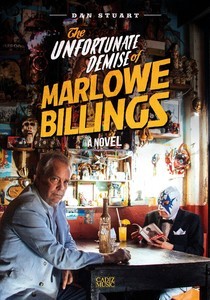
Stuart says this will be his last ever album citing the current preference for digital streaming and such as the death knell for this tradition. Again one hopes this is part of his mythologising but if not it’s a glorious swan song. The accompanying book is a more straightforward affair than his previous “false memoir” The Deliverance of Marlowe Billings. Whereas that came across like a collection of weird flashbacks to Stuart’s early days The Unfortunate Demise of Marlowe Billings is a conventional narrative for the most part with our hero escaping to Mexico and getting caught up in the murky and deadly intrigues of the cartels. While parts of it coincide with the album it stands on its own two feet, hardboiled fiction, akin to the current fascination with Narcos and El Chapo and even Breaking Bad although Stuart weaves his own story into the pages and allows himself some sweet mental revenge in the epilogue.  He says the story is 65% true and there are several episodes which offer an insight into his thoughts as when he describes himself as, “a lazy writer, songs came easy and he didn’t take them too seriously. He didn’t have the courage or stamina to write serious fiction.” Well, he has done here. The novel has an introduction by Stewart Lee, the comedian, which suggests that the book is sufficient  recompense for the lack of further songs from Stuart. We would respectfully disagree and hope that this is not the last we here from Stuart or even Billings.

Website
 

Hadley McCall Thackston. Wolfe Island Records

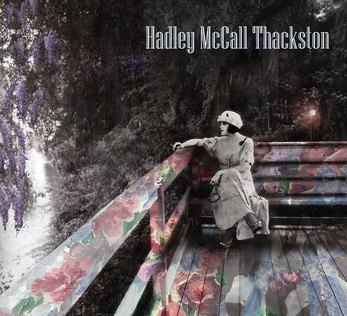
hmt-coverSome albums just take root on first listening and so it is with Hadley McCall Thackston’s debut offering. From the first flutterings of the opening song, Butterflies, to the closing Last Mountain Waltz the album springs, fully formed, from Miss Thackston’s imaginative mind and the excellent arrangement and production skills of Hugh Christopher Brown. A Georgia native, Thackston began writing many of these songs on her front porch and one can imagine she could have delivered a fine album of unadorned simplicity given that she is a fine writer and excellent singer (and you can see her singing in such a manner on a YouTube video here). In a serendipitous manner however a friend of her mother’s saw one such video and alerted his producer chum who invited her to make an album with him. Thus it was that David Corley introduced her to Brown and pretty soon Thackston was in Canada’s Wolfe Island recording with the musical community who seem to infest the island.
It’s no disrespect to Thackston to say that the musical accompaniment and arrangements are half the delight here. Her songs are elevated throughout whether it be glorious country embellishments or poppier retro sounds which come across as if Amy Whitehouse and her producer, Mark Ronson, had decided to ditch the horn section and replace it with banjos, fiddle and accordion. This element is most pronounced on the driving beat of Ellipsis which stomps along with a sassy strut and finger popping chorus. They repeat the trick on Somehow where Thackston really channels Whitehouse vocally over a gypsy fiddle and on the dramatic No which has Thackston’s vocals multitracked and where a horn does parp up, both songs incidentally having lyrics which one could easily imagine Whitehouse singing.

A couple of songs retain a porch like simplicity within the arrangements. The opening Butterfly is a charming breeze of a song which recalls a more innocent time when the likes of Julie Felix were popular entertainers although lyrically it’s a timely call to arms for women and girls setting out on life to set their sights high. Last Mountain Waltz is more traditional with rippling mandolin and weeping strings although again there’s a powerful undertow of being shackled by society’s expectations. Elsewhere Redbird is a meditation on the power of belief wafted aloft by sonorous strings and hazy guitars and Devil or Angel finds Thackston in a vampish mood, an Eve tempting her Adam as she sings, “I’m a devil dressed in angel’s wings, man, did I have you fooled. If I did, I’m not sorry,” as the band slope along in Weimar cabaret style.

Two songs stand out. Change is a deceptively pretty country song replete with weeping pedal steel and rippling mandolin with Thackston speaking out on the #blacklivesmatter theme as she describes watching yet another news item on an unarmed black man shot dead by police, “Each death sewn into life’s tapestry, each stitch a blemish on our history that time cannot erase.” It’s a powerful song. Wallace’s Song (Sage Bush) is the opposite in that it’s an excellent uptempo country love song with a clever chorus referencing one of country music’s enduring duos. It’s a good enough song to get Ms. Thackston up onto that Grand Ole Opry stage.

Website

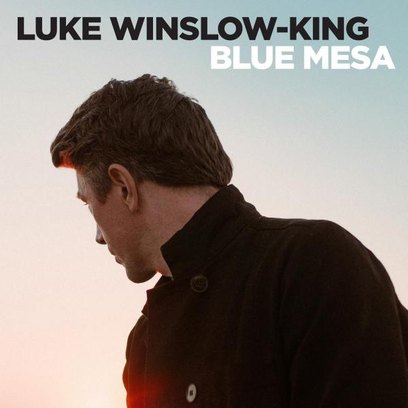
Luke Winslow King. Blue Mesa. Bloodshot Records

blue20mesaMore commonly associated with blues and New Orleans styled music, Luke Winslow King’s latest album for Bloodshot Records finds him reaching out a bit into the currently fashionable country soul genre. For sure he can still batter up a fine bluesy mess as on the Hooker ‘n Heat boogie of Thought I Heard You and the Albert King like guitar strutting Leghorn Women. Meanwhile the Big Easy is summoned up on the syncopated rhythms of Chicken Dinner adorned as they are by a fine horn section.
The majority of the album however is more laid back with Mike Lynch’s organ playing as prominent as Roberto Luti’s fiery rattlesnake guitar licks. While Born To Roam wanders somewhat uncomfortably into the rockier side of Eagles territory, elsewhere Winslow King settles into a comfortable groove which suits his slightly careworn vocal delivery just perfectly. The title song is enlivened with south of the border guitar arabesques while there’s a very fine slide guitar solo mid way through. Several songs sound as if he is mashing up Z Z Hill and Sam Cooke with Better for Knowing You the best example and After the Rain is an upbeat number which has a similar jauntiness to that of Van Morrison’s Cleaning Windows and which again has some very dandy slide guitar playing. The closing song, Farewell Blues,  written while his father was dying (The album is dedicated to his late father) is a simple homily to saying goodbye delivered in a country blues fashion with Gary Davis like guitar picking as a fiddle saws away also. A fine close to a very nice album.

Luke Winslow King plays several dates in England in September, dates here.

Website


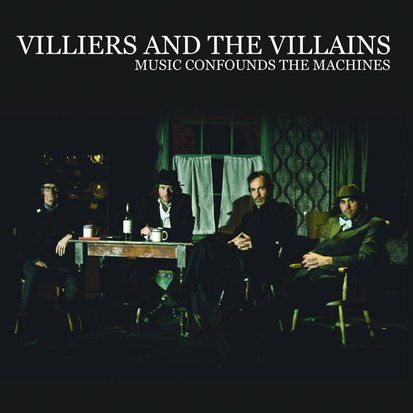
Villiers and The Villains. Music Confounds the Machine

a0119926799_16When Blabber’n’Smoke attended the Kilkenny Roots festival back in May we were very pleased to see Villiers and The Villains play in some of the local pubs as part of the free music trail which is an integral part of the festival. We’d first heard of this Belfast based band back in 2016 when we reviewed Songs of Love and Fate, a fine mix of Dylan influenced country rockers and some Lou Reed urban cool. Live we can confirm that they can carry off this mix with some aplomb, stretching out on some numbers with guitarist Doc Doherty keen to whip out some excellent solos at the drop of a hat. A perfect bar band in fact, rooted in blues and rock with the attitude and look of “been there and done it.” Music Confounds the Machine builds on the first album with the band tighter and taking on more influences including an exciting injection of south of the border Mexicana and while Tony Villiers is still somewhat in thrall to Dylan and Reed,  here he’s bolder, casting aside their shadows on several of the songs.

The album kicks off with a fat sounding horn section parping over a bluesy band stroll on The 1979 Situation with the horns and Doherty’s squealing guitar conspiring to drown the song in a caterwauling sound as Villiers snarls away. It’s loose limbed and pub friendly but as an introduction to the album it slightly wrong foots the listener as the remainder of the disc is much more nuanced. Kingdoms of Sin takes the born again Dylan of the eighties into an almost vaudevillian atmosphere with a cod dramatic vocal chorus as it waltzes along and one can imagine the late Alex Harvey enjoying this one and the bluesy Red Wine and Reefer would surely bring a smile to the ghost of Rory Gallagher. There’s more horn fuelled rumpus on Meat for the Dogs while Montpelier Hill comes across as if a jocular Lou Reed was having a good day. Little Rhoda May meanwhile is an excellent skiffle like number which, like several songs from the previous album, sounds like Dylan and The Band goofing off in the basement of Big Pink and The Band are again recalled as The Villains add an organ to the mix on the southern swell of Without Your Love.

So far so good but Villiers and the band ramp it up on several numbers. Mexico is a magnificent song which drinks deep of many excellent bands who have roamed around the borderlands with Little Feat the first that springs to mind although the band here invest the song with their own personality. The Government is Coming to Town recalls the theatrics of Kingdoms of Sin although here it’s more pronounced with Villiers the ringmaster announcing the arrival of ministers of state as if they were clowns tumbling from a car and the band trip out on Tijuana tequila. Two songs find Villiers speaking in his fine brogue with his voice on the title song invariably reminding this listener of Van Morrison’s Coney Island although there is no narrative, more an impressionistic poem imbued with the spirit of Dylan Thomas and Jackie Leven.  He speaks again on The Bubble Will Burst, a lengthy closing song which has the band and Villiers honing in on Lou Reed circa his New York album but which again is delivered with an authority which allows the song to stand well clear of becoming just a pastiche.

We need to mention the delightful Down at Ellie Mays which has Villiers with guitar and harmonica creating a song which can stand along with any romantic singer/songwriter song from the past couple of decades and he also picks up a harmonium for a hidden number at the end of the album bringing it to a wonderfully creaky end.

website

Red Pine Timber Co. Sorry For the Good Times. Goldrush Records

a3958064908_16With Scotland’s premier Americana festival at Southern Fried Perth looming, a perusal of the programme jolted us into remembering that we hadn’t discussed this second album from this excellent Perthshire band although it was released a few months back. For that we apologise but now is as good a time to delve into the album’s delights as surely any Blabber’n’Smoke readers within hailing distance will be going to Perth and they can purchase the album at the band’s show.
Anyway. Red Pine Timber Co. came into being several years ago, a hefty ensemble of  players assembled by Gavin J.D. Munro, late of the much missed Southpaw, and they released their first album in 2014 (which we reviewed here). With Monro well versed in the Americana idiom and the band adding a fine Celtic soul sound mix to the songs (including an adventurous horn section) the album was a bold step forward for Monro. As we said at the time the album was a collection of, “Wearied ballads that glow with a Tupelo honeyed light while the brass section adds a tumescence that is quite daring.” Four years down the line and we find that this could quite easily sum up Sorry For the Good Times although there are fewer wearied ballads and in the meantime Munro’s vocal foil, Katie Whittaker, has blossomed into a singer par excellence, her crystal clear voice able to worm its way into your heart while also being capable of belting out some raucous rockers. The band meanwhile, despite some line up changes, are well honed in bar room ballads and country styled rockers with that horn section still injecting a vital ingredient into the mix.

The album is much more reflective of the band’s live performances than their debut release. Having seen them several times, outdoors, indoors, in a crammed sweaty pub and a concert hall, they always put on a fantastic show. Monro and Whittaker can bring a tear to the eye as they cast themselves as heartbroken losers in life’s lost highway before the band roars into action and rips it up sounding for all the world like a testosterone charged Hot Band or a whisky fuelled New Orleans combo. Happily much of this is captured here.

They open with a Byrds’ like guitar jangle on If You Want To before the horns weigh in and propels the song forward as Munro and Whittaker share vocals on a number which is defiant and punchy. The pair then deliver Hollow Heart which still has a pugnacious horn section but has at its core a simple country styled song with mandolin breaks and creamy pedal steel churning away as the pair sing like star crossed lovers. The third song, Tracks in The Snow, allows Whittaker her first opportunity to fly solo with the band dialling it down to a pared back acoustic backing with only a swooning steel guitar and occasional twanged telecaster interrupting her vocal reveries. An acoustic guitar solo erupts halfway through with Spanish sounding arabesques adding a touch of exotica to this magnificent piece. Munro meanwhile is the front man on The Same Kind of Pretty which has a sinful slide guitar worming its way throughout adding a swampy southern touch to the song.

We do get some much anticipated tears in the beer songs with Whittaker, sounding like a Nashville angel, singing the aching hurt of Put Down The Bottle while Munro, not to be outdone, gives us the boozy western waltz Bar Stool with the band expertly inhabiting a mood of inebriation as fiddle and pedal steel weave away and a tipsy trombone completes the scene. The band do gear up however for the Bo Diddley rhythms of Look at The Moonlight, sounding here like some bastard son of The Stones and Tom Waits with screeching fiddle and an impressive harmonica solo wailing out from amidst the sonic maelstrom they conjure up. They swoop into Gram Parson Las Vegas territory on two songs, the horn fuelled For the Angels (which again has a lovely touch of the Stones in the piano opening) and the magnificent Cutting You Loose which finds the band really cutting it as they sound like the tightest country rock combo around while Whittaker here excels, staking her claim to considered amidst the newest crop of feisty country singers such as Sarah Shook and Linda Loveless.

Sorry for the Good Times is an eclectic listen but the Red Pine Timber Co. are an eclectic band who fuse a wide range of influences into an energetic whole. It’s somewhat heartening to be able to report that, for once, a band is able to capture some of their live energy on a disc. If you are going to Southern Fried be sure to catch them live.

Website


I See Hawks in LA. Live and Never Learn. Western Seeds Record Company

i-see-hawks-in-l-a-live-and-never-learn-cover-300dpi-696x623Still flying that old freak flag high and championing the evergreen sounds of Topanga canyon country rock from back in the seventies, I See Hawks in LA return to the fore with this excellent slice of slinky and sly songs. It’s been five years since their last album Mystery Drug and in the meantime two band members have had to contend with the passing of parents, events which stalled the band but which they say they got through due to friends, family and making music. A presumption then that these songs might have had a longer gestation than usual but they are all the better for that as The Hawks deliver a wonderfully balanced set which sets rockers and humorous tales alongside more serious matters such as their ongoing concern for the environment.
It’s a lengthy album but chockfull of great songs. Forget about the comparisons to the Eagles which commonly inhabit reviews of the Hawks. Here they delve deeper into the sounds of bands such as Poco, New Riders of The Purple Sage and even the good old Grateful Dead – just listen to the winding guitars in Singing In the Wind (a song which weirdly enough finds the Hawks in wind blasted Wuthering Heights territory). There’s also a soupçon of southern syncopation in the slow meander of White Cross and surely that’s the spring heeled wackiness of NRBQ lurking in the taut rhythms of Stoned with Melissa before it dissolves into its incense and peppermint coda. There’s cosmic cowboy joy in Poour Me while The Last Man in Tujunga is a supreme roadhouse boogie styled song which would give Commander Cody a run for his money.

The band are more contemplative on their ecology themed songs. Ballad For The Trees has singer Rob Waller sounding like Brett Sparks of The Handsome Family as he sings of the ecosystem in danger of breaking down as the band huff and puff with a powerful country rock chug. Planet Earth is, strangely enough, more ethereal, lifted to the heavens by some heavenly pedal steel playing despite the dystopian despair of the spare lyrics which recall the words of J. G. Ballard.  There’s also a light touch on the breezy Live and Never Learn where Dave Zirbel’s pedal steel uncoils itself in best 70’s country rock fashion while Tearing Me in Two adds some fiddle to the mix moving the band from the saloon to the front porch.

We need to mention two songs on which drummer Victoria Jacobs features. My Parka Saved Me is an almost fifties styled death on the road song as she recites the tale of a car smash with a twist on the old tale of a cigarette case catching a bullet. On Spinning she sings lead and takes us down a paisley patterned rabbit hole, a lovely nod to the naivety of many of the psychedelic folk songs of that long gone era. A paisley pattern or more appropriately, a coat of many colours, just about sums up this album as it dips and dives into various styles but overall the band weave these disparate threads into a very fine tapestry of songs and sounds, the end result being one of their best albums.

I See Hawks In LA are currently touring the UK, all dates here.

Website

The Mammals. Sunshiner. Humble Abode Music

6159nstzwkl

Mike Merenda and Ruth Ungar, after a long spell on the road and one (excellent) album as The Mike & Ruthy Band, here revive their old band name which went into hibernation some years back. The Mammals were considered one of the best roots rock band back in the noughties and came with a government warning due to their political songs, one in particular, The Bush Boys, getting right up the White House’s nose.

Currently a six piece band, the front pair are joined by guitarist and keyboard player Ken Maiuri, pedal steel player Charlie Rose, bassist Jacob Silver and drummer Konrad Meissner. Together they have produced in Sunshiner, an incredibly vibrant and joyous slice of music, a collection of songs that glide, that soar and exhilarate. This is today’s American folk rock, the band rolling along expertly picking up moss from antecedents from both sides of the Atlantic such as Fairport Convention, The Byrds and The Band while ancient roots from the folk tradition are also to be heard. It’s also a political album, not in the sense of polemics, but across the piece they cleave to an American radical position which goes all the way back to the Wobblies through to hippies and into the current protests on American streets. They celebrate humanity, deplore poverty and care for the environment and they do so in a most entertaining manner.

The full power and sweep of the band is apparent on the opening Make It True  with its Dylan like harmonica and folksy bustle with soaring harmonies urging folk to just appreciate and celebrate the very act of being here. This impressive ensemble sound is repeated on The Flood and Fork In The Road while Culture War is somewhat more folky with Merenda commenting caustically on current information highways, worrying about those cathode rays beamed into homes and feeding your mind, instead urging folk to get back to basics citing Guthrie and Seeger –  basically, Educate, Agitate and Organise. Open The Door meanwhile has Ungar singing about altruism with the band laying down a powerful rock beat and as the song heats up she sounds almost like Grace Slick as she hammers home the closing lyrics. For a full appreciation of the band’s chops however there’s the incredible kaleidoscopic mix of rock and folk which is Doctor’s Orders. There are words in here but they are submerged and distorted as Ungar’s fiddle and Maiuri’s organ just go kind of batshit all over the place, a delirious knees up indeed.

While this quicksilver folk rock sound is exhilarating, the band dial it down on a couple of numbers going back to their Catskill roots. Beautiful One is just Ungar and her ukulele on a lullaby like primer for kids advising them to be loving and kind and children are again at the heart of My Baby Drinks Water with Ungar’s voice almost acapella ( her father, Jay, adds some very  quiet violin) as she decries an avaristic society which allows children to starve. Maple Leaf chugs along nicely with a fine ecological message and Sunshiner is a very tender acoustic number with Merenda singing about a family whose men folk worked in the mines but who now try to be carbon neutral with solar powered generators. A worthy but perhaps dry subject to sing about but the band invest it with a quiet beauty, banjo tinkling and pedal steel gently flowing. When My Story Ends is a song some folk might consider worth having played at their demise.  Sounding as if it could have been written by Pete Seeger or Rosalie Sorrels it’s an incredibly sweet song with Ungar singing of her perfect way to end her days on earth.  They close the album with the beguiling notes of Big Ideas, the music here recalling the mood and ambience of John Martyn’s Grace and Danger over nine soothing minutes with Ungar and Merenda softly singing together over muted keyboards and atmospheric guitars. It’s truly a beautiful song and a wonderful way to end the album.

Website


Cowboy Junkies. All That Reckoning. Proper Records

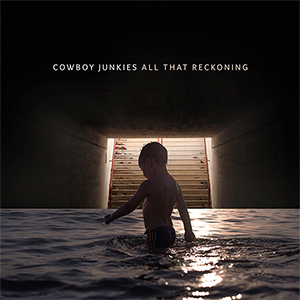
prpcd149-300px30 years on from The Trinity Sessions and 16 albums along the line the Cowboy Junkies continue to mesmerise with their simultaneously glacial and slow burning sounds with Margo Timmins’ voice and brother Michael’s warm guitar tones their signature. All That Reckoning, their first release in six years, follows what was for them a furious burst of activity when they released four albums in their Nomad series in 2011 -2012. Recorded when the band found themselves without a record deal the four albums showed the disparate faces of the band, each disc with its own personality with two of them based on particular themes. All That Reckoning however irons out these facets with the band adopting an at times sepulchral sound with solid bass and drums propelling swathes of guitar while Margo Timmins voice reaches out from the depths.

The album opens with the spare glowering of All That Reckoning (Part 1) with bass guitar guiding the vocals over a background of muted electronic effects, the song signalling that this is not going to be a sunshine sort of listen. A wash of percussion introduces When We Arrive with Timmins singing, “Welcome to the age of dissolution,” a nod perhaps from writer Michael regarding the new world age we are in currently as nations close their drawbridges. The the song is delivered at a similar pace to the opening song although with a narcotic lushness about it and much of the album is in a similar vein, walking pace songs with stolid bass and drums and Timmins’ ice queen voice although there is variety in the guitar settings along with occasional additional instrumentation.

They do crank up the volume and energy at times.  Sing Me A Song is fuelled with fuzz guitar and incandescent solos as the rhythm section rock out and All That Reckoning (Part 2) stomps angrily all over its earlier counterpart. Meanwhile Nose Before Ear sounds like a tale plucked from the Child Ballads with the band sounding as if they have been listening to Calexico while Wooden Stairs sounds as if it’s describing a hidden story behind the bland facade of Grant Wood’s American Gothic.

The Things We Do to Each Other stands out with its acoustic guitar slightly setting it somewhat aside from the other numbers but it’s essentially another piece in the jigsaw here with the band railing against the populist attempts to segregate against anyone who is not one of us.  Obviously written some time before the furore surrounding America’s recent immigration issues Missing Children is astoundingly prescient.  A huge slab of a song with angry jabs of guitar and violin stabbing throughout Timmins sings sounding like Patti Smith at times as she sings of the indifference of folk to news items regarding the plight of child immigrants. It’s the centrepiece of an album which is indignant regarding the current state of affairs and perhaps the best album the Cowboy Junkies have recorded for some time.

Website