Our friend in Edinburgh, David Ferguson, writes about the wonderful new album from Hannah Read…
Hannah Read is an Edinburgh-born singer, songwriter and fiddler (with links also to the remote Scottish Isle of Eigg), who is now resident in Brooklyn, New York. Hannah is much in demand as a collaborator on both sides of the Atlantic and was part of the highly successful Songs Of Separation project, which won Album Of The Year at last year’s BBC Radio Folk Awards.
For her first full-length album, Way Out I’ll Wander, Hannah Read has delivered a beautifully-crafted set of songs which deal elegantly, eloquently and honestly with universal themes of home, love and loss. Hannah’s pure and clear vocals (transatlantic, with pleasing traces of her Scots accent) are to the fore, while subtle washes of strings, woodwind and yearning lap steel guitar add richness to the intimate song arrangements.
Highlights from this very fine album include Moorland Bare (an evocative Robert Louis Stevenson poem set to Hannah’s hauntingly beautiful melody); the simply stunning Alexander (a poignant and reverential tribute to an elderly war veteran); Way Out I’ll Wander (an achingly beautiful reflection on the loss of Hannah’s much loved grandfather “…on the last day of the year…”); and the invigorating Boots (which oozes delight in the simple pleasures of newfound love).
Filled with songs of true depth and beauty, Way Out I’ll Wander is likely to bring Hannah Read even greater recognition on both sides of the Atlantic, on a par with her good friend Sarah Jarosz (who provides backing vocals on the album).
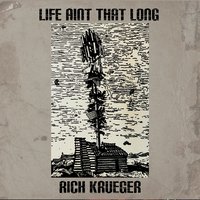
We were introduced to Rich Krueger last year via his EP Overpass (reviewed here) which revealed him as a serious songwriter with razor sharp wit, a sometimes surreal way with words and an excellent ability to blend various musical styles ending up with his own idiosyncratic sound. The EP was a curtain raiser for two planned album releases with Life Ain’t That Long the first to be whelped into the world and a fine pup it turns out to be.
There’s no template for a Krueger song and the album weaves like a drunken sailor with bar room wisdom, tin pan alley pop, country and old fashioned R’n’B all stumbling into view. Sure enough there are shades of Springsteen, Newman, Bukowski and Van Morrison here and there but it’s all filtered through Krueger’s sardonic prism. The album opens with the country styled A Stoopid Broken Heart which sweeps along with pedal steel, fiddle and slide guitar in a glorious manner as Krueger sings as a barfly longing for the bar singer and telling everyone in the saloon about it. The Gospel According To Carl is more mannered, kicking off like a Randy Newman number with Krueger and his piano carrying the melody before the band weigh in and the song swells into a Gospel number. It’s a grand narrative, the protagonist a flashy used car dealer who can charm the pants off the customers having learned his craft as a pretend cripple at his dad’s tent shows. Of course dodgy brakes on a just sold car lead to calamity and his literal downfall as he sits atop a church, sozzled and ready to fly. Meanwhile the guy opportuned for casual sex in a bar in A Short One On Life grows to empathise with his paramour’s plight while Ain’t It So Nice Outside Today inhabits the souls of people who suffer- ill, old, maimed, feeling helpless, yet, despite this parade of horrors, there’s ultimately a sense of optimism by the end. The quest for happiness is investigated in the jazzy What Is It That You Want with Krueger recalling Ben Sidran back in the days.
Krueger seems to delve into his own past on a few songs. ’77/17 is a coming of age tale which recalls a first love and the ongoing flame it ignited, his own American Pie (in both the Don McLean and the movie series sense). Krueger’s teen sex life and the cultural highpoints of 1977 are conjoined in this winning slice of slightly stained urban R’nB grit. The Sex Pistols are one of the cultural touchstones in ’77/17 and Sid Vicious makes an appearance in the schlocky Springsteen like Then Jessica Smiled which is replete with farting sax solos and female harmonies straight from the Brill Building as Krueger looks back on his life, the lyricism here diametrically opposed to the wonderful pastiche that is the music with the song ending with a quote from Bonnie Tyler’s It’s A Heartache. Delicious.
Finally there is the crowning glory that is The Wednesday Boys, a song which truly inhabits the Celtic soul of Van Morrison with Krueger even approximating Morrison’s stream of consciousness delivery. It’s his Brooklyn version of Cypress Avenue and his band here support him with flying colours creating a wonderful neon lit night time ambience, Ed Hopper’s Nighthawks coming to life. We look forward to the promised second album.
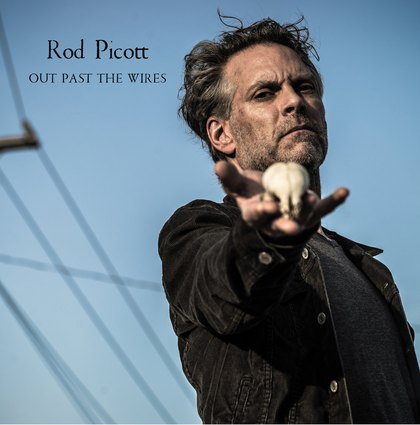
Whetting our appetite for his upcoming tour of the UK, Rod Picott releases his most ambitious album yet, the sprawling double disc (on CD and also on vinyl!) Out Past The Wires, 22 songs carved from his usual cast of blue collar workers, hard luck losers and folk living on the edge. Picott seems to have been extraordinarily prolific in the last year, the songs on the album whittled down from a long list of 78 to 32 serviceable ones, the ten spare songs expected to surface at some point. In addition he has released a collection of his poetry (God in His Slippers) and is preparing a book of short stories which will expand on some of the characters in the songs here.
Produced by Neilson Hubbard, the album features Picott backed by a studio band which includes Hubbard on percussion along with Will Kimbrough, Evan Hutchings, Lee Price and Kris Donegan with Picott recording his voice and guitar initially before the band set to backing them allowing the fuller band arrangements to rock out with some finesse, a finely nuanced balance of loose limbed spontaneity and excellent playing. There are moments here when they sound like The Faces with the slide guitars on A Better Man particularly reminiscent of Ronnie Wood slashing away while Better Than I Did opens with a Lennon like harmonica trill before the band head into Basement Tapes territory.
With Picott’s more sensitive songs, featuring just him and his guitar with some minimal backing, scattered throughout the two discs, mingling with the full on band songs, there’s no dichotomy between the discs here and, somewhat rare for a double album, no sense that Out Past The Wires would work better as a single disc. Instead it’s a double dose of good medicine with no slump in quality control in sight. He’s by turn joyous and morose, optimistic and pessimistic, angry and resigned. Blanket Of Stars is a beautifully delivered tender song sung by an outsider who’s mother was a teenage bride, his daddy a little bit drunk while Holding On ruminates in a similar manner with Picott in solo folksinger mode, the song grabbing one’s attention just as much as the rockier items here. Dead Reckoning is a perfectly realised love song as is The Shape Of You although here the love is in the past and the singer is drinking away his memories. Alcohol is the devil in Bottom Of The Well, a stark and astute portrait of a descent into addiction but this despair is somewhat redeemed by the following We All Live On, a rare note of optimism from Picott.
It’s a joy to hear Picott and the band gel on songs such as Take Home Pay (one of four co-writes with his buddy, Slaid Cleaves) and Coal which burns with a slowly seething sense of injustice along with a Southern rock swamp vibe while Hard Luck Baby is a rocker in the Mellencamp camp. But the 22 songs here run through a gamut of styles with the common denominator being Picott’s finger on the pulse of today’s America with Hard Luck Baby coming across like a condensed and updated version of The Grapes of Wrath. Overall the album is a triumph with Picott stepping up to the mark throughout and it certainly sets the barrier high for his upcoming shows, a barrier we are sure he will surmount as he’s a seasoned and exceptionally good performer. In addition he’s preparing the companion book with a first sneak peek available here as he fills in the background to Take Home Pay.
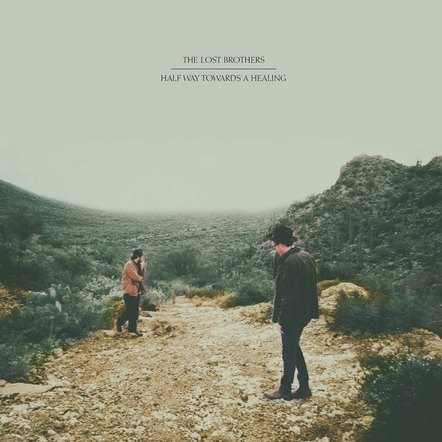
Oisin Leech and Mark McCausland, the Irishmen who sing so beautifully together as The Lost Brothers, headed to the arid lands of Tucson, Arizona for their latest instalment of wonderfully crepuscular songs. The pair have a penchant for choosing a specific location for each of their recordings (including Liverpool, where they started off as a duo, Sheffield, Portland Oregon and Nashville) and often a particular producer, believing that it’s key to attaining the “magic.” For Halfway Towards A Healing they recorded in Dust and Stone Studios with owner Gabriel Sullivan and the legendary Howe Gelb overseeing the production and sure enough, some of the Giant Sand man’s sonic drizzle percolates throughout the album.
There’s no dramatic change in The Lostie’s sound. They’re still the perfect late night accompaniment, their harmonies excellent, the songs almost lullabies, a balm for the discontented and the lonely. They’ve often been compared to Simon & Garfunkel but at times here they approach the melancholic lyrical beauty of Leonard Cohen, the title song here being the premium example (while it also slouches along wonderfully with Gelb’s fingerprints all over it). More Than I Can Comprehend (co-written with Glen Hansard) is a lyrically stark portrait of a relationship blowing up and Songs Of Fire is despair writ large despite its incredibly nimble arrangement. For true melancholia however it would be hard to beat Summer Rain which rambles along wonderfully with Gelb’s idiosyncratic lounge piano allied to a lazy cowboy rhythm.
The opening songs, Echoes In The Wind and Where the Shadows Go, will satisfy those who hold to the Simon & Garfunkel comparison, the former in particular is suffused with Simon’s early style. Come Tomorrow, a song which canters along in comparison to its siblings recalls another sixties songwriter, in this case Tim Rose and his version of Morning Dew. Again Gelb seems to be in the background with gently twanged guitar and occasional sonic splutters making their mark. On working with Gelb Mark McCausland says, “He would pick us up in the morning and take us out into the desert. We’d walk for hours, then he’d drop us back at the studio. We’d go through songs with studio engineer Gabriel Sullivan, then Howe would meet us at the end of the day, listen to what we’d done and work on the tracks. All those trips into the desert were to get the environment into our system.” The Tucson topography looms large in the instrumental, Reigns Of Ruin, a gentle cantina styled strum and Gelb himself has a cameo appearance as he narrates the closing song, The Ballad Of The Lost Brother, a self help manual of sorts which sounds like the sort of thing Travis Henderson (from Paris, Texas) might have said were he a gonzoid Zen like musician from Tucson, an odd end to the album but a delight for any fans of Gelb.
Mark Twain said, “Comparison is the death of joy” but if one were forced to compare Halfway Towards A Healing against their earlier albums it’s tempting to say that this is their best yet.
For two decades Tom Heyman has been a vital part of the San Franscisco music scene, a go to pedal steel man and guitar slinger who has recorded and played with the likes of Chuck Prophet, Alejandro Escovedo, Russ Tolman, Mark Eitzel and John Doe. He came to Blabber’n’Smoke’s attention when he released his third solo album, the late night wallow that was That Cool Blue Feeling and we got to see him play live when he toured over here with Dan Stuart and Fernando Viciconte. On Show Business, Baby, Heyman wanted to capture the experience of “seeing a great band getting down in a small club, “citing his love of bands such as Rockpile, The Flamin’ Groovies and NRBQ, an experience he knows all too well having spent ten years with Philadelphia’s Go To Blazes and he succeeds in spades.
With 13 songs, all hovering around the three minute mark, the album is an excellent collection of taut and punchy numbers, many of them capable of being inserted into The Groovies’ Teenage Head with no seams showing. There’s a sense of juvenile delinquency (and more so, inadequacy) on several of the songs along with tons of swagger and snot – the closing number, Sonny Curtis’ Baby My Heart (with Heyman digging into Bobby Fuller’s version) is straight out of Nuggets. The curling guitar riff which kicks off the album on Baby Let Me In sets the scene as Heyman snarls and whines impotently at his girl who’s locked him out as the band barrel on magnificently, a Seeds like keyboard stab incessant along with a deranged guitar solo from Heyman. It’s a great start to the album but throughout there are songs which just spring from the speakers brimful of attitude, stuffed with memorable riffs and stomps. The cowbell happy Show Business recounts Heyman’s time as a bartender, What In The World is NRBQ meets Bo Diddley while Whiskey Wolf kicks off with a Dragnet like guitar riff as Heyman sings of a 9-5 guy transformed into a booze fuelled predator at the weekend with guest guitarist Eric Ambel howling at the moon on his “rip snorting guitar solo.” Meanwhile the hero in Out West dreams of getting it together by heading for the coast of the setting sun as the band clatter along like Joe King Carrasco and All Ears has the pounce and drive of Nick Lowe’s Rockpile.
On a couple of the songs Heyman comes across as a successor to Mott The Hoople’s Ian Hunter whose hip sense of sneer ruled songs such as The Golden Age Of Rock’nRoll.Etch A Sketch is a clever metaphor for a broken heart while Little Killers is one of those songs stuffed with rock’n’roll cliches tossed off with a cool attitude and a fine pop sensibility. Finally, there’s a magnificent cover of Dion’s Daddy Rollin’ (In Your Arms) which is heavier than the other songs here, an evil sounding organ fuelled blast with pummelling drums, it’s like a Vanilla Fudge cover of Dion’s fuggy folk psychedelic original leading one to wonder whether Heyman could investigate a late sixties voodoo vibe somewhat further.
With this sleek, sharkskin suited (with a hint of glitter), album, a hymn to tight rhythm, cool riffs and snarly rock attitude, Heyman succeeds perfectly in his quest to capture the joy of close up musical nirvana. It would be a joy to see him deliver any of this live.
Celtic Connections is coming up and one of the first artists Blabber’n’Smoke is going to see is Findlay Napier who will be performing his latest release, Glasgow. An album that is part tribute to, part dissection, of his adopted hometown, Glasgow is a worthy successor to Napier’s VIP, an album that found him delivering wry biographies of some famous (and some not so) people.
Glasgow’s a notorious city (or so we Glaswegians think). On the one hand it has a reputation for poverty and violence, on the other, it’s the friendly and forward looking metropolis that has been a city of culture and which has its very own “style mile” (in reality just a bunch of the same department stores you can find in any city centre). What Glasgow does have and always had is a ready supply of talent ready to mythologize the grimy tenements, the gangs, the shopping, the culture, the football and the music and perhaps Napier’s greatest achievement here is that he isn’t one of those. Sure, there are moments on Glasgow when he is in thrall to the history and romanticism that does exist in this once called “second city of the empire” but overall here he is an oblique aural flaneur taking the listener throughout various aspects of the city that have influenced him. That he does it with such casual excellence is the icing on the cake.
With Boo Hewerdine supporting on guitar and piano and with occasional field recordings the album is less fleshed out musically than VIP, however this allows Napier’s clear and ringing voice full rein over the simple backings. He opens the album with tolling bells as he sings about the city’s central necropolis, a ghost story one might expect but instead Napier delivers a potted history of Glasgow’s patron saint while describing the Goths who frequented the graveyard when he lived nearby. As on VIP’s Hedy Lamarr, Napier gets a subject and takes it places one would never expect. Glasgow’s history of shipbuilding sails into view on the powerful There’s More To Building Ships with Napier railing against the faceless men who dismantled the industry while detailing the industrial illnesses endured by the workforce, here he reminds one of a powerful songwriter from Leith, Dick Gaughan. Pulling Wires is another social testament inspired by a documentary on Glasgow’s homeless who collect scrap metal and again it’s transformed into a memorable and hefty folk song. The Locarno, Sauchiehall Street 1928 pays tribute to a famous Glasgow dance hall and is imbued with a similar sense of wonderment and memory as VIP’s Valentina but Napier’s other slice of everyday life centres on a chip shop bang in the centre of town as he sings of an unrequited love affair with a girl who wraps the fries. Banality transformed into art it’s supremely underplayed.
As a musician who came to live in the city, Napier acknowledges others who have written and sung about Glasgow with a fine selection of covers. Chief of these is his rendition of Cod Liver Oil And The Orange Juice, a song popularised by the late Hamish Imlach and a great vehicle for Napier who gives it just the right amount of salaciousness. The Blue Nile’s A Walk Across The Rooftops, a reminder of Napier’s student days is stripped right down and sung as a delicate and tender love song, Napier posing as a Glaswegian Chagall. Michael Marra’s King Kong’s Visit To Glasgow manages to cram several tributes into one as it mentions The People’s Palace, Glasgow bands, footballers, Glasgow’s one time reputation (again) as “cinema city” and , most of all, to the writer, Marra, a Dundonian who wrote about Glasgow better than most Glaswegians. Football, and its unsavoury punch-ups, open Julia Doogan’s Glasgow but the song soon settles into a hymn of sorts to the Dear Green Place. Finally, Napier offers up a gorgeous reading of Emma Pollock’s Marchtown, a glorious song which addresses the history of an area, now called Strathbungo, historically associated with Mary Queen Of Scots, an area which Napier himself now calls home.
Glasgow is an album which any fan of Napier will love and for many Glaswegians it will strike a chord. From the excellent cover artwork with Napier recreating Raymond Depardon’s striking image of Govan kids in the 80’s (including a very sad shot of him standing in the doorway of the derelict Lyceum cinema, a haunt of Blabber’n’Smoke’s childhood) to the many totems mentioned in the songs, it just hums with the vibrancy that many of us believe still surrounds the city.
For anyone interested in Texan folklore and the songs of Townes Van Zandt, Butch Hancock and Guy Clark this album is an intriguing listen. Tim Henderson, who died in 2011, was from West Virginia but moved to Austin, Texas when in his 30’s. Influenced by his grandmother who played mountain dulcimer Henderson took up music at an early age but once in Texas he joined in the budding musical scene there releasing his first album in 1978. While his fame never expanded much beyond the State’s borders, at home he was feted with Townes Van Zandt championing him as he won a best song award at The Kerrville Folk Festival in 1977 while he was awarded a Lifetime Achievement Award by the Academy of Texas Music in 2011 for his “timeless contributions to Texas music.”
Gone To Texas is the first volume of a six album set which gathers Henderson’s recording together and, as the title hints, it concentrates on the songs he wrote about Texas history, culture and people. Released last year in The States it’s coming to our attention now due to the ministrations of promoter Rob Ellen who heard about Henderson when he was on the road with an artist Henderson mentored, Chuck Hawthorne. Ellen attended a concert celebrating the album release and was knocked out and amazed at the galaxy of Texas artists who turned up to pay homage and undertook to try and spread the word further. For that we say, Thanks Rob.
Listening to the album I was struck time and again as to why Henderson isn’t better known. His songs range from vibrant retellings of pivotal moments in Texas history to songs packed full of humour and wit. His Ballad Of Whiskey John (one of the songs that helped him win the Kerrville New Folk Competition – Van Zandt was a judge that year) is a folk tale, almost a talking blues, which recalls Loudon Wainwright and Kinky Friedman. Witch Of West Lynn, written in revenge against getting a ticket for running a red light, cackles with an absurd humour with Henderson roaring like Shel Silverstein while Jesus Would Have Loved El Paso is a sly dig at television pastors such as Jerry Falwell who delighted in calling Texans sinners and it’s delivered with a passion similar to that of Tom Russell.
Russell comes to mind again when Henderson dips into the border territory as on La Dona Maria and Maria Consuelo Arroyo, both replete with Hispanic sounds and the latter leading us into another comparison, this time with the rawness of Terry Allen’s Juarez. There really is so much treasure here (some not so polished, the living room recording of Texas Morning Ride gains from its lo fidelity) with songs such as Dust and Texas In His Ways truly embedded in the Texas tradition but our favourite is the magnificent Miss Amelia Harris, Spinster, a song which sounds as if you had bundled together all of the artists we’ve mentioned here and added a dollop of John Prine.
Gone To Texas is a tremendous listen and it whets the appetite for the accompanying volumes. Hopefully it and the other five discs serve to spread Henderson’s legacy further afield, we’d certainly love to hear more of the man. Thanks again, Rob.
Mary Gauthier is no stranger to hurt and heartache, despair and gloom. Over the course of seven albums she’s relayed her own troubled past – adoption, drink, drugs, brushes with the law – and done so brilliantly rising to the top of the current crop of singer songwriters. Rifles & Rosary Beads is another album of troubles and woe with Gauthier’s wearied and resigned voice, as always, capable of conveying a multitude of emotions. The difference here is that Gauthier is relating the pain and trauma of war veterans, the songs having their gestation in a series of song writing workshops where she sat down with US veterans and transformed their experiences into song.
Songwriting With Soldiers is a non profit organisation started by Darden Smith which encourages veterans to share their experiences with professional songwriters. Weekend retreats feature workshops and the resulting songs are performed and recorded with participants given a CD to take away along with other memorabilia of the retreat. Download copies of the songs recorded are then made available to the public with the veterans involved and the artist given song writing credits Gauthier (along with a list of other well known artists) has been involved in the project for several years and Rifles & Rosary Beads is her “commercial” version of some of the songs she has co-created over those years, all of whom were consulted and agreement given that the record be made. A portion of the sales generated will go to Songwriting With Soldiers.
You can read an interview with Gauthier here which goes into some detail about the song writing process, however in the studio she has recorded the songs very much in her usual manner such that anyone not knowing of these songs’ gestation would just be marvelling at yet another very fine Mary Gauthier album, The War After The War and Morphine 1-2 could easily sit on any of her other albums – the former song was crafted when Gauthier sat with six spouses of veterans who explained their ongoing difficulties dealing with the emotional fallout from war on their partners (with all six listed as co-authors). While there’s a strident, almost martial edge, to the opening song, Soldiering On, the album as a whole is set in Gauthier’s familiar laid back style. Iraq portrays a female soldier’s experience of sexism from her supposed comrades, Rifles And Rosary Beads is a vivid picture of a soldiers totems and fears and It’s Her Love is a devastating portrayal of a veteran’s reliance on his partner’s support. The album closes with an anthem of sorts, a cry against the indifference meted out to many wounded and troubled service men and women as Gauthier sings that they are Stronger Together.
Rifles & Rosary Beads is a powerful and emotive listen. It’s Gauthier doing what she does and doing it well. Beyond that it raises the profile of the forgotten wounded (and surely here in the UK there’s a need also). You can hear many of the original songs recorded at the retreats here.
Ho, ho, ho. It’s that time of year again and you can’t go to the shops without your ears being hammered by the usual festive suspects – we won’t name them but you know who they are. Over the past couple of years however there’s been a groundswell of Christmas songs that one can actually listen to and enjoy and this compilation from Hemifran Records is the best we’ve heard in a while.
Label owner, Peter Holmstedt, decided it was time to put out a decent collection Christmas songs, “I’m a big fan of compilation albums, and I had the idea of reaching out to singer songwriters I know and admire, and asking them to write a song with a Christmas hook…I was interested to hear what interpretations they would come up with and I was delighted at the response.” What he ended up with was 18 songs which hover around the season, some more so than others, for the most part devoid of sleigh bells (Keith Miles, Citizen K and The Refugees are the guilty parties but we forgive them) and certainly with none of the enforced jollity or fake sentiment that seems de rigour for a listen under the mistletoe.
Opening with a song about a bi-polar cousin visiting and threatening to kill you bodes well for the album and Elliott Murphy’s Five Days Of Christmas is darkly humorous but the remainder of the album consists of that spirit of Christmas that seems to affect so many folk these days – loneliness and past memories. So, aside from the rockabilly swagger of Fayssoux’s Christmas Ain’t Christmas and the jiving This Christmas from The Refugees, we’re well into Joni Mitchell River territory here. As such, Annie Gallup offers up her tale of a long and lonesome journey enlightened when the passengers began to Carol on Christmas On The Train, a song that reminds one of The McGarrigles, while Jude Johnstone’s piano ballad, I Guess It’s Gonna Be That Way, hits all the Mitchell buttons as does Janni Littlepage’s chilly Now That Winter’s Come. The guys here can also hit those buttons with Kenny White’s Christmas Day another lonely travelogue and Paul Kamm’s Where Are You Going Tonight a nice folky evocation of chilly winter nights. And while Keith Miles and Jack Tempchin go down the smoochy ballad route (successfully one must say) there’s some grit on the road when Bob Cheevers unveils his growling and bluesy The Spirit Of Christmas which roams around homeless folk hunkered down just trying to survive the season.
Finally, Citizen K conjures up a Brian Wilson like production on his I Won’t Be Home For Christmas while My Darling Clementine deliver probably our favourite here, Miracle Mabel. It’s their own update on their own nativity tale and it’s wonderfully done. Slyly resisting the bible (that book with Cain and Abel), they celebrate their own child in a perfect facsimile of a Christmas song. It deserves to stand up alongside Christmas staples such as watching It’s A Wonderful Life.
So, if you’re looking for an “alternative” musical accompaniment to your Turkey dinner, seek no more. It’s here and it’s a bit of a Christmas Cracker with a hidden song at the end.
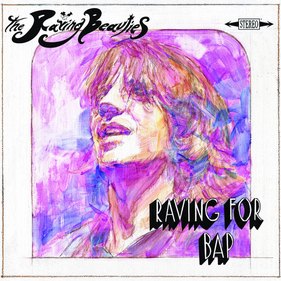
It’s just over a year now since Bap Kennedy died from cancer. Since his death his family have been raising funds for Belfast’s Marie Curie Hospice where he spent his last days and this unique tribute to his music is an opportunity for you to join in.
Raving For Bap is a five song EP performed by Brian Bell of The Raving Beauties and The Dreaming Spires (readers with a good memory might recognise these names from The Paisley Overground mini album they conspired on some time ago). Bell, a long time friend of Bap had been planning on recording with The Spires but in the wake of his passing decided a tribute disc would be apt. However, these disciples of jangled Byrds’ like pop declined to ape Bap’s performances, speaking to The Irish News, Bell said, “We didn’t want to just do ‘straight’ covers of Bap’s original arrangements, so tried to choose songs that would showcase his wonderful song craft and melodic flair, but in a very different way.” The result is five songs, including two from Energy Orchard days, that sparkle in a way that will be familiar to listeners of The Beauties and The Spires.
The streetwise suss of Hard Street, the country blues of The Way I Love Her and the unabashed romanticism of Moriarty’s Blues are here all awash with12 string jangled guitars and sweet harmony singing along with whiffs of mild psychedelia. That all five songs (Walk In Love and Lonesome Lullaby are the other two) are successfully reimagined is testament not only to the band’s skills but also Kennedy’s song writing skills – it’s tempting to imagine him here as the Dylan to the Raving Beauties’ Byrds. Mind you there’s a fine Beatles like guitar feel to Lonesome lullaby, a nice touch given the Liverpudlian affinity with Ireland while The Way I Love Her has a punchier attack more akin to later Paisley Underground bands such as The Long Ryders.
Although it’s over far too soon, the EP is a tremendous listen. With Christmas coming up it’s a perfect alternative (and almost the same price these days) as a charity festive greetings card. All proceeds from sales will go to Marie Curie. You can download the EP here but there is also a limited edition 10″ vinyl disc available here.
 Our friend in Edinburgh, David Ferguson, writes about the wonderful new album from Hannah Read…
 We were introduced to Rich Krueger last year via his EP Overpass (reviewed
  Whetting our appetite for his upcoming tour of the UK, Rod Picott releases his most ambitious album yet, the sprawling double disc (on CD and also on vinyl!) Out Past The Wires, 22 songs carved from his usual cast of blue collar workers, hard luck losers and folk living on the edge. Picott seems to have been extraordinarily prolific in the last year, the songs on the album whittled down from a long list of 78 to 32 serviceable ones, the ten spare songs expected to surface at some point. In addition he has released a collection of his poetry (
 Oisin Leech and Mark McCausland, the Irishmen who sing so beautifully together as The Lost Brothers, headed to the arid lands of Tucson, Arizona for their latest instalment of wonderfully crepuscular songs. The pair have a penchant for choosing a specific location for each of their recordings (including Liverpool, where they started off as a duo, Sheffield, Portland Oregon and Nashville) and often a particular producer, believing that it’s key to attaining the “magic.” For Halfway Towards A Healing they recorded in Dust and Stone Studios with owner Gabriel Sullivan and the legendary Howe Gelb overseeing the production and sure enough, some of the Giant Sand man’s sonic drizzle percolates throughout the album.
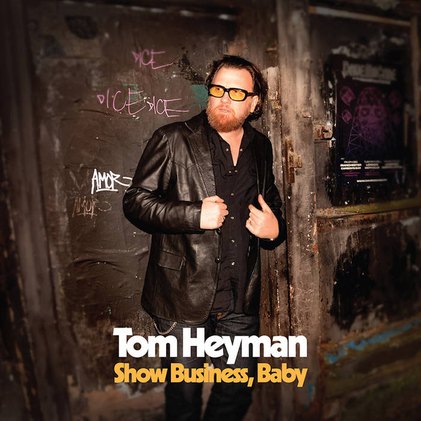 For two decades Tom Heyman has been a vital part of the San Franscisco music scene, a go to pedal steel man and guitar slinger who has recorded and played with the likes of Chuck Prophet, Alejandro Escovedo, Russ Tolman, Mark Eitzel and John Doe. He came to Blabber’n’Smoke’s attention when he released his third solo album, the late night wallow that was
  Celtic Connections is coming up and one of the first artists Blabber’n’Smoke is going to see is Findlay Napier who will be performing his latest release, Glasgow. An album that is part tribute to, part dissection, of his adopted hometown, Glasgow is a worthy successor to Napier’s
 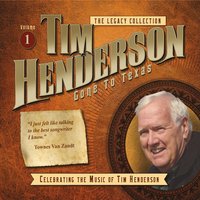 For anyone interested in Texan folklore and the songs of Townes Van Zandt, Butch Hancock and Guy Clark this album is an intriguing listen. Tim Henderson, who died in 2011, was from West Virginia but moved to Austin, Texas when in his 30’s. Influenced by his grandmother who played mountain dulcimer Henderson took up music at an early age but once in Texas he joined in the budding musical scene there releasing his first album in 1978. While his fame never expanded much beyond the State’s borders, at home he was feted with Townes Van Zandt championing him as he won a best song award at The Kerrville Folk Festival in 1977 while he was awarded a Lifetime Achievement Award by the Academy of Texas Music in 2011 for his “timeless contributions to Texas music.”
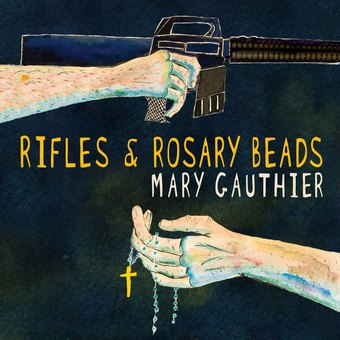 Mary Gauthier is no stranger to hurt and heartache, despair and gloom. Over the course of seven albums she’s relayed her own troubled past – adoption, drink, drugs, brushes with the law – and done so brilliantly rising to the top of the current crop of singer songwriters. Rifles & Rosary Beads is another album of troubles and woe with Gauthier’s wearied and resigned voice, as always, capable of conveying a multitude of emotions. The difference here is that Gauthier is relating the pain and trauma of war veterans, the songs having their gestation in a series of song writing workshops where she sat down with US veterans and transformed their experiences into song.
 Ho, ho, ho. It’s that time of year again and you can’t go to the shops without your ears being hammered by the usual festive suspects – we won’t name them but you know who they are. Over the past couple of years however there’s been a groundswell of Christmas songs that one can actually listen to and enjoy and this compilation from Hemifran Records is the best we’ve heard in a while.
 It’s just over a year now since