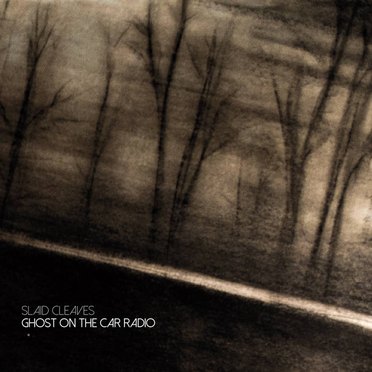
Slaid Cleaves. Ghost On The Car Radio.

a3490201652_16Never a man to let you down Slaid Cleaves again comes up with the goods with Ghost On The Car Radio, a magnificent selection of songs that, aside from acting as a primer on how to turn out a nigh perfect album, reflects our current troubled times. It’s not a political album per se but Cleaves continues to be a champion of blue collar working songs on the sly country funk of Little Guys and the finely burnished Primer Gray, both songs hanging on the automobile as a metaphor for the state of the nation. The pulsating Take Home Pay with its growling guitars is a fine a capture of day to day scraping it together, the protagonist, unable to compete with younger labourers, pawns what he has and considers selling his blood, as Cleaves explains, “I’m bone dry but I can bleed.” Continuing their mutual admiration society Cleaves features four songs co-written with his buddy Rod Picott and his version of Drunken Barber’s Hand (a pacier rendition than Picott’s on Fortune), is given some elucidation via an interview Cleaves gave to Rolling Stone where he explains that the song was written in response to the topsy turvy politics that was gathering pace in the States.

Given all this the album overall is less direct than Cleaves’ last album (2013’s Still Fighting The War) and he lays down some songs that at times approach a Beatles’ like melodic air. If I Had A Heart is a careworn threnody, a life of dissolution and regret straining to accept the concept of a new innocence. So Good To Me meanwhile has McCartney like bridges over a very finely nuanced mix of acoustic clatter and swooning electric guitar while To Be Held drips with soulful tears as Cleaves almost dips into Solomon Burke territory with able assistance from Harmoni Kelley on harmony. There are also some invigorating slices of out and out jangled rock with Still be Mine a wonderful cascade of keyboards and guitars while the opening song, Already Gone, crashes in with a Tom Petty like flourish. Add in the Bakersfield jaunt of The Old Guard and the closing solo rendition of Junkyard, a slight return to the automobile motif equating a terminal illness to the heaps of rusting cars and you have one of the best albums of the year so far.

Website

Anna Coogan. The Lonely Cry Of Time & Space

a4200116745_16Last time we looked Anna Coogan was a wandering minstrel of the singer/songwriter variety as evidenced by albums such as The Wasted Ocean and The Nowhere Rome Sessions. There was a hint of things to come when her versatile voice was added to the freaky world of Johnny Dowd’s last two albums and on The Lonely Cry Of Time & Space she breaks through to an alien universe of sound that’s somewhat akin to PJ Harvey working with Angelo Badalamenti.
Played in the main by Coogan on voice and guitar with Willie B on drums, Moog bass and synthesiser the album is a helter skelter ride into avant-garde mutations of surf music, twang and arid desert ruminations with a dash of astrophysics added for good measure. With some songs written to accompany vintage French and Russian movies while others rail against the recent Trumpdon of America and the threat to the environment that it entails, Coogan achieves a huge sound that swirls throughout. At times almost hypnagogic, elsewhere like a trepanning as she drills into your head, it’s a challenging listen but there are enough hooks to drag the listener on board. A song like If You Were The Sun with its operatic vocals, alien synthesized ambience and closing heavy metal guitar riffs is balanced by the following chimes of Wedding Vow which, had it been available back then, would have been perfect for the soundtrack for Kill Bill with its Morricone like menace.

At their simplest Coogan and Willie B conjure up a wonderful dark stew of menace on the apocalyptic  Wishing Well (a riposte to anti immigration hysteria)  while Burn For You broods mightily as Coogan wanders into the miasma of Middle East calamities. Sylvia (an ode to Sylvia Plath) has its roots in folk which is apparent at the beginning of the song but it soon takes wings as shards of guitar splinter over rushed drums. There’s a Kate Bush like ebullience to the Telstar rock of Meteor and the title song is inspired by the recent discovery of gravitational waves (as prophesied by Einstein) with the song sounding like a mash up of Brian Eno’s Apollo Atmospheres and the aforementioned PJ Harvey. Meanwhile the robotic pulse of Collateral is Coogan’s response to the US election fiasco as she sings, make me invisible, make me expendable, her guitar here as American as the stars and stripes as it twangs with a fury.

Website

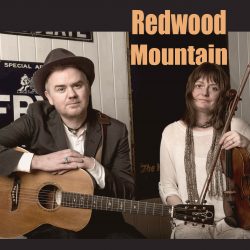
Redwood Mountain. Redwood Mountain

redwood-mountain-side-1-alt-desat-40-250x250Aside from his burgeoning career as a transatlantic bridge, linking Nashville to Leith Scots musician Dean Owens has delivered several projects over the past few years which have been more low key than his official solo albums. He’s recorded (and played live) tributes to Johnny Cash and Hank Williams with the albums available via his website and at gigs. Redwood Mountain follows this tradition but here Owens isn’t restricted to one artist, instead offering up his version of the great American songbook, not the one written by Gershwin et al but the songs that were first sung and handed on before they were written down. Songs that crossed the ocean with settlers and grew into the New World landscape, played on porches and at barn dances before they were eventually transcribed and then etched into shellac.
The catalyst for the recording was the gift to Owens of a book, Alan Lomax’s The Book Of American Folk Songs. First published in 1968 the book was a collection of 111 folk songs, ballads, sea shanties, work songs, cowboy songs and spirituals with Lomax adding chord charts and explaining the history and provenance of the songs. Intrigued by this wealth of traditional songs Owens set about rearranging some of them and in keeping with the sometime stark delivery of the earliest recorded versions decided to record them in a stripped down fashion. Thus was born Redwood Mountain, a duo of Owens and fiddle player Amy Geddes (with occasional double bass and piano from Kevin McGuire), the pair delving into the backwoods. Geddes of course is the fiddle player in Owens’ band The Whisky Hearts but here she’s riding point with Owens, her fiddle playing not only the second voice on the album but an essential connection to the Celtic roots of much of these Appalachian and high plains songs. This is evident on her rendition of the traditional Scots tune Amang The Braes O Gallowa, one of two numbers here not taken from the Lomax book but acutely delivered with an aching pull and which would not sound out of place on Nick Cave’s soundtrack for The Proposition.

They open with the devastating Katy Cruel, a song with strong Scottish roots and perhaps best known these days for Karen Dalton’s haunted version. Owens and Geddes are just stunning here, their delivery sending a chill up the spine and they capture this spectral aspect again on Fair Thee Well O Honey (also known sometimes as Dink’s song) with Geddes’ fiddle wraithlike at times. Owens’ lone voice on East Virginia (with Geddes adding an intermittent resonant fiddle) is another dark tale but that’s as murky as it gets as the remainder of the album, while still at times dwelling on misery, is somewhat more upbeat. Thus we get the waltz like Get Along Home Cindy and the slave runaway song Run Boys Run which finds Owens in fine voice and Geddes’ fiddle flying like Scarlet Rivera on Desire. Cowboys get a look in on the narrative of On The Range Of The Buffalo with Owens lowering into Cash territory with his vocals and there’s space for a railroad song (Railroad Man which roams into Woody Guthrie and big Bill Broonzy territory) while Rye Whiskey could be sung as easily in a Scots tavern as a hobo camp back in the thirties. Owens winds up the album with his own song, Take It Easy, But Take It which again is reminiscent of Guthrie as Owens adds some modern  commentary as he sings, “The homeless should always have shelter, the hungry should always have food, the sick should be helped to get better and the misunderstood understood.”

Dylan was scrabbling around the Lomax collections on his albums Good As I Been To You and World Gone Wrong while more recently Ags Connolly offered his selection of Cowboy songs and Redwood Mountain continue in this tradition. But the album that most comes to mind when listening to this is Billy Bragg and Joe Henry’s Shine A Light, another collection of Americana folklore and I’d certainly recommend to anyone who enjoyed that disc to give a listen to Redwood Mountain.

You can buy Redwood mountain here


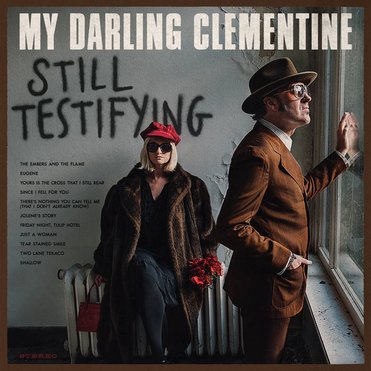
My Darling Clementine. Still Testifying. Continental Song City

a0840776620_16Still mining the rich vein of country duetting, My Darling Clementine have grown in stature since the release of their first album, How Do You Plead, back in 2011. Essentially a homage to the classic duets of George Jones and Tammy Wynette in the late sixties the album led to them being named Americana Music Artist of the year at the British Country Music Awards in 2012. A second album and a successful collaboration with crime writer Mark Billingham on The Other Half (an album and stage show) have established the duo (Michael Weston King and Lou Dalgleish) as the current King and Queen of UK Country music and with Still Testifying they further advance the charms and depth of their project.
Keen to avoid making the same type of album over and over King and Dalgleish have followed a path which was hinted at on Our Race Is Run (from second album, The Reconciliation) which was suffused with a Southern Soul sound, brass and organ offering a sanctified Solomon Burke like solemnity. As such, Still Testifying shifts from a Nashville based sound mirroring the shift in the late sixties that saw Music Row challenged by Memphis, Texas and even Hollywood showbiz and hippies. With artists such as Elvis Presley, Dusty Springfield, Bobbie Gentry (and Lulu) getting down and dirty in Memphis, The Flying Burrito Brothers channelling a similar sound in LA (remember, they covered Dark End Of The Street on their first album) and even Bacharach and David getting in on the act with their score for Butch Cassidy & The Sundance Kid, country was edging into pop, rock and soul and it’s this creative period that My Darling Clementine inhabit here.

They open the album with the barnstorming The Embers And The Flame which barrels in with a similar swirl as that of The Burritos’ Christine’s Tune before the horns add some Hollywood colour. It’s the horns again which lift Dalgleish’s sorrowful tale of a couple trapped in love on Just A Woman (which incidentally reverses Wynette’s oft repeated apology for her man) with the pair crooning almost amidst a dreamy background which one would like to imagine was on the soundtrack for a Doris Day/Rock Hudson movie had they looked at real life instead of cotton candy pillow fluff. Tear Stained Smile meanwhile employs some fat sounding sax on a cheerful murder song which rolls along like Elvis in Vegas while There’s Nothing You Can Tell Me (That I Don’t Already Know) has a cracking guitar riff over a sinewy rock beat that has Elvis In Memphis all over it along with some Tex Mex organ stylings. Here Dalgleish and King keenly observe the human condition and the mating technique with some finesse with lines such as “The groove on your third finger tells me you once had a wife.” As it’s a My Darling Clementine album there are several other songs which feature couples in or out of love or trying to make some sense of just what happened to them. Friday Night, Tulip Hotel is a wonderful waltz describing a sorrowful clandestine tryst that seems doomed to repeat itself until one day the man doesn’t turn up. Elsewhere Dalgleish picks up the ongoing tale of Dolly Parton’s Jolene on Jolene’s Story offering the other side of the story.

Not all of the songs are stained with romance however as Dalgleish offers up the delicate Eugene, inspired by an occasion when the band were on tour in Oregon while King summons up the plight of isolated and stricken communities on Two Lane Texaco. The closing Shallow abandons the band and finds the pair harmonising on a delightful song that, despite the earlier tales of loss and abandonment, tells of an undying love.

Website


R Mutt. The Dash.

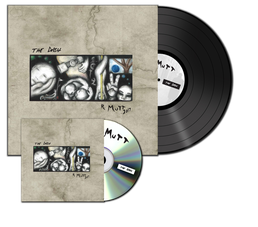
rmutt2b-2bthe2bdash2bcd2bvinyl2bpack3Blabber’n’Smoke mentioned Milwaukee band R Mutt back in 2011 when we reviewed Leash On Life. An energetic combo who play no frills American rock’n’roll shaped by Bruce, Punk and Outlaw Country, the band reached out to us recently with their latest disc, The Dash, which follows the dictum of if it ain’t broke don’t fix it but there has been some tinkering under the hood since we last heard them.
There’s been some line up changes with Jim Dier and Ron Thornton now joined by Dave Smolarek on guitar and Matt Schreier on drums with both newbies well integrated and assisting in some of the songwriting. In addition, the band credit producer Kevin Blackwell for adding an edge to their songs that they feel was at times lacking in their previous albums. And although I’d hesitate to say that they sound more polished here there is a vibrancy to the recording while there is also a slight shift from the Springsteen like elements that was so apparent on Leash Of Life with the band delving further into the burnished rock of Blue Oyster Cult with dashes of MC5, grunge and even occasional power pop thrown in. Songs like Mystery and Hypocrite have radio friendly riffs with refined vocals and cascades of guitars, the latter adding an Elvis Costello like sneer.

The opening title song barrels in with lyrics that cast doubt on the American Dream with the band crashing around in a style reminiscent of the MC5. This is reinforced by the classic guitar intro into Pushing Tin which is Chuck Berry meets U2 with the subject matter the drudgery of an endless day at the coalface for little reward. On Never Look Back the band lock down into a pummelling rock groove that one could equally equate to The Stones and the better glam rock bands of the seventies and even, dare we say it, Kiss. BOC come to mind on the dynamic Glass Citadel and the pell mell frantic delivery of Queen Of Speed but the band are well able to wind it down somewhat with the slightly psychedelic tones of Captain Sidewinder which is swathed in Mellotron and languid guitars sounding for all the world like a Spirit outtake. It’s a different approach for the band I’d like to hear more like this. In the meantime, The Dash is a very fine album that proves there’s still a spirit of adventure in the American heartlands.

website

Sean Taylor. Flood & Burn.

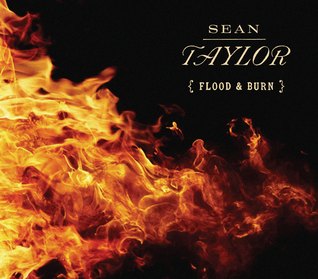
ST-Flood&Burn-Coverideas.inddLondon based Sean Taylor has released several albums over the past ten years which cast him as a folky troubadour with one foot in the blues and the other treading into beatnik territory. He’s been compared to John Martyn (reinforced perhaps by his regular collaborations with bassist Danny Thompson) and Blabber’n’Smoke has sung his praises when reviewing earlier albums, Walk With Me and Love Against Death. Flood & Burn, his eighth album, finds him at the top of his game as he delivers 12 songs that embrace pensive folk moodiness, jazz influences and country blues. Recorded in Austin, Texas with producer Mark Hallman (who plays bass, drums, keyboards and mandolin) several of the songs have a greater American bent than I recall from his earlier albums with the spritely Until The End Of Time skipping along with its twinkling guitars recalling The Byrds and The Sadies.
The album opens with the fog ridden Codeine Dreams, its lonesome sax evoking a film noir treatment of addiction as Taylor almost whispers the lyrics inducing a narcotic feel. It flows freely into the easy bass driven lope of A Good Place To Die which again has a cinematic feel to it as Taylor’s lyrics approach a Dylan like opacity with gutsy guitar solos and whirling organ bursting loose towards the end. From Dylan, Taylor moves into Tom Waits territory with the bristling God-fearing blues shuffle that is Run To The Water and he wades deeper into this territory on the title song which is suffused with biblical images with guitar, banjo and slide guitar providing a skeletal backbone for this delicious dip into an antebellum world. Even more Waits like is the boho bluesiness of Bad Case Of The Blues with Taylor evoking Bukowski and Townes Van Zandt over a blowsy drunken rhythm embroidered by Hana Piranha’s gypsy fiddle while the one cover on the album, Heartbreak Hotel, is given a gutbucket blues dress down, guitars snapping like coiled snakes with Taylor adding some fine blues harp as Eliza Gilkyson joins in on vocals. Taylor relaxes somewhat on the jazzy vibes of The Cruelty Of Man which is almost Tom Waits elevator music (not a criticism) as it slides along with ease, trumpeter Ephraim Owens adding some colour but this late night effervescence disguises the barbed lyrics which rail against the homogenisation of modern culture.

Elsewhere Taylor returns to his native roots on several songs with Troubadour a wonderful conglomeration of rippling guitars, pedal steel and piano that has the autumnal feel of Nick Drake and the gentle propulsion of Pentangle. Life Goes On is a hypnotic drone that does recall John Martyn’s work as it weaves and wends its way while Beautiful Mind delves even deeper into Martyn’s song poems. Taylor caps this with the closing song, Better Man, which features Danny Thompson on double bass on a song that seems to be about the travails of being a travelling musician. Whatever it’s a wonderful closure to what is a wonderful album.

Website

Robyn Hitchcock. Robyn Hitchcock. Yep Roc Records

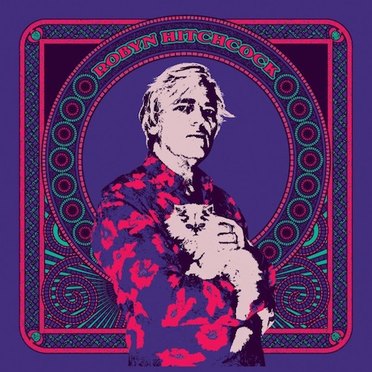
robynhitchcock_poster_mock_sm_1I don’t know if Robyn Hitchcock would appreciate being called a “national treasure” but for some folk his idiosyncratic take on psychedelic rock and his whimsical musings over the past 40 years have certainly placed him on some sort of pedestal.  Of course, being Hitchcock, this pedestal ideally would support a statue that, like Pygmalion’s, would come to life to inhabit a world half Hieronymus Bosch, half Dali, suffused with sea creatures and wondrous insects along with a peculiarly English  vision, all laughing bobbies and trolley buses surveyed through a kaleidoscopic lens. Since his days with The Soft Boys and then The Egyptians and a successful solo career Hitchcock has forged a singular path. His instantly recognisable voice, as English as Beefeaters and pillar boxes, has cut across songs that have tripped the psychedelic light fantastic and others which are delicate acoustic ruminations, all of them an opening into his mind’s eye. For some he’s picked up the baton from Syd Barrett and for a time he was considered a UK equivalent to REM.
This self-titled album finds Hitchcock ensconced in Nashville with producer Brendan Benson and the first thing to say is that it’s his most energetic disc in some years. In fact several of the songs hark back to the youthful vibrancy of The Soft Boys; the tsunami of guitars on Virginia Woolf taking the listener right back to their debut, Can Of Bees while Mad Shelley’s Letterbox has chiming guitars,  sitar like sounds and glorious harmonies that elevate the song to a psychedelic power pop heaven. Detective Mindhorn in particular is classic Hitchcock  as it pounds along in sixties freakbeat  style as he seems to sing of a TV detective with some peculiar powers, kind of like Sergeant Pepper meets Adam Adamant.

The opening I Want To Tell You About What I Want finds Hitchcock setting his wares on the table with some finesse. Here he leads the listener into his weird world, the band providing a muscular background with Hitchcock setting out a utopian/dystopian double barrelled wish list. Sayonara Judge starts out as gossamer spun delicacy with sublime pedal steel before the glistening guitars start to snarl towards the end on a song that makes full use of Hitchcock’s backing singers (who include Emma Swift and Gillian Welch). There’s a wonderful song that’s brimful of nostalgia as Hitchcock recalls a trip with his father on a trolley bus on Raymond and The Wires and this air of nostalgia is transported through the looking glass on the very trippy Autumn Sunglasses which is a perfect simulacrum of late sixties UK psychedelia.

There’s a nod to the Nashville location of the recording on the goofy country of I Pray When I’m When I’m Drunk which tries to marry Hitchcock’s surrealistic words to a honky tonk bar band but essentially it comes across a bit of a throwaway. More successfully, he delves into cosmic country territory with 1970 in Aspic which rings with a degree of authenticity.

website


Steve Gardner. Bathed In Comfort

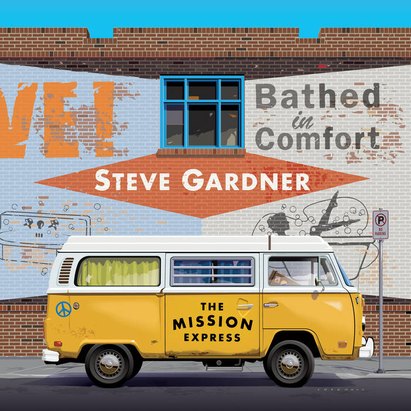
a0774927855_16Imagine you’re a songwriter who’s been doodling around for a while building up a pile of notebooks with lyrics and chords scored out, rewritten and revised, a body of work that you’re dying to unleash on the world but what’s the best way to do that? Well, Steve Gardner, a Hertfordshire based,  self professed “amateur” songwriter was pondering on that very question when, on a whim, he contacted one of his favourite musicians, a chap called Chuck Prophet, asking for some advice. As Gardner relates, “It was a speculative shot – scarcely more than fan-mail – and I was a little shocked when he wrote back saying he was “up for anything”.  Pretty crazy but true and as things progressed Gardner eventually found himself ensconced in a studio in San Francisco with Prophet and his band The Mission Express with Prophet in the producer’s chair. Bathed In Comfort is an odd album as there’s no disguising Gardner’s DIY background, a kind of post punk C86 era naiveté but producer Prophet, acting like an aural equivalent of those home makeover “experts” on the telly, clothes each of the songs in appropriate trappings. The end result is an album that hovers somewhat in the margins between Robyn Hitchcock, XTC and those C86 heroes, Stump.
There’s dark folk, pastoral whimsy, psychedelia and wigged out space rock crammed into the 12 songs onboard here. At times the guitars are revved up, elsewhere there’s a dreamy swoon like touch. And while Prophet and James Deprato on guitars, Matt Winegar on keyboards along with rhythm section Vicente Rodriguez and Kevin T White give it their all its Stephanie Finch’s vocals which stand out on several songs as she accompanies Gardner’s voice especially in the deadly folk ballad Miller’s Daughter where she inhabits the role of a long dead farmer’s daughter. The signature Mission Express sound itself is best expressed on the glorious Take Me Down with switchblade guitars and a pounding beat (although the song seems to owe something to Nick Cave’s Red Right Hand) and the powerfully mutant Bo Diddley freakbeat  of I’m Gone.

What Would I Do and I Forgot, both with sitar like guitar curlicues have an incense and peppermints aroma around them while Peter The Astrophysicist recalls XTC at times and I Can’t Walk Away also shimmers with a psychedelic glean with Finch again adding so much with her vocals. Throughout the album Gardner offers some delightful lyrics as he wanders from genre to genre but his description of a washed out rock star reduced to manning a vinyl market stall on Lance Gardino is spot on. Prophet drapes this sad vignette with an arrangement that rises and falls with Gardino’s career that is almost a mini pop opera in the vein of The Who especially towards the end when the band let rip with a riff that probably only exists in Gardino’s dreams. For those looking for some guitar thrills the opening Rosalie has some wicked slide guitar over a bucking banjo and finally there’s a kind of “novelty song” in the shape of The Day The Aliens Saved The World. It’s delivered twice here. A “country version” that trips along nicely but which pales alongside the “rock version” where Prophet kicks into his recent Suicide influenced speed freak rockabilly bent (as evidenced on In the Mausoleum on his latest record). It’s a total blast.

Having never heard the raw Gardner it’s difficult to say how much he’s been shaped by Prophet but he seems to be happy with the pup they’ve delivered and I’d definitely recommend a listen and even say that for Chuck fans it’s a must buy. Apparently Deprato thinks, “It’s weird”.  So, another recommendation then.

website

https://stevegardner.bandcamp.com/album/bathed-in-comfort


David Starr. The Head and Heart

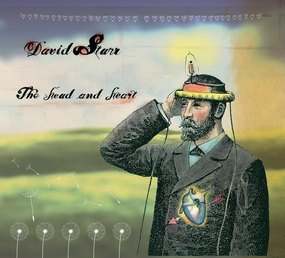
original-the_head_and_heart_coverWhen Blabber’n’Smoke first heard David Starr on last year’s Love & Sabotage  we likened him to Poco, Steve Stills, JD Souther, Andrew Gold and even Fleetwood Mac. The album (which featured contributions from Ritchie Furay, Steve Cropper and John Oates) was a wonderfully melodic slice of country tinged rock music and on the one occasion we saw Starr play the songs live he more than made up for a lack of a band with his enthusiasm and skill honed from many years on the road.
The Head And Heart, Starr’s six song EP follow up is a more reflective affair with little of the California highway breeziness that dominated the earlier album. Instead, Starr offers up some robust thoughts on the inner self and the temptations and conflicts we all face from day to day. The EP finds his friend John Oates firmly in the driving seat as he produces and arranges all the songs breathing new life into one Starr recorded some years ago and also tackling a golden oldie.

Starr proved on Love & Sabotage that he can delve into the more introspective and folkier side of things with his excellent You Will Come To Know and here he continues on that path. The album opens with The Edge Of The World, a peek into the mysteries of women and their beguiling ways that’s cloaked in a sumptuous melody with cello and pedal steel adding a quiet majesty over a pulsating rhythm section, somewhat akin to Jackson Browne’s work on For Everyman. The following title song is similar in delivery with the backing musicians somewhat stellar here with some very fine percussion (from Greg Morrow) in particular. Starr sings here of the ongoing conflict between emotional and rational thoughts, that moment when it’s tempting to just do it and consequences be damned while an inner voice is screaming just the opposite. Here his voice is strong and earnest with Oates adding fine harmonies. It’s a wonderful song and perfectly executed.

There’s more roots rumbling on the closing Dancing With My Pride (co written with cellist Bob Leipman) which utilises the woody timbre of the cello (played here by Nat Smith) to underscore the elemental aspects of the song as Starr picks upon a theme suggested by his reading of a book written by his grandfather. Here he sings of a farmer wronged in the past but for whom hope springs eternal as the song sashays from  haunting verses to a countrified middle eight with the cello coming across like a fiddle and parlaying with mandolin and pedal steel.  Again this song exemplifies the contradictions that Starr dots throughout the EP as the song attempts to defeat pessimism with an optimistic hope for the future and there’s a wonderful moment when his voice just drops into a whisper on the last line of “I’ll forgive her soon by the light of the prairie moon. Imagining her kiss and her sweet perfume. I’ll close my eyes and I’ll see her face , in a dream I’ll be the man I hoped to be. But for now…”  in a manner that is reminiscent of Warren Zevon.

Elsewhere Starr heads into darker territory on a pair of songs which have a burnished sheen to them that is in danger of roaming into AOR in the eighties. Waiting In The Dark shimmers with a menace as Starr descends into drugdom in the inner city but the scything guitars and polished production mark the song as somewhat out of step with the overall sound of the EP.  I’ve Come For You is another rainpuddled neon sign reflective slice of nightlife but it’s delivered much more successfully with some actual wickedness in the slide guitars and a sense of venom in Starr’s vocals.

Finally, Starr takes the brave step of covering California Dreaming, a song that’s imprinted on just about everyone and a choice that beggars the question of why redo this one? Apparently it was suggested by Oates as fitting into the EP’s theme of contrasts and for sure, despite it being thought of as the epitome of hippie heaven, the song actually is a wistful plea to be in sunny climes as the singer is stuck in a cold and dreary place. Starr (and Oates) take this melancholic yearning as the starting point for a dramatically reinvented version that replaces the Mamas & Papas soaring vocals for a wintry and claustrophobic New York winter feel, the band closer to The Insect Trust than Papa John and Mama Cass.

Davis Starr is currently touring the UK. all dates here including a Blabber’n’Smoke House Concert on 23rd May. PM for details.

Website


John Alexander. Of These Lands

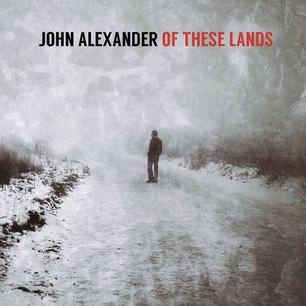
a0817967281_16I first noticed the name, John Alexander, in the credits of the latest Doghouse Roses album where he contributed some fine guitar. And then this album, Of These Lands, popped through the post with some roles reversed, Doghouse Roses’ Paul Tasker and Iona McDonald credited with vocals and guitar on some of the songs. Their presence certainly ticked some boxes, marking the album as one to have a good listen to but, and I think it’s fair to say, I wasn’t expecting the rollin’ and tumblin’ excitement that was to follow.

Alexander is a Scottish musician but he’s welded to and wades in muddy waters, the delta sort to be more accurate. Some of the songs on the album follow in the line that stretches from Taj Mahal to Keb’ Mo’ with a vibrant attachment to country blues, the guitars evincing a spritely fingerpicking blues style while Alexander’s voice has a very fine smoke stained patina that at times sends chills up the spine. The best example here is on the spooky Hallowed Ground (with Tasker on slide guitar) which recalls the magisterial ground zero of old time blues, Blind Willie Johnson’s Dark Was The Night, Cold Was The Ground. It’s the starkest moment on the album but the voodoo swampiness of Meet Me Where The River Flows (with Jim McDermott on drums and Nicholas Blythe on bass), the zinging guitar sparks of Take The Blame and the fiery solo rendition (with Alexander on acoustic and electric guitars) of All My Angels Have Fallen are rooted in the blues tradition with the latter recalling the late John Campbell.

Less one think this is just a blues album Alexander has some more tricks up his sleeve. An accomplished guitarist he is able to cross the ocean from the Mississippi delta back to the motherland and in particular those artists who picked up on blues traditions and transformed them into a sixties folk blues boom. Hence we have the nimble A Little Daylight which with its vocal harmonies could easily have sat within a Pentangle album while Used To Be A Friend Of Mine sounds like an outtake from an early John Martyn album.  Seven Cold Curses takes a slight curve into a rootsier Americana with a whiff of Townes Van Zandt while Hold On is a powerful and taut ballad that recalls the dustier edges of 70’s country rock  such as Guy Clark or Steve Young. On the closing This Side Or The Other Alexander draws all of his influences together as his grainy voice demands, “a double shot of whisky and a ham on rye”.  The song is a laid back and wonderful conglomeration of folk and blues (and beyond), Greenwich Village meets the delta and a smoky London town. A delightful end to a very fine album.

There’s an album release show at Glasgow’s Glad Cafe this Friday, 19th May. Tickets here

Website