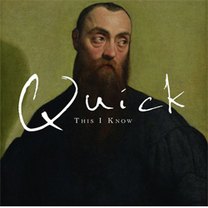
Quick, a three-piece acoustic band were winners of Celtic Connections’ Danny Kyle Open Stage award in 2016. As winners, they were then offered a support slot in this year’s CC Fest appearing with Chicago Bluegrass outfit Special Consensus. They also delivered a live session on Celtic Music Radio and this Friday they release their debut five song EP, This I Know.
The trio (Alex Hynes, guitar and vocals, Willem Mckie, mandolin & vocals and Emily Barr vocals) use their spare instrumentation to underscore their superbly arranged and intricate vocal harmonies. While all three are excellent singers it’s the harmonies that shine here although Barr carries most of the delicate My Half Moon by herself with the guys only appearing towards the end. The opening Salt & Water is an atmospheric folk number that is surprisingly assured for the band’s first outing while Barber’s Song, while still in the folk idiom, is quirky in a Fence Records sort of way as the band stealthily invest the tonsorial protagonist with a quiet dignity and a fine sense of hubris. Sonder has a more straightforward brisk delivery with added bass and percussion allowing Hynes and McKie an opportunity to show off their fine finger picking and the EP closes with the Acappella Crazy Grace (apparently dedicated to Hynes’ niece) with the three voices creating a sublime sound which recalls Gospel and Appalachia.
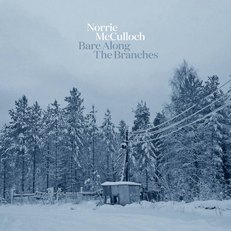
This third album in as many years from Ayrshire bred songwriter Norrie McCulloch confirms what Blabber’n’Smoke has maintained since we first heard his debut, Old Lovers Junkyard, that he is one of Scotland’s (and the UK’s) premier artists. Over the course of his three albums McCulloch, along with his superb studio band (Dave McGowan of Teenage Fanclub / Belle & Sebastian and Stuart Kidd and Marco Rea from The Wellgreen) has gathered from a well of inspirations (artists such as Townes Van Zandt, Jay Farrar, Fairport Convention, Van Morrison and John Martyn). By some alchemical process he has transformed them into his own noble spirit with songs that inhabit the past and celebrate the here and now, his attractive and slightly wearied voice with its mild Celtic burr anchoring him to his homeland whilst the music traverses oceans and genres.
Bare Along The Branches finds McCulloch continuing to peer into his roots and influences but with a new found confidence that is reflected in the more diverse instrumentation on show here. There’s an expansive edge to some of the songs with electric guitar and organ added to the trail mix that was on show on These Mountain Blues. Thus enabled McCulloch is able to capture for example the sheer joy of vintage Van Morrison Caledonia Soul escapades on songs such as Shutter with its repetitive refrain which is pure Morrison soulful scatting. The song itself concerns a tryst gone wrong in a lonesome cabin, a wonderful concatenation of images and sound with piano and organ fuelling the sheer exuberance of McCulloch’s lyrics. There’s more soul on the plaintive Lonely Boy with electric keyboards and Chi-Lites harmonies harnessing the song to seventies Top of The Pops memories of smooth harmony groups dressed in silk while Little Boat chugs along with some meaty guitar plunges and churchlike organ on another song that is reminiscent of Van Morrison.
While this affiliation to a hybrid Celtic soul music dominates the first half of the album McCulloch proves he can deliver ballads in the Americana vein with Safe Keeping and Frozen River evidence of his admiration for Jay Farrar, the former a halting dust blown rust belt eulogy while the latter skips along almost approaching bluegrass. Never Leave You Behind meanwhile is a full blown dive into country rock with some fine lap steel playing from McGowan and McCulloch revisits the dusty troubadour persona of his previous albums on the tremendous Around The Bend. This is a glorious ballad in a Neil Young mode with banjo, harmonica and lonesome pedal steel combining to create a frontier feel while McCulloch’s lyrics are a form of old Western Zen acceptance. The album closes with the lengthy Beggars Wood, a stark meditation on a childhood fable that has followed the artist into adulthood and is only exorcised when he revisits the scene. As it progresses the song blossoms from skeletal guitar and voice into a soaring guitar solo that avoids bombast as it stutters to the end, the song proof indeed that McCulloch continues to explore new avenues for his muse. Three albums in and not one clunker, McCulloch has the talent to enter the mainstream if he gets the breaks so grab a hold of this and let everyone else know about it.
Norrie McCulloch has arranged several shows to launch Bare Along The Branches starting with The Tollbooth in Stirling on 23rd February. Next up is Glasgow’s State Bar on the 24th and then Edinburgh’s Bluebird Cafe on the 25th.
Way back in the dark ages (well, the seventies) TV talent shows were fairly popular. This was of course way before the Simon Cowell perversities that pollute our minds these days. There was Opportunity Knocks and New Faces, the latter with a panel of judges who were in the main Tin Pan Alley types. I mention this as Steve Somers, father of Ben, notes in the liner for this album that his first break was as a winner on New Faces in the mid seventies, he even provides a link to a video of the performance on his website, a rabbit hole I fell into as I spent far too long watching related time capsules on YouTube. It certainly was a different world back then.
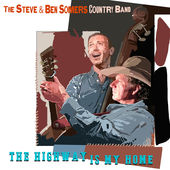
Anyway. Since then Steve’s kicked around the business playing and singing or supporting dozens of artists (Lonnie Donegan, Joe Brown, Glen Campbell, Johnny Cash, Billy Jo Spears) and leading his own bands which have generally played Country and Western Swing. Ben’s been a musician for as long as he can remember and again has an impressive resume having worked with Dr. John, Taylor Swift, Seal and Dizzee Rascal (first time appearance for Mr. Rascal on Blabber’n’Smoke I believe). Together the pair have played their favourite Country songs for some time but for The Highway Is My Home they’ve gathered together a tight little band to deliver 11 cracking slices of good old fashioned delights.
With Steve on acoustic guitar and Ben on double bass they share the vocals and are backed by Matt Park on pedal steel and Chris Haigh on fiddle with electric guitar duties shared between Rob Updegraff and Marcus Bonfanti. A talented bunch as a brief glance at their respective CVs will confirm and as such well able to nail the various strands of classic Country they tackle here. The guitars fizz and burn while the pedal steel is a delight throughout. The highlight is their version of Dallas Frazier’s Elvira goes back to its original Southern soul grit groove with Park and Updegraff’s respective solo turns quite magnificent.
Ten of the songs are covers, some familiar (TVZ’s Loretta, Bob Wills’ San Antonio Rose and Hank’s Jambalaya), others less so (Paul Burch’s If You’re Gonna Love (C’est Le Moment) and Sydney Bechet’s Wabash Blues). They’re all delivered with panache with the band dipping into Western Swing, bluegrass and lovelorn waltzes with an out and out rocker on the thrilling Seven Nights To Rock. The one self penned song, The Highway Is My Home, pales somewhat in comparison to its neighbours. A breezy number similar in vein to Gentle On My Mind it’s delivered excellently with some valiant fiddle and fluid pedal steel but ultimately it fails to pack the punch delivered by the other songs.
And if you want to watch the youthful Mr. Somers on New Faces look here.
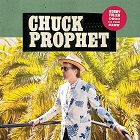
Six weeks into 2017 and Chuck Prophet throws his hat into the ring with this contender for top ten album of the year. Partly a masterful depiction of the darker side of California, at times trashy garage rock, elsewhere stained meditations on the human condition and laced throughout with a sardonic humour and sly beat argot Bobby Fuller Died For Your Sins is a thrilling listen. Prophet has described the album as California Noir and as such it can be considered a slight return to his magnificent San Francisco inspired album Temple Beautiful, an album whose title song was “the coolest song in the world” according to Steve Van Zandt on his radio show. Although it’s not as singular in its focus as Temple Beautiful was, Bobby Fuller Died For Your Sins is a similar ride as Prophet casually adopts classic rock riffs, attitudes and legends and transforms them into his own unique style. He’s a master of the riff, the hook and the melody, his vocals cool and hip as he tumbles through his rock’n’roll universe.
The title song is a perfect introduction to the album. Thrashing drums lead into a power pop guitar rush as Prophet turns in an anthem that celebrates the power of song as he sings of hearing “the record crackle as the needle skips and jumps.” That he’s singing of Fuller, the author of I Fought The Law and whose death at the age of 23 is still subject to conjecture while also describing a kid gunned down by cops, Prophet signposts his version of Mondo Hollywood where glamour, danger and death ride side by side. The fuzzy psychedelic slice of freakbeat that is Your Skin has a protagonist whose itch to get inside a girl’s skin recalls Buffalo Bill from Silence Of The Lambs, creepy, but with a magnificent Yardbirds’ like guitar freakout at its psychotic centre. Killing Machine chills as Prophet sets up a scenario over a throbbing bass line and a claustrophobic clutter of guitars and synth. Played like a slo-mo movie a guy buys a gun, “it was as easy as pie like he was paying for gum,” as a waitress has a cigarette break outside. Her words, “oh no” leaving one to imagine this real American carnage.
The album has several visceral slices of rock’n’roll. The Alan Vega influenced speed freak rockabilly of In The Mausoleum, the Stones’ like raunchy Post-War Cinematic Dead Man Blues and the mean streets prowl of Coming Out In Code. Then there’s the full blown rush of Alex Nieto (Prophet’s protest song about this 28 yr old shot dead by police in a San Francisco park originally recorded and released just days after the event last year) which has the ferocity of a full blown Crazy Horse wig out with Prophet’s vocals showing his anger. Aside from his undoubted prowess as a prowling rocker Prophet can turn in a tender ballad as in open Up Your Heart in which one hears echoes of Curtis Mayfield while We Got Up And Played is a sepia tinged look back at days spent playing in rock’n’roll toilets, a song that is tempting to see as an open letter to his ex band mate Dan Stuart.
There’s more as the album overflows with delights. Humour in the bouncy rock of If I Was Connie Britton as Prophet imagines his life as this star of TV’s Nashville and the magnificently titled Jesus Was A Social Drinker which must be this album’s contender for coolest song in the world as Prophet digs deep into his laconic irony, indeed Jesus was “an all round decent dude“. To cap it all there’s the chiming glory of Bad Year For Rock And Roll, a eulogy for Bowie delivered with all the snotty glam thrust of prime Mott The Hoople.
There’s not much else to say here other than that Bobby Fuller Died For Your Sins is prime time Chuck Prophet. A blast from start to end and thoroughly recommended. The album was released this weekend and Chuck’s currently touring the UK with a Glasgow show on the 15th at the O2abc courtesy of The Fallen Angels Club. All tour dates here
Hard-core Country fans in the UK (the ones who don’t need the word Ameripolitan explained to them) discovered a home grown hero in the shape of Ags Connolly when his debut album was released three years ago. He sang with an authentic voice and his songs mined traditional country tropes; the album cover featured Connolly alone in a bar which was festooned with portraits of country stars; Hank, Waylon, Willie, Johnny Paycheck and David Allan Coe. The opening song, When Country Was Proud, was a defiant reclamation of the tradition from the usurpers of modern day Nashville and was included in a list of the best country songs of the last 50 years by Country Music People. Not bad for a chap from Oxfordshire who recorded the album with a bunch of Scotsmen in a studio just outside Edinburgh.
Since then Connolly has been building up his support both here and in the States (where he toured last year with members of Pokey LaFarge’s band). He’s even been to Nashville where he had the opportunity to sing his salute to his favourite artist (I Saw James Hand) to the man himself. Over the three years we’ve had the opportunity to see Connolly live on four occasions and he continues to grow in stature on stage while a steady trickle of new songs into the live set whetted the appetite for a new album. Now, at long last, it’s here and suffice to say that it maintains the solid core of excellence that was evident on the first album as it also sets forth into newer territory.
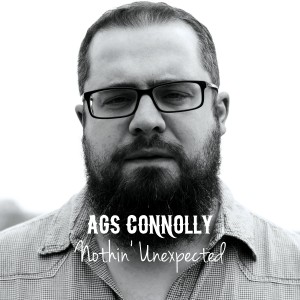
Nothin’ Unexpected was again recorded in Pencaitland with the same team who turned in the tremendous honky tonk and hard core country sounds on How About Now. Producer Dean Owens is no stranger to Nashville and he helms the record with a crisp yet warm no frills approach. The band (Stuart Nisbet, Kev McGuire, Jim McDermott and Andy May) are just superb with Nisbet in particular shining as he handles electric twang, lap steel, mandolin and Dobro. May’s piano is up there with Hargus “Pig” Robbins while the rhythm section of McDermott and McGuire nail the songs be it rockabilly or border ballad. The addition of The Mavericks’ Michael Guerra on accordion and Eamon McLoughlin on fiddle on various numbers adds to the palette allowing Connolly to head to the badlands for some Tex-Mex stylings or add a back porch rusticism on occasion.
Armed thus, Connolly sets out his wares and it’s fair to say that each of the ten songs here is somewhat masterful. Aside from the lone cover of Loudon Wainwright’s I Suppose, here given a sympathetic country waltz treatment, Connolly tears down the walls of heartache with numbers such as I Hope You’re Unhappy and When The Loner Gets Lonely, the latter adorned only with guitar and accordion and a wonderful description of a barfly with only a hint of a back story. There’s some revved up rockabilly and western swing on the rollicking Neon Jail and Haunts Like This while the opener I Hope You’re Unhappy is in the grain of George Jones with Connolly’s vocals up there with The Possum. Do You Realise That Now utilises Guerra for its south of the border romanticism with Slow Burner also dipping into border territory. Connolly closes the album with a solo performance of I Should Have Closed The Book, another failed relationship song but evidence that he is a master of metaphor and simile, able to tackle age old country topics and spin a new take on them. The masterpiece here however is Fifteen Years, a country dirge with Dobro and fiddle ladling on the misery as Connolly weaves a tale as expertly as Texan masters such as Guy Clark. A wonderfully delicate and evocative recollection of tough memories it’s a song that would not be out of place on Robbie Fulks’ magnificent Upland Stories.
Nothin’ Unexpected is an excellent album that improves on Connolly’s debut while retaining the central thrust that he is championing the core values of country music. That he does it so well is welcome and hopefully a beacon for other UK singers to follow in his footsteps.
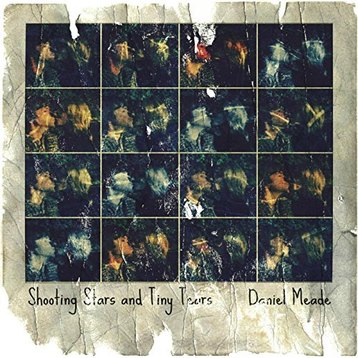
Shooting Stars and Tiny Tears is Daniel Meade at home, alone. Taking some time out from his increasingly frenetic schedule (tours with his band The Flying Mules and a recent jaunt around the UK playing keyboards with Ocean Colour Scene), he has returned to the DIY concept of his first solo album As Good As Bad Can Be playing all instruments here and harmonising with himself. As on As Good As Bad Can Be there’s a definite homemade quality to the recordings with little of the dynamics one can achieve when playing with a band. On the other hand Meade writes songs of great quality and assembles them in his home studio with such skill that the album is so much more than a collection of demos, rather it’s an intimate collection of songs that reflect his Tin Pan Alley, country and honky tonk influences.
According to Meade the album grew out of a writing project he set himself with the aim of writing a song within an hour and then allowing himself four hours to record it. There was a theme of sorts as the songs would all revolve around notions of romance with Meade inspired through his relationship with his girlfriend. As the exercise progressed it grew legs until the realisation that here was an actual album in the making and consequently it’s unleashed here.
Anyone who has seen Meade and his Mules hit the stage will know that they can whip up quite the storm but Meade has also demonstrated that he’s well able to delve into classic sad country mode with the prime example perhaps Help Me Tonight, a classic tearjerker. Shooting Stars and Tiny Tears leans heavily in this direction with none of the Jerry Lee type rockers in sight. Sure enough there are some up tempo numbers which jaunt along in a fine skiffle and country blues style as on I Wanted Nothing and One Is All I Need, the former recalling Big Bill Broonzy, the latter a grand singalong around the old Joanna with a hint of cockney voiced sixties beat bands (with Meade’s piano playing here a triumph as it barrels in and out of the song). There’s a delightful innocence in the gleeful acoustic skip of Your Voice At Night while How Long Does It Take To Fall In Love reeks of barroom honky tonk as the instruments tumble over each other. In all of these songs Meade’s words are just about perfect, self contained couplets which match the masters be it the lonesome lyricism of Hank Williams or the more pop orientated Felice and Boudleaux Bryant. Indeed the exuberant delivery of I Got Something with Meade multitracked vocally would sit easily within the Everly Brothers canon. As good as these songs are they pale somewhat when Meade settles into his lonesome persona. The title song, which opens the album, is a delight as he strums gently around a poetic love song suffused with heavenly imagery. He closes the album with another simple song, just voice and guitar on Today Doesn’t Matter which again recalls the high lonesome balladry of classic Hank.
It’s a measure of Meade’s talent that this homespun project opens up to reveal a songwriter who is immersed in the well travelled roads of his forbears and is able to add his own fresh take on time honoured traditions. Forever restless he’s off soon to tour in Europe and he promises another Flying Mules later this year but in the meantime this is a great listen.
Rab Noakes, now aged 70, is one of Scotland’s musical heroes. Since the early seventies he’s been a fixture on the music scene, an early member of Stealers Wheel and recording with legendary Nashville producer Bob Johnston. Blabber’n’Smoke first became aware of him when Lindisfarne recorded two of his songs on their first two albums in their brief moment of glory and there’s a back catalogue of delights to be heard for those new to his music. His last album I’m Walkin’ Here (2015) was a fine collection of his own songs along with his interpretations of several songs that had influenced him in his youth. The release of that album was delayed by a diagnosis of tonsillar cancer and the ensuing treatment, radiotherapy and chemotherapy which was a tough road but which seems (thankfully) to have worked well enough to allow Noakes to return to performance.
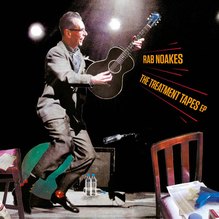
The Treatment Tapes is a chronicle of sorts, six songs written throughout the treatment process and then recorded with little fuss over two sessions. Aside from the lethal fears of a cancer diagnosis the site of Noakes’ lump could have been a death sentence of sorts to a singer no matter how well the treatment worked. On the evidence here his voice has survived the illness and the treatment (although his candid sleeve notes detail some limitations) allowing him to deliver the set in his recognisable style. There are plaintive introspections which recall Loudon Wainwright and the late Alan Hull along with more jaunty folk blues numbers. The songs stand proud without any knowledge of the story behind their genesis; the deeply affecting love song, I Always Will coming across like a Townes Van Zandt number cosseted by a wonderfully woody cello and the opening Fade (to shades of black) a Gene Clark like fatalist ballad. However Noakes’ detailed notes on each of the songs pins them to a particular stage in his treatment process allowing the listener an insight into the trials he faced and it’s a measure of the man that the notes, the words and the songs all coalesce into a triumph of sorts. He’s still here and still singing. He champions the NHS treatment he received on Water Is My Friend as he sings, “There are people looking after me who don’t get paid enough while bankers take a big reward for far less useful stuff”, the title taken from advice fromhis radiographer to keep his mouth hydrated (and delivered with a nod to The Sons Of the Pioneers cowboy classic, Cool Water). Overall the EP is a two fingers to the big C delivered with a life affirming sense of spirit.
Rab Noakes celebrates his 70th birthday and his 50 years in music on his 70/50 tour which opens at Celtic Connections on February 2nd. From there on he tours the UK with all dates here.
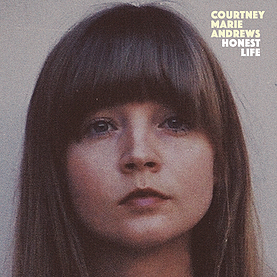
The grainy portrait of Courtney Marie Andrews (almost like those pictures of lost kids on American milk cartons) which adorns Honest Life’s cover is close up, intrusive. The grain suggests a zoomed in crop of a larger picture, the surroundings unseen, allowing the listener to imagine the background, the baggage that inevitably clutters most photographs. What is undeniable is that Ms. Andrews’ stare is unflinching, defiant almost. Here she sets out her wares, crafted by her own hand and hewn from her own experiences and this fierce independence infuses the album as she sings of trials and tribulations and offers a sense of dignity to the downtrodden.
Still only in her mid twenties Andrews has packed a lot into her ten years in the music business. There’s a back catalogue which is somewhat confusing with several albums withdrawn apparently. Aside from her own ventures she has been an in demand musician and singer for various artists including Damien Jurado and Jimmy Eat World, a gig that ended up with her residing in Belgium playing for several artists there. The genesis of Honest Life occurred in Belgium as Andrews broke up a relationship and returned to the States taking up a job as a barmaid in a small tavern several miles out of Seattle. Here she served tables and heard the tales of the tavern’s denizens, several of which have made their way onto the album. She strips the tales and her own experiences down to the bone, the Honest Life(s) of the title, no aggrandisement here, the result recalling the naked emotions stirred on Joni Mitchell’s Blue. Crafting the album Andrews courted several producers but felt that their ideas didn’t tally with her wish to deliver a raw and relatively unembellished record so she took the bull by the horns and produced it herself.
The result is an album of glacial purity with Andrews’ voice cool and clear over a subtle and perfectly executed band setting that has glistening guitars and warm pedal steel complemented by superb keyboard playing. The sound does hark back to Mitchell’s first forays into group arrangements and that “Ladies of the canyon” vibe so popular with the folk rock mafia of that time but such is the strength of the songs that Andrews surmounts any accusations of mere copyism. There’s a heart and soul to these songs which bleeds from the speakers with dignity. Irene is perhaps the best example as a powerful country rock pulse twitches with her forensic lyrics, “The heart is funny Irene, you can’t control who it wants to love, so let it love Irene, man or woman, or anyone it wants. You dream of the north Irene, well then that’s where you oughta be. But you gotta want it Irene, don’t follow any path half-heartedly.”
Paths and roads feature heavily on the album be it the routes (mainly dead end) leading to a local dive or the paths Andrews herself follows. The album opens and closes with ruminations on a journey. The opener Rookie Dreaming positing her as an ingénue with romantic notions of sixties movies in her mind as realises romance is not all sugar and spice. On the closing song Only In My Mind she’s somewhat wiser, able to recognise that the notion of a perfect love is mainly in the mind. In between there’s the winsome Not The End, a song that captures the transience of true love. Part of Andrew’s voyage is her time bar tending, her muse here the customers of the bar she worked in and she captures perfectly their dramas and woes on several of the songs. Table For One paints a picture of a lonesome traveller stopping off for liquid succour while How Quickly The Heart Mends is Andrews’ version of a honky tonk song with a sting in its tail as she sings,
“I can’t believe I got all made up, put on this dress that you love, only for you to go and pretend, like all those years meant nothin’. So go on and forget, act like we’ve never met, leave with your new friends, how quickly your heart mends. The jukebox is playin’ a sad country song, for all the ugly Americans. Now I feel like one of them dancin’ alone and broken by the freedom.”
The album is packed with such lyrical acuity and all the songs are gracefully delivered, the band excellent on all accounts. It’s early days but Honest Life is already a contender for one of the albums of the year.
Ms. Andrews will be touring in the UK (supporting The Handsome Family) at the end of February and she was available for a short chat with Blabber’n’Smoke at the tail end of last year. We started off by asking her about the writing process for Honest Life.
I started writing songs when I was really young, a teenager but for this album I started writing when I was in Belgium. Then I was a bartender in a small town bar in Washington State and that’s where I finished writing the songs.
They’re pretty sad songs
I was going through a hard time, a breakup.
Some folk think that breakup albums are some of the best ones
Yeah, well songs are a great way to express emotions, sometimes I think when you feel pain it’s easier to express that in a song.
There are lots of images of roads, trains and such. Is the album like an emotional journey?
I’d say that it is. I was talking to an interviewer a few months ago and we kind of came to the conclusion that even the sequencing of the songs was like a travelogue. The beginning, the opening song Rookie Dream is getting on the train, the beginning of the journey.
I take it that Rookie Dreaming is one of the earlier songs you wrote as you’re singing about moving too fast to see the paintings in Paris and the sunrise in Barcelona so presumably it was written in Europe.
Yeah. It was written way before all the other songs, that was actually a different time when I was in Europe some way back
I was going to ask you about your lyrics in that song when you say you felt like you were a 1960’s movie. Did you have a particular movie in mind?
No, I didn’t have any one movie in mind there. It’s more of a “feeling ” lyric if you know what I mean but now that you ask I wish that I did have one in mind, that’s a cool question.
Again, talking about paths and roads in Only In My Mind you sing, “life is a road without any turns” and I wondered if this is in any way related to the Robert Frost poem The Road Not Taken.
Well again, I didn’t have that in mind when I wrote that song but I love Robert Frost and it’s great that it has that effect on you when you listen to it.
Most of the album is just you and the band but there’s a string arrangement on Only In My Mind which is wonderful and sounds as if you had an orchestra in the studio with you.
That was my friend Andrew Joslyn. There’s a story behind that. He and a friend of mine were dating and they went on vacation and when they came back their house had burned down. I’d asked him to write an arrangement and it was only a couple of days after the house burned down so he said that he wrote it in a kind of fervour, feeling all the pain and hurt he had and he managed it all in under an hour. There’s a lot of emotion in it and it really adds to the song.
You produced the album yourself.
Yes. I spoke to a few people but they weren’t really in line with what I wanted it to be, at least for this batch of songs. I wanted it to be raw and real.
People have compared the album to Joni Mitchell and I certainly thought that were elements of her and artists like Judee Sill and Carol King, an early seventies singer songwriter feel to it.
Well those women are definitely huge influences on me and I respect and honour them but for me it wasn’t so much getting the sound of a certain time as getting a more timeless sound, one that you couldn’t pin down to a certain age. I think that when you have a more organic sound and instruments on a record that people think of an older time and an older sound just because that’s what those records had on them.
The album’s being released here in January but I believe that it’s been out in the States since last summer. Has it done well over there?
It’s quite a big gap between the two release dates so it’s been a slow ride but yeah, it’s done well and it’s been a good time for me
For some of the songs you drew on your time spent bar tending.
Yes. In these small time bars in America there’s all sorts of characters, people who don’t really seem to have many ambitions, not afraid to be themselves and especially when they’ve had a few drinks they’ll start to talk. They’ll tell you stories and I’m always willing to listen and be empathetic and try to connect with them. I think that everyone has a story in them but some are just more willing to tell you about it and those are the ones I wrote a song about.
In How Quickly Your Heart Mends you sing, “The jukebox plays a sad country song for all the ugly Americans.” It’s a very evocative lyric, a Hopper painting meeting a Tom Waits song.
Well when I played that song to some members of my family they were like, how can you say ugly Americans? But then it’s small town America and most city folk just don’t have the experience of being there. They don’t understand what that small town feel is. It’s people who have been stuck in a small town forever and that’s what I was trying to convey.
As we said Courtney Marie Andrews is touring the UK with Loose Music stable mates The Handsome Family. Dates are here
Death Is Not The End said Dylan, words which unfortunately have been a signpost for much of the last 12 months as numerous musicians signed off. We’re not subscribing to the curse of 2016, people come and go and there is an age thing of course, the baby boomers at the end of the mortal coil. Still it’s sad to yet again have an album that is probably going to be remembered as much for the passing of an artist as for its musical merit.
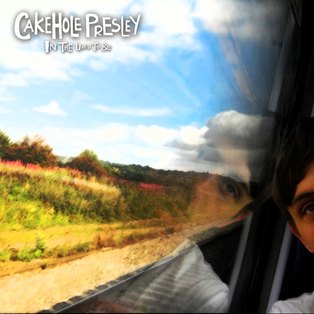
Cakehole Presley‘s bass player Mark Humphries died just a few weeks after this album was recorded, not headline news but a shock to his community in Cardiff. The album (their second) carries a quotation from him in the sleeve notes, the release a tribute of sorts to him. As such it’s a fine capture of a band who are typical of those who toil at the coalface of rock’n’roll; local heroes with the chops and song writing savvy to rise above the norm but unlikely to command the attention of all but the most finely attuned movers and shakers. A pity really as it’s a bloody good listen, earthy and honest reminding one of the early days of Lindisfarne along with a hint of the better pub rock bands; folk, country, rock and good old ballardeering here aplenty. If anything there’s just a touch too much variety on show as they move from hammering home a sixties type R’B rave up on Great Together into the dreamy protest swirl of Sweet Dreams (Little Darlings), an anthem to the poor and huddled which has a quiet grandeur about it. The softer (with a whiff of Celtic romanticism within) songs just tip the scale over the rockier ventures. In the Used To Be is jauntily nostalgic, Reeva, a touching celebration of grandchildren. Sweetheart is Dylanish in its sinuous delivery while Sunderland captures perfectly those moments when a gray and drizzled life that is only punctuated by bus timetables is coloured by thoughts of a whimsical wonderland.
Aside from a foray into a woozy cabaret world on the Weimar Wurlitzer of Cobbled Streets & Syphilis there’s a shimmering guitar driven pop song on Hope I’m Reaching Your Heart, the opening song on the album while the closer, Don’t Let The Bastards Grind You Down, is a fine sing-along barrelhouse carouse. Overall, the album is a rousing listen and a fine farewell to their departed member with an unlisted last song, a simple folksy ditty, their eulogy.
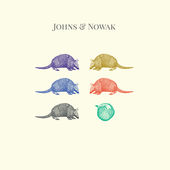
This Bristol based country bluegrass duo were kind enough to send their debut EP to Blabber’nSmoke at the tail end of last year but we’ve only recently got around to giving it a full listen. Turns out that it’s an evocative listen with the duo delving deep into the world inhabited by Gillian Welch and David Rawlings (although with some role reversal in terms of the vocals). Andy Nowak is the guitarist while Camilla Johns adds mandolin, the two instruments welding together perfectly. Nowak is the singer and Johns the harmonist, again their voices blending well with Nowak’s lead voice nicely wearied and worn.
As a fledging unit they’ve (perhaps) wisely used the EP to set out their singing and playing skills first and foremost with four of the six numbers covers. They’ve also gone “old school” singing into a vintage sixties microphone and recording to good old fashioned tape and the sound is indeed warm and up close. This works to best effect on the opening song, Bill Monroe’s Dark Is The Night, Blue As the Day which is just short of wonderful. The lazy swing, the plinking and plonking interplay of guitar and mandolin and Nowak’s nuanced vocal delivery all coalesce into a fine old time sound that captures Monroe’s high clear sound. More up to date is the cover of Nickel Creek’s 21st May which actually benefits from the stripped back duo delivery with the guitar/mandolin interplay particularly good here. There’s a bit of a curveball as they tackle Creedence’s Bad Moon Rising but picked to the bone and slowed down it fits well into the overall picture as does the closing cover of Welch and Rawlings’ Wayside/Back In Time which strips out the organ and fiddle of the original but ups the tempo somewhat. With Johns sharing lead vocals here the playing is more robust and as the song opens it is surprisingly reminiscent of vintage Richard Thompson.
There are two originals. A song from Nowak, Still Standing Still which is folkier than the covers tempting one to consider whether a bluegrass duo playing songs in a Nick Drake vein is a plausible concept. Spider On The Headstock is an instrumental composed by Johns and again it sits more comfortably in a folk setting with its elegiac process and nimble dexterity.