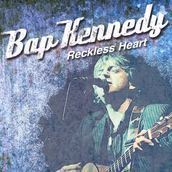
Bap Kennedy. Reckless Heart. At The Helm Records

500x500

Released at the tail end of last year Reckless Heart is Bap Kennedy’s last work. Sadly, he succumbed to cancer on November 1st, shortly before the album release. Over the years since his days in Energy Orchard and then progressing onto a solo career Kennedy built up a reputation as one of Ireland’s finest songwriters marrying Celtic and American influences and although he was younger than peers such as Nick Lowe and Elvis Costello his body of work sits well alongside the likes of theirs. He had celebrity supporters; Steve Earle produced the first solo album and proclaimed him, “the best songwriter I ever saw” and Van Morrison, Shane McGowan and Mark Knopfler all collaborated with him.

Reckless Heart was all but done and dusted when Kennedy fell ill and was diagnosed with a terminal cancer early in 2016 so it’s not an album written by an artist facing up to his own mortality. Instead it’s a fairly joyous celebration of music and life with Kennedy less in thrall to America than he was on his previous release Let’s Start Again and delivering a generous dollop of good time songs with hints of rockabilly and rhythm’n’blues. There’s a deceptive ease to the songs, a measure of the man’s craft. Like Ronnie Lane he has the knack of seeming to be able to casually knock off songs that just hover in the air, all warm and fuzzy and memorable as on the second song here, Good As Gold, a delightful candy flossed gossamer of a song that summons up lazy summer days. The insouciant Help Me Roll It, the Basement Tapes like nonchalance of Reckless Heart and the easy rolling Honky Tonk Baby show a man at ease with his world and on top of his form as he revisits his rock’n’roll roots.

The album opens with the perfection that is Nothing Can Stand In The Way Of Love. Here Kennedy is again in Basement Tape Dylan mode and the band busk in fine fashion as accordion, organ and tasty guitar licks cement the rustic roots feel. I Should Have Said  is an introspective love song tinged with regret which, with hindsight, is very moving, suffice to say that Kennedy here sings wonderfully while the arrangement with sensitive burbling bass, stately piano, organ swirls, curling guitar and female harmonies is dynamite. In a similar fashion Henry Antrim is another moving ballad that transports a cantina type melody to the Irish hinterland but Kennedy can kick out as on the rollicking closer It’s Not Me It’s You with its gutbucket guitar solo while Por Favor bursts with a nuevo wavo frenzy recalling the likes of Doug Sahm. The crowning glory however is the sombre The Universe And Me, another song that with hindsight grows in stature. Here Kennedy approaches Dylan’s metaphysical meanderings as he sings,

“There’s no music in money, there’s no money in love, there’s no love in this town tonight but I think I’ll stick around…I live between the stars upon the cosmic sea, And I’m down here all alone, just the universe and me. And I wonder why the sun shines and who taught the birds to sing. You can tell me all the numbers but nobody knows anything.”

It’s a beautiful number and as epigraphs go not a bad one.

Bap Kennedy is survived by his wife Brenda. Bravely Brenda and Bap maintained a blog detailing his treatment which you can read here.
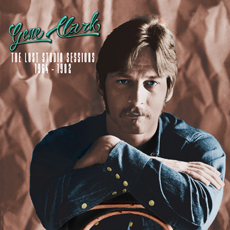


Gene Clark. The Lost Studio Sessions 1964-1982. Sierra Records

d10_homerjethroinstrumentalcd_1

I think it’s fair to say that the release of this album might be proof for Gene Clark fans that Santa really exists. News of an album composed of 24 unreleased Clark recordings (not even on bootlegs)  broke in the middle of 2015 with a release date of December 2015 mooted.  Of course that date came and went with no sign of the album. Fans, used by now to the haphazard ways that have accompanied various other Clark projects filled forums with their hopes and fears around the release, evidence of the devoted following that Clark still incites.  Some of this may be a legacy of Clark’s spectacular ability to snatch failure from success in his brief life. His post Byrds albums were plagued by bad luck and bad timing, overshadowed by peers who perhaps had better management or a more disciplined approach to life.

Currently Clark is up there with Townes Van Zandt as a posthumous favourite, critics now hailing albums that were criminally overlooked in the first instance. There have been a valiant crew of believers who have been flying his flag for some time and there have been some excellent reissues and compilations along with John Einarson’s biography and the documentary The Byrd Who Flew Alone. We can now add to the roster this incredible collection of songs, all fully fledged studio recordings, no demos or alternative takes, which takes us from a fresh voiced 19 year old Clark straight out of The New Christy Minstrels through to a reunion with fellow ex-Byrds Michael Clarke and Chris Hillman in the early eighties. Here we should salute Sierra Records who have doggedly pursued this project and come up with the goods with the full consent of Clark’s estate (his sons Kai and Kelly Clark) with the album available in several formats, fully annotated and with some bonus songs for those who subscribed to the deluxe formats.

The album opens with a brace of songs recorded by Jim Dickson in 1964, the 19 year old Clark sounding earnest with already a hint of doomed romanticism in his delivery. Just months before he teamed up with his future band mates for the PreFlyte songs Clark is already stamping his unique style with the opening The Way I Am a signpost to the future.  I’d Feel Better (complete with some whistling) is upbeat in a Peter, Paul and Mary pop direction but  Clark heads into deeper territory on the following That Girl with his voice deeper and the lyrics bereft, his doomed minstrel waiting in the wings here. The five songs gathered here are curios to be sure but also a fascinating glimpse into the nascent genius of the man, a fine hors d’oeuvres for the main feast to follow.

From 1967 there are two gems, one of which exemplifies the hound dog of showbiz shenanigans that trailed Clark. His folk baroque (and Dylanesque) Back Street Mirror is a worthy companion to the songs on Echoes but was canned only to reappear some months later with his vocals stripped and replaced by those of the UK actor David Hemmings for his own album release (a crime repeated in 1972). From the same session is a pulsating slice of country soul that recalls both The Boxtops and Gram Parsons with Clark and trumpeter Hugh Masekela powering through Don’t Let It Fall Through. Next up is what might be called the heart and soul of the album as Clark delivers eight songs recorded around the same time as the White Light sessions. Here he is approaching his zenith, the songs achingly beautiful with a spiritual dimension and laid down simply, just voice and guitar and 20 minutes of sheer bliss.

There’s a brief pit stop into Flying Burritos territory on the gorgeous remodel of She Darked The Sun, presumably recorded around the time Clark dallied with the Parsons’ gang for the wonderful Here Tonight, before another generous and fascinating collection of songs. In 1972 Clark was in the studios with a top notch crew (Clarence White, Sneaky Pete Kleinow, Spooner Oldham, Byron Berline, Michael Clarke, Claudia Lennear) and the four songs here are excellent examples of the blissed out country rock that was popular at the time with Clark excelling on Roll In My Sweet Baby’s Arms. Again the curse strikes with Clark wiped from the tapes and the backing tracks for several of these songs used on Terry Melcher’s portrait of post Charlie Manson LA on his album. The album ends however on an upbeat note with some fine country rock recorded with Nyteflyte, a would be super group comprised of Clark, Chris Hillman, Herb Pedersen, Al Perkins and Michael Clarke in 1982. They cover Gram Parsons, The Box Tops and Rodney Crowell along with a final outing for Feel A Whole Lot Better and on the strength of the delivery here it’s a pity that they didn’t take off.

There isn’t much else to say here. Gene Clark nuts will already have this nestled under their wings but for anyone interested in the development of LA singer song writing, the history of The Byrds, The Burritos and even the Eagles then this is well worth a listen. An album curated with care and a love of Gene Clark’s music.

website


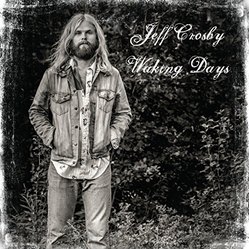
Jeff Crosby. Waking Days. At the Helm Records

jeff-crosby-waking-days

Anyone looking for a whiff of nostalgia for the good old California days need look no further than this album from Jeff Crosby, Idaho raised but inhabiting (at least in his mind) Laurel Canyon circa ’74. He looks the part, longhaired and denim clad on the sleeve, an extra awaiting his call to lie down beside the Eagles for the Desperado photo shoot. His sound is akin to a gruffer Jackson Browne, his voice has a handsome lived in element to it while the songs are snapshots of outsiders; strangers in a bar, folk killing time on the street corner, drifters on a two lane blacktop, all caught up in their memories of happier times.  Delivered with a nod to the stirrings of country rock when rock musicians such as The Dead were starting to sweeten their songs with pedal steel Crosby sails through the album with some finesse.

Aside from one out and out rocker, the ferocious snarl of What’s Normal Now which Crosby says is a homage to his liking for 90’s rock (Nirvana, Dinosaur Jr.?) and the title track’s Springsteen like blue collar rock imagination of the American Dream Crosby sticks to his 70’s template albeit he’s no copyist. Opening with the evocative City Girls he establishes his narrative gift as he describes a chance encounter in a bar with a girl who dreams of better days but who is condemned to endlessly repeat the scene, the song ending on a guitar solo that recalls the likes of Waddy Watchell.  This easy rolling rock’n’roll, reminiscent of artists across the spectrum from Warren Zevon to Fleetwood Mac, continues on The Homeless and The Dreamers with Crosby in particularly good form on the lyrical front here, the words a cry from a lost soul cast adrift from friends and family. The elegantly sculpted piano laden love song Emily is a road song of sorts with Crosby drawing on the topography of the West, the lovers separated by canyons and time, a theme revisited on the brash country rock of The Only One I Need, a song that is borne aloft by the pedal steel playing of Brian Whelan.

Whelan features heavily on several songs that are more contemplative. Carved In Sandstone, a song inspired by a feature built on Table Rock in Idaho, a 60-foot high cross on which teens carve their undying love. It’s perhaps the fulcrum of the album as Crosby again sings of a past lover and their memories but ends up admitting he’s down and lonesome in Tennessee. It’s a lovely careworn country lament, bittersweet but honeyed. Red White and Blue is another pedal steel crowned beauty, somewhat starker but again imbued with memories as is I Should Be Happy with Crosby again facing choices and looking back as he imagines his ex lover’s happy existence while he is stuck in a rut, his internal voice telling him he should be happy.

A fine listening experience, Waking Days is a fresh take on well-worn themes and a welcome calling card for those new to Crosby’s music. This release is a second time around for the album which was originally released in 2015. This version has two bonus songs tacked on at the end, both older songs from Crosby which have been featured in the TV series Sons Of Anarchy. This Old Town is a fine blend of Springsteen and Dylan with harmonica to the fore while Oh Love, Oh Lord is a bang on capture of the funky corkscrewed guitar and keyboard sound of The Band.

Website


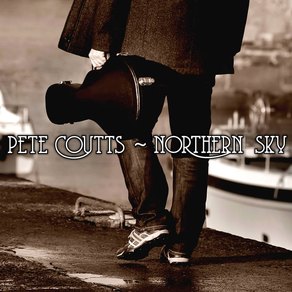
Pete Coutts. Northern Sky. Fitlike Records

a2233215624_16

Pete Coutts is a well kent musician in the folk world of North East of Scotland and he first came to Blabber’n’Smoke’s attention as one third of Ballad of Crows whose 2015 album we reviewed here. While that album had some roots in American music for his solo debut Coutts sticks firmly to his homeland and traditions, singing in the local tongue, Doric. A northeastern version of the Scots language Doric has an extensive history in literature and song stretching back to the 15th Century (many of the Child Ballads can be traced back to here) and its earthy kailyard utterances fit perfectly into Coutts collection of fine folk songs and tunes.

Singing and playing guitar and mandolin Coutts is assisted by a fine cast of top players from the Scots folk world who add whistles and pipes, fiddle and accordion, bodhran and cittern. The result is a nimble and excellently played series of instrumentals and songs that burst with energy as the players engage with each other as only the best folk musicians can creating a concatenation of strings and things. As with the finest Celtic music Coutts conjures emotions and memories of the land, sea and air along with the folk who dwell within. The instrumentals have a wonderful sense of restrained gaiety as the musicians parry with each other summoning up images garnered from the televised Transatlantic Sessions.  Allathumpach opens the album and immediately the listener is transported into a bothy session, a sense heightened by In & Oot. Boink!, despite its title, is somewhat more mannered initially with Coutts’ mandolin and the guitars gently bolstered by the fiddle and whistles before a grand entrance from the pipe ushers in a sense of grandness. The last tune on the album, Strichen Gala/The Road To Aikey Brae, closes the circle as once again one feels as if you are surrounded by a fleet of fine players and the ale is flowing fast.

These instrumentals are scattered throughout the album with Coutts’ songs standing proud amongst them. With occasional seabird sounds interspersed adding to the atmosphere Coutts’ strong voice delivers a powerful set of songs that take in the pride of fishermen returning home with a full catch (Sail & Oar) and the backbreaking work of cutting peat (Castin’ The Peat). Will Ye Byde is a glimmering gem of a song that sounds as ancient as the Caledonian Forest with Coutts accompanied only by a sonorous accordion on a love song which invokes the likes of Rabbie Burns and Lewis Grassic Gibbon with Coutts standing tall beside such keepers of the folk tradition as Martin Carthy. This is reinforced on Belhelvie, a gutsy rendition of a fatal accident involving a traction engine falling into a dyke which is both stirring and emotive. all the more so as it’s apparently based on a true family tale.

The title song is a bit of an anomaly here and presumably something of a tribute to its writer but Coutts handles Nick Drake’s Northern Sky with some aplomb. He sings it wonderfully and the slight Celtic air afforded it remains true to the melancholic feel of the original. It’s probably the best cover of a Drake song we’ve come across. Whatever, it sits well within the album which overall is a blissful winter listen. If you’re looking for some Celtic music to air around this New Year then is thoroughly recommended.

Website


Dumb Instrument. Backwards Is The New Forwards EP

oneway202

Back in the heady days of the Scottish Referendum the Ayrshire based troupe Dumb Instrument were all over the airwaves with their deadpan hymn to the nation, Suffering From Scottishness. A perfect combination of our ability to poke fun at ourselves and our gift for self deprecation (which is only there to hide the fact that we do believe we are the “greatest little nation on earth”) the song captured the zeitgeist (as we journos say) and there were even suggestions that it become the national anthem for the newly emerging independent nation.

Well, we all know where that got us and now, two years on, we’re facing a future where we might all be forced to become Little Englanders while a bouffanted buffoon across the pond might be considering invading us in order to stop wind farms spoiling his view from the links. It may be farfetched to consider that in the title song to their new EP, Backwards Is The new Forwards, Dumb Instrument have again got their finger on the pulse of the national mood but at the very least the song can be considered a parable about the dash to the past that has characterised these political catastrophes; as if walking backwards will take us back to the days of Empire (or in the US, glorious isolation). If so then it’s a masterstroke, if not then it’s just a bloody great song.

The undoubted humour inherent in Suffering From Scottishness and other songs such as Buckfast Vs. Hash on the album The Silent Beard somewhat overshadowed the musical prowess of the band. On this EP it’s almost the reverse. The title song, a whimsical piece that in its subject recalls The Goons is delivered swathed in a stately jazz rock arrangement that recalls some of Robert Wyatt’s work. The horn section is alternately muted and then swollen as the song progresses over a metronomic drumbeat and some beautiful double bass work. Singer and writer Tom Murray’s use of Scots idiom is perfect, the song overall a miniature absurdist masterpiece that is just glorious to listen to.

The third song, Shug, is also set to a somewhat ponderous beat as Murray sketches a portrait of an idiosyncratic artist (one is tempted to consider this almost a self-portrait). Here the music achieves prominence over the words as pedal steel glides in towards the end with a fine otherworldly sensation against an ethereal choir which recalls some of Eno’s work on his Apollo soundscapes. In between these two songs is the electronic bounce of Blin Bobette which harks back to Euro disco with plenty of synthesized burps although it seems to be about a woman’s descent into a religious madness who sees Jesus rising from her soap dish.

On the strength of the title song alone this is a tremendous listen and apparently it’s the first of a series of EP’s the band are planning to record over the next year, one a month. Dumb Instrument are appearing at a charity show at Mono, Glasgow on 22nd December in aid of Glasgow Night Shelter along with Rulers Of The Root and The Primevals.

Website


3hattrio. Solitaire. Okehdokee Records

3hattrio-solitaire-3000x3000

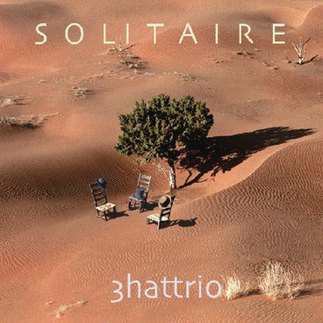
This third album from Utah band 3hattrio doggedly pursues their concept of American Desert Music. The trio (Hal Cannon, Greg Istock and Eli Wrankle) live and work in the desert of Southern Utah, the band forming when they chanced upon each other in a town called Virgin in the middle of the Zion National Park, jammed and then set out on this stony path. Unlike previous bands such as Giant Sand who were tagged with the desert rock tag only to disown it (Howe Gelb prefers “erosion rock” apparently) 3hattrio make a conscious attempt to translate the alien landscape around them into words and music. Their second album Dark Desert Night was inspired by the sharp crack of desert nights, the songs dark and evocative. On Solitaire they are basted in the heat of the day, the cover showing 3 hats on 3 chairs, a nearby tree shedding shade in the opposite direction.

The album title is borrowed from environmentalist Edward abbey’s 1968 book Desert Solitaire. Not having read the book and never having been in a desert I can only imagine what a solid wall of heat and light is like but fortunately there are other writers who have taken it upon themselves to describe it such as Cormac McCarthy’s powerful lines from Blood Meridian.

“The sun in the east flushed pale streaks of light and then a deeper run of color like blood seeping up in sudden reaches flaring planewise and where the earth drained up into the sky at the edge of creation the top of the sun rose out of nothing like the head of a great red phallus until it cleared the unseen rim and sat squat and pulsing and malevolent behind them.”

 This play of light and colour with the heat almost visible in the air is subtly manifested by the songs and music on Solitaire. It’s a softly shimmering album, the fiddle and double bass almost palpable while the guitars and banjos crackle like a batshit old prospector who has spent too long in the hills. The vocals inhabit an age old America reflecting the travellers who voyaged over these sands as they went westward ho while the primitive scatting on the opening Texas Time Traveller is reminiscent of the Native Americans displaced in this ruthless migration.

When Blabber’n’Smoke reviewed Dark Desert Night we reckoned that 3hattrio were ripe for soundtrack plucking and this is maintained on Solitaire. One can imagine McCarthy’s border desperadoes riding into hallucinatory settlements and hearing these songs sung by itinerant musicians who may be real or not. Rose limps along with an air of despair, an elegy for these badlands, Mojave is an intricately weaved jig of sorts with banjo leading over atmospheric fiddle wails that is somewhat shamanistic. Blood River, Eddy Mesa and Should I all display the disparate elements of the band, folk, jazz, experimental as they meander like a 19th Century version of Beefheart’s Magic Band. Even on a song that is more conventional and descriptive such as Range there’s a spookiness that’s almost akin to that of The Handsome Family. The album closes on a traditional note with a version of Bury Me Not that is almost ethereal and in its nocturnal feel a fitting close to the end of days spent under a blazing sun. The one quibble on the album is the band’s cover of Bob Marley’s Get Up Stand Up which despite a fine interpretation is probably just too familiar to sit easily in these unfamiliar surroundings.

All in all Solitaire is a worthy successor to Dark Desert Night and the good news is that 3hattrio are coming to Glasgow as part of Celtic Connections playing The Mackintosh Church on 4th February.

Website 

Yola Carter. Orphan Offering.

image55

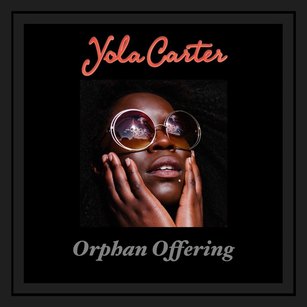
To borrow Mr. Kristofferson’s lines, Yola Carter is a walking contradiction. She’s black and can belt out a Gospel song as if she was raised on Southern grits but her earliest musical heroes were Dolly Parton, The Byrds and CSN&Y. She has toured the world with Bugz In The Attic and played at Glastonbury with Massive Attack and co-wrote Will Young’s single Hope and Fears. Her co-writer for that song was her fellow band member Stew Jackson in the Bristol based country soul band Phantom Limb, Carter’s first attempt to indulge her country roots. Aside from the apparent oddness of someone from Massive Attack tackling country songs Carter challenges preconceptions, people don’t expect an Afro crowned ebullient character to sing a Dolly Parton song.

It’s a contradiction that has stalked Ms. Carter since her early years. She has spoken about the difficulties of growing up in a mostly white community and her musical favourites just made her feel more isolated back then. Add to that a difficult family background and it’s clear that her career has been something of a victory against the odds. Still it’s been a long journey and Orphan Offering is her first opportunity to let the world hear who the real Yola Carter is. We had the opportunity to hear some of the songs from this five track EP back in the summer when Carter played at Perth’s Southern Fried Festival noting a slight Band influence and she made a big splash at her appearance at this year’s AmericanaFest in Nashville so hopes were high for this debut disc.

The EP opens quite magnificently with Home as delicately picked acoustic guitars trill before Carter makes her appearance sounding somewhat like Roberta Flack. As the guitars continue to trace their way through the song Carter’s voice grows in power before a gear change halfway through when backing vocals kick in, the guitars mildly thrash and Carter moves into full testifying mode. With Carter seeking her spiritual home and the second half sounding like a cross between David Crosby and Aretha Franklin it’s an impressive opener. What You Do is more down home with a sawing fiddle to the fore over a funky country backbeat and chugging guitars, The Band influence evident here although one can also detect the likes of Delaney & Bonnie in the grooves while Carter offers up one of her most powerful performances delivered with a Southern drawl. The fiddle returns on the closing Fly Away with the band again churning up a fine country stew that’s half barn dance, half psychedelic drone with Carter again in top form leading her backing singers on a series of vocal acrobatics whipping into a frenzy before gently letting the listener back down to earth.

Orphan Country is like a Richard Thompson song sung by Aretha Franklin, its melancholic melody and supple guitar solo (by Kit Hawes) deepened by Beth Porter’s sombre cello. Here Carter sings of the restraints she grew up against likening herself to a wild horse who should be allowed to run free. The mood deepens on Dead And Gone, a meditation on the delicate balance between misery and happiness with Carter again alluding to her own experiences over an excellent glimmering backdrop that recalls Joni Mitchell’s Hejira era and the ambient notes of Emmylou Harris’s Wrecking Ball. Finally, Heed My Words is a song that again recalls the metaphysical wanderings of Crosby and the Daniel Lanois ambient sounds of Wrecking Ball with Carter proving that she can be delicate and evocative, her voice here keening and redolent of spiritual searchers.

This is grown up music, deeply thought out, Carter’s influences skilfully blended into a sound that is somewhat unique and here fully realised. As she herself says (in an interview you should read here) “People say, “What’s your connection with American roots music?” I’m like, “My actual roots.”  How about that, kids? How about my actual, real actual roots?”

website


Roddy Hart & The Lonesome Fire. Swithering. Middle Of Nowhere Records

hart

Fate smiles upon Roddy Hart. Notwithstanding his obvious talents a brief look at his career will have many other artists shaking their heads in disbelief. His first album featured a guest appearance from an early fan Kris Kristofferson with Kristofferson championing Hart’s work since then. An invitation from fellow Scot Craig Ferguson to appear on The Late Late Show in the States was so well received that Hart and his band returned for a five night residency on the show which was viewed by 12 million Americans. A chance encounter in a Glasgow studio led to a cameo role in the movie Sunshine On Leith, he was invited to play at the Scottish Parliament’s 10th anniversary and in his role as curator of Celtic Connection’s Roaming Roots Revue he has had the opportunity to collaborate with a veritable who’s who of American and UK roots royalty; his phone book must be well guarded. In addition he hosts one of the better radio shows here in Scotland and just recently has become the MC of Radio Scotland’s Quayside Sessions. One might suggest that he change the name of his band from the Lonesome to the Ubiquitous Fire.

Of course this hasn’t all just tumbled into Hart’s lap. Kristofferson was quick to spot a songwriter with promise telling Hart (who has a law degree),”The world doesn’t need any more lawyers” when Hart was swithering about his future prospects.  Aside from his own take on classic Americana song writing gathered from years listening to the likes of Jackson Browne Hart is able to turn his hand to writing new arrangements for songs and poems by Rabbie Burns and he also delivered a very respectable EP of Dylan Covers a few years back. It was however a bit of a surprise when in 2013 he formed The Lonesome Fire and turned in an album that was somewhat anthemic in its ambition with Hart and band allowing the likes of Arcade Fire and The National to erupt from its shiny grooves, the album was nominated for a Scottish Album Of The Year Award.

So, three years on Hart & The Lonesome Fire return to the fray with another album that if anything is more polished and epic in its ambition. Swithering (a Scots word that indicates indecision) is an odd title for an album that sounds so self assured (it shines at times with the arena allure of U2). A close inspection of the lyrics reveals Hart singing on Sliding, “And I don’t really know why I didn’t doubt it, I was sure but now I’m swithering” as the band whirl up a Springsteen like storm, keyboards rippling away over a pummelling rhythm. Hart himself explained in an interview  that the album was conceived in a different manner from that which was he used to and that he swithered throughout the process before producer Paul Savage came on board and helmed the project. Whatever, the result is an album that might remind folk of the works of The Blue Nile and Lloyd Cole as it alternates between rain speckled drama and guitar based epics.

Opener Tiny Miracles is a seductive glistening groove while the following Berlin has Hart in his most emotive mode amidst shards of glimmering guitars and an eighties like percussive beat. Low Light descends into a rubbery funk beat that is somewhat beholden to Talking Heads but Hart struts his stuff quite excellently here with a fine sense of paranoia and a brilliant glimpse of his native accent thrown in. The cavernous No Monsters rumbles with an evil menace and there’s a similar sense of dread on the ethereal I Thought I Could Change Your Mind which is like a cross between Nick Cave and The Beatles especially as it approaches its end and a mournful horn section appears from the mists. The closing song We’re The Immortals is in a similar vein as a wheezy organ leads into an arrangement that sounds somewhat like something Brian Wilson would come up with if he was a funeral director.

At times there’s just a wee bit too much bombast, clang and clamour, the songs too in thrall to AOR as on Dreamt You Were Mine and In The Arms Of California but there’s a fine reminder of Hart’s own past on the gentle sway of Violet. It’s a softly strummed love song adorned with sympathetic guitar and keyboards and, despite Hart’s onward progress, the song here that I think best sums up his qualities. Not as iconoclastic as shouting Judas at a Dylan gig but just a personal preference expressed here. However, there’s no doubting that Hart & The Lonesome Fire have the chops to make it big with this album and hopefully the Fates will continue to shine on him.

Website


Doghouse Roses. Lost Is Not Losing. Yellowroom Music.

a0181202839_16

Back in March Blabber’n’Smoke spoke to Paul Tasker about his solo album Cold Weather Music. We also spent some time discussing the exciting news that Doghouse Roses had a new album recorded, their first in six years with Paul promising a November release. True to his word, Lost Is Not Losing hits the streets this week and, several listens in we can confirm that it’s been well worth the wait.

Comprised of Tasker on guitar and the glorious voice of Iona MacDonald, Doghouse Roses are one of those bands who are critics’ favourites with a devoted following both here and abroad especially in Europe. Critical acclaim however doesn’t always butter the bread and following their excellent 2010 album This Broken Key they had a hiatus of sorts.  An invitation from cult US art rockers Television to open for them on a European tour in 2014 was a kind of kick starter and it paved the way to this album. They’ve been back on the road and released two EPs in the past two years and finally with Lost is Not Losing they emerge triumphant.

Since their tentative string laden debut and the woody Americana of This Broken Key Tasker and MacDonald have matured as songwriters and while they still tread in the footsteps of artists such as the Pentangle family, Gillian Welch, Fairport Convention and John & Beverly Martyn the pair confidently march forward. The album is a fine mix of assured and melodic folk rock along with strong ballads and even some mild rockabilly. Gathering around them a sympathetic crew of musicians and vocalists the album is fully realised, the songs throughout balanced perfectly.

They open with the liquid gravitas of Pour, a lambent lament on the effects of alcohol on a relationship with Tasker’s electric guitar slowly burning as MacDonald commands the voice of a wounded soul, battered but proud, the song akin to an early Fairport number when Richard Thompson and Sandy Denny were ascending to their heights. With drums and bass from Craig Lawrie and Stephen McGourty gently propelling the song along with harmonies from Jo Shaw and Biff Smith the song is a fine declaration from Doghouse Roses that they’re back. To Decide displays the pair unadorned, Tasker’s guitar wizardry and MacDonald’s voice welded to each other on a wistful ripple of a song which seems to have had its genesis in late night post gig decisions. The pair delight again on the old time New Year Rag, a song that has a political context delivered with the breezy sassiness of the likes of Malvina Reynolds while the starkly beautiful After Sun addresses an environmental collapse and Feed The Monster tips against global avarice and the indifference which allows it to grow unfettered.

0008282817_21

Elsewhere the basic duo sound is gently expanded to include mandolin ripples (from Laura Beth Salter) on The Whistle Song offering a fine folk lilt and an opportunity for Tasker and Salter to indulge in some duelling string playing. Jez Hellard adds some excellent and earthy harmonica to the tale of a prostitute on Fairground and there’s a full band set up for the breezy folk rock of Crooked Life which in a blindfold test could easily be assumed to be an outtake from Fleetwood Mac’s witchy Stevie Nicks. There’s some electric guitar muscle on the driving rock of Weather The Storm (courtesy of John Alexander), the song itself wonderfully arranged in its dynamics and vocal performances in the middle eight especially. Perfect radio fodder as is the chunky retro groove of Diesel Engine with the Roses’ letting their hair down somewhat as various guitars slip and slide and snarl, the lead on this occasion handled by Slovenian guitarist Dejan Lapanja.

The album draws to a close with a song that sounds as if it’s been summoned from the halcyon days of sixties folk. Days Of Grass And Sun displays the duo’s strengths with MacDonald’s voice crystal clear and assured as Tasker lays down his intricate finger picking and flourishes. The song itself has the perfect mixture of simplicity and memorable melody that characterised the likes of Tom Paxton, Fred Neil and even Joni Mitchell in her Clouds era. It’s a wonderful ending to what is a wonderful album throughout.

Lost Is Not Losing is released this Friday with a launch event at The State Bar in Glasgow. They appear again the next night at The Admiral Bar as part of a Light Of Day charity gig  before the band head off to Germany for a short tour. Dates here

website


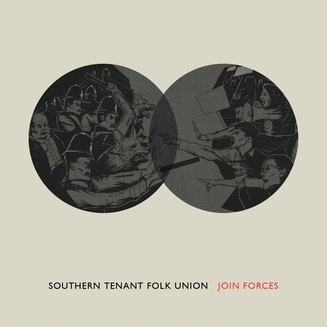
Southern Tenant Folk Union. Join Forces. Johnny Rock Records

joinforces_cover1500x1500-1

Only the other day we offered the thought that Two Cow Garage‘s song History Now could be an anthem for the Occupy movement and now we look to another band who were described in Q Magazine as a folk band for the Occupy era. Sure enough Edinburgh based Southern Tenant Folk Union are a political animal with Join Forces, their seventh album, written following the Tory victory in the 2015 election and then recorded in the tumultuous days of June and July this year, the Brexit days. Released at the end of September it’s somewhat fitting that it came to the front of the review queue now just as we all sit pinching ourselves in an attempt to believe that the recent American election was just a bad dream.

In the wake of the concept that was their last album, The Chuck Norris Project, STFU go back to basics here, folk infused bluegrass with Celtic tints while the songs celebrate the tradition of protest from Woody Guthrie to Billy Bragg. They tackle the media, politicians and the unwitting ways we are all involved in far off wars, our taxes supporting arms exports without ever descending into polemic, the songs delivering the message without a preachy tone. In addition there’s a hefty dose of fine songs (and tunes) that simply tell a tale or weave a scene and leave the listener to decide if there’s a message there or not. Chief among these is the beautiful folky lament of Ashes, a meditation on the glory of trees, their growth and their decay and ultimately a song that reflects on the human spirit. It’s delivered with some gusto and recalls the glory days of Fairport Convention. My Grandfather’s Father opens like an Appalachian hymn before the band swing in with a definite Scots skirl in Katherine Stewart’s fiddle playing as they tell the tale of a philanderer’s bastard son. Stewart offers more traditional fare on the three part instrumental Islay Crossing with her fiddle playing ably assisted by the other players on a stirring set of airs and reels while Happy As We Both Can Be (which closes the album) is a celebration of life and growing old together.

The meat of the album is in the protest songs however, the opening To The War (one of two songs written by singer and guitarist Rory Butler, the remainder penned by banjo player Pat McGarvey) is an up-tempo diatribe against social injustice and the ways we are all inveigled into participating. The Media Attack rails against the gutter press with a driving rhythm while Join Forces suggests that opposing sides, both kind of brainwashed into their respective ideologies join together. It’s a fine idea but it’s the one song here that sounds kind of forced. There’s no faking it however on the sweet country rock of Were You Faking When You Kissed Her which addresses the two faced duality of politicians smiling for a photo shoot and then privately expressing their inner thoughts. What Kind Of Worker Do You Want To Be is a jolly romp into Wobblie (IWW) territory and they dig into sixties protest with What Would You Give For A Worker With Soul which sounds like an old civil rights anthem, Dylan crossed with Hamish Henderson. Finally, there’s the outstanding optimistic bluegrass romp of Our Revolution It Will Someday Come which reminded us of that old song We’re All Part Of That Smiling Revolution (by The Global Village Trucking Company). Totally different sound but both imbued with a hope we all need these days.

Website

And here they are taking it to the root cause…