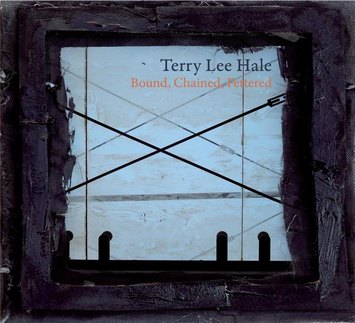
Terry Lee Hale. Bound, Chained, Fettered. Glitterhouse Records

cd-terrylee

Texan born, long domiciled in France, Terry lee Hale is a survivor. Throughout four decades of changing fashions and tastes he’s continued to deliver thoughtful and sometimes meaty deliberations on the plight of man. Like his long time associate, Chris Eckman of The Walkabouts, Hale found that Europe was a more fertile territory for his lean tales and dark folk blues than his native land, his albums in the main released via German labels. His last album, The Long Draw, a thought provoking mix of Dylan like rambles and punchy roots rock was one of our favourites of 2013.

Intriguingly, for Bound, Chained, Fettered, Hale sought out the services of a producer, arranger and guitarist who he had long admired and who is, coincidentally,  a Blabber’n’Smoke favourite, Antonio Gramentieri of Sacri Cuori,  Dan Stuart and Hugo Race fame. Hale ventured to North Italy to record the album with Gramentieri in the producer’s chair, the pair recording live for the most part, Hale on acoustic six and 12 string, Dobro and harmonica with Gramentieri providing bass, electric guitar and lap steel. Unlike The Long Draw it’s an uncluttered reflective album, no raging against the political machine here. Instead Hale seems to be musing on life, relationships, aging and death. Gramentieri weaves his magic through the songs, as a player yes, but more importantly in his assemblage of some of his local cohorts (Christian Ravaglioli, keyboards, Franco Neddei, synth and mellotron, Diego Sapignoli, percussion and Franceso Valtieri, sax) whose spare contributions add a fine light and shade to the songs. Gramentieri has a light touch, the arrangements always at the service of the song and Hale is front and centre throughout, his voice up close; rarely has he sounded better.

Aside from The Lowdown, a raunchy blues number that wanders finely into Tom Waits territory with Gramentieri scowling via his guitar parts as Hale wails on harp and a baritone sax parps, the album is a quiet affair. The opening title song finds Hale sounding like Bill Callahan as he recites his words over a distant guitar grumble and dusty Dobro delivering a back porch Don Juan like philosophy. Acorns belies its gentle, almost breezy, delivery with its cryptic words, a broken love affair, a faltering memory clinging to fleetingly recalled events while the following instrumental, Flowers For Claudia, a brief one minute interlude, does seem somewhat elegiac. Age and memory seem to crop up again on Can’t Get Back (Just Like That), Hale’s guitar given just a dusting of guitar, organ and percussion allowing the lyrics to stand tall although the meanings remain vague.  Scientific Rendezvous is more structured with Gramentieri’s guitars and lap steel somewhat menacing as Hale recalls The Walkabouts’ spookier European moments on a song that is again something of an enigma. Here he could be singing about cloning or artificial insemination but the song’s mention of daddies and mommies does seem to relate to birth while the opposite end of the life cycle is the subject of the following song, Signed Blue Angel. Here he has adapted words written by an eight year old grandchild of an old friend on a death. While this might seem cloying it’s surprisingly fresh and direct, a child’s reference to angels and butterflies given a sincere reading and set within an almost Appalachian melody with gliding lap steel and a hint of cowboy balladry. It’s offset by the following stark threnody of Jawbone, an arching summary of the cycle of life and death and dust to dust. An elemental song given some heft from Gramentieri’s atmospheric guitar stylings and Franco Neddei’s muted synth playing it’s spine tingling as Hale balefully repeats the title towards the end. The album ends with another low down blues number, the slow burn of Reminiscent. More full blooded than The Lowdown, Hale picks forcefully, Gramentieri the gut in the bucket as the song slouches along like a grim reaper looking for his target.

Bound, Chained, Fettered is an excellent listen. Its slow groove, Hale’s fine vocals and words and Gramentieiri’s sonic additions all adding up to a chilling and absorbing adventure. It’s available now and Terry Lee Hale is currently touring on the continent, dates here.
Website

Glitterhouse Records


Daniel Romano. Mosey. New West Records.

danielromanomoseyada
Mosey, an American equivalent perhaps of the French flaneur, a leisurely amble drinking in the atmosphere of the surroundings. God knows where Daniel Romano’s been wandering of late but his latest adventure, which casts aside any lingering memories of his Nudie suited George Jones fan era certainly lives up to his definition of the genre he has invented. He explained his vision of Mosey in a recent interview as, “It means a lot of things, I guess. Mostly, just keeping away from any kind of boys’ club that I don’t want to be part of, that I might get lumped into just from ignorance. Sometimes you have to set your own ground in order not to be buried in something that doesn’t represent you. But people feel they have to put you in a category.”

Fair enough, it would be a brave man who would lump this record into one category (the irony of this being an Americana based blog is not missed), but it’s folk who know Romano through his excellent reboots of classic country and countrypolitan sounds who will be reading this. In addition, despite Mosey being a singularly Daniel Romano album, it comes trailing clouds of influences, his moseying apparently allowing him time to wallow in various genres and styles all the while indulging in some grand nostalgia.

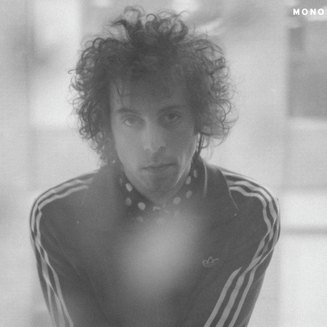
Recorded in mono with Romano playing all instruments (aside from piano, strings and horns) the album is a kaleidoscopic whirl of sounds. A mixed metaphor perhaps but aside from the retro music here there’s a fine cinematic feel to many of the songs with Romano stirring up visions of spaghetti westerns and swinging London and there’s a definite Bollywood touch to the opening number Valerie Leon. Leon, a Hammer horror starlet, Bond girl and (in the UK) famous for gloriously dated TV ads for Hi Karate aftershave, is an odd totem to hang a song on (and she’s missing from the video) but the mash up of Bollywood and Italian sixties pop (a la Sacri Cuori on Delone with a touch of Morricone added) on top of a supremely melodic hook laden pop song is sublime. Throughout the album Romano hits on those sixties mavericks who had the knack of producing hits that were just a touch, well, kinky. Lee Hazlewood and Serge Gainsbourg come to mind, Toulouse, a wonderfully pun filled number recalls Hazlewood’s duets with Nancy Sinatra (with Rachel McAdams in the Nancy role) while Calexico’s update of Hazlewood is recalled on the widescreen horn driven vista of Sorrow (For Leonard and William), the title perhaps a joke, Leonard and William perhaps Nimoy and Shatner? Meanwhile Mr. E Me is a brassy pop revision of The Stones’ Sympathy For The Devil.

The album is a musical maze with twists and turns. The heyday of American pop psychedelia as filtered through the Brill building is captured on the astonishing brio of Maybe Remember Me and The Monkees like grandiosity of Hunger Is A Dream You Die In, a grand canyon of a song. Another figure from the sixties looms large on (Gone Is) All But A Quarry of Stone but in Romano’s skewed wormhole of time here he recalls Dylan revisiting his roots with a song that could have come from Time Out of Mind with a fantastic ersatz Garth Hudson organ solo. Meanwhile the slow blues burn of I Had To Hide Your Poem In A Song is like a fourth formers attempt at a Dylan song, portentous perhaps but delivered with some fury.

As on his last album, If I’ve Only One Time Askin’, Romano adds musical interludes after several of the songs, brief snippets of Mosey music (I suppose) that support the soundtrack aspect of the album with Tarantino like flashes of twanged guitar and exotic choruses. It all adds up to an intoxicating whole, an album to wander into and attempt to wander out of. Tellingly Romano seems to reference the author of the gnomic novel The Magus on his song The Collector, an earlier John Fowles book from the sixties. Here a butterfly collector incarcerates the girl of his dreams and Romano cloaks the song in a cocoon of gilded sixties menace recalling the work of John Barry and his glacial keyboard sound.
Mosey is an audacious and invigorating album, Romano blasting through preconceptions, digging into the past and blowing it up into an HD reality. He starts a European tour today with a show in Glasgow this Friday at The Classic Grand. Dates here


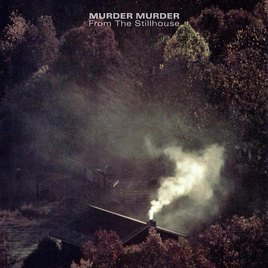
Murder Murder. From The Stillhouse.

album-cover

Oh well, another category to file beside rock and pop and insurgent country doo-wop (and if you have any of the latter please let us know). This time it’s Bloodgrass, defined by Northern Ontario band Murder Murder as bluegrass +outlaw country +murder ballads. A six piece shit kicking acoustic set up Murder Murder certainly flail along at quite a pace, the bass and drums propelling their guitars, fiddle, mandolin, Dobro and banjo with some abandon, indeed the occasional break from their breakneck numbers here are welcome respite, a chance to catch some breath.

The songs are frontier tales, bloody revenge, double crossed lovers, death dealing bootleggers and hellfire preaching all included. Written by the band the songs are graphic, with none of the coyness that was sometimes used in the good old trad days. On Half Hitch Knot the brother of a woman beat up by her man hogties him singing, “You’re a polite cocksucker with your hands tied up, like a barnyard pig just about to get stuck” while Bridge County’s bootlegger metes out punishment to a rival, “I found him standin’ by the old ash woods, I cut that fucker down right where he stood”.  Sung with some panache, indeed relish, the vocals are rousing while the band is like a well oiled machine, the instruments meshing splendidly, the songs packed with dynamic shifts in tempo that add to the drama.

3049123

They do rein it in on a couple of numbers. When The Lord Calls Your Name preaches repentance for a life of sin, the melody similar to that of A Satisfied Mind while Bridge County flows slowly, the vocals dramatic, the fiddles scraping over a steady drumbeat, the tension building as the song culminates in a bloody battle with the law. There’s one cover, a poignant choice given recent news, as the band deliver Guy Clark’s The Last Gunfighter Ballad, the tempo upped somewhat from the original but lyrically it fits right in with the band’s own writing skills. Indeed, they even throw in a lusty shanty of sorts about gay pirates on Duck Cove, of course, it ends in murder and mayhem.

There’s a rabble-rousing element to the album, like Old Crow Medicine Show or even Dropkick Murphys music these songs should take to the stage like a duck to water. You can see if that’s the case as Murder Murder are currently on their first tour of the UK. All dates are here and include Edinburgh at Stramash on 28th May and Glasgow’s McChuill’s on the 29th.

Website


David Starr. Love and Sabotage.

l_and_s_new_front_cover

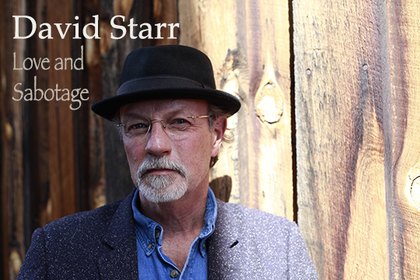
The unassuming, almost professorial, chap staring at you from the cover of this album doesn’t give a hint of the sparkling old school country tinged melodic rock he’s packaged within the cardboard. Starr, from Colorado, has a hefty pedigree under his belt with five previous albums and a lengthy list of acts he’s supported or played with, several of whom turn up here including Richie Furay, John Oates and Steve Cropper. The album ranges from classic guitar driven freeway friendly songs to fiddle and mandolin rich ballads, suffice to say if the likes of Poco, Steve Stills, JD Souther, Andrew Gold and even Fleetwood Mac (circa Rumours) floats your boat then you should lend your ears to the 15 songs on offer here.

The title song opens the proceedings, a radio friendly riff of a song sparked with soaring guitar breaks and some snarly lap steel that keeps it grounded, there’s a muscular heft in the rhythm section and keyboards. It’s classic FM fodder, the Eagles and even Boston recalled as Starr sings with confidence. Secrets, a co-write with John Oates (who provides harmonies), is another song that, had it been released back in the days, could now be a staple of retro radio. It’s supremely melodic in the Fleetwood Mac manner with a winning guitar break and an excellent middle eight featuring some fabulous harmonies. Starr turns in several other songs in a similar vein, the aching Called It Love, a Jackson Browne like drama with Steve Cropper adding some sinuous guitar lines and Our Mistakes which glistens with some Byrds like guitar flourishes.

The album is finely balanced with a brace of introspective numbers and some rootsy ramblings. Long Ride Home is a cosmic cowboy lament, an intricate lace of slide and electric guitar with mandolin and accordion it’s a valedictory to life on the road and beautifully delivered. What Do You Recall is a stripped down piece, piano and fiddle and voice only as Starr peers into a memory of a love, a song that is painfully wonderful, like a love song to a dementia sufferer if that’s not supposing too much. Memory also features on the slinky and slick night-time blues of Afraid as Starr revisits his past while The Beautiful Music Of You (featuring Furay on harmonies again) is a simple love song with a hint of sadness provided by mournful viola.

The rootsiness shines through on the Dobro and accordion driven Acadian rhythms of You Will Come To Know and the jaunty harmonica led skip of No Time Like The Present. However the crowning glory here is Starr’s rendition of Tumbleweed, a song written by Canadian Tia McGraff. With a grumbling and growling guitar underpinning some sweet mandolin and fiddle playing along with some very sweet harmonies (courtesy of Tania Hancheroff) Starr here recalls the luminous sound of Emmylou Harris on Wrecking Ball.

Love and Sabotage is an excellent album and the good news is that Starr is currently touring the UK although he’s performing solo. However, on the strength of this he seems well worth seeing. He appears in Glasgow as part of the Southside Fringe on Thursday his other dates are here.

website


Fraser Anderson. Under The Cover Of Lightness. Membran Records

utcol-300x300

Blabber’n’Smoke first encountered Scots musician Fraser Anderson when he reissued his album Little Glass Box back in 2014. That album featured the legendary Danny Thompson on double bass inviting inevitable comparisons to the late John Martyn. True, Anderson had some of Martyn’s blend of folk jazz and blues about him but his songs raised him far beyond any such comparison.  At the time of recording Anderson was living in France with his family but in 2014 he relocated to Bristol and set about recording Under The Cover Of Lightness. The result is an album that sees him travel further into the tenebrous world of folk jazz; burbling bass, woody cello and supple guitar work all entwined with keyboard, accordion and violin adding colour, his voice with a slight Scots accent an instrument in itself. There’s less of a pastoral feel this time around, the songs darker at times, Anderson reflecting on life love and loss.

Some of these songs are truly beautiful but Anderson quests further throughout the album exploring other avenues,  his new life in Bristol reflected perhaps in the Portishead like reverie of Beautiful Eyes and the street rap of With You All motored by an insistent urban beat. This exploration reaches its apogee on the techno beats of Go On Wide (Part 1), a jarring explosion of keyboards and synthed percussion with Anderson’s vocals reverberating. It’s an audacious number in relation to its neighbours (in particular the languid liquid guitar work of Go On Wide (Part 2) which follows), the two songs a yin and yang pairing of a tumultuous relationship perhaps.

It’s a presumption of course but the album seems to chart Anderson’s life, the opening sumptuous horn and organ fuelled Simple Guidance a young lover’s dizzying ascent into romance, hindsight allowing that perhaps it happened all too soon but the singer has no regrets. Beautiful Eyes is a Parisian dawn tale, the heroine wandering home to listen to Piaf dreaming of her time to come with the beautiful people.  As Anderson narrates, the chorus, sung wonderfully by Bex Baxter, is dreamlike, buoyed by swooning keyboards and trippy effects. Please Let This Go is starkly wonderful. Pizzicato violin underpins Anderson’s pained recollections of failed love before a limpid rhythm and string section draw the song to a close. There’s some healing in the lovely The Wind And The Rain, another string driven threnody that opens with a fragility that’s eventually supplanted by a soulful organ as Anderson reflects and gathers the strength to forge on ahead. Feel is darkly claustrophobic, a menacing blues cluster with savage guitar work (from Ali Ferguson) that recalls John Martyn on I’d Rather Be The Devil. Anderson rushes through the words, his voice billowing like Tim Buckley’s.

As the album approaches a conclusion Anderson bares his soul on the exceptional spoken word With You All. A Beat poem with a naked soul, Anderson recalling Jackie Leven and even Renton’s Choose Life rap from Trainspotting in his delivery as he describes the photographs he took of his first born son and recalls the highs and lows of his life. The final three songs are contemplative reflections, Anderson returning to the chamber folk of Please let This Go peppered with some electronic burblings which add to the atmosphere. Crying From My Heart weeps majestically, the instrumentation simply superb. Five Days is gossamer thin, dappled with spare guitar, Anderson’s supple voice suffused with emotion. The closing song, Rising Sons, rises from an electronic morass growing into a tender salute to his children, now grown but still close to his heart as Anderson closes the disc singing, “I’d choose broken bones over broken homes, I’m here for you my boy”.

There’s an emotional heft to this album that raises it well above the bar. Anderson recalls his peer, Blue Rose Code’s Ross Wilson not only in their shared explorations of the hinterland of jazz and folk (and their expeditions into dance and rap) but also in the ability to convey hurt and loss with an aching beauty. Under The Cover Of Lightness is not, despite the lushness of some of the songs, an easy listen but will reward the earnest listener well.

website

Keegan McInroe. Uncouth Pilgrims.

upalbumcover

Anyone with a hankering for some good old-fashioned Texan singer/song writing in the fashion of Michael Murphy or Terry Allen would be well advised to check out this fourth album from Keegan McInroe. McInroe has a knack for producing simple sounding songs that are melodic and memorable, honed by years of solo troubadouring through the States and Europe. Simple sounding perhaps but lyrically he garlands them with acute observations and well-crafted tales with much of this album inspired by events on his travels (the album title is a nod to Mark Twain’s European travelogue The Innocents Abroad).  He may be an old-fashioned solo troubadour on the road but here there’s a band of fellow travellers well able to summon up a fine rootsy folk feel or dive into a soulful swampy groove. It’s a lengthy cast list so suffice to say that fiddle, pedal steel, harmonica, mandolin, Dobro, ukulele and keyboards are all added to the basic guitar bass’n’drums set up. Overall the set up works but there’s a dichotomy here with some songs veering well away from the well-travelled folksinger mode.

McInroe nails his colours to the mast with the opening Country Music Outlaw, a witty number in which he maps out his life in terms of his heroes while admitting that he’s just another “shaggy singer of songs”.  Tonight is reminiscent of Terry Allen (particularly in the piano playing) and introduces a theme of sorts to the album, the transient romances common to travellers with Begona, a lovely pedal steel infused song, and Verona, with Dobro and accordion adding colour, continue in a similar manner, the latter alluding to the Shakespearean connections enjoyed by Verona.

McInroe offers up a fine story in a Townes Van Zandt style on the lengthy Woody & Ruth and on Give Me The Rain he recalls Randy Newman both in the melody and delivery. For the remainder of the album McInroe dips into a beefier sound which overall is less successful than the folkier offerings. I Got Trouble works well, a jagged bluesy guitar and gospel chorus and organ combine to create a sense of panic, late nights and drink fuelled paranoia, a theft in Barcelona. There’s more menace in Nikolina, a late night spiked trip down a blowsy jazz ridden blues that could be Tom Waits in his cups. Here McInroe is as far removed from his folky image as can be imagined but he pulls it off, the song quite powerful. The title song however is a pounding jackhammer blues effort that just jars in comparison to its siblings.

McInroe concludes the album with another summary of sorts on the jaunty Lay Down where he details his own travels, no need for heroes here, just him and his guitar, city to city, looking for some love.

Keegan McInroe embarks on another European tour this month with some UK dates included, see here.

website


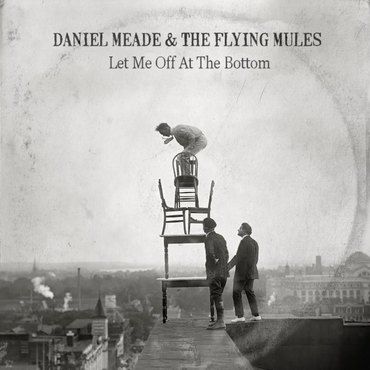
Daniel Meade and The Flying Mules. Let Me Off At The Bottom. At The Helm Records

ath19848

Time then for Daniel Meade, Glasgow’s own hillbilly hell raiser, to raise the bar with his third official release and the first album to feature his wingmen, The Flying Mules. The Mules (Meade – guitar and piano, Lloyd Reid – guitar, Mark Ferrie – double bass, Thomas Sutherland – drums) are well kent faces locally with several regular slots in city bars and are veterans of tours with Pokey LaFarge and Sturgill Simpson. Indeed, they appeared as Simpson’s band on his latest Glasgow date, the US chart topper unsure about appearing before a Glasgow audience on his lonesome at the cavernous O2ABC. Meade himself has recently toured supporting and then playing alongside Diana Jones with several of the songs here making their first appearance. Now, hot on the heels of five packed shows in four days at the Kilkenny Roots Festival in Ireland last weekend, The Mules are set to unleash Let Me Off At The Bottom on the world.

Equally at home with Jerry Lee Lewis styled rockers and George Jones like laments Meade has the ability to take country music clichés and turn them into rockabilly poetry, the honky tonk hell raisers and beer stained weepers delivered with a Glaswegian gallusness. There are some fine examples in the rollicking There’s a Headstone Where Her heart Used To Be with Meade explaining, “Well I met lots of women on this rocky road, I love them whether long short or tall. Some for a weekend some twice as long but I still love them all.”  Of course he’s derailed by a femme fatale, a merry widow whose lips taste of candy, laughing with his friends as he looks on from beyond. It’s delivered with a vengeance, Meade’s honky tonk piano driving the song with an excellent guitar solo from Reid that’s half Les Paul, half Chet Atkins.

There are several hi-octane belters here, The Mules firing on all cylinders, the rhythm section tight as the proverbial duck, bass supple and slapping while the traps are expertly deployed. Back To Hell opens the album with a locomotive energy, Meade introducing one of the album’s themes, the demon drink, from the beginning. It’s a breathless dash from start to finish, again Reid throws in one of his seemingly  effortless solos, the notes curling from his guitar sweet as honey. Ghosts and Crocodiles has a jug band like infectiousness to it while Please Louise is a guaranteed crowd pleaser as Meade tries to back pedal from a shotgun marriage, his lyrics delivered expertly over the barrelhouse keyboards and fretboard wizardry, a Jordonaires type chorus the icing on the cake. He hasn’t learned his lesson on the avaricious rocker Lock Up You Daughter and it’s back to the drink for the closing The Bottle Called For Me, a saloon bar knockabout that ends with a good old rabble rousing chorus.

As infectious as these songs are (and a good indication of how superb the band are live) The Mules have other strings to their bow. As evidenced on his last album Meade can turn his hand to old time country songs and waltzes (as on his duet with Diana Jones on Help Me Tonight) and there’s a brace of these sadder tear stained moments on the album. Meade has an acute grasp on the topics that engaged George Jones and Hank Williams (heartbreak mostly), while his voice can convey the hurt just as well as the good times. He Should Have Been Mine laments with a fine plaintive piano and Poison Dart lopes along with some sweet guitar curls and a lonesome prairie feel. Best of all is the powerful confessional of Leave Me To Bleed, Meade, superbly accompanied by Siobhan Wilson on harmonies, reaching into the darker recesses of country music, his bride dead before the wedding, guilt and faith confused, the music a back porch funereal.

Midway twixt the light and dark there’s an excellent country ramble on Count The Roses which delves into George Jones territory with some style while the title song recalls the Everly Brothers with its harmonies. Like Pokey Lafarge, Meade has the ability to write songs that seem to have been around forever and here he’s forged a set of songs that cover a panoply of half a century of rockabilly and country music. The album’s a whirligig of rabble rousing honky tonk and forlorn laments all delivered with some panache.

Let Me Off At The Bottom is released on May 27th on At The Helm Records. There’s an album launch in Glasgow at The Rum Shack on the Southside on the 28th May.

website

At The Helm Records


Joana Serrat. Cross The Verge. Loose Music

joanaserrat_crosstheverge_1500-300x300

It’s a fair bet that readers of Blabber’n’Smoke will be familiar with Loose Music, the record label that’s been a cornerstone of the UK Americana scene since 1998, their roster packed with major US acts, home to Danny and The Champs and of course, the springboard for Sturgill Simpson’s world domination. Joana Serrat is their first Spanish artist and for Cross The Verge she has ventured from her Barcelona home to Montreal to record this vibrant slice of shimmering soundscapes soaked with some vibrant guitar work

Able to whip up a Calexico like storm on Desert Valley, Serrat can also sound like The Cocteau Twins or Julee Cruise, her voice melting into atmospheric keyboards and spiralling guitars as on the enchanting Lover. While the album as a whole veers more towards brash guitar driven Americana the opening song, Lonely Hearts Reverb is a Twin Peaks like calling card, Serrat sounding as tender and vulnerable as Cruise as guitars scintillate, keyboards swell and heavenly choruses erupt. There’s no evidence of Catalonian sunshine on the frosty slow drift of Oh, Winter Come, a delicate finger picked guitar ballad while the closing song, Your Gold Could Be Mine is another simple effort with a solitary acoustic guitar supporting Serrat’s vocals which here recall The Cowboy Junkies’ ice queen, Margo Timmins.

There’s a fine old fashioned country rock strut on Saskatoon (Break Of Dawn) and on I Follow You Child, the latter with a turbo charged thump as banjo and pedal steel whip up a storm over some clattering percussion. A lonesome pedal steel introduces Solitary Road which sashays with some style into an old fashioned waltz time emboldened with some twangy guitar fills. Elsewhere Serrat picks up some vocal partners. Neil Halstead joins her on the effervescent country pop of Cloudy Heart, the pair harmonising well on a song that is peppered with vibrant guitar and pedal steel breaks. Ryan Boldt (Deep Dark Woods) turns up on the dark melodrama of Black Lake as churning guitars and a sluggish rhythm recall the darker works of Will Oldham.

A welcome addition to the Loose roster, Serrat delivers an album that will surely appeal to those who like their Americana delivered with an air of mystery and sang froid, an approach best heard here on Flags, a song that marries a warm buttery pedal steel sound , guttural guitar and her delicate voice, a dreamlike cosmic American music.

Ms. Serrat is touring the UK in May with a Glasgow date on the 10th at Broadcast. Tour dates here

website

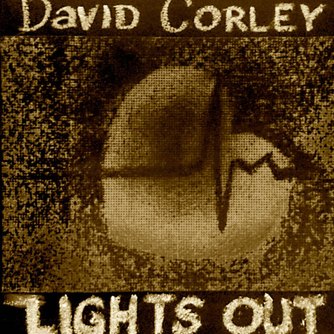
David Corley. Lights Out.

a0500688826_16

David Corley erupted into view at the beginning of 2015 with his tremendous debut album Available Light. An astonishing record, his deep voice carrying years of experience (53 years in fact), the music reminiscent of Southern soul and swampy blues, Available Light was an immediate hit with the roots music community in the UK, Ireland and the continent leading to Corley and his band touring Europe. Disaster struck however when Corley’s history of cardiac problems caught up with him, collapsing with a heart attack on stage in Groningen. Fortunately prompt attention and then medical care in Groningen’s University Medical Centre allowed a full recovery and now, after some rest and recuperation, Corley returns to the fray with this EP and will be touring again in May.

With seven songs and running at around 35 minutes Lights Out was recorded following Corley’s illness, some of it on Wolfe Island, Ontario and in Brooklyn with his band, The Wandering Stars, while three songs were recorded in The Netherlands with local musicians, keyboard player and Corley’s producer Hugh Christopher Brown on hand at all of the sessions. Most of the ingredients that contributed to Available Light’s success are in evidence, not least Corley’s voice, more stentorian than ever but there’s a bite here, an urgency that was not in evidence on the album.  While there are some languid reflections on a life lived there’s also some punk like ferociousness and soulful funk. His brush with the Reaper is alluded to on the artwork, a blurred heart with a cardiograph on top of it.

Watchin’ The Sun Go opens the disc in fine style. Spare guitars slowly mesh together over a restrained keyboard before Corley (here sounding somewhat like Springsteen) sings and the rhythm kicks in. There is an E Street feel here with organ swells on the chorus while other keyboard sounds add an off kilter edge to the song but overall the effect is uplifting with Corley seeming to sing about his “resurrection”. Under A Midwestern Sky revisits Available Light territory, its sinuous guitar and organ winding like the Mississippi as Corley dips into his finest rough baritone boosted by a gospel like chorus. The song meanders wonderfully, like Dylan’s Slow Train Coming the band coil around the words, the guitars snaking in and out creating something of an epic. Pullin’ Off The Wool dives deeper into soul music, Corley here sounding like a secular Solomon Burke, his words half spoken, his voice stained with experience and emotion as he investigates what true love means. His impassioned pleas here are superbly supported by the excellent Gospel tinged harmonies from Kate Fenner and Sarah McDermott while the band hit a gorgeous Muscle Shoal type soul beat. Mickey Raphael turns up on harp on the parable that is Blind Man with Corley and the band taking up the reins of early Kris Kristofferson on a rusty tale of love gone wrong, the protagonist blinded in so many ways by his lover, well aware of his fate but unable to do anything about it. Corley waxes poetic here as the band tumble along slowly, a wild bunch playing sad saloon music.

Given his heart problems one fears for Corley’s health as he launches into the frantic rant that is Dividing Line. With the band pile driving into a ferocious garage punk riff he rails mightily over snarly guitars about love and hate, “don’t stop this train, of thought“, wailed throughout. There’s a grand shift in the middle of the song when the grunginess is briefly replaced by a brash acoustic thrash. Wonderful. Lighting Downtown meanwhile is a whip smart slice of funk, Corley funnelling Prince and Curtis Mayfield. Down With The Universe is a fine sign off. It opens as another slow Southern groove, organ and slide guitars setting the scene as Corley again seems to reflect on his near death, observing himself from above, recalling tender moments  such as “I liked you best when you took off your dress” but eventually surrendering to a universal que sera sera, a dreamlike sitar infused ending fading into oblivion.

Mr. Corley says that Lights Out is “a bit of a departure…conceived during a stay in a hospital”, promising a full new album later this year. However there’s no sense here of this being a stop gap. Indeed it’s more proof, if proof were needed, that he is a writer and performer of the first order, poetic and passionate. You can catch him on tour here including two dates at the Kilkenny Roots Festival, Kilkenny seeming to have adopted Corley as a native son.

website

Buy the EP here for EU customers, here for US and Canada


Lera Lynn. Resistor.

leralynn_cvr

While some folk might have caught a glimpse of Lera Lynn at Celtic Connections when she supported Sturgill Simpson most will probably know her through her work on the television series, True Detective. Just as season one of the series raised the profile of The Handsome Family when their song, Far From Any Road, was used as the theme music, Lynn has benefited from her association with the show. Several of her songs (some co-written with Roseanne cash and T Bone Burnett) appeared throughout the episodes while she also appeared as a “shadowy” bar singer. Folks expecting however a rerun of the languid country tinged songs that populated her last album, 2014’s The Avenues, might be somewhat surprised by the direction she’s taken here.

Resistor features Lynn and co-producer Joshua Grange playing most of the instruments on a set of songs that creep from the speakers, a bit like that Japanese ghoul from The Ring. There’s an emphasis on percussion and reverbed guitars creating an atmosphere that rumbles and roots around in that dark American hinterland; neon lit motels, dark highways and ghosts on the highway. There are moments that recall Twilight Hotel (the duo that featured Brandy Zdan), a whisp of the doomed romanticism of Chris Isaak and, on the opening Shape Shifter, a nod to bands like The Breeders.

Shape Shifter actually does the album a disservice. It’s a fair enough song with a fine guitar solo midway through but its robotic rhythm and routine verse/chorus shoehorned into a radio friendly groove doesn’t really cut it. The following songs fall into the same trap. What You Done with its lead bass line and Goth like darkness, Drive’s would be highway drama and Cut + Burn’s melodrama are songs that just don’t quite cut the mustard.  Things look up with Run The Night, the instrumentation is enhanced with some acoustic guitars in the mix while the percussion is more restrained, enhancing the song as opposed to dominating it and from here on in the album just gets better.

For The Last Time is a well paced and fully realised version of Lynn’s noirish dreamsongs. Her vocals are allowed to ride above the song and the guitars coil around her with a fine degree of menace. Fade Into The Black approaches that juncture where Roy Orbison and David Lynch intersect while Slow Motion Countdown is a dream like slow waltz tinted with an old time veneer reminiscent of The Walkabouts’ Prague wanderings. Scratch + Hiss continues in a similar vein, Lynn a chanteuse here, simpering over an opalescent backdrop of shimmering guitars.

Overall the album shows that Lynn isn’t one to rest on her laurels, some of her choices here somewhat daring in their refusal to go down a gravel road that would see her as just another singer wanting to sound like Lucinda Williams. However some of the songs lack passion while others show some promise. You can make your own mind up as she is touring the UK in May, all dates are here

website