Phil Cook. Southland Mission. Thirty Tigers/Middle West Records

Who’s Phil Cook you may ask. Well, Blabber’n’Smoke saw him play to a packed ABC O2 this week in support of The Tallest Man On Earth. Dwarfed by the stage Cook and his electric guitar delivered a short but very sweet set of songs, his guitar playing reminiscent of Ry Cooder and even Pops Staples, riding and sliding a rural blues groove with ease. Turns out that Cook has been a busy guy over the past decade, a close colleague of Bon Ivor in Wisconsin before relocating to North Carolina playing in Megafaun and becoming a studio producer and session man for Hiss Golden Messenger, Matthew E White, The Blind Boys of Alabama and Alice Gerrard.

Southland Mission is touted as Cook’s debut album although apparently he released an album of solo songs a few years back. It is however a magnificent collection of blues soul and gospel grooves that packs a thump, swamp ridden, riddled with joy and despair. His guitar playing is a joy, warm and supple with added zest when required whether he’s picking or playing slide and throughout there’s a Southern feel be it the Allman’s on the slide guitar of Gone or the back porch picking of Belong.

The album opens with the breezy Ain’t It Sweet which recalls classic Little Feat, chugging guitar and bar room piano leading into the harmonies (added by Justin Vernon) before Cook delivers a stinging slide solo. 1992 is a cover of a Charlie Parr song that clucks and picks, again Cook’s guitar is sublime, adding layers within the song and sounding as if it’s been transported from the Depression era as the band whip up a mighty country blues thump. There’s a slide guitar intro into Great Tide, another song that reeks of Lowell George and there’s no finer compliment than that. The song clatters and burns, guitars glowering, voices hollered over a vital heartbeat from bass and drums reaching a crescendo before slowing down and massing for a final aural assault. It’s really quite magnificent.

Next up there’s a dip into acoustic country blues with Mandolin Orange’s Andrew Marlin and fiddler Bobby Britt expertly leading Cook down a dappled path on Belong before the Cooder like Sitting On A Fence weaves its way into view. A sinewy Gospel tinged country blues with some great female harmonies it shifts its shape with a sly sinuosity as the guitars snake and buzz. There’s more guitar excellence on the field holler Gospel of Lowly Road with Cook achieving a fine sense of thrum and throb on the strings; turn the volume up here and the song just reverberates, ably assisted by the vocal harmonies which are somewhat bewitching. Time To Wake is like a funky Daniel Lanois production, ambient but with some earth thrown in and Cook closes the album with his melodic duet with Frazey Ford on Anybody Else along with the grand Southern rock chug of Gone which, as mentioned earlier recalls The Allman Brothers Band in their heyday.

So lesson ended and by now you should be itching to hear some of Mr. Cook. You won’t be disappointed.

website

Woody Pines. Woody Pines. Muddy Roots Music Recordings

The spine of this CD has printed on it Country Blues – Rag Time – Viper Jazz and Woody Pines latest album pretty much does what it says on the cover. Pines honed his act initially as a street performer often in the company of Gil Landry and he has a sneaking affection for veteran folkies such as Baby Gramps and Peter Stampfel, guys who injected a healthy dose of sixties freakdom into folk music. He’s got a healthy run of albums under his belt including Counting Alligators which Blabber’n’Smoke reviewed here while his EP You Gotta Roll (reviewed here) is a regular favourite in the hacienda. Comparisons abound with that other arbiter of old time American music, Pokey LaFarge but Pines is altogether more laid back although it’s true that they drink from the same trough.

This latest self titled album is Pines’ best effort so far, a no frills collection of songs that are redolent of pre war hillbilly music and fifties hillbilly boogie tempered with some lyrics that slyly evoke more modern times. This is evident from the start with Anything For Love, a toe tappin’ dose of western swing with Woody declaring that he’d pinch Mike Tyson’s cheek if it got his gal’s attention before he goes on to seek advice from his Miles Davis and John Coltrane records. It’s a zippy start to the album and it recalls the dapper days of Dan Hicks and his Hot Licks with some hot fiddle playing from Billy Contreras. Contreras pops up again on fiddle on the Reinhart/Grappelli jive of Walking Stick but the bulk of the album is Pines along with Skip Frontz Jr on upright bass and Brad Tucker on guitar, a bare boned approach perhaps but the three of them do conjure up a fine stew.

There’s some scintillating syncopation on show here, the double bass snapping on Black Rat Swing and New Nashville Boogie while Tucker’s guitar humbucks and growls especially on the blues ridden Delta Bound. With covers of The Mississippi Sheiks’ Make It To The Woods, a skillet licking blues groove and Memphis Minnie’s Black Rat Swing Pines pays tribute to his forebears while his rendition of the old chestnut Junco Partner is an easy rolling gait with some fine country picking from Tucker. Finally Pines offers some tender moments, his sweetly delivered Little Stella Blue a breath away from Satisfied and Tickled Too but a beautiful moment. He closes the album with his salute to one of his heroes on Worth The Game, a Dylan like piece that bridges the gap between old time, sixties revival and present time. The song goes on.

website

Rita Hosking. Frankie and The No-Go Road. Independent release.

Quietly, almost surreptitiously, Rita Hosking, like the teacher she is, has over the years gently led her listeners into her world of softly stated folk music, an amalgam of sunny California and steelier mountain climes. She’s a story teller with a guitar who has always embellished her songs with banjo and Dobro, keeping it simple but direct. Her last release,  Little Boat was a miniature delight, 27 minutes of unalloyed joy as Hosking sang of small town life and a child’s wonder of science.

Frankie and The No-Go Road follows the template of the earlier albums, produced again by Rich Brotherton (of Robert Earl Keen fame) who plays a plethora of stringed instruments and keyboards here while husband Sean Feder adds Dobro and Djembe. The twist is that it’s a bit of a concept album, or at least a set of songs with a thematic connection, the connection being the concern about the untrammelled drive of commerce and its abuse of the individual’s aspirations along with its effects on society and ecology. There’s no storyline as such but Hosking adroitly weaves her theme around the concept of Wetiko, a Native American word for those who consume all around with no thought for the future. She directly addresses this in the song Wetiko singing “Take it all, take it now, take it any way you can. And you will be a royal in this guns’n’dolls land” but overall the message is oblique. The “hero,” Frankie is on an odyssey set off by his search for a better world as he observes wanton commercialism. He considers a flight from it all but instead decides to teach folk how to achieve a better world. He battles the villain and returns only to find that messiahs are not always welcomed, unabashed he continues to deliver his wisdom. In a nutshell this is it but the above is gleaned from Hosking’s written intros on the lyric booklet as the songs exist both within and without the story. You can enjoy the album as you wish, a set of very fine songs or as a message.

As a set of songs the album maintains Hosking’s place as one of our finer artists. She sings with a fine sense of ache and the songs are all excellent rootsy excavations. Mixing a folky sound with a more primitive and bare boned banjo blues style she delivers a set of songs that each deserve attention. Our Land is a song that is shiveringly good while Mama Said is a pure joy. The band are excellent on the gently rolling Black Hole and there’s a wonderful sense of defiance on Resurrection.

Rita Hosking is touring the UK in November, dates here.

website

Ben Rogers. The Bloodred Yonder. Tonic Records

2015 just gets better and better with each month throwing up some fantastic roots records and Vancouver’s Ben Rogers is not one to disappoint us with The Bloodred Yonder one of the most vibrant slices of countrified rock we’ve heard in a while. Rogers is a rebel rocker in the vein of Waylon Jennings and Steve Earle; he’s bad and wants us to know it, running from the law, a God fearin’ vagabond washed up on hard times, riding the rails and singing like fury although inside he’s hurting.

Rogers’ 2013 debut, Lost Stories: Volume 1 had him marked as a solid songwriter and performer working in the acoustic tradition. The Bloodred Yonder however is Rogers flexing his muscles with a full band behind him, in particular his brother Matt on guitars and keyboards and Matt Kelly playing a mean pedal steel, fuzzed up and rivalling Sneaky Pete in The Burritos. Together they revel in a hard edged honky tonk heaven somewhat akin to that inhabited by Jennings’ Lonesome, On’ry and Mean album – shitkickin’ music that doesn’t take prisoners. And while this mean country machine rolls on Rogers is there, riding shotgun, his lyrics loaded with acute observations, sage wisdom and just plain old poetry, in fact some of the best words we’ve heard this year.

There’s excitement aplenty on the opening songs. Wild Roses is out the traps with a gallop, a Western movie set to song, Rogers sounding wizened, the guitars blazing away. Wanted is a raucous honky tonk rant as the singer complains that he’s wanted by everybody except his romantic prize. Panhandler is a rip-roaring hillbilly take on the Stones’ Sympathy For The Devil with the protagonist bragging about his past, “I was baptised in a horse trough/I was born wearing a bull rim Stetson hat/Give me a jar of applejack/I’ll skin that hard tail mule in 30 seconds flat.” Perhaps exhausted by this opening triplet Rogers eases on the throttle delivering the achingly mournful Goodbye Rosa Lee, a keyboard spangled lament to a lost love with the lyrics almost a short story in themselves with killer opening lines “The moon shines like a silver coin you put in the jukebox to play our favourite song/I feel your beating heart as we dance along/We kiss so gently as if our lips are made of glass.” The song floats on with Rogers voice wearied but dripping poetry throughout.

Although there are still some instrumental pyrotechnics to come with the fiery pedal steel at the end of Darling Please and the Neil Young guitar rush of River standing out, Rogers triumphs on two songs in particular. On the whiskey soaked and weary Sinners he sings “Well God spoke to me last night, I told him I don’t talk to strangers/The guardian angel of death watches over the sinners” as pedal steel weeps away and the song limps along wonderfully. Even better is the Bakersfield styled The More I Learn which balances scatology and philosophy name checking The Klu Klux Klan, Einstein and Galileo, all kicked off when the singer has to bag his dog’s pile of shit only to find the bag has a hole in it.

All in all a cracking album that engages and intrigues, the lyric sheet included essential here as the words all work in their own right. As we said earlier Rogers is well versed in the acoustic setting so it will be interesting to see how these songs translate into a solo show and the good news is that he is currently embarked on a solo tour of the UK. English dates are about over but he has six Scottish dates coming up, see here.

Betty Soo. When We’re Gone. Independent release.

Still banging on about the Glasgow Americana Festival (which starts today folks, see here for details) we were surprised to find Betty Soo scheduled to appear. Blabber’n’Smoke encountered Betty’s fine albums back in 2011 here and here after which she seemed to drop off the map. Well, perhaps she was quiet on the album front but according to her press release she’s been busy; touring, attending to friends with personal and mental health problems and managing her own health which has been problematic at times.

Nice then to hear that Soo remains at the top of her game on When We’re Gone, a swoonful mix of laid back country and folk styled songs, her wonderful voice surrounded at times by the graceful pedal steel stylings of Lloyd Maines or marinated in soothing cello. The cello is played by Soo’s primary foil here, producer Brian Standefer who recorded the album at his studio in Texas and together the pair have crafted an exquisite piece.

There are songs that have the inbuilt pain and heartache one expects from Mary Gauthier, The Things She Left Town With being the primary example. It’s a wonderful song, hesitant and painful, Soo’s voice emotional but distant, observing the scene as Will Sexton skilfully fleshes it out with some mournful guitar flourishes. There’s sadness scattered throughout the album. Last Night aches with betrayal as does Josephine, a song that that could have been written by Janis Ian, its inner city folkiness redolent of bed sit listening. Aside from some of the country leanings and its Texas origins, most notable on the curling guitar of Sexton on Love Is Real,  the album actually is more akin to late night musings in Greenwich Village. The Paul Simon styled title of 100 Different Ways Of Being Alone is home to a relatively fast paced deliberation on alienation and loneliness while Hold Tight swims with shimmering cello and recalls Laura Nyro’s city ballads.

When We’re Gone is an album that should mark Ms. Soo out as a major talent, her voice is like crystal, her songs heartfelt and delivered with grace and beauty. Any doubts as to this should be dispelled by her crowning achievement here, the heart rending Nothing Heals A Broken Heart. A meditation on a mother’s loss of her child it’s a monumental song, borne along on a weeping cello with an empathetic rhythm section the song weeps tears as Soo captures the mother’s pain in a series of vignettes opening with these lines.

We took your seat out of the car after a couple of weeks but your room is still unchanged/ Yellow and lime Jeans still crumpled in the basket/a small tear on the left knee from a big old oak you were proud to climb.

Five and a half minutes of heartache, the bass like a heartbeat and Soo, harmonising with herself, drenched in regret, it’s one of the best songs we’ve heard this year. Listen and weep.

As we said above Betty Soo is appearing at Glasgow Americana. She’s appearing with Danny Schmidt at The Glad Cafe on Saturday 10th October and on the strength of this album you’d be daft not to see her.

website

GospelbeacH. Pacific Surf Line. Alive Natural Sound Records

Well the nights are drawing in and it’s a strange time to be extolling the virtues of an album as sunny as Pacific Surf Line, an album that might require some sunscreen to be applied before listening. The album’s packed full of sunshine pop and rock’n’roll, the California (or more specifically LA) sound that was mined by The Beach Boys, Buffalo Springfield, The Monkees and The Byrds helmed by producers such as Gary Usher, Terry Melcher and Curt Boechter. No surprise really as GospelbeacH are the spiritual descendents of Beachwood Sparks whom folk will remember as a sun drenched jangle band from the turn of the century.

Brent Rademaker and Tom Sanford, both ex Beachwoods got together back in 2014 and pretty soon were joined by Neal Casal (somewhat of a renaissance man in the Americana scene, check out his resume sometime) who added his guitar and vocals to the mix. With bass duties picked up by Kip Boardman and Jason Soda coming in on yet more guitar the line up was finalised; bass drums and three guitarists, a modern day Moby Grape? Not too farfetched a comparison perhaps as the Grape produced what might be the finest West Coast pop/rock disc with their debut album, each song on it deemed worthy of a single release (a PR stunt that backfired spectacularly). The point here is that GospelbeacH have the muscle, crossfire guitar and song writing chops that Moby Grape displayed so briefly and combine this with the mature country rock of Souther, Hillman and Furay.

There are ten songs, all written and arranged by all band members with Rademaker singing lead throughout, harmonies from the other four. The sprightly country rock of the opening California Steamer immediately grabs your attention, an intricately layered tapestry of guitars, acoustic and slide, beavers away as Rademaker sings the praises of barrelling down the California coast on a glorious train. It’s a sublime song that incredibly gets better towards the end with an excellent coda featuring organ and sparkling guitar, a song that could kill an album as you reckon there’s nothing coming up that’s going to beat it. No fears here as the band next launch into the sun kissed road song Sunshine Skyway evoking the likes of Poco with some fine pedal steel from Jason Soda skirling away. Your Freedom allows some room to catch your breath on a gentle ballad that features some heavenly harmonies before Mick Jones hammers into view with its driving rhythm and snarled Dobro summoning up a country punk thrash before Casal delivers a blistering guitar solo.

Midway through and the band deliver two of the album’s highpoints. Come Down visits the Beach Boys circa 1973 when they added a rhythm section and explored California with a weathered eye. Tempo changes, keyboards and guitar effects echo the Beach Boys mature style and the harmonies lift the song into another dimension. Southern Girl repeats this trick although here the template is Surf’s Up with the band capturing the melancholic nostalgia conveyed by Brian Wilson at the end of the sixties. Immaculately delivered this is no mere copy cat with the arrangement superb, an ARP string ensemble adding texture and Jason Soda soaring stratospherically on his guitar solo. Proving that they’re not anchored to the west coast the band salute some predecessors on the jubilant jangled groove of Out Of My Mind (On Cope & Reed), a song that still relates to LA but the hazier side of things. The lengthiest song here it allows the guitars to flash over a Lowry organ buzz but there’s a sense that they’ve missed a trick here in the title as it most resembles the late Kevin Ayers in full flow.

There’s a sense that the band have had great fun in making this album, collecting their musical memories and breathing new life into them and the closing song Damsel In Distress is no exception gathering in as it does elements of Steve Wynn and CSN&Y’s muscular Long Time Gone. Whatever, it’s another grand song and a great way to end what is a great album.

website

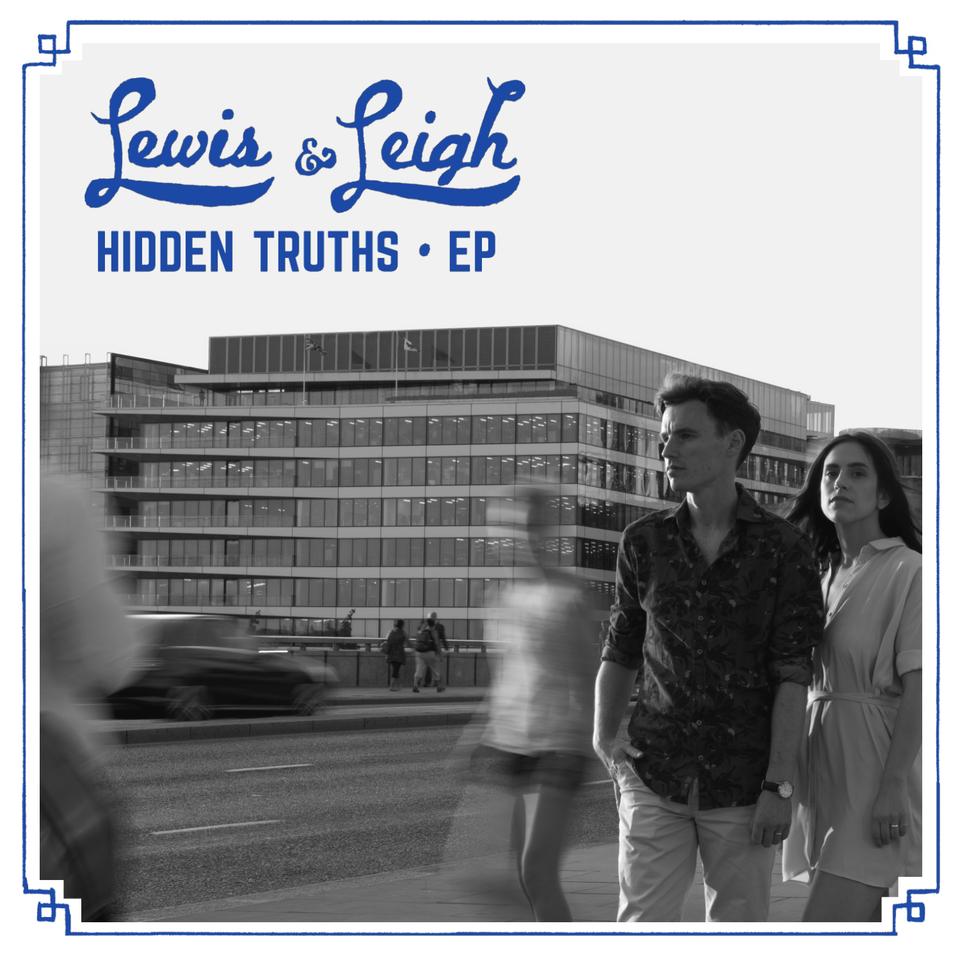
Lewis and Leigh. Hidden Truths EP.

Fresh from their highly praised appearance at The Americana Music Festival in Nashville in September Al Lewis and Alva Leigh are set to appear at Glasgow Americana in October with Hidden Truths, their third EP, due for release on October 16th. Since the pair, Alva from Mississippi, Al from Wales, teamed up in London around two years ago they’ve gathered a fair amount of noise, supporting John Fullbright, gaining the attention of Ryan Adams and becoming a staple on those radio shows which still have some form of quality control. Their previous EPs, Missing Years and Night Drives, the first a fresh faced quartet of songs swerving between pedal steel flavoured country and introspective acoustic numbers, the latter a darker affair with the duo recalling Twilight Hotel especially on the spectacular The Devil’s In The Detail, gave notice of their talent and number three is no different.

Hidden Truths continues the noirish trail blazed on Night Drives and beefs it up with some fine horn arrangements which add some swing to the songs which at times are like mini movies packed with drama and emotion. The first song, Heart Don’t Want, opens with a pleading Leigh sounding vulnerable over a naked guitar strum. Lewis then wades in with a defiant sneer, his voice adding a sense of urgency. A dramatic horn section adds a cinematic lift with the pair sounding like a musical version of Charlie Starkweather and Caril Ann Fugate. The quite amazing Only Fifteen is truly a mini opera squeezing into 4 minutes what Pete Townshend took two whole discs to convey. A clattering rockabilly rush sets the scene as Lewis describes being abandoned as an infant. At fifteen he finds he is adopted and sets out to find his birth mother who, once tracked down pleads her age, also fifteen as reason to abandon him. Her plea, backed by some fine plaintive horns seesaws with his guitar fuelled rage until they achieve a rapprochement. It’s a wonderful performance recalling Loretta Lynn’s work with Jack White.

Please Darlin’ is a down home slice of country pie larded with swollen horns and a loose electric guitar thrum as Lewis and Leigh play star crossed lovers who continually interrupt their daily chores in order to dance to their favourite record. There’s an infectious gaiety about it and halfway through listening to it a thought popped into my head that if Delaney and Bonnie had a TV sitcom way back then this could have been the theme song with backing by The Band. A silly thought sure, but it fits.

On each of their two previous EPs the duo have ended with a cover song (Wilco and Coldplay if you ask) and here they close with Elton John’s Country Comfort (from 1970’s Tumbleweed Connection). They take this lament for a rose coloured past and replace John’s mannered voice with their own excellent harmonies recalling classic Parsons and Harris and capturing the sense of nostalgia and loss in the lyrics perfectly.

Only four songs but each one is excellent and apparently Lewis and Leigh are promising an album in the New Year. In the meantime they are touring the UK with four Scottish dates included (Aberdeen, Inverness, Glasgow and Edinburgh), the Glasgow Americana show is on Saturday 10th October at The Glad Cafe. Other dates here

website

Glen Hansard. Didn’t He Ramble. Anti Records

Ex member of The Frames and winner of an Oscar (Best Original Song, 2007 for Falling Slowly from the film Once) Glen Hansard is perhaps second only to Van Morrison in the recognition stakes when folk talk about current Irish singers (Bono excluded). He’s carved a reputation as a soul searching sensitive chap especially after allowing the breakup of his relationship with Marketa Irglova (his co Oscar winner and partner) to be pored over in the documentary The Swell Season. Didn’t He Ramble is his second solo release and there’s plenty of wistful pensiveness on it especially when his Irishness is on display (several of the songs have a decidedly Hibernian bent) however there’s also a brashness present with a horn section and booming beat featured here and there.

Unfortunately, the mixture of the two makes for an uneven listen. The jangled Lowly Deserter is smothered under parping horns. Her Mercy opens tenderly, almost prayer like, with hushed guitar and sensitive keyboards adding to the sanctified mood. Halfway through a choir and horn section confirm this but the song then looses any subtlety as the horns elbow their way into front space. The horns are used more successively on Just To Be The One; muted, with flute and string embroidery here they fit Hansard’s melodic delivery like a glove.

No such concerns with the remainder of the songs with the opening, Grace Beneath the Pines is an atmospheric emerald piece with Hansard emoting in a poetic bent as he alludes to Frost (grace upon this road less travelled) and Yeats (There’ll be no more running round for me/no more going down you will see) over a sombre string backing. The song recalls fellow Celt Jackie Leven as it builds in intensity. Wedding Ring is a stumblebum folky song with an easygoing beat and Paying My Way grumbles along in a low-key Springsteen fashion. McCormack’s Wall is the most evidently Irish song with Hansard’s voice accented as he hymns some of his homeland’s delights before ending the song with a fiddle led jig. Stay The Road sees Hansard and his guitar closing the album and is evidence that he is at heart a troubadour, his words expertly crafted and carried expertly aloft by his nimble fingers. A simple song but an excellent ending. There’s simplicity evident also on the song Winning Streak, a winning folk rock number that is immediately hummable and memorable. The concern here is that it’s because the song has a close resemblance to Dylan’s Forever Young along with a dollop of John Prine. Having said that it’s a fine listen.

website

Stevie Agnew & Hurricane Road. Bad Blood & Whiskey. Skimmin’ Stone Records

Two years ago Blabber’n’Smoke reviewed the debut album, Wreckin’ Yard, from Dunfermline’s Stevie Agnew and was well impressed by it. On the album Agnew had crafted some particularly fine songs that were in the vein of master story tellers and Americana icons such as Steve Earle and he delivered them with a heady mix of acoustic instruments and the odd rocker. Well, the good news is Bad Blood & Whiskey is if anything even better with Agnew in great voice, sounding grizzled and worn (and wise) while the music has retained the country/folk acoustic leanings with a definite dash of Celtic melodies thrown into the pot. Shades of Shane MacGowan loom here and there while the spiky haired spectre of Rod Stewart can be imagined smirking in the corner.

As on Wreckin’ Yard the songs are composed by Agnew and drummer Chris Smith (who produced the album and plays several instruments here). Of the 13 numbers there are several that are simply breathtaking, digging deep into woe and misery, drink and lost love with the occasional ray of light, the lyrics and melodies are striking. In addition the playing from the Hurricane Road band (assisted by several guests including Agnew’s father, Pete of Nazareth fame on bass at one point) is strong, able to accommodate blues, folk and rock with ease. Although are a couple of occasions when Agnew and his cohorts slip into an overused format, the slinky blues of The Fall Of Man and the mannered country rock of Moonshine for example, overall the album is striking.

The MacGowan influence is best heard on the wonderful Take Me Home With You, a duet with Ali Bell in the manner of McGowan and McColl that has a fine lilt to it with Uilleann pipes adding to the comparison. The pair sound great together although one gets the impression that Bell’s character has been imagined by the narrator who is seeking succour from any girl while in his sozzled state. You can’t beat lyrics like this…

“You’re well put together and fit for your age/It looks like you’ve been around the block/don’t put me on hold leave me out in the cold it’s nearly eleven o’clock/I’ve been wandering around this mouldy old town and the band’s playing Lefty Frizzell.”

It’s a song that given the right breaks could easily become a radio regular.

Agnew is excellent on several tear stained laments here, the opening Don’t Know How To Leave Her is the equal of any Don Henley ballad and In The Shadows is a pedal steel soaked slow waltz with lyrics that are imbued with the spirit of Hank Williams. There’s some sweet Caledonia soul on the quietly majestic Whiskey with harmonies from Elaine Shorthouse and Beth Malcolm cosseting Agnew’s strained vocals while Venal Street bridges the gap between Tom Waits and Michael Marra and is one of the highlights here. There’s some gaiety on Eyes Like Audrey Tautou which trots along with a Celtic air similar to Steve Earle’s Galway Girl while Earle again is recalled on the brisk I Will Find You, another song girdled by fiddle, country guitar licks and pedal steel. There’s more Celtic folk on the tale of an old roue on the prowl on Ghosts Of Yesteryear with the lyrics here especially fine. The badge for best song here however goes to the spectral Bad Blood with Agnew’s hoarse voice sounding as if he and Tom Russell were raised together.

Despite the plethora of influences mentioned above Bad Blood & Whiskey isn’t a hotchpotch imitation of various artists. Agnew stamps his authority on the songs and listen by listen there are more gems to discover and relish, be it the words or the playing. An excellent album indeed and it would be somewhat amiss not to mention the album artwork which is quite striking featuring Agnew slumped in a bar vividly captured by Edinburgh photographer Marc Marnie. It just about sums up the album (with a nod to Tom Waits).

website

Los Lobos. Gates Of Gold. Proper Records.

Over the past few years it seemed that Los Lobos were marking time, their only releases being live affairs, one “unplugged” (Disconnected In New York) and a live rendition of their album Kiko. Both albums were in fact pretty good but fans yearning for the follow up to Tin Can Trust have had a five year wait for Gates Of Gold with the previews of the title song setting parts of the blogosphere on fire. The song, a mandolin driven mid tempo lurch was favourably compared to vintage Levon Helm, it’s theme of wonderment regarding an afterlife assessed as an acknowledgement of the band’s increasing years. It’s a fine song although a little too short for our liking, fizzling out just when we felt it should start to burn. As an introduction to the album it also sells itself short as around it Los Lobos deliver their usual heady mix of rock and blues and Mexican styles with several of the songs boasting an impressive sense of daring do pulling in jazz and psychedelic flurries and proving that they are still essential listening.

Made To Break Your Heart opens the album with a flourish. A bustling beat and jagged guitar underpins the vocals before shifting into a jackhammer riff and glorious guitar solo. When We Were Free utilises the studio to full effect with the guitars treated and distorted over a tremendous burbling bass and vibrant percussion. With Steve Berlin’s sax freewheeling along with jazz influenced guitar runs the song runs the gamut from prime time Joni Mitchell to Weather Report and there’s more sonic burps on There I Go, a song that sounds like Dr. John beaming in from outer space. It’s back to earth with a tremendous bump on the gutbucket rock and blues drive of Mis-Treater Boogie Blues, a veritable treat for the ears. There’s more boogie on Too Small Heart while I Believed In You goes back to basic 12 bar blues with barbed wire slide guitar and scuzzy rhythm giving it an all too authentic touch, you can well imagine the band, broke down but not busted hammering this out in a low-lit dive.

One gets the impression that Los Lobos at heart are still a bar band and could throw out songs like I Believed In You at the drop of a hat and do them better than most bands around. However writers David Hidalgo, Louis Perez and Cesar Rosas are also capable of tender ruminations alongside their perennial returns to their Latin roots. Poquito Para Aqui swings with a Columbian Cambian sway with the guitars reminiscent of Ry Cooder’s ventures into Cuban music while La Tumba Sera El Final is a cover of a Mexican song about following a lover to the tomb. As adept as ever at translating Latin themes into rock’n’roll they offer the excellent Magdalena, a rolling and rocky blues number with tumbling guitar and a wonderful juggernaut thrust halfway as they sing of Mary Magdalene. Finally, Song Of The Sun is a creation myth that opens with acoustic guitar strums leading one to expect a folk rock song in the LA Topanga canyon style. Instead the band invest it with a powerful driving rhythm that recalls English rockers such as Richard Thompson and again the only fault here is that the song is all too short.

Overall Gates of Gold is on a par with Tin Can Trust and one can imagine that if they were to concentrate on the concentrated excellence of songs such as Song Of The Sun and Gates Of Gold Los Lobos could come up with an Americana classic.

website