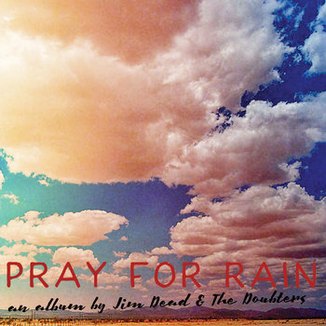
Jim Dead & The Doubters. Pray For Rain

a0137445401_2


Been a while since we heard from Jim Dead, Glasgow’s premier purveyor of dry gulch rock. His last missive from the missions was  I’m Not Lost back in 2013 where he and his compadre Craig Hughes plugged in with a crackling intensity. On Pray For Rain Dead has resurrected his occassional backing band The Doubters (on this occasion comprised of Stuart Begley on guitar; Frankie Coia on bass and Tommy Clark on drums ) and with his new posse in tow seems to have been spending some time in a bar with a jukebox populated with early ZZ Top and Creedence discs. It’s a cantankerous listen, scribbled with quarrelling guitars and a heavy bass/drum thud, Dead’s voice wailing like a biblical prophet. While his previous releases have always had a whiff of Morricone inspired dusty vistas here the gloves are off and the band are howling at the moon.

One of the highlights of Dead’s previous full length album, Ten Fires, was the loping death sentence of John Landstrom Must Die and it’s this song that is the template for Pray For Rain. Dead and Begley’s guitars spar throughout be it the on the jagged juggernaut that is the opening song, Wooden Kimono, the sludge ridden blues riff of the title song or the evil slide opening to You Coulda Said, the latter especially invigorating. There’s evidence of Dead’s allegiance to metal with Lovesick Blues sounding like an unholy marriage of Black Sabbath and Blue Cheer as Dead screams, “You don’t love me, I don’t like me too” over an almighty riff. And overall the riff is king here as Dead & The Doubters demolish the melodies on their steamroller ride with May The Road Rise an almighty example.

There are glimpses of Dead’s earlier incarnations. Crows On The Wire is a jaunty country rock romp (although it’s wired to the moon with its zinging guitar lines) and Home returns to his role as a shamanistic weatherman singing, “There’s a wind coming in from the west, woman by my side says she knows best. It’s taken all I have just to find a place where I can stop and have a rest.” It opens up with a resigned air, slowly jangled guitar over a slow beat before an excellent fuzzed guitar solo weighs in. This yin/yan dynamic persists throughout the song with Dead sounding increasingly desperate. The album closes with the slow burn of I’m Not Lost (a song that wasn’t on the EP of the same name) that harks back to the Neil Young like epics of Ten Fires. A seven minute long miasma of thrashing and squalling guitars with a Crazy Horse backbeat it pummels the listener into surrender.

Jim Dead & The Doubters will be playing at the album release show at the 13th Note in Glasgow on Friday 4th December with support from Craig Hughes’ Dog Howl Moon. If Dead can summon up the intensity he’s captured here it should be a fine night.
website

Joe Nisbet Jr. The Gospel According To Mr. Niz.

a4205479128_16
Listening to The McCrary Sisters’ vocals on the new single from Blue Rose Code reminded me of their blistering show back in August at Perth’s Southern Fried Festival. This also reminded me of the stellar work carried out by their Scottish band and in particular the guitar work of Joe Nisbet Jr, guitar work which had also graced Ag’s Connolly’s show a few days earlier. Nisbet is a bit of a hidden treasure. He’s worked extensively with The Proclaimers and China Crisis and is the regular go to player for Dick Gaughan and Justin Currie. He’s the one bending the strings and playing those country licks on Ags Connolly’s excellent album How About Now and was up on stage with Dougie McLean for the closing song of the 2014 Commonwealth Games, Caledonia.

Seems like Mr. Nisbet and his buddy, bass player Nico Bruce, are like a Scots version of the wrecking crew, laying down some wicked music but forever in the background. I was intrigued to discover then that he had released an album at the back end of 2013 called The Gospel According To Mr. Niz, a copy of which he gracefully provided Blabber’n’Smoke with. The intrigue grew when some Googling unveiled the story behind the album of which he says, “Took 4 days to record but had been 30 years in the making.” It turns out that Joe Nisbet Sr. was an evangelical preacher and when Joe Jr. was a kid he accompanied his dad on a two-month tour of the American South with pop preaching each night accompanied by Gospel choirs. This, says Nisbet, was, “the beginning of a lifelong fascination with the classic sound of the black gospel quintets of the 40’s and 50’s.” It abided during his tenures with China Crisis and The Proclaimers but when Justin Currie persuaded Nisbet to add his vocals on Currie’s songs and then to sing himself he was finally able to make his own Gospel record which we will now delve into.

The Gospel According to Mr. Niz has 13 songs, the majority based on vocal quartet songs from the 40s and 50s with two covers  of Rev. Gary Davis and Mississippi Fred McDowell. There are no choirs or harmonies here however with Nisbet handling the vocals himself. For a guitarist who doesn’t sing he does a fine job here, his voice at times recalling John Mayall in the late sixties proving that white men can sing the blues even though the accent is sometimes not spot on. However and remarkably there are times when he almost reminds one of a young Elvis crooning the gospel, most notably on Maybe It’s You and Peace In The Valley. It’s a stripped back album, the basic set up being Nisbet on guitar, Nico Bruce on double bass and drums from Keith Burns while Neil Weir adds trumpet on occasion. Producer Phil Cunningham (of Hogmanay fame) captures the bare sound as if they were in the Sun studios, the bass snapping and slapping, the guitar threshing like Sister Rosetta Tharpe’s. There are moments however when Nisbet’s guitar wizardry is astounding, the shimmering effects on Walk With Me up there with Ry Cooder’s brooding soundtrack work.

Nisbet, not an evangelist himself, takes liberties throughout, changing and adding lyrics to suit his take on these songs. The listening experience is greatly enhanced by his notes on the songs which are enlightening and witty such as his comment on his pulverising version of I John which he says, “opens with John the Divine on Patmos and ends with Robert Fripp in Berlin.” His rendition of Joe Louis which incorporates The Walls Of Jericho as originally sung by the Dixieaires is a delight and the one occasion here when he’s compelled to add some harmonies.  While songs such as Samson & Delilah, I Am A Pilgrim and Peace In The Valley will be familiar to many I’m sure that aficionados of gospel music will find that Nesbit has delivered a very singular take on the genre, a take that is inspiring and a great listen.

I’m sure there’s more to tell here, the image of a wee Edinburgh lad in tented prayer meetings in the rural South 30 years ago surely deserves some inquiry, a sure fire documentary for the Beeb perhaps. Anyway, I’ll leave it to Mr. Nesbit Jr. to tell it more eloquently than I can manage.

Buy The Gospel According To Mr. Niz here

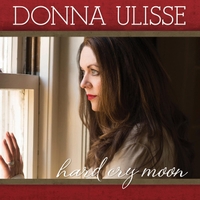
Donna Ulisse. Hard Cry Moon.

donnaulisse9

Bluegrass singer/songwriter Donna Ulisse’s latest album, Hard Cry Moon is a wonderfully down-home piece of work. Dedicated to her grandfathers, one Italian, one American, she sings about her memories of these men on several of the songs here while the remainder are effectively tinted with nostalgia. Conjuring up a more innocent time Ulisse and her players (Casey Campbell, mandolin; Dennis Crouch, upright bass; Stuart Duncan, fiddle and Scott Vestal on banjo) weave together a wonderfully delicate tapestry of sounds with her voice evocative and warm. Assisting her on harmonies is husband Rick Stanley, cousin of the famed duo Carter and Ralph.

The album opens with the spritely Black Train which positively belts along in true bluegrass style with some scintillating instrumental breaks. Ulisse then delivers the first of her eulogies here with Working On the C&O describing her grandfather’s 50 years working on the railroad,  initially as a “gandy dancer.” She explains this term in the liner notes and the song is a fine example of honouring and remembering a generation who worked harder than most of us could ever imagine. Her liner notes also explain her ode to her Italian “papa” who died when she was aged just seven, her abiding memories of him belonging to time spent in his well tended garden. The song, Papa’s Garden is a heart tugging piece which one could well imagine Dolly Parton singing sharing as it does Parton’s love of family narrative. In between there’s a fine song, We’re Gonna Find A Preacher which one imagines is Ulisse’s idea of romance around her grandparents’ time and which is delivered with a fine patina evoking old times, the fiddle sawing away over plinking guitar and banjo as the couple “with his daddy’s suit and my mama’s gown” plan to elope.

There’s more memories on It Could have Been The Mandolin where Ulisse sings about the joys of hearing Bluegrass on the radio while she covers Whispering Pines, a song she has long loved. Elsewhere she just delivers some excellent songs such as the very fine title song which has the makings of a classic heartbreak song. Away from the comfort of the majority of the album there’s a sense of danger on the spooky The River’s Running Free while Ain’t That A Pity is a rapid fire bluegrass workout. The album ends with the very gentle I’ll Sleep In Peace at Night with Ulisse joined on harmonies by Fayssoux McLean, a veteran of Emmylou Harris sessions.

While Hard Cry Moon is a fine example of the bluegrass Ulisse there’s space here to mention an album she slipped out earlier this year called The Songwriter In Me. Issued in conjunction with a book she’s written about her song writing it consists of demos which are in stark contrast to her fully realised projects. It’s a riveting listen and places Ulisse firmly in the tradition of singers and writers such as Diana Jones and is well worth checking out.

website

Brent Best. Your Dog, Champ. At The Helm Records/Last Chance Records

brent-best-ydc1-600x536

There was an interesting buzz amongst some of the online Americana community when news of this album’s release was announced earlier this year. Naturally folk were keen to hear Brent Best again after a five year layoff, after all his band, Slobberbone were up there with the Drive By Truckers as an ass kicking roots rock outfit with author Stephen King name checking them as one of his favourites. In addition there was a degree of relief with the album having been crowd funded some years back with some folk fearing that the disc was destined to join the realms of fabled “lost” records. Truth was that Best was beset by a series of calamities that would have derailed anyone and by the time he was back on his feet he and his label, Last Chance Records, went out of their way to contact the original funders with Best penning an open letter explaining the five year wait and asking lost backers to contact him. Released a few months ago in the States Your Dog, Champ, it’s fair to say, more than repaid the wait with the reviews generous in their acclaim. The UK release is the first fruit of a promising collaboration between US label Last Chance and Brighton based At The Helm Records with some further delights promised.

First thing to say about the album is that it’s not the old rambunctious swagger of Slobberbone with Best admitting that when he started recording he “proceeded to furiously overdub the shit out of them (the songs), overcooking them within an inch of their life.” He’d been living with these songs for a while and it seems that only when he had got himself settled that he was able to fully realise his vision, re-recording the songs and then getting some simpatico players in to fine tune them. The end result is one of those albums which wears a patina of dust with some gnarly roots digging deep. A combination of dark ballads, acoustic based with pedal steel and fiddle accoutrements, and growling electric workouts all graced with Best’s grumbled vocals, it’s an album that impresses more and more on repeated listening, the lyrics repaying close attention as Best travels down a dark highway, the sort of album that fans of Neil Young have probably given up on ever hearing again from Shakey.
The album opens with the breezy soft country rock of Daddy Was A Liar, a deceptively upbeat song with a dark underbelly which opens with a bagful of kittens drowned and ends with an infant suffering the same fate. No such deception on the following Good Man Now with Best opening the song with the blunt, “Mama you always told me that the only good man was a dead man.” A grim tale of patricide with soaring pedal steel and screeching violin the song swings from slow ballad to ballsy rock in dramatic fashion. This howl of a violin is used again on the claustrophobic clutter of Tangled, the “heaviest song” here; crunching guitars over a rumbling bass line, splashing cymbals and a deep spiralling guitar solo make for a fine sonic soup with Best responding to himself on the chorus via overdubs sounding like REM on Quaaludes.

For the remainder Best adopts a sound not dissimilar to that of Uncle Tupelo, a dry alt-country manner driving the songs. His portraits of characters and situations on Aunt Ramona, Career Day and Robert Cole (songs he says that almost wrote themselves) are keen observations delivered in finest “No Depression” style although there is some tenderness in here as well such as on the mandolin and fiddle laced Queen Bee. He bares his soul on the weeping ballad Clotine, a love song of sorts (that could provide several months’ work for a psychoanalyst) it’s beautifully crafted and flows with a wonderful sense of regret and longing.

The album ends with the plaintive It Is You, another gem with Best’s words and gruff voice perfectly offset by his very fine players, the fiddle emotive, pedal steel gently caressing while his harmonica solo is a model of perfection. Throughout the album the musicians (including Ralph White of the Bad Livers on fiddle, Petra Kelly on violin, Andy Rodgers, Boxcar Bandits, on banjo, Scott Danborn from Centromatic on piano, Burton Lee pedal steel, Grady Don Sandlin drums, Drew Phelps bass and Claude Bernand from the Gourds on accordion) are on top form while Best handles acoustic and electric guitars with some aplomb. Altogether, Your Dog, Champ is perfectly positioned as a late contender for one of the best albums of the year and plans are afoot for Best to tour the UK early next year to promote the album.

Website

Fiddle & Banjo. Tunes From The North, Songs From The South.

Seems like we haven’t had any old time music reviewed here for a while so it’s a pleasure to introduce Fiddle & Banjo AKA Karrnnel Sawitsky (fiddle) and Daniel Koulack (banjo), a Canadian duo who mine similar territory to Cahalen Morrison and Eli West but more closely resemble Appalachian scholars Anna & Elizabeth who we reviewed a few months back. They share the timeless quality that permeates traditional music, taking music from the past (some of it familiar to the listener from childhood songs or from the numerous visitations of musicians on albums over the past eighty years, and some not so familiar) and imbue them with a freshness, a new life, a new version for those musicians and listeners yet to follow.

The album title is derived from the duo’s stated intention of joining up the Canadian dance music they grew up playing with those age-old Appalachian songs and tunes that have influenced them and a host of other string players. The result is a superb (and superbly balanced) set of traditional numbers and their own tunes. Familiars such as Killin’ Floor, How Can A Poor Man Stand Such Times and Live and Arkansas Traveller rub shoulders with some fine inventions from the pair. Several of the tracks are medleys of traditional tunes (helpfully noted in the liner) and one cannot help but marvel at not only their dexterity but the telepathy in the playing, Koulack playing clawhammer style as Sawitsky fiddles creating a rarefied atmosphere that is just thrilling and at times spine tingling; whether playing a waltz time tune or setting up a reel they weave magnificently.

Excellent as these forays into an instrumental heaven are, the album is enhanced greatly by the presence of guest Joey Landreth who sings and plays Dobro on several songs here. His finely wearied delivery offers a touchstone for those who might find an instrumental album somewhat daunting. In addition the songs allow Sawitsky and Koulack freer rein to saw away in a less measured fashion than on the instrumentals as on the frenzy the whip up on Little Birdie. Landreth’s Dobro also provides some bluesy touches to Skip James’ Killin’ Floor and the closing magisterial reading of How Can A Poor Man Stand Such Times and Live. Finally, they get extra points for opening with a brief rendition of Pete Seeger’s Goofing Off Suite, a wonderful tune and going back to an original point one that will be familiar to fans of Raising Arizona.

Wrapped up in some fine packaging the album is a wonderful window into the past and will surely appeal to anyone who gets a nice chill when they hear that high lonesome sound.

website

Patrick Sweany. Daytime Turned To Nighttime. Nine Mile Records

Nashville based Patrick Sweany first came to Blabber’n’Smoke’s attention in 2013 with his album Close To The Floor, a fine collection of swampy blues and soul songs with some edge to them. Some of that edge was due to recent family bereavements, Sweany sounding angry and defiant. Two years down the line and he’s recently domiciled, settling into a new home with his wife and with the resultant music portraying a man who is more content with life, still digging the blues but with a skip in his step.

Sweany describes Daytime Turned To Nighttime as his “grown up record” and it does sound as if he’s a man who’s comfortable in his own skin. While recording the album he was also busy renovating his new home while listening to classic Southern sounds, Lee Dorsey, Bobby Charles, Bobbie Gentry; his choice of rhythm section here (Ron Eoff, bass and Bryan Owings, drums) reflects this, the pair having a pedigree including Tony Joe White, Levon Helm and Solomon Burke. With Sweany and producer Joe McMahon on guitars, Tyson Rogers on keys and Alexis Saski and Laura Mayo offering some sublime vocal swoops the album is a syrupy trip through the delta with some snarly rustbucket kicks thrown in for good effect.

There are ten songs here and all deserve attention. Sweany opens with the blue collar First Of The Week which recalls Bobby Bland and then heads into the acoustic blues swagger of Tiger Pride which struts like prime Taj Mahal. The loose limbed slow rolling feel is maintained on the following Here To Stay (Rock + Roll), tasty guitar licks over a slipping and sliding rhythm conjuring up a back porch cook out, the band playing and the pork slowly melting. The heart of the album however is a brace of slow burning numbers that gather together influences such as Gospel, New Orleans strut and Southern rock. Sweethearts Together is slowed down to a coma pace, wonderfully sluggish, barely perceptible flourishes from guitar and keyboards fluttering briefly. Afraid Of You sweeps in with a glowering majesty, guitars swooping and keening around a determined acoustic guitar motif in a manner reminiscent of the Allman’s Midnight Rider while Nothing Happened At All is stone cold Southern rock, fans of Lynyrd Skynyrd should tune into this.

Throughout the album Sweany’s voice is draped in the sweat of classic soul singers and he excels on the wonderful Too Many Hours which captures the classic meeting of sacred and secular which is at the heart of great soul music and for those who might long for his more rough hewn blues persona there’s a really dirty howling Wolf type workout on Back Home. Here Sweany delivers in buckets, fiery and feisty, howling at the moon.

website

Trevor Moss & Hannah-Lou. Expatriot. Anglophone Recording Company.

Erstwhile members of Danny And The Champions of the World, London husband and wife duo, Trevor Moss & Hannah-Lou have achieved something of a coup by scooping up acclaimed producer Ethan Johns to helm this, their fourth album release. Johns had toured with them and was somewhat enamoured of their sound and welcomed them into his home studio. The album, in the main consisting of the duo’s voices and Trevor’s acoustic guitar does sound great, crystal clear, the voices ringing out with the spare additional instrumentation given just the right amount of space and colour. The press release notes that the album has the couple moving on from their folk sound although there’s not a significant shift in their sound here. Instead there’s a confidence and assurance that might reflect the guiding hands of Johns at the desk and a year of solid touring supporting name acts at auditoriums across the world. In addition there’s a nod to an increasing American influence in the music, a hint of which is offered in the cover art which is a recreation of their pose on their 2010 single England. Instead of a George Cross painted behind them there’s now a stark black rendering of the album title. Do they feel estranged from the current version of Englishness or demonstrating that they’ve spread their wings?

There are certainly some comments on the state of the nation here, finger pointing songs as Dylan called them; the wheezing harmonica led The Relinquished, which bemoans factory working the exemplar here. The Dylanesque style here is repeated throughout the album especially on the opening title song and the declamatory Babe To Cradle with the latter’s opening lines “You callous kings and queens, it’s time to lay down your rusty crowns, they don’t impress us anymore,” reminiscent of Greenwich Village folkies and Broadside magazine. Much of the album indeed has a sixties glow, the tender Our Tryingest Hour rippling with echoes of Paul Simon and it’s tempting indeed to think of Trevor and Hannah-Lou as a modern version of Richard and Mimi Farina here. However there is a definite whiff of that dappled English folk sensibility on the mesmerising If only I Were The Kind where the vocals are shadowed by some nuanced guitar feedback. Again, there’s a retro feel here which in this case recalls the very early Fairport Convention when they were in thrall to Joni Mitchell and not yet folk rocking.

website

The Orphan Brigade. Soundtrack to a Ghost Story. Proper Records

Two Americans and an Irishman walk into a haunted house… No, it’s not the opening line of a joke but the punch line for the story behind The Orphan Brigade. The three (Neilson Hubbard, Joshua Britt and Ben Glover) have built an album around the tales and histories of characters from the Civil War period, notably Confederates housed in and around a plantation house named Octagon Hall in Franklin, Kentucky, sixty miles north of Nashville. The Hall still stands, spared from immolation by the Northern troops, an antebellum reminder of the horrors of war and slavery and reputed to be the “most haunted house in America.” With a wealth of historical documents to hand (letters, journals, poetry, some written by members of the titular Orphan Brigade, a nickname of the Confederate Army’s First Kentucky Brigade) the trio set up shop in the haunted house to write and record the album with assistance from Gretchen Peters, Kim Richey, Kris Donegan, Heather Donegan, Dean Marold, Eamon McLoughlin, Dan Mitchell, Barry Walsh, Carey Ott, Brad Talley, Zach Bevill, Jim DeMain and Ryan Beach.

It’s a fine back story and the cast tell tales of spooky happenings during the recording, much of it captured on a documentary directed by Hubbard and Britt. However, entertaining as this all is it’s much more than an Americana version of American Horror Story, the good news being that the album stands up to scrutiny whether the listener knows the origins or not. It’s not a retelling of the era in the vein of White Mansions although there are songs that refer directly to the experiences of the historical protagonists. Rather it’s an impressionistic capture of the spirit (sorry) of the times delivered in a variety of styles that gather in musical influences but are rooted in modern music. One could imagine that The Band or a solo Robbie Robertson might have made the album.

The war does loom large on the wheezy accordion tooled I’ve Seen The Elephant, the delicate harmonies of Last June Light and the martial numbers, The story You Tell Yourself, decorated with slight mandolin and throbbing guitar and We Were Marching On Christmas Day which captures excellently the tribulations of the foot soldier in a wintry waste. On a more optimistic note The Good Old Flag points to the reconciliation required after a bitter war and is delivered as an excellent mid tempo ballad buoyed on some fine guitar flourishes and sublime harmonies.

There’s a wealth of styles here, a sea shanty on Cursed Be The Wanderer, an Irish Lament with Paddy’s Lamentation and some slide driven Southern grit on Trouble My Heart (Oh Harriet). Whistling Walk appears at first to be an oddity, a whistled instrumental with a jazzy cornet and guitar it ambles into view with an unexpected jocularity but when one reads that it’s inspired by the fact that slaves carrying food from the kitchen to the table were ordered to whistle in order to prevent them eating any of the food then it falls into place.
As we said earlier, the album stands on its own two feet but there’s a wealth of information to be had for anyone wanting to delve, either into its making or the history it commemorates and is heartily recommended.

website

And just because it’s Halloween

Texas Martha and the House of Twang. Long Way From Home

Texas Martha AKA Marty Fields Galloway is certainly a long way from home on this album which is probably the first honky tonk album to be recorded in Bordeaux, France. Sure enough, she’s Texan through and through but she has a hankering for France and spends much of her time there and, much like a country music magnet, she’s attracted a hot shot bunch of continental players who together make up The House of Twang. These are guys who’ve done their homework, the rhythm section of Serge Samyn and Hervé Chiquet stoke the beat solidly while Lionel Duhaupas bends and twists and twangs his guitars and plays a mean pedal steel. Together they’re a formidable outfit with Galloway belting out her roadhouse songs but able also to rein it in and deliver some soulful country.

The album gets off to a great start with the rip snorting Born To Boogie, Galloway’s powerful voice galvanised by the curling pedal steel and twang fuelled guitar bursts over a pile driving rhythm; even her transition into French lyrics midway through, initially a surprise, works. Take You Down is in a similar vein, again the music is punchy and defiant as Galloway hymns the South but there’s a change in gear on the following title song which takes us away from the honky tonk and onto the freeway. There’s a brisk acoustic thrust to the song with harmonica (from Christophe Dupue) threading throughout while the pedal steel hums like a train coming along the tracks, altogether the sense is of the wide open road. A Lover’s Lane is more countrified, the pedal steel keening away as Galloway sings of the tribulations of a young girl suckered into a tryst and then judged. It’s a great song but the vocals are just a mite too powerful for the tender playing and the song could be better if there was a sense of hurt instead of defiance in her voice.

No problems however with Johanna, another sad luck song which is boosted by the organ playing of Vincent Samyn while Strike is a sinewy blues number with Martha ballsy as hell while the guitars snarl. The album closes with another foot to the pedal barrel house boogie on Gotta Move but before that there’s a brief excursion into Southern Gothic territory on the tremendous Do As You Are Told which comes across like the Violent Femmes backing Bobbie Gentry in a story penned by Flannery O’Connor.

Hopefully with Texas Martha berthed just across the channel we can hope to see her and her crack musicians in the UK at some point, Blabber’n’Smoke will keep you posted.

website

Barbara Nesbitt. Almost Home

A native of Georgia who ran away from home aged 15 to join a band, Barbara Nesbitt is now firmly planted in Austin, Texas where she spends her time playing in two bands, The Whiskey Sisters, and Tim Flannery & The Lunatic Fringe in addition to her solo work. Almost Home, her third album, is a finely assembled collection of country songs replete with pedal steel, banjo and Dobro with one song, Like A Good Girl Should sneaking into the city for some low down blues. Originally released stateside in 2013 the album is getting a push here as Ms. Nesbitt this weekend commenced a UK tour taking in several Scottish dates.

There’s a grand sweep to the opening moments of the title song which kicks off the album in a classic manner. Nesbitt and drummer Bill Coomes are the star crossed couple desperate for their reunion on an achingly sweet and sad song that features fine pedal steel as the pair harmonise wonderfully. Coomes is featured vocally again on the Everly styled country lament of Graceless, written by Kasey Chambers and here the pair recall classic country duos such as George and Tammy. Nesbitt herself is a fine singer, able to be natural and clear, almost like Emmylou on Don’t Think Much, a fine Dobro driven lament while she can be forceful and dynamic as on the slow burning blues of Like A Good Girl Should. With the front porch knees up Never Been In Love complete with spritely fiddle and the tender country rock of All The Way adding to the quality the album is a fine listen.

Tour dates

Tuesday, Oct 27th – Quarter Folk club @ The Bully Inn, Quarter (near Hamilton)
Wednesday, Oct 28th – Backstage at The Green Hotel, 2 The Muirs, Kinross
Friday, Oct 30th – Aikmann’s Bar, Bell Street, St Andrews KY 16 9UX 9:30 – midnight Free entry
Saturday Oct 31st – Craigrossie Hotel, 1 High St, Auchterarder, Gleneagles Perthshire, Scotland
Sunday, Nov 1st – Rose And Crown in South Shields, Hill Street, South Shields
Monday, Nov 2nd – String Theory, Heart of Hawick, Tower Mill, Kirkstile
Tuesday, Nov 3rd – The Tap in Hull, St. Johns 10 Queens Road, Hull
Wednesday, Nov 4th, The Bedford, 77 Bedford Hill, Balham, London Free entry
Friday, Nov 6th – The Betsey, 56 Farringdon Rd, London Opening: Simon-Stanley-Ward

website