BBC Radio 2 Folk Awards 2015. Proper Records


Radio 2’s annual folk awards came around again last week, the 16th year this event has taken place. By now the winners are known and it was particularly gratifying to see that Loudon Wainwright was given a Lifetime Achievement Award along with Yusuf Islam (previously known as Cat Stevens). Equally gratifying was the quality and the broad spectrum of the nominees, proof again that folk has been undergoing one of its periodic reawakenings over the past few years.

Blabber’n’Smoke has dipped its toes into the folk world on occasion but we’re grateful for the snapshot provided by Proper Records on this two disc collection of nominees. Well kent names such as Wainwright, Julie Fowlis, Cara Dillon, Peggy Seeger, Kathryn Tickell and Martin and Eliza Carthy are all present and are reason enough to give the set a listen. Dillon opens the album with a hop and a skip on the delightful Moorlough Mary while Loudon’s song God and Nature, from his latest album Haven’t Got The Blues (Yet) shows that he continues to go from strength to strength. Peggy Seeger belies her age with the Titanic tale of Swim To The Star and Julie Fowlis chills to the bone with the Gaelic lament Do Chalum. However it’s the Carthy’s who stand out here with the powerful and earthy Waking Dreams (Awake Awake) that once heard, should open doors into the folk world for anyone whose experience is limited to having heard a few Sandy Denny songs.

While the above names will be familiar to those with a fair-weather acquaintance of the folk world there’s a host of folk (sorry) here that are certainly new to us but who are capable of equalling the songs already mentioned. We have mentioned Josienne Clarke & Ben Walker before and their song It Would Not Be A Rose is a satisfyingly haunting combination of Clarke’s magnificent voice and Walker’s guitar skills. In a similar vein Chris While & Julie Matthews, The Furrow Collective, Naomi Bedford and O’Hooley & Tidow all offer fine compositions that are not traditional folk per se but nevertheless satisfy the ear. More traditional fare is delivered through the Celtic mists of Cruinn’s Manus Mo Ruin and 9Bach’s Pa le? while the work song tradition is upheld on Jez Lowe’s The Pitman Poets and Nancy Kerr’s Never Ever Lay Them Down. The future of folk (perhaps) is featured on Martin Green’s I Saw The Dead where he collaborates with Portishead’s Adrian Utley and Becky Unthank to produce an atmospheric ghost story while the past in the shape of The Great War is the inspiration for Sam Sweeney and Rob Harbron’s Rose Howard taken from the album Made In The Great War.
The second disc ends with four live songs from Radio 2’s Young Folk Award Nominees (Talisk, Wildwood Kin, Roseanne Reid and Cup O’Joe) which all bode well for the future. Overall the album is a fine gateway into the sometimes daunting world of folk music and a fine way to while away a late night with a fine wee drink. No need to stick your finger in your ear here.
The winners and other information about the Radio 2 Folk Awards is here

Proper Records Store

Mishka Shubaly. Coward’s Path. Invisible Hands Music


Mishka Shubaly seems too good to be true. A fantastical biography paints him almost as a child prodigy, a brilliant writer receiving a Dean’s Fellowship, the largest merit-based scholarship offered by Columbia University’s School of the Arts. Having achieved his degree he quit writing, survived a shipwreck, became a musician, an alcoholic and drug addict. He then got clean and started to get his highs from distance running while reviving his writing career going on to become a successful author with a series of candid autobiographical novellas released on the burgeoning Kindle market. More to the point he revisited the songs he was writing when his main occupation was waiting for the man and has been releasing them on a series of albums the latest of which is Coward’s Path.
The first thing to say here is that hopefully his writing continues to sell because it’s unlikely there will be queues of folk lining up to buy this. Shubaly doesn’t hold back when he describes the desperation, the degradation, the self loathing and bleakness of the addict. Expletives are common (with one song called Fuck Self Control) while his voice is of the non singing variety, a rough untutored vehicle that often seems out of control and about to crash, think of a collision between Ed Sanders (of The Fugs) and Barry McGuire (Eve Of Destruction) and you’re halfway there. The songs for the most part are ramshackle folky singer songwriter events thrashed out with occasional slide guitar, organ, percussion and fiddle adorning the bare boned acoustic guitar rhythms. All in all a recipe for a mess one might think.
Well, think again. Coward’s Path is wayward, bleak, rough and not easy listening but ultimately it uses these qualities to its advantage. Like some of the fabled cult albums of the sixties on the ESP label it has a mesmerising quality, a weird attraction as Shubaly draws the listener into his twilight world. The roughness becomes a faux naiveté, the arrangements begin to spark and repeated listens reveal melodies and a raw beauty in some of the songs. To cap this the lyrics are the diamonds in the mine with Shubaly challenging Bukowski for the title of sodden poet laureate. At his best he comes close to Cohen or Cave singing “that nightstand I built for you Is it lonely for me alone in your bedroom? Does it cry out at night or does it understand As you tremble underneath your new man’s hands?” on I Can’t Remember When You Were Mine. Your Stupid Dreams treads the same territory as Richard Thompson’s End Of The Rainbow with Shubaly warning an infant that life is shit “There You lay in your diaper, just as cute as could be Propped up on your elbows and smiling at me. I drove in for your birthday, your mother drove me away. But that woman taught you to crawl And that’ll come in handy some day.” “If my heart was a horse they would shoot it” he wails over a clattering percussive collection of ironmongery on Frankenstein Heart driving home the self disgust that permeates the disc but again it’s compulsive listening as the song lurches along and the lyrics become ever more visceral.
While Fuck Self-Control is a vitriolic and deluded salute to determined self-destruction there are some tender moments to be found with Depravity’s Rainbow a mock baroque folk song that resembles some of Tom Waits earlier work while New Jersey Valentine’s Day Orphan Blues is almost Latin in its rhythms. The best is kept to the last with the wonderful dirge that is Your Plus One at My Funeral as Shubaly reaches from beyond to ask “who’s going to walk you home when I’m rotting down below?” Again the song structure is simple, repetitive guitar strums throughout but producer Erik Nickerson adds a tremendous guitar solo that sounds as if it’s reaching for the sky along with percussive effects that again recall weird folk experiments of the sixties. Simply brilliant. Earlier however Shubaly actually emerges from his ditch to offer up a song that is fully formed and with any luck should be weaving its way through discerning radio playlists on I Can’t Remember When You Were Mine, a fine pop song fuelled by self despair.
In essence Coward’s Path is a vicarious, at times voyeuristic voyage into the life of an addict portrayed through a series of musical vignettes that burrow under the skin. It might be destined for cult status; at the very least it  begs to be heard at least once, it might turn into a habit.

website

Invisible Hands Music

The Wynntown Marshals. The End Of The Golden Age. Blue Rose Records


Over the past few years The Wynntown Marshals have gone from strength to strength. Their 2013 album, The Long Haul, was generally accepted as one of the finest examples of UK Americana music of the past decade and led to the band being signed to Blue Rose Records, a label whose roster shows that they are not easily impressed. Terrific as it was The Long Haul was conceived during some turbulent times for the band with drummer Kenny McCabe joining just before recording began and keyboard player Ritchie Noble climbing on board after the album was finished. The End Of The Golden Age follows two years consolidation for the current line up including a hefty slew of live shows (which get better and better each time Blabber’n’Smoke sees them). While The Long Haul portrayed a band triumphant in the face of adversity here they’re riding a wave of popular acclaim and success.
Fans of The Marshals will be gratified to find that there’s no major change in direction or sound here, instead there’s a sense that the band have shifted up a gear. Their roots are still to be found in the melancholic songs of Wilco and the fiery guitar bursts of Neil Young while singer Keith Benzie continues to mine a rich narrative seam that embodies classic American landscapes and his own experiences. Noble adds a subtle richness to the mix with his keyboard skills (on Hammond, piano, Rhodes, Wurlitzer, synth and glockenspiel) fully embedded, a sound explored by The Marshals on The Long haul but fully realised here. It’s perhaps best noted on the pale fire of Idaho where his piano is stately and measured as Iain Sloan’s pedal steel keens away with the song itself sounding as if Neil Young had discovered an outtake from Déjà Vu. Elsewhere some judicious horn additions from Bruce Michie add to the sonic palette.
The album opens wonderfully with a blissful guitar intro that actually recalls the bucolic Canterbury rock of Caravan on There Was A Time before Benzie’s hoarsened voice leads the band into a corkscrewed country rock song with organ swells and skirling guitars that betray their Celtic roots. Dead Sunflowers is a sinewy number that recalls Canada from the previous album. A fulsome tenor sax introduces the starry-skied regretful love song Being Lazy with Benzie sounding like Jeff Tweedy at his most laidback while the production captures each and every squeak of the acoustic guitars. With lyrics by bass player Murdoch Macleod, Being Lazy captures the band at their best; Benzie inhabits the song, the keyboards cosset the melody as the guitars strum along with an occasional whiff of pedal steel, a wonderful song. Red Clay Hill is a fiery burst of outright Americana rock with tough guitars and swirling organ as Benzie sings “Last night I dreamt that I took a walk in an Ansel Adams picture” before being joined on vocals by Hannah Eton-Wall (The Redlands Palomino Co). The song soars wonderfully and there’s a magnificent guitar mash in the middle firing in all directions. The Girl On The Hill inhabits the same territory as Being Lazy. A winsome dappled brook of a song, sparkling guitars and pampered keyboards lift it aloft belying the possibility that it’s actually a murder ballad, the lyrics pointing in that direction but somewhat coy regarding what actually happened.

Over the years The Marshals’ have generally provided a would be epic on their albums and here it might be the mysterious tale of a man’s involvement with a killer whale on Moby Doll. As usual it builds from a slow narrative into a propulsive thriller and hopefully it will be a killer live. The album ends with the celebratory (and joyous) title song, a brief memorandum from Benzie regarding a past relationship which celebrates joy and sadness buoyed by an uplifting jangle fest of guitars, a fine curtain closer.

The End Of The Golden Age is released in May and there’s talk of a vinyl edition as well. In the meantime they’re touring Germany before the album launch at The Voodoo Rooms in Edinburgh on 12th June.

website

Tom Russell. The Rose Of Roscrae. Proper Records

The first thing to say about this album is that if you intend to listen to it then best go out and buy some beers and snacks beforehand. Next, get a comfy seat, set up your audio for its best “widescreen” effect and prepare to sit through two and a half hours of prime Americana country folk opera. It’s an effort for sure to sit throughout The Rose Of Rosecrae but having done so on three occasions (along with several dips into individual songs) Blabber’n’Smoke can confidently declare that ultimately it’s an interesting and rewarding endeavour and that the album, while not quite the masterpiece that some are pronouncing, is poised to loom over competitors in year end lists.
Tom Russell is no stranger to themes and concepts with previous albums such as The Man From God Knows Where and Hotwalker comprised of songs and spoken word, sound collages and guest artists. The Rose Of Roscrae takes this to another level, it’s a full blown musical story that traces the journey of a young Irishman to America where he goes West (as young men were inclined to do) allowing Russell to include Celtic laments, talking blues, cowboy songs, square dance, slave songs, Native American chants, Gospel and Mariachi music. Weaving traditional songs, standards and his own material into his sonic tapestry Russell has engaged a luminous cast of characters using archive recordings and contemporary collaborations to flesh out the story, the list is daunting……………
Jimmie Dale Gilmore, David Olney, Johnny Cash, Joe Ely, Augie Meyers, Fats Kaplin, Barry Walsh, Jimmy La Fave, Gretchen Peters, Ramblin’ Jack Elliott, Walt Whitman, Moses “Clear Rock” Platt, Jack Hardy, David Massingill, A.L. “Bert” Lloyd, Finbar Furey, Sourdough Slim, Blackie Farrell, Tex Ritter, Glen Orhlin, Pat Russell, John Trudell, Henry Real Bird, Thad Beckman, Maura O’Connell, Eliza Gilkyson, The McCrary Sisters, Ian Tyson, The Swiss Yodel Choir of Bern, Bonnie Dobson, Lead Belly, Guy Clark, Dan Penn, Gurf Morlix, Pat Manske, The Voices of the Waverley School, Pasadena, California and The Norwegian Wind Ensemble.
You get the picture.
As we said the album is a night in, the songs rolling over you. Some are snippets, over in less than a minute but like connective tissue essential to the overall sinewy aural chew. However there is sustenance galore in many of the individual songs which cleave to Russell’s familiar styles, bold and proud American folklore with sparkling guitar and Dobro providing punch and his spoken soliloquies that paint campfire pictures with tender guitar backdrop. When his hero is thinking back to his homeland Russell captures a fine Hibernian air which is best heard when Finbar Furey provides an excellent Carrickfergus/ The Water Is Wide before Russell wades in with a fierce expatriate’s memories of the Irish landscape. Throughout the album Russell deploys his “actors” as a director might with Jimmie dale Gilmore’s high lonesome voice capturing the frontier while David Olney rants magnificently as a hang ’em high judge. Meanwhile Eliza Gilkyson is a fine vocal foil to Russell on the opening songs of the second disc as does Gretchen Peters before the story heads down to Mexico allowing Augie Meyers and Joe Ely to shine.
Overall there isn’t enough space here to dig deeply into the 52 songs that comprise The Rose Of Rosecrae. Suffice to say that it’s a bold adventure and one that by and large succeeds. It’s begging for a visual accompaniment, a stage show or film gathering all of the cast (although the deceased might have to phone it in) but it’s safe to say that for those who have enjoyed Russell’s previous thematic albums this is essential. As for the others I’d recommend a deep breath, some popcorn and open ears and prepare to be astonished. Tom Russell will be appearing in Glasgow as part of Glasgow Americana in October.

website

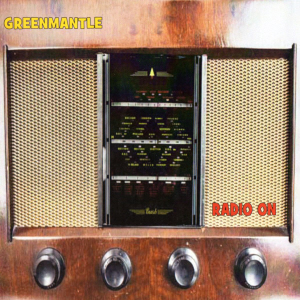
Greenmantle. Radio On

greenmantle cover
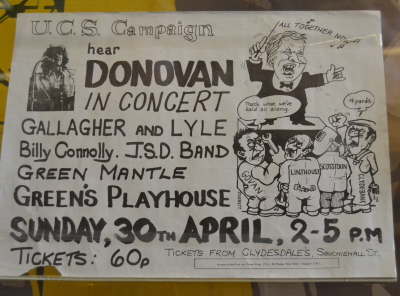
Blabbern’Smoke  first encountered Jack Law last year when he played a set at Glasgow’s Glad Cafe supporting John Hinshelwood.  An imposing character and no spring chicken (and I’m sure he won’t mind us saying this, he called his band the Spring Chickens on the night) Law turned out to have a very interesting past as a musician prior to a successful career in public health issues. As one half of the duo Greenmantle (the other half being Billy Campbell, a veteran of Glasgow’s sixties beat scene) Law criss-crossed the country playing folk clubs and the like from 1970 until ’76 when the band eventually parted. Influenced by the likes of CSN&Y and very much a part of the scene that produced Stealers Wheel and Gallagher & Lyle they were on the bill at Glasgow’s infamous Green’s Playhouse, later The Apollo, for a benefit concert for the Upper Clyde Shipbuilders, a gig that included Billy Connolly, Gallagher & Lyle, The JSD Band and Donovan. In fact there’s a handbill advertising the show on display at Glasgow’s Transport Museum.

UCS poster
Almost 40 years later Law and Campbell reconvened after a chance encounter and released an album, Two Hats, in 2011 which was well received and now they’ve come up with their second offering, Radio On. With producer George Burton collaborating musically Law and Campbell have taken the opportunity to record several of the songs they played endlessly on the road back in the seventies with Burton adding some studio sparkle and heft. The result is a full-blown band sound (with Dave Thomson on board) with horns and and some imaginative arrangements that, while harking back to the late sixties and early seventies, are impressive. The band describe the album as “a bow to the past, a wink to the present and a nod to the future.”  The past is when the songs where written while the present is the current arrangements and performance. It wouldn’t come as a huge surprise to discover that Law, Campbell and Burton might have been viewing old episodes of Top of The Pops prior to the venture as the overall feel is akin to those “respectable” bands who occasionally scored a hit and appeared amidst Pan’s People and teenybopper idols. The aforementioned Stealers Wheel and Gallagher & Lyle are obviously touchstones but on the album there are echoes of The Pretty Things on You Don’t Read my Mind with its psychedelic middle eight while Sad Cafe come to mind on Moviemaker. The nascent country rock of the early seventies is revived on Masters Of Rhyme and the twang fuelled Red Rosé And Ruined. Both Campbell and Law sing well and this is most evident on Fine day For Dying which delves into the Scottish soul movement of the seventies which saw groups such as Cado Belle and The Average white Band transporting Philadelphia to the Highlands. One of the highlights here, Fine Day For Dying uses a horn section to great effect and grooves with a healthy slink.
As for the nod to the future, the title track is a new song, worked up in the studio while they recorded the rest of the album. It’s the punchiest effort here with a power pop thrust as they strap on jangly guitars and celebrate the joys of music with the freewheelin’ feel of driving a convertible down a rock’n’roll highway. For a couple of veterans reunited after so long a time the album is testament to their experience and road tested chops and while it might not set the heather on fire it’s sure to please their fans and with luck strike a chord with a some new ones.

website

Robert Chaney. Cracked Picture Frames. Jagged Lines Records

When Robert Chaney, a Floridian musician, decided to move to London a few years back he didn’t have any contacts so he figured he’d check out the open mic scene. As he tells the story an early appearance led to him coming to the attention of producer Ken Brake and together the pair of them set out to make Cracked Picture Frames. It’s a bold album, Chaney, armed only with acoustic guitar and his lonesome voice, delivers a stark and startling effort that fits into the solo, haunted singer/songwriter tradition. The quality of the songs and his immaculate delivery however elevate the album above its peers, head and shoulders above in fact as song after song stuns the listener. While Chaney dips into Southern Gothic, Greenwich Village folk, Texan troubadour and delta blues styles on various numbers he stamps his authority all over the album.

His lyrics command attention be it telling blood stained tales such as on The Ballad Of Edward And Lisa or waxing poetically on the magnificent Does Your Love Pay Out In Full, a song that would sit very comfortably on Dylan’s Blood On The Tracks. Dylan and Townes Van Zandt might be names that come to mind when listening to the disc but to these ears, Cracked Picture Frames recalls the desolate howl of the first Loudon Wainwright album and the bleak landscapes that can be evoked by Eef Berzely from time to time. While there’s a hint of The Handsome Family’s grotesquery in some of the words the grim humour is absent, instead Chaney is bleak, he observes and reports with a poet’s mind. So we get a story of a child blinded by his religiously delusional aunt, a Mexican school bus crash, domestic violence, a forlorn lover wanting to patch up a broken relationship. On what might be the most arresting song on the album, The Cyclist, Chaney is as naked as Dylan was on his first albums, recalling the likes of the Lonesome Death Of Hattie Carroll as he narrates a mini movie that is noirish in the extreme as the protagonist, involved in a love tryst with his brother’s wife ends up paying for a crime she commits instead of revealing his betrayal. A nice update on that old standard Long Black Veil, it deserves to be heard.

Cracked Picture Frames is a wonderful album, proof, if needed, that one man and his guitar can be riveting as it paints pictures in the mind. His voice, a cracked crooner on the drawn out words of Corazones Amarillos, urgent on the bluesy Black Eyed Susan draws you in and the guitar work is simple but beguiling. One imagines that live, an audience would listen, hushed, to these meditations, in the meantime the album more than suffices.

website

Hi Alerts. Conjure Time. Twenty Stone Blatt Records


Let’s take a trip…………………….to Sunset Strip, to fuzzed out guitar, to wild and wailing harmonica, to beauty and beast boy/girl singing. Conjure up Sky Saxon or Kim Fowley subverting the peace and love vibes of the blissed out California sixties with their mondo wackiness, add some later essence of X and possibly Sonic Youth and you have the recipe for Conjure Time. The Hi Alerts are essentially a car crash collision of two Glasgow bands, The Primevals, swamp rock garage band par exemplar and Los Tentakills, purveyors of weird and witchy psychedelic trips. The resulting mash up is an album that should please fans of both bands with The Primevals’ Martyn Rodger’s guitar assaults adding plenty of heft to the lysergic leanings of the usual Los Tentakills affairs.
With Rhod Burnett pounding the drums and Ady Gillespie laying down a solid bass, Rodger and Al Hotchkiss flail away on guitars creating a fine Pebble dashed bedrock for singers, Michael Rooney and Celina Oxymandias. It’s tempting to call them a wigged out Sonny & Cher but in reality the pair of them are reminiscent of John Doe and Exene Cervenka tardised back a decade to the sixties and fronting a twisted Hollywood’s director’s idea of a way out combo, perhaps waiting in the wings of Russ Meyer’s Beyond The Valley Of The Dolls.
Folk who recognise the name checks above will already be forming sounds in their head as to how Conjure Time sounds. If you’re not familiar with them then suffice to say that Conjure Time is packed with songs that are undeniably retro but which howl to be heard in the present time. The opening song Four Walls is an incredible guitar warped groove, Broken Heart is Nancy Sinatra and Lee Hazlewood (or George Jones and Tammy Wynette) punked up. Stop Messing With My Mind is a sonic guitar mind melt while Straight Ahead To My Soul wrenches the ghosts of the MC5 and forces them to party with Sonic Youth when they were Geffen bigwigs circa Goo. Losing Streak is one of the songs that most recalls the heyday of X with Rooney and Ozymandias in perfect twisted tandem. Catastrophe is a mighty showcase for the duelling guitars here with wah wah and screaming solos battling it out for supremacy over the funkiest background here. They close the album with Twisted In The End, a fuzz fuelled diatribe that again brings us back to the essence of X although it’s much more frantic than anything that combo ever laid down on record with a veritable wall of sound towards the end. Magnificent.

Buy it here

Sergeant Buzfuz. Balloons For Thin Linda. Blang Records


Sergeant Buzfuz are a South London based vehicle for singer and songwriter Joe Murphy’s agit folk pop and social commentary songs which they deliver in an attractive faux naive folky style. Deceptively simple, down to the cartoon rendering of the band on the album cover and the band name, there’s a temptation to dismiss this as almost a novelty item. Dig deeper however and there’s plenty of evidence that Balloons For Thin Linda is a well thought out, well crafted (and subversive) album.
The basic band (William Barr on mandolin, Ian Button, drums, Eilish McCracken, fiddle, flute and whistle and Murphy on vocals and guitar) are fleshed out with bass, violin, cello and accordion offering the opportunity for the song arrangements to accommodate some baroque stylings which at times are reminiscent of the ornamented musings of late sixties/early seventies folk rock. Meanwhile Murphy’s deadpan descriptions and his vocal delivery recall predecessors as varied as Alan Hull of Lindisfarne, Robyn Hitchcock and Ray Davies, the latter most pertinent as the album purports to be an aural tour of London territories and Davies is of course the rock poet laureate of London. However, with the exception of S6 Girls (weirdly enough the song that most approximates early seventies Kinks) which describes a girls night out in Sheffield (Murphy’s home town) it’s hard to pin down this supposed concept on listening. Never mind, the album works without a detailed knowledge of the difference between Kensington and The Elephant and Castle and it’s best perhaps just to sit back and enjoy the songs and this is where the album gets interesting.
While the band deliver some fine songs such as the driving Robyn Hitchcock like Gold Feelings and the Irish strains of Molly’s Bar the meat is in Murphy’s acute observations of modern ills with the deceptively attractive Move, Carmelita seeming to be about a trafficked woman, held in a soundproofed room for men’s pleasuring. Infinite Kingdom Of Dirt tears down the idolatry of monarchy and the imperial delusions thrown at us by the media as wounded soldiers are cast aside and civilian deaths in the Middle East are ignored. The title song concerns a mentally ill woman wondering the halls of Harrods with the music meandering between a false jollity and a darker hopelessness. It’s a yin/yan thing perhaps. Enjoy the music but read the words and it’s to their credit that Sergeant Buzfuz are putting these songs about. Do have a listen.

website

And just to prove that Sergeant Buzfuz have a sense of humour

Johnny Dowd. That’s Your Wife On The Back Of My Horse. Mother Jinx Records


A scrofulous screaming desert storm of guitar noise and a forlorn saloon bar piano are the first sounds you will encounter on That’s Your Wife On The Back Of My Horse, the latest album from Ithaca’s Johnny Dowd. Amid this maelstrom he gravely intones
“That’s your wife on the back of my horse. That’s my hand in your pocket. Around my neck is your mother’s locket. Your sisters will dance at my wake. Your brother will blow out the candles on my birthday cake. That’s your wife on the back of my horse.”
Sounding like the late William Burroughs howling in an electric dust storm Dowd immediately stakes his claim to be one of the most left field candidates in the field of Americana with this opening gambit. It might scare some folk away but for those who stay the course the album is a hell of a ride.
Dowd recorded most of the album himself playing guitar, bass and keyboards with an electronic drum kit and the whole was then mixed and produced by “voodooman” Matt Saccuccimorano. The end result is a gripping kaleidoscope of thrills that mixes Southern Gothic with synth sounds that fart and burp. Tales of the devil bump up against gangster braggadocio and cosmic weirdness. Listening to the album cinema references kept coming to mind, Repo Man, The Man Who Fell To Earth, Wise Blood, all mutated and mashed in Dowd’s leering imagination. As on his last Album, Do The Gargon, Dowd adopts various musical styles, sixties TV cop themes in Cadillac Hearse and Iggy Pop’s The Passenger on The Devil Don’t Bother Me while Words are Birds is reminiscent of Snakefinger’s work with the Residents. This might all sound on paper a bit of a mess but Dowd has a firm hand on the tiller, his voice and drawl, deranged, modified, discombobulated throughout, cuts through and is immediately recognisable.
The lyrics for the title song are inspired by the boasting of Johnny Guitar Watson on Gangster of Love where he baits a sheriff saying, by the way, that’s your wife on the back of my horse. This cocksure bravado is revisited on the buzzed up funk of White Dolemite, a nod to a Blaxploitation movie from the seventies which gets down and dirty with Anna Coogan singing hot pants, he needs a spanking throughout as Dowd lists his love powers and is then updated on the rap of My Old Flame. Coogan turns up again on Poor, But Proud, a defiant rail against poverty and aging. Delving into the South The Devil Don’t Bother Me is an awesome mix of Teutonic synth discipline and Baptist hell fearing belief while Empty Purse is a nightmarish whirligig fairground ride of a song that again reminds one of a cinematic equivalent, in black and white, the carousel out of control in Hitchcock’s Stranger On A Train or the scenes where Janet Leigh is drugged in Welles’ Touch Of Evil. Whatever, it is scary. Akin to this is the voodoo soaked tale of Female Jesus who makes her living on her back and who used to play in a punk rock band, a succubus to avoid surely but the song sucks one in.
In the midst of all of this musical mayhem there’s an absolute nugget of a song that encapsulates the album. Why is, on the face of it, a lonesome love story that is played relatively straight as far as the rest of the songs go with a regular rhythm, country guitar stylings and a male female call and response. However the routine breakup stuff soon swoops into alien territory with the lyrics and the music climbing into cosmic consciousness. Ana Coogan appears again and her vocals are sublime as she pits her disembodied self against Dowd’s cowboy spaceman on what is the best song I’ve heard this year.
That’s Your Wife On The Back Of My Horse is available now and Dowd has a short tour in April and May, dates here.

Robin Adams. The Garden. Backshop Records


If you live near the Shawlands area on the south side of Glasgow you might have seen Robin Adams striding along, usually with his guitar in bag strapped to his back, his lion’s mane head of hair flowing in the wind, he’s quite a striking sight. Fortunately, he’s quite a striking musician as well with his previous albums gathering a bit of a cult following, similar to that of the late Nick Drake three decades ago when Drake was known to only a few cognoscenti. Reviews of Adams’ previous works have compared him to Drake and John Martyn (the Martyn comparison is odd other than that they share a Glaswegian background) but there are some elements of Drake to be found here. There’s a melancholic feel to the lyrics and a bucolic air in the music but the comparison ends there, to these ears it’s the likes of Roy Harper, Robin Williamson, Bert Jansch and Will Oldfield who come to mind with beguiling melodies and lyrics that can be darkly beautiful.
Adams stares that The Garden was influenced by his thoughts on Vincent Van Gogh, the painter’s struggles with his internal turmoil, his darkness and light. However, the album’s hazy sameness, an almost repetitive search for peace recalls another painter, Monet who captured the likes of Reims Cathedral in different lights at different times of the day trying to capture the illusive nature of light. Monet ended his years obsessively painting his garden at Giverny. As with light so with sounds and Adams, perched in his bedroom overlooking his garden, offers variations on this theme.
Overall The Garden is the sound of one man and his guitar. Occasional harmonica, keyboard, percussion and bass intrude and there’s a cello on one of the songs. A fine guitarist with a wisp of a voice that only occasionally betrays its Glaswegian origin, Adams roots around in the soul of despair. He cites Rimbaud’s description of a soldier’s corpse (Sleeper In The Valley) as inspiration and this is most obvious on the apocalyptic lyrics of Collision Course that closes the album while the opening song, The Garden is full of foreboding with spilled blood fuelling the garden’s growth. Paint Me The Day is almost iridescent as Adams sings of “burning red skies over fields of gold flowing like rivers of colour all born from your soul.” Packed full of beautiful metaphors it’s a powerful plea for love. Throughout the album Adams displays a fantastic poetic bent, his words paint pictures, impressionistic, not story telling but allied to the slight Americana touch in Keep Me or the naked guitar lines of Troubled Skies he is riveting, demanding a replay to properly savour the songs. The Garden isn’t an album to put on as background music, it demands and repays close attention and the rewards are there with Street a magnificent meditation on the fragility of the human condition. With the devastating opening lines “your heart is made of paper, your life is made of glass so beware of those who reach for you” delivered over a rippling guitar that recalls Arthur Lee’s Love on Forever Changes, the end result is sublime. Meanwhile Need Not Turn is perhaps the best song Will Oldham hasn’t yet written.
The Garden is a wonderful listen for those who delve into the nooks and crannies of a songwriter’s mind, it flows, brackish and dark perhaps, but seeking an outlet.
Robin Adams is launching the album at Glasgow’s Glad Cafe on Saturday 4th April.

Robin Adams Facebook page