Dark Green Tree. Secret Lives. Haven Records

The story of Dark Green Tree is one of serendipity. Chance meetings and a decade of collaborations lie behind this album which was recorded in 2014 and since then the original duo have become a trio. You could actually claim that there’s four folk behind Secret Lives as producer Boo Hewerdine co-writes several of the songs here along with added guitar duties noting that his involvement with Dark Green Tree’s Ross Cockburn began ten years ago at a workshop in a “drafty hotel in Perthshire.” Cockburn found the voice for his songs in Jay Brown and with Hewerdine they set about recording along with some gifted musicians including fiddler John McCusker. Looking for a female voice they happened upon Cera Impala at a house concert in Edinburgh and apparently she is now a fully-fledged member of the band. A somewhat tangled tale perhaps but in essence this quartet of star crossed strangers have conspired to deliver an album that is somewhat akin to the musical meanderings of Mazzy Star or the nocturnal ramblings of Lullaby For The Working Class.

The album opens with the ringing guitar jangle of Yearn For Love, a song soaked in a whisky tinged Americana that swells with keyboards adding a fine soulful feel but Brown’s vocals appear strained and slightly uncomfortable here. A teething problem only however as for the remainder of the album the band head into a darker hinterland allowing Brown’s breathy husk to grow. The brisk Rolling Wind, fiddle and banjo driven with sweet guitar interludes, is more suited to Brown and the addition of the close harmonies from Impala is the icing on the cake. From here on in the album is tremendous. Skin and Bone is a shiver of a song, dread and dark with the insistent pulse of a cello at odds with the fatalism of the lyrics. Lay Me Down rumbles morbidly with fiddle and slide guitar adding a sinister touch while Heart Of Winter is appropriately frosty.

The intimate vocal pairing of Brown and Impala is superb on the limpid slow waltz of Secret Life while the countrified Sarah, a tale of a Bonnie & Clyde type pair that goes awry saws away wonderfully with McCusker’s fiddle playing excellent. However the highlight of the album is their cover of Ryan Adams’ When The stars Go Blue which bursts into view with a spectacular and sparkling guitar intro before Brown and Impala croon away.

With a full release date next week and lots of radio play locally hopefully we’ll be hearing more of Dark Green Tree. They’re’ appearing at this weekend’s Americana Cavalcade at Perth Racecourse at 2 pm so if you’re going get there early.
website

The Railsplitters, The Honeycutters, Ballad Of Crows

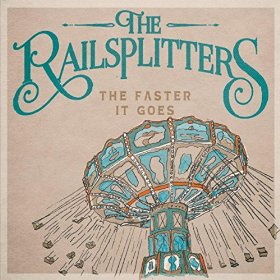
The Railsplitters The Faster It Goes


The Railsplitters are a five-piece string driven crew from Colorado and are yet another band who use traditional instruments but who are bang up to date regarding their song writing. While there’s one traditional song here (Salt, Salt Sea) it’s an ocean away from the gloom of its forebear (The House Carpenter) with a contemporary feel. At times here and elsewhere on the album there’s the impression that we’re listening to musings and notes from singer Lauren Stovell’s diary as she sings about upstart Romeos trying to impress her (You) and a year of romance (Seasons). This is impressive as the majority of the songs are written by the male members of the band, Dusty Rider and Peter Sharpe, both managing well to inhabit the female psyche. Best is Rider’s tale of a young mother clinging to the hope that her husband will return on Met That Day with Stovell at her most plaintive. Currently The Railsplitters are playing their debut UK and Ireland datesand the album is released on July 6th
website

The Honeycutters. Me Oh My


From Asheville, North Carolina, The Honeycutters are based around the strong vocals and fine song writing of Amanda Platt. The basic line up of mandolin, pedal steel, guitar, Dobro, bass and drums is enhanced in the studio with keyboards, electric guitar and trumpet leading to a warm wallow in some intricate and finely sketched playing. This is immediately apparent on the lengthy and rather glorious All You Ever which blossoms from its tentative opening with a drumbeat underpinning Platt’s wearied vocal into a full blown pedal steel mandolin and keyboard borne country rock affair. Platt dips into country soul territory on what is the antitheses of Stand By Your Man on the powerful title song as she sings “some girls marry and some girls wait, some girls worry ’bout judgement day, some do better without that ball and chain” while Little Bird is a song that could have been penned by Mary Gauthier and is delivered with the same wearied feel that Gauthier does so well. While Platt stands up for downtrodden women elsewhere (Not That Simple) there are some upbeat moments here with the opening Jukebox a fine slice of honky tonk philosophy while Ain’t It The Truth is a punchy slice of Loretta Lynn styled fight back against all of those rotten men. There’s 14 songs here and everyone is a winner with Platt and the band coming across as ones to watch out for.
website


Ballad Of Crows


Back to the UK (and Germany) for this eponymous album featuring Steve Crawford and Pete Coutts along with Sascha “Salossi” Loss. With a sound that fuses classic west coast harmonies with a traditional Scottish feel there’s a temptation to recall the likes of Gallagher & Lyle all those years ago but BOC are rootsier. Crawford and Coutts handle guitar, mandolin, and vocals with Loss adding additional guitar, vocals, bass, fiddle and Sansula (kalimba). With additional texture from guests on fiddle, accordion, cello and slide guitar the album is a well measured collection of rustic notes that certainly grows on the listener with repeated plays; a sweet late night pleasure that might summon up another duo from the seventies, Crosby & Nash. A cover of Tim O’Brien’s Brother Wind begs the comparison but overall the songs, in the main written by Davy Cattanach along with Crawford and Coutts hark back to halcyon seventies days.
website

Sacri Cuori Delone Glitterbeat

From the moment Blabber’n’Smoke first heard Sacri Couri we were convinced that they were a very special band. They played a short set when backing Dan Stuart back in 2012 which we described as an “astounding palette of sounds that ranged from surf and Duane Eddy type guitar to Nino Rota cinematic whirls with Joe Meek electronica and superb percussion to take the audience on a trip through some weird places.”
Their album Rosario confirmed their wide range of influences and left no doubt that there is a “Sacri Cuori universe,” a strange and wonderful place where a cornucopia of delightful sounds coalesces to deliver a true Technicolor dream. Often described as purveyors of imaginary soundtracks (and very much influenced by the likes of Nino Rota and Ennio Morricone) Sacri Cuori actually delivered the soundtrack for a movie, Zoran, which won several European awards in 2014 and now we have Delone, an album that positively drips with aural delights and is indeed, as the press release claims, a kaleidoscopic road trip.

For an Italian band Sacri Cuori have long been associated with American music due to their association with the likes of Dan Stuart, Calexico, Richard Buckner and Giant Sand with their first album, Douglas and Dawn recorded in Tucson. Delone however sees them proudly reclaim their homeland with guitarist Antonio Gramentieri saying, “in every sound and feeling on the album, Italy is the heartbeat.” It’s an Italy that is viewed through the lens of Hollywood and Cinecitta, the Italy that was cool and hip in the sixties, land of Vespas, Gaggia, Mastrello Mastrianni and Virna Lisi. The band look to the music of Italian film composers, not only Rota and Morricone but lesser known artists such as Riz Ortolani, Armando Trovajoli and Piero Umiliani, composer of the song forever associated with the Muppets, Mah Na Mah Na. With a musical palette then that includes orchestral sweeps, funk, goofy humour and Euro pop they also toss in tango, surf music and a nod to the subversive pop genius of Serge Gainsbourg. Morricone’s spaghetti western whistling is married to the traditional sound of Secondo Casadei’s Romagna Mia and lit by a neon stream of vibrant Giallo colours.

Delone features Evan Lurie, Marc Ribot and Steve Shelley on additional instrumental duties while the vocals are handled by Howe Gelb (on Serge), Carla Lippis, an Italian diva they discovered in Australia and Emmanuelle Sigal with the songs variously in English French and Italian. The opening number, Bendigo is a turbo charged Mexican infused surftrash thrash that Quentin Tarantino really needs to hear. Delone, the song, tells the tale of the album’s anti hero, a man in the shadows , in a manner redolent of sixties spy thriller theme songs while Dancing (On The Other Side Of Town) is romance as danger, a David Lynch nightmare delivered with a deadpan sense of cool. With spoken word snippets between numbers, twanging guitars, deranged horns and fairground keyboards enlivening the instrumentals the entire album is a delight to listen to. It’s infectious, humorous and intelligent and marks Sacri Cuori as one of the coolest bands around.

p.s. watch the video below for a cameo appearance from Marlowe Billings, Toni Delone’s American friend.

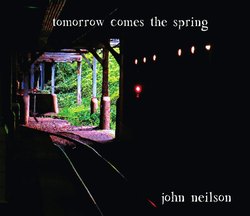
John Neilson. Tomorrow Comes The Spring. Lounge Side Records

Currently a resident of Austin Texas John Neilson was recognised initially as a songwriter when in LA. Writing with LA Guns and Sophie B. Hawkins among others he eventually teamed up with producer Jim Wirt and Tomorrow Comes The Spring is their second joint effort. The first thing to say here is that this is not an album that sounds as if it were birthed in Austin. There’s no grit and little swing evident, instead there’s a shimmering pop sensibility that ranges from upfront summer tinged power pop to ethereal swoons with Neilson’s light voice swathed in harmonies.

Neilson tops and tails the album with two fine shots of chiming power pop. Fall belts out of the starting gate and never lets up with a great chorus and a fine bridge leading to a smashing guitar solo before crunching back into the song, listen loud. Walk Away which closes the disc is a chunkier affair but the guitars continue to churn and burn as Neilson offers up another fine and melodic chorus which is just on the right side of sentimentality. In between Neilson walks a line that straddles folky singer/songwriter tales and romantic ballads, the latter again veering dangerously close to showbiz sentiment. Starlight Eyes for example creeps into view with an almost whispered declaration of love before sailing into Christopher Cross territory but Neilson rescues the song halfway through with a key change and an inventive arrangement that takes him closer to Brian Wilson. The arrangements again are the saving points of Dreams At Night and Columbian Cocaine, another two songs where Neilson bares his heart. He’s on surer ground with the tarnished tales featured in Lights Of Los Angeles although the soaring chorus here jars with his finely observed words. Coming Home is a sturdier effort with Neilson hitting the right emotional buttons as he lays down a downbeat Christmas song (wrong season John!) as a weary drunk contemplating a seasonal homecoming without his girl. Take A Shot is a portmanteau song that starts off with rippling country tinged guitar and bucolic lyrics before a swift shift into a brief appendix in a manner that recalls McCartney back in the days.

We struggled with Tomorrow Comes The Spring which apart from the two rockers is not an immediate listen. However it’s proof that an album can grow on one and the fine arrangements to be found here do repay repeated listenings. However it’s tempting to ask if Neilson could provide a whole album of those souped up power chords next time.

website

Tom Heyman. That Cool Blue Feeling.

Not a name that’s overly familiar perhaps but check out albums and tour bands from the likes of Chuck Prophet, John Murry, Hiss Golden Messenger and John Doe and it’s a fair bet that Tom Heyman has been involved. Following the breakup of Go To Blazes, his 1990’s Washington roots rockers band Heyman relocated to San Francisco where he’s been in much demand as a sideman with occasional forays into solo recording with a ten year gap between his last album and this third one, That Cool Blue Feeling.  Happily we can report that it’s been well worth the wait as Heyman delivers an album that fulfils his intention to find a sound that “combines the loose late night low down groove of JJ Cale and the melodic storytelling of Gordon Lightfoot.” From start to finish this is an album that slowly burns into the listener’s ear with Heyman’s laid-back vocals pouring over some tasty yet subdued guitar licks. Recorded in Portland Heyman plays guitars (acoustic, electric, slide) and organ and is supported by Rusty Miller on drums, bass and piano and Mike Coykendall on drums and bass. They fuse wonderfully and the production (by Coykendell) is warm, capturing a feel of spontaneity that is heard to best effect on Time And Money where the guitars churn and the percussion thumps like a heartbeat heard through a stethoscope.

The album prowls into view with the slow burning blues of Black Top, a Southern inflected moan that sounds as if it has crawled from the swamp. Cool And Blue is a delicate and fragile attempt to fan the flames of a failing relationship, cooled by wintry references in the lyrics but warmed by a very short but tremendous guitar break in the centre of the song. In The Nighttime World carries on with this mundane existence, a world-weary Muscle Shoals type shuffle sees the relationship over with the singer reduced to smoking dope and buying gifts for his ex via late night TV shopping channels. There’s more moping on the snarly Always Be Around, a fine sidewinder blues swatch, a last gasp attempt to win back his girl but it seems unsuccessful as on the last song Heyman bares all on the naked acoustic of  Losers Like Me.

Aside from this domestic disharmony, Heyman throws in a couple of classic Americana styled portraits. Chickenhawks and Jesus Freaks has Paul Brainard on pedal steel decorating a set of lyrics that capture the chills and thrills of hitching a ride in the deepest South. Jack And Lee is a robust portrait of a drinker trying to hold his shit and his marriage together while Number 9 burrows into a methadone user’s method and madness while it rolls along like a bona fide trucker’s song.

Overall the album sounds great, warm and vibrant. Heyman’s guitar playing is at times scintillating and the songs are all top class. It’s an album to be savoured, perhaps late at night and perhaps with a beverage but it does burrow in.

website

Brock Zeman. Pulling Your Sword Out Of the Devil’s Back.


Canada’s Brock Zeman has steadily pursued his career over the course of 11 albums, several of which we’ve featured on Blabber’n’Smoke or over on Americana UK. While he’s ranged musically from dusty ballads to hard-bitten country from album to album his lyrics have consistently impressed proving him to be a fine storyteller with a firm handle on vivid sketches of hard living and lovelorn regret. Pulling Your Sword Out Of The Devil’s Back maintains this standard and shows Zeman continuing to grow in confidence with several of the songs benefiting from additional instrumentation and tight, almost poppy arrangements which has led to the album getting several radio plays from UK Roots music radio shows.

The album opens with the feverish spoken word title song as Zeman describes his songwriting process with a passion. “I live in a house full of ghosts that just won’t let me be. I let ‘em in myself, but now I can’t get ‘em to leave. I’m haunted by love” before stating “It’s just heart to tongue, tongue to hand, blah, blah, blah, and struggle.” Referencing the song itself he says “there’s no chorus in this one it’s ugly and it’s wrong, there’s no melody so you won’t be able to sing along. No pretty little voice like the angels singing low pushed through pretty little lips in a pretty package wrapped up in a pretty little bow” The irony here is that for the remainder of the album Zeman wraps the songs in melodies, keyboards, strings and synths and even some female harmonies while the song itself blossoms from its initial guitar and violin cushion into a full blown anthemic thrash.

Walking In The Dark which follows is a fine demonstration of Zeman’s new found melodic sensibility as the song uncurls like a Springsteen drama with some sparkling guitars bouncing off of the slick beat. Zeman half speaks and the lyrics are full of neon lit street life images on a rumination of the revelations available to late night dog walkers. Sweat is a funky low rider of a song that sounds like Johnny Dowd backed by The Ohio Players with Zeman getting down and dirty on the vocals. In contrast Don’t Think About You Anymore is a string driven threnody while Some Things Stay is almost power pop with its insistent beat. Towards the end of the album Zeman pulls out two crackers. Little Details harks back to 1980’s rolled up cuffs and big quiffs on brat pack movies but does so with an attractive and pulverising insistence that draws the listener in. Dead Man’s Shoes also seems to be trapped back in the eighties but the template here is Elvis Costello and his excavations of sixties pop on Get Happy.
Zeman winds the album up with the flipside of the opening song. Instead of the writing process he enquires of the listener what they are listening to on their radio on Everybody Loves Elvis.

Overall Pulling Your Sword Out of The Devil’s Back is less immediate (and less rootsy) than Zeman’s previous work but its layerings and variety grow on you after a while and deserve some delving into.

The Foghorn Stringband. Devil In The Seat


Back in 2012 Blabber’n’Smoke described The Foghorn Stringband’s album, Outshine The Sun as one of the best string band albums of the year. So the arrival of their latest, Devil In The Seat was greatly anticipated and sure enough it’s certainly the best string band album we’ve heard this year. The Portland, Oregon quartet (Caleb Klauder, mandolin, violin, vocals; Stephen ‘Sammy’ Lind, violin, banjo, guitar, vocals; Nadine Landry, guitar, double bass, vocals and Reeb Willms, guitar, vocals) may have swapped their recording location from Oregon to Hawaii on this occasion (why, who knows but I’m sure they had a fine warm time sipping their Margaritas) but once again they sound as if they’re playing on a front porch in some bygone frontier settlement.

All four excel on their various instruments and their sheer exuberance is a delight to listen to. On top of that each is an accomplished singer with their voices  seeming to reach from the past. With lead vocals switched from song to song there’s a sense of variety when listening to the album with Williams and Landry duetting wonderfully on the unaccompanied What Will We Do, a rare excursion into traditional folk which they learned from Irish singer Cathy Jordan. Williams yodels away on the roadhouse honky tonk of Mining Camp Blues while Landry adds a fine Acadian lilt to Henry Lee. As for the guys, Klauder and Lind can holler and whoop with the best of them. There’s variety also in the song selection as they range from lilting Appalachian ballads to square dance roustabouts and country waltzes. Each and every one is a delight and as with the previous album they note where they first heard each cut which can lead to some fine Googling fun checking out the originals.

From start to finish Devil In The Seat is an album that defies the listener to remain seated as the band whirl and skirl. There’s top marks for including a great version of Chicken Reel, a tune we probably first heard in a cartoon way way back in the mists of time and one that never fails to raise a grin and look for a partner to dozie doh with.
Good news is that The Foghorn Stringband are touring the UK and Ireland in May and there are two Scottish dates. They appear at Glasgow’s CCA on Sunday 17th may and at The Traverse Theatre Bar in Edinburgh on the 18th. The other tour dates are on their website. If they’re as good live as on record then these should be nights to remember. Here’s a clip of them playing.

Benjamin Folke Thomas. Rogue State Of Mind. Bucketfull Of Brains


Reviewing Benjamin Folke Thomas‘ debut album, Too Close To Here, Blabber’n’Smoke detected several of the Swedish artist’s influences jostling for position throughout. While Thomas was able to corral these into what was indeed a very fine opening statement the album did have a homemade charm having been recorded quickly and live in the studio with a resultant cliff edge tension on some of the numbers. Rogue state Of Mind is a very different beast; self assured and polished, it was recorded with Thomas’ regular band in Gothenburg and sounds like a group as opposed to a singer with a backing band. While none of the songs were rehearsed prior to going in they’ve made full use of the studio to flesh out the sound adding keys and brass to several of the songs while Thomas’ voice has filled out, less gruff and rushed than on Too Close To Here.
So, polished and ready to go Thomas and his band (Henning Sernhede on electric and acoustic guitar, lap steel, keys, pedal steel, mandolin and banjo, Johannes Mattsson, electric and stand up bass, keys and Jonas Abrahamsson, drums, percussion and keys) set out their wares and the result is in the main mighty fine. Like Danny And The Champions Of The World they manage to churn up a heady brew of urban Americana with a hint of The E Street Band on occasion and in Sernhede they have a guitarist able to soar when required. It’s apparent from the opening guitar curls of Break The Border that they’re a confident bunch with the song a zestful mid paced rocker with a touch of The Allmans in the guitar breaks. They then take a left turn however on the following Gettysburg, an acoustic tale that trots along with a steady although increasingly punchy pace, adorned throughout with some very tasty lap steel licks. The time signatures here recall Dylan circa Blood On The Tracks and the Dylan reference is reinforced by Thomas’ lyrics about a mystical camp whore. Riding the rhythm his voice rings with poetic fire as he sings “ in the cool fountain evening when she danced beneath the rain like random rhythms that drive black dust insane like an arrow screaming at her pleasure.” Bulletproof is more pared back, a trio of guitar, bass clarinet and mandobird cast the song in aspic as Thomas wrings out his emotions in a very fine wearied style.
The band jump back in for the brisk and declamatory Futile Blues where Thomas sounds like John Stewart in full voice before Broke Down Train pulls in with an ambient sound that recalls a Daniel Lanois production, a hypnotic haze pervading the song. Pauper To A King is a claustrophobic and grimy urban tale leavened only by some sleek guitar lines which snake around the funk fuelled bass line on a song that one could imagine Danny and his Champs doing. Dream About You Baby is a funky shuffle of a song with female backing vocals and honking sax with Thomas leering somewhat as he dreams about his girl in his bed as he seduces her by playing Blond On Blonde. There’s a darker side on the next song, Woman I Love which starts out with a chilling neon lit noirish feel but is eventually let down as the intensity fades towards the end. There’s a dip into Townes Van Zandt territory on the stripped down acoustic lament of Married Blues before Thomas closes the album with the pleading and powerful Little Too Late, an ambiguous tale that could be about a stalker or a lover about to lose his partner, whatever, Thomas imbues the song with a passion, his voice bursting at times as the tune climaxes with a wonderful solo from Sernhede. Heady stuff.

Website

Lead Belly: The Smithsonian Folkways Collection.


Huddie Leadbetter, better known as Lead Belly is perhaps more remembered than listened to these days. His reputation as a mean man (he served two sentences for manslaughter with the story going that he sang his way out of doing his full time so impressed were the governors with his music) preceded him and was often used as a hook to draw audiences in when he played. “Sweet Singer of the Swamplands Here to Do a Few Tunes Between Homicides” was one headline in the New York press. Since his death in 1949 and especially following the folk blues revival of the sixties his music managed to escape the shadow of the penitentiaries and many of his songs found their way into the popular canon. Dig through any half decent music collection and there are bound to be Lead Belly songs in there, he’s been covered by Lonnie Donegan, Ry Cooder, Tom Jones, Creedence Clearwater Revival, Pete Seeger, Led Zeppelin and Nirvana among others while songs such as Irene Goodnight, Midnight Special, Black Betty and Rock Island Line are pretty much standards.
As is often the case with vintage blues there are numerous Lead Belly albums on CD available and it’s a bit of a hit or miss regarding the quality of some of these. Good news then that Smithsonian Folkway have decided to follow up their definitive Woody Guthrie Centennial box set with this Lead Belly Collection that includes 108 songs (16 previously unreleased) on five discs and a 140-page book. It’s a comprehensive document that includes rare live radio recordings with Lead Belly an engaging raconteur as he ranges from folk to blues to Tin Pan Alley songs. Remastered for the collection the sound is for the most part excellent and while many of the songs will be familiar there’s a wealth of material that will be unknown to any but the most rabid collector. The accompanying book is a treasure trove in itself with essays that cover his life and his legacy. The full story of his release from prison, his troubled relationship with Alan Lomax and his friendship with Woody Guthrie are all covered and there are extensive notes for all of the songs.
Hop on over to the Smithsonian Folkway’s website  where you can watch a watch a video of the actual contents.

Paul Brady. The Vicar Street Sessions, Vol. 1. Proper Records


Back in October 2001 acclaimed Irish singer/songwriter Paul Brady managed the amazing feat of selling out a full month of shows in the one venue, Dublin’s Vicar Street. Designed to showcase his career and back catalogue Brady opened up his “little telephone book” and invited some of his showbiz pals to join him with the aim to have at least one guest per night, unbilled. A mark of his standing in the music community the guests included Van Morrison, Mark Knopfler, Bonnie Raitt, Gavin Friday, Sinead O’Connor and a host of others.
14 years later and we have a selection of songs recorded during this auspicious venture with promises of further volumes to come. Volume 1 comprises of 13 songs recorded on various nights, nine of them featuring guest spots. While it was Brady’s show several of the guests perform their own songs with Brady and band backing them while others cover the man’s songs. In such exalted company Brady acquits himself well with the opening I Want You To Want Me expertly performed and a fine example of his song writing which some folk place on a par with Richard Thompson and John Martyn. He closes the album with a fine rendition of Dylan’s Forever Young sharing the vocals with Mary Black, Moya Brennan and Maura O’Connell and eventually the full hall who join in the refrain with the recording actually carrying some of the passion of the night.
As for the guests, Van Morrison, whose announcement is greeted heartily by the audience, sings Irish Heartbeat trading vocals with Brady with the song beefed up by a horn arrangement and ending with some fine scatting from Morrison. Mark Knopfler gets all J J Cale on his slinky and sinister Baloney Again and Bonnie Raitt is on fine form vocally on two Brady songs, Not The Only One and The World Is What You Make It with her slide guitar kicking the band into Little Feat territory on the latter. Curtis Stigers blows into view on his song Don’t Go Far (co-written with Beth Neilsen Chapman) while Ronan Keating (of Irish boy band Boyzone!) appears on The Long Goodbye which fits into the overall sense of capturing the occasion but despite repeated listening it’s a song I could live without, coming across as somewhat bloated in comparison to its surroundings.
There are some intimate moments. Sinead O’Connor’s In This Heart is delivered a cappella with Brady singing along, her reedy warble supported by his slight brogue. It’s the most traditional sounding song on the album reminding us that Brady was once in the forefront of Irish folk music. Similarly stripped back is Eleanor McEvoy’s tale of a missing girl, Last Seen October 9th, with Brady on piano and backing vocals, a chilling song. Top of the class however are Gavin Friday and Maurice Seezer who transform Brady’s Nobody Knows into a twilight zone inhabited by Lou Reed and Nick Cave.
Brady sold around 17 thousand tickets for his month long sojourn and it’s a fair bet that this belated release (and others to come) will be snatched up by a good many of those who attended. With a great live sound the album is engaging throughout and well worth a punt for those who admire Brady or have an interest in the Irish music scene. We’ll certainly be looking out to see what gems are unveiled on Volume 2.

website