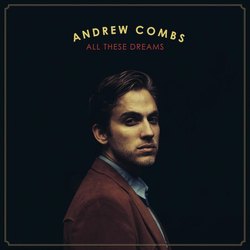
Andrew Combs. All These Dreams. Loose Music

First thing to say about this album, the second from Nashville artist Andrew Combs, is that we were expecting some kind of Roy Orbison doppelganger to come soaring from the speakers. Seems that comparisons to Orbison have been bandied about all over when folk write about the album but the similarities (if they are there) largely passed us by. Instead we were reminded of the lush arrangements of songs such as Gentle On My Mind and Everybody’s Talking as rippling guitars and sweet strings swept over the two opening songs, Rainy Day Song and Nothing To Lose. Throughout the album there’s a sense of late sixties popular country pop with Strange Bird recalling Mike Nesmith’s latter efforts with The Monkees before flying solo, poppy with hooks galore but with a sly intelligence in the lyrics (and some inspired whistling). On the title track Combs continues to deliver a radio friendly sound on another song that flows effortlessly with strings and a slightly twangy guitar in the middle eight while his slightly weathered voice, attractive throughout, has a passing comparison to Ryan Adams. We have to admit here that the song All These Dreams shares with Orbison’s latter efforts a sense of drama, however it’s the Orbison who was the senior figure in The Travelling Wilburys and of Mystery Girl who’s recalled here and much of that sound was down to Jeff Lynne. Whatever, the worst that can be said here is that Combs has the ability to write hooks as catchy as Lynne and that can’t be all bad.

The latter half of the album steps out from under the Nashville pop umbrella and is all the better for that. The ballad, In The name Of You stands tall next to similar efforts from John Fullbright while Slow Road To Jesus opens like a dusty Kristofferson song before heading into a mock baroque gospel tinged lament. Here Combs’ voice is hesitant and searching while the arrangement is wonderful, the guitars, keening pedal steel and spare percussion perfectly balanced with the swooping strings and brass that adorn the bridge. This is Jimmy Webb or Harry Nilsson territory and it’s executed brilliantly. Month Of Bad Habits has a slight bossa nova feel allied to a deep south sultriness and again it flows sweetly with a hint of menace in its undertones albeit sweetened again by the string arrangements. When the guitar and pedal steel cut loose halfway through the song toughens up and the extended outro is not a million miles away from some of Calexico’s work. Combs closes the album with another understated ballad, Suwannee County that is swathed in warm pedal steel work (from Steelism’s Spencer Cullum Jnr.) and demonstrates that while he’s a dab hand at channelling 1960’s Countrypolitan Nashville pop his stronger hand lies in darker territory.

website

Esther Sparks & The Whiskey Remedy. Love Songs

Esther Sparks was born and raised in a spiritual community, the Spire Fellowship, based in Overtoun House in West Dunbartonshire. She moved to the States in 1996 living in New Orleans for several years before relocating to Colorado, a chequered past and one which she’s visited on prior albums. Now she’s formed a band, The Whiskey Remedy (American spelling of whisky please note) and released Love Songs. The album was released back in October of last year and Sparks and company actually played two Scottish release dates along with a session on Tom Morton’s radio show. Late as ever to the party Blabber’n’Smoke was only recently alerted to the album but on listening reckoned it’s well worth sharing here.

Love Songs is a short album with Sparks on guitar and vocals and married couple, Darren Thornberry on harmonies and lead guitar, and his wife, Melissa on drums. It’s dominated by Sparks’ strong vocals which retain a hint of her Scottish roots while her writing is rooted in a confessional folk idiom recalling writers as diverse as Tracy Chapman and Michelle Shocked while there’s a sense of Eddie Reader in the delivery. The trio deliver the songs with brio and mention must be made of Melissa Thornberry’s percussion which is inventive throughout, adding colour to the primarily acoustic guitar based numbers. Mr. Thornberry adds some guitar solos but his primary contribution is on the harmony vocals, best heard on the vituperative Love Like Yours.

The album opens with the stark self-flagellation of Forgive Me with Sparks’ regrets to the fore over forlorn piano and a climatic chorus. Always is another apology but this time more gentle and tender in its delivery despite some martial drumming and Sparks’ most assured vocals on the album while My Ground has some tremendous percussive effects which cosset Sparks’ spooky spiritual delivery. By now it’s evident that the songs are about loss and regret and Your Love Called nails this as Sparks delivers a powerful solo performance about abandonment, wondering how and why it happened, teetering on the edge of despair. Broken promises and broken love continues on the full-bodied rush of Madeleine’s Man while The Man Up The Stairs is a wish fulfilment torch song as Sparks conjures up an ideal partner. Closing with the boozy clatter of Prayer Of A Drunkard that culminates in a bar room chorus, Sparks ends up in the suds and slosh filled sentimentality that fuels broken dreams worldwide reminding one of Mary Coughlan’s odes to the demon drink.

website

Heid: The T. F. Arnott Story

Here’s an oddity, the description alone commands attention and demands a listen.

“….. fragments of a long lost more extensive piece of work by a radio documentarian about a delta blues guy called T. F. Arnott. It tells the story of his strange and deeply twisted career and how it spanned throughout the better part of the 20th century. First spotted as a talent scout in Hollywood in the mid thirties he appears throughout the ages, meeting folk like Elvis, Richard Feynman, and even Bill Clinton along the way. “

The album is the demented brainchild of T. F. Arnott (described as a “Blues Player, Poet, Theoretical Physicist, Hollywood Mogul, Alligator Hunter and also Glaswegian”) who recalled his younger days when he and his chums would record improvised radio comedy programmes on his mum’s tape player. Now grown up (allegedly) he’s spun this fantasy (with the assistance of Kerr McClure, Isaac Wilcox, Marcus Montgomery Roche and Peter Arnott) and unleashed it on an unsuspecting world.

It’s great fun. The album consists of acoustic blues songs for the post part interspersed with snippets of documentary commentary from various characters recalling the career of T. F. Arnott. These range from Shaky Mo (a doppelganger for Camberwell carrot Danny from Withnail & I) describing Arnott’s 1967 spell in London where he recorded “Twelve songs about Sausages” (” great title, crap record”), to the owner of Florida’s Crocodile Club who went hunting in the Everglades with Arnott, killed a manatee and tried to make a guitar case out of its skin. Failing to do so they eventually fashioned a hat instead. There’s episodes involving The Manhattan Project, Jean Paul Sartre’s sex club and Arnott’s in setting up Sun Records which he originally called Bum Records. Sure, it’s juvenile at times but there’s many chuckles contained herein, a bit like listening to Cheech and Chong recording Blind Melon Chitlin Lemon while watching Spinal Tap.

As for the music, some of it is excellent. There’s a fine Glaswegian take on How Come My Dog Don’t Bark (recorded by Dr. John among others) retitled How Come My Dog Dinnie Bark. Cry recalls the works of Hamish Imlach with wonderful woozy Glaswegian backing vocals, Don’t Ya Call Me sounds like an angry west of Scotland John Lee Hooker while there’s a lighter take on the blues with the toe tapping and memorable Magic Band. Overall it’s great fun, not to be taken too seriously (the legend himself confided to Blabber’n’Smoke “it’s just a wee DIY type affair”) but for the grand price of £2 you can download it and judge for yourself.

Buy it here

The Unthanks. Mount The Air. Rabble Rouser

Mount The Air, the first album from award winning folkies The Unthanks in four years opens on a bold note, one is tempted to say a Blue Note as the title song is introduced with a melancholic trumpet reminiscent of Miles Davis circa Sketches Of Spain (although Miles had left Blue Note by then for CBS). It’s a surprising sound for a folk album but The Unthanks have been busy over the past few years collaborating with artists such as Adrian Utley of Portishead and exploring the music of Robert Wyatt and Anthony & The Johnsons and Mount The Air is an ambitious marriage of folk, jazz and even trip hop. Rachel and Becky Unthank continue to mine familiar folk tropes, lost loves, wayfaring strangers and magical animals but the arrangements by Rachel’s husband Adrian McNally launch the band into unfamiliar waters at times. It’s tempting to think that the album is an attempt to capture some of the sense of adventure and shock achieved by the Fairports way back when they unleashed their folk rock magnum opus, A Sailor’s Life. Had The Unthanks continued in the same vein as the opening song then there might have been a chance of this but overall the album fails to live up to the adventurous opening.

The song, Mount The Air is a pinnacle. This age old song from the Cecil Sharp collection is stretched to almost ten minutes with Becky Unthank, a changeling looking for a lost love, only occasionally heard amid the Iberian strains of trumpeter Tom Arthur and fiddle from Niopha Keegan. With driving percussion and sweeping strings it’s cinematic in its delivery and somewhat breathtaking. Foundling is another lengthy song that tells the tale of an 18th Century Foundling Hospital but it cleaves to a more traditional style, piano led with Rachel Unthank’s lyrics and vocals the highlight here. Flutter is more adventurous with debts perhaps to Utley’s work with Portishead, electric keyboards and skittering percussion buoying up the otherworldly vocals.

Overall it’s somewhat churlish to concentrate on the more experimental aspects of this album. At their best The Unthanks are a somewhat unique crew, true to their North East roots (the album was recorded in their Northumberland studio), they’re perhaps the best current embodiment of folk music with one foot in tradition and the other in the modern world. Their rendition of Magpie here is haunting with just voices and harmonium transporting the listener into a mystical Albion while Hawthorn is simply delivered and breathtakingly beautiful.

website

The Pretty Things. Bouquets From A Cloudy Sky. Snapper Records

When it comes to bad luck there’s no better example than that of The Pretty Things. Ask your man on the Clapham omnibus to name the top UK bands of the sixties and you’ll get The Beatles, The stones, The Who, the Kinks, The Small Faces and Cream perhaps. Pressed, you might find he’s familiar with Manfred Mann or the Dave Clark Five or Herman’s Hermits. It is unlikely that The Pretty Things will come to mind given that they really only had two medium sized chart hits, Rosalyn and Don’t Bring Me Down in 1964 before disappearing from the general public’s view.

Dyed in the wool music fans however will argue the case for The Pretty Things to be sitting in the top echelon of sixties pop and rock, maybe outside the top three but certainly in the top six (or seven or eight, arguments for and against can be directed to the editor). After all they started off when original Stone’s bassist, Dick Taylor met singer Phil May at the London Central School of Art (and all the good sixties bands formed at art colleges, didn’t they?), grew their hair longer than The Stones and proceeded to deliver what might be the best sixties UK take on R’n’B. More unhinged than Jagger and crew, rawer than The Yardbirds, a precursor to the wilder garage delights of Nuggets era US bands and equalled only by the original Them in our opinion. Their main claim to rock and roll fame however resides in their later sixties psychedelic era. In common with their peers, grungy blues riffs gave way to elaborate melodies, Eastern influences, instrumental experimentation and in 1968 they delivered S.F. Sorrow, now commonly accepted as the first “rock opera,” beating The Who’s Tommy by several months. More importantly, S.F. Sorrow and the following album Parachute are prime examples of UK psychedelia with the whimsy kept in check and the songwriting still strong after all these years. Both albums sunk without a trace however but The Pretty Things were thrown a lifeline when Led Zeppelin released the 1974 album Silk Torpedoes on their Swansong label. There was much press brouhaha but it was another Swansong signing, Bad Company who shifted units leaving our lads to limp along, bedevilled by line up changes and lengthy legal battles for the rights to their original material.

It’s a hearty welcome then to this fairly comprehensive compilation of all things pretty. Bouquets From A Cloudy Sky gathers all 11 of the studio albums on CD (with bonus tracks on all) along with two discs of rarities, two DVD’s of band performances and documentary, a 10″ acetate with four songs, a 100 page book and a host of paraphernalia. There’s the sneering blues pop of Rosalyn (covered by David Bowie on his Pin Ups album), a brilliant rough and ready 1964 BBC recording of a lascivious Mama, Keep Your Big Mouth Shut, the sublime psychedelia of Defecting Grey and to prove that they could still cut it long after their star faded a song such as Dream/Joey from 1974’s Silk Torpedo shows that they were still a force to be reckoned with.

Overall this is a must buy for anyone who puts The Pretty Things in their top ten (6,7,8,perhaps) sixties bands but shifting at around £125 for the set it’s good value for anyone interested in the era, mind you it’s limited to 2000 copies so if you want it get in quick.

website

Naim Amor. Hear The Walls. Fort Lowell Records

Naim Amor is yet another of those European artists lured into the lair of Tucson to collaborate with members of Giant Sand and Calexico and who forgot to return. A French native, Amor was quickly assimilated into the local scene along with his then partner, Marianne Dissard, releasing albums as part of Amor Belhom Duo and ABBC, before going solo. Retaining a European sensibility on his own albums, often singing in French and often reaching into the world of La Variete, that particularly French version of pop music, Amor can come across as an Arizona equivalent of Stan Getz in his bossa nova days. He delivers sumptuous candy floss sounds that caress the ears of casual listeners but which reward those prepared to dive in for a longer look (and listen) with the cream of Tucson musicians and producers all grooving to this sunny Mediterranean sound. It’s significant that at times one imagines Amor’s music sound tracking films by Jacques Tati and even early Roger Vadim as he has a fine sideline in composing film scores and has released a series of instrumental albums for imaginary movies.

Hear The Walls, Amor’s latest offering, features for the most part Amor on guitars and vocals with Giant Sand’s Thoger Lund on upright base. Recorded straight to tape with some string overdubs added later it belies its simple conception as the warm sounds caress (that word again but there’s no other way to say it) and envelop the listener. Using a variety of guitars Amor sounds as if he’s sitting beside you gently plucking or strumming while his voice is a hushed and evocative Parisian come on, as French as a pack of Gitanes, a youthful Serge Gainsbourg. It’s a sonic delight and credit must go to Jim Waters who recorded the album and Jim Blackwood who mastered it. Amor says of the album
“When you turn the music off, you can hear the walls-the sound of one specific place, it’s nude ambiance that makes it so unique. This album fits the moment and the place when you decide to finally turn the music on again…and listen”
and it’s true that this is essentially an ambient album that can transport the listener to another place. The opening song Live For It inhabits the same universe as Angelo Badalamenti’s music for Twin Peaks, a surrealistic netherworld where people swim in thick air never needing to surface for breath. Turn The Magic On is a sound map to late night silence, that space when the music stops and one reflects on what was heard, a familiar feeling for those caught in the endless embrace of listening, a favourite album conjuring up moments past, moments lost perhaps. Seulement Toi echoes these solitary moments with liquid guitar sounds that recall The Durutti Column’s cascades while Over the Miles throbs with a warm heartbeat. As Fast As The Tall Ships Go is a magnificent instrumental with Lund’s bass playing adding a tenebrous sonority beneath rippling guitars with the end result not too far from a Nick Drake recording. In The Blue Waters Of My Mind could be on the Popeye soundtrack, its watery immersion reflecting clear blue depths. Cherches Dans La Brume continues in this vein but No Way Back then moves into neurotic chamber pop territory, pizzicato strings amplifying the anxiety in the lyrics. The most cinematic piece here, Au Large de Tres Bras is a halting and sombre moment with the strings foremost but careful listening reveals some discordant guitar trickery in the background that adds to an overall sense of menace such as that conveyed in Polanski’s Repulsion. Some might find that far fetched but several late night listens here have evoked that response on each occasion. Au Rouge De Ton Baiser is late night France, seductive and mysterious, a Brassai monochrome set to music and the album ends with two more evocative instrumentals which demonstrate Amor’s two worlds, Learning America welcoming a new country while Cours La Rejoindre seems to wave farewell to the past.

As we said above this is sumptuous music to wallow in, a delight to listen to, a late night offering that will have you dreaming of Parisian spires, cobbled lanes and films from Marcel Carne and Jean Vigo. Enjoy.

website

Bob Collum & The welfare Mothers. Little Rock. Harbour Song Records

If you’re in Basildon and happen across a chap who looks like an accountant carrying a guitar case then our advice is to follow him and see where he’s playing. Odds are that this suited and bespectacled character is Bob Collum, an Oklahoman who for several years has lived in Essex. Long enough it seems for the sound of South London and the Thames Delta to percolate into his fibre and in particular that mix of country, rock, blues and R’n’B that informed the likes of The Kursaal Flyers, Eddie and The Hotrods, Roogalator and eventually flowered in the mature work of Elvis Costello and Nick Lowe.

Like Roogalator’s Danny Adler Collum has the advantage of actually being an American and one supposes this gives him a bit of a head start when it comes to conjuring up visions of the country in song. In fact Collum states that the album is in some ways a look back at what he remembers of America, an angle that is uppermost in some of the songs. Of these Johnny Held Them Down is the most obvious as Collum goes into Costello and the Attractions angry mode to stamp on the Confederate flag while Locust Grove abandons any attempts to sound Essex bound as Collum delivers an excellent, stark and haunting ballad that recounts a murder that occurred in Tulsa in 1977. Elsewhere there’s a fine acapella introduction to Seven Kinds Of Sorrow before the song swings into country rock territory as practiced by the likes of Poco back in the days, Poco being an apt comparison as the fabulous pedal steel work by Allan Kelly is up there with Rusty Young. Kelly is key to the album’s overall sound with his fat and sweet playing while Marianne Hyatt (another US ex pat) is a fine vocal foil to Collum throughout. It’s a pity that her showcase, Superdome, is slightly overwrought as opposed to the loose freewheelin’ style enjoyed by the rest of the songs. Her duet with Collum on the wonderfully dippy honky tonk duet Good Thing We’re In Love more than makes up for this as her sassy ripostes in the chorus bear comparison with Tammy and Dolly and the more recent efforts of Lou Dalgleish of My Darling Clementine. Like My Darling Clementine’s tales of marital disharmony it’s excellently delivered with a deep twangy solo from Martin Belmont who recently performed a similar role on Hank Wangford’s dissection of country waltzes.

Elsewhere the chunky rhythm section of Paul Quarry and Gareth Davis along with Collum’s gutsy guitar are joined by Peter Holsapple on organ for the sweeping title song while Wasted Wonderland is a fine example of what Danny Adler called “gusha gusha” music, laden with hooks and a fine sinewy backbone as Kelly’s pedal steel punctuates the song throughout, a sound that is captured throughout making this a very fine offering indeed.

website

Starry Eyed And Laughing. Forever Young. Aurora.

It seems to be general wisdom that in 1974 rock was heading for the doldrums, caught in a downward spiral that was only ended when punk exploded in 1976. Some folk will have that all that was available was pompous prog rock or the ragged tail end of glam and that music listeners were a sorry lot of loon panted hippies wishing the sixties had never ended. Mick Farren’s infamous diatribe in the NME in ’76, The Titanic Sails At Dawn catches the mood of the time. I remember those years before punk as exciting times, albums I bought in ’74 included Grievous Angel, It’s Too Late To Stop Now, On The Beach, Pretzel Logic, Natty Dread, No Other and Veedon Fleece. All have stood the test of time. I’d read about most of the music I bought back then via Zigzag magazine and it was thanks to them that I heard about an English band who sounded like The Byrds and who were named after a line in a Dylan song. For someone grabbed by then by country rock (another album I bought that year was the superb Burritos compilation, Close Up The Honky Tonks) Starry Eyed And Laughing seemed like a no brainer and there was even an opportunity to see them live one night at the Queen Margaret Union in Glasgow. Their debut album was a stormer, seesawing between Byrds jangle and CSN&Y harmonies and seeing them live and up close (as opposed to Mr Young at the Apollo) was sheer heaven, one of the best shows I’ve ever seen. Unfortunately after a second album, Thought Talk in 1975, the band disappeared, consigned to the dustbin of history although I’ve continually listened to them particularly their debut which still thrills.

Forever Young, a collection of studio and radio sessions (14 of the 18 previously unreleased) is something of a treasure trove for anyone who has happy memories of Starry Eyed And Laughing. It also serves as a fascinating nugget for anyone interested in the evolution of country rock in the UK, a form that did go into hiding for a while but eventually re emerged with folk such as Elvis Costello, Robyn Hitchcock and Nick Lowe admitting to a fondness for some twang and jangling guitars. It captures early attempts by producer Dan Loggins to have the band perform covers of songs by Roger McGuinn, Steve Stills and Mike Nesmith and others, a plan that was nixed when the band demanded their album would be all their own work. In addition there are previously unheard originals along with radio sessions (sadly some of these only came to light following the death of their first manager).

The cover versions are an intriguing lot. There’s a Byrds’ type cover of Dylan’s Forever Young, a new song back then but delivered as if it were a 1965 follow up to Mr. Tambourine Man. The chiming guitars and McGuinn like vocals are spot on and a delight to listen to. McGuinn’s own I’m So Restless (from his solo debut) is more cosmic country than the original which had a folk base, here it sounds like The Byrds circa the Dr. Byrds and Mr Hyde album with a wee bit of cosmic rocking going on, similarly Steve Stills’ 4+20 has a psychedelic sheen to it. Listening to their version of Mike Nesmith’s Propinquity has the ability to transport the listener into an alternative reality where McGuinn and gang take over the Nitty Gritty Dirt Band’s mantle of champions of Papa Nez as the twelve string corkscrews thorough this magnificent song.

If the cover versions were all that’s here then it might be safe to relegate the album into the curio cabinet. However the band’s own songs, while undoubtedly indebted to The Byrds sound and in particular the 12 string eclectic guitar jangle, stand proud after all these years and one can see the time line from them to the likes of The Long Ryders, carrying a banner for sure but no mere copyists. With three writers on board (Tony Poole, Ross McGeeney and Iain Whitmore) they offered up some treasures of their own. Miles Away is a yearning dreamlike swoon, more Gene Clark than McGuinn here. Giving You The Blues visits another Byrd’s territory, this time David Crosby with its hypnotic scales and time changes, superbly sung it’s spine tingling. Jet Plane Rider has obvious links to Eight Miles High but it’s an exhilarating listen in its own right; it’s almost spooky mind you at how well the band were able to channel their influences. Their blossoming into their own right is portrayed on the barnstorming (Just Like) A Weepy Movie, the keening ballad So Tired, adorned by marvellous harmonies and well able to pass muster with contemporary songs by the likes of Poco and even the Eagles. Finally, the alternative version of In The Madness, a song on their first album, shows that by then they had transcended their influences and were able to mark their territory with a song that soared high on vinyl way back then.

On a personal level it’s been a joy to listen to this album. If you’re not familiar with the band but enjoy The Byrds, McGuinn, Crosby, Poco or early seventies country rock in general then you really should check it out.

Website

Annie Keating. Make Believing. Proper Records

Over the course of five albums Annie Keating has crept up on the inside to come level with peers such as Patty Griffin, Gretchen Peters and Suzy Boguss and Make Believing is perhaps her most accomplished album to date. At first listening it’s more upbeat than its predecessors with a sunny disposition contained in many of the songs thanks to the well tempered playing, in particular the wonderful harmonica playing of Trina Hamlin which summons up memories of sun dappled days listening to country rock such as The Nitty Gritty Dirt Band. Keating continues to sing wonderfully, her voice occasionally a wounded flutter (Blabber’n’Smoke even likened her to Melanie here) but for the most part she’s a seemingly effortless, almost sultry delight.

Recorded live for the most part over one weekend there’s a cohesiveness to the playing, a fine organic rooting through country and even soul on the organ drenched Still Broken. The opening song, Coney Island sets the scene with harmonica, rippling guitars and mandolin evoking carefree times as Keating conjures up the sense of dizziness experienced by young lovers on a day out in funland, a perfect aural equivalent to the faded Kodachrome snapshot of the big wheel that adorns the album cover. Sunny Dirt Road waltzes in with a country fiddle flourish and again Keating seems to be reminiscing about young love, this time in a honeysuckled south, but from here on in this youthful sense of optimism is lost as Keating moves into a more introspective mode more akin to her earlier albums. While Foxes, Know How To Fall and One Good Morning are all delivered with a skip in the step the lyrics are darker with the latter a forlorn yearning for one day with no bad news. Sink Or Swim is a gutsy riposte to bad news with a damned if we do, damned if we don’t attitude and a breezy delivery while Just Up Ahead is a sublime swoon of a song laden with plaintive guitar as Keating hunkers down and decries the futility of optimism. The arc of youthful joy to adult acceptance is completed in the Peter Pan like Lost Girls, a fantasy attempt to recapture lost innocence and again a wonderful performance with harmonica huffing away over a tremendous glistening sheen of guitar. Towards the end there’s the aforementioned gospel tones of Still Broken which is almost a confessional, an admission of failure as Keating sings “they say that time heals all but I’m still broken today, my guitar’s in the corner, I don’t want to play, my throat is so dry, I can’t seem to sing anyway.” Reminiscent of Satisfied Mind with organ swirls and a slow building climax and sounding as if were recorded in Muscle Shoals Still Broken is a minor masterpiece.

Whether this is a concept album that goes around like the wheel on the cover we don’t know but it’s certainly a powerful jolt of an album that should assure Ms. Keating’s ascendancy to the top ranks of Americana singer songwriters.

website

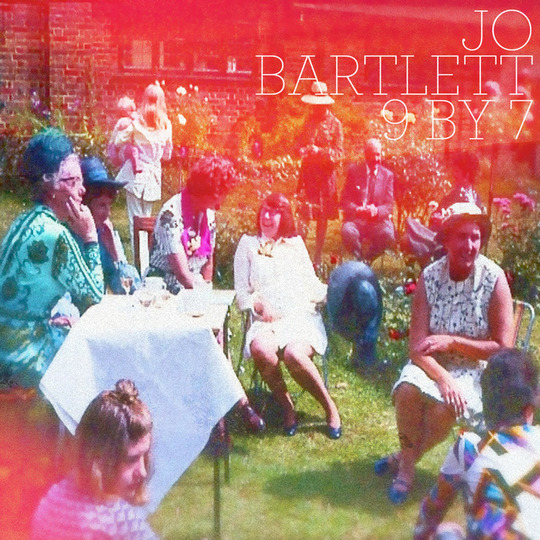
Jo Bartlett. 9 x 7. Strike Back Records

Jo Bartlett was a co founder of The Green Man Festival (held in Wales) back in 2003 and with partner Danny Hagan has released four albums as It’s Jo and Danny along with fronting a “psychedelic” instrumental band, The Yellow Moon Band. 9 x7 is her second solo album, deriving its title from the nine songs performed by seven musicians contained therein. With her past music described as “folktronica” in the press release it was somewhat disappointing to hear the opening song here, Dying Kiss, washed as it is under swathes of electronic keyboards with programmed percussion pinging and popping as if the eighties never went away. A pity, as the song and Bartlett’s voice are actually quite fine. Fortunately over the course of the album Bartlett relegates the synth like noises to the background allowing her songs some room to breathe although they never quite go away.

Measure Of the Storm has some proper strings and rippling guitars to guide it as Bartlett sets out on a folk rock voyage which has some of the urgency and dynamics of seventies folk rock about it. She repeats this on the breathless Rising To The Bait which has some rich guitar undercurrents churning under the lyrics. There’s a return to the rubber band percussion pops and synth strikes on Driven Away and again there’s a sense that unadorned this would pass muster, a feeling reinforced by the following ballad, Highway Found, which is delivered almost as if Sandy Denny were singing it and Jerry Donahue playing the guitar solo. A triumph then for this song and Bartlett follows it up with the superb instrumental Olympic which is an acrobatic tumult of strings and guitars that would not be out of place on an old Pentangle album. What Do You Say To That is a bold experiment with Bartlett’s voice echoed over gnarly guitar and insistent percussion that has its roots in John Martyn’s echoplex ruminations but it just doesn’t take flight. Advent is more successful as Bartlett revisits early Fairport territory when the Fairport’s were trying to be the UK equivalent of Jefferson Airplane or The Byrds. There’s a shimmer to the guitars, some sproinks and oinks from the electronic gizmos and a great throbbing bass line. To cap it all the album ends with the airy and billowing Suitable Drama which again bears comparison to the late Denny. Overall 9 x 7 is indicative of a fine singer and songwriter who has to decide which side of the fence she is on.

website