Gretchen Peters. Blackbirds. Proper Records

It’s surprising that Blabber’n’Smoke hasn’t featured Gretchen Peters before now. Recently inducted into the Nashville Songwriters Hall Of Fame Peters has steadily built up her reputation as a writer for other singers and a solid performer in her own right. A frequent visitor to these shores Ms. Peters returns in spring and on the strength of Blackbirds she’s well worth seeing. The album is billed in the promotional literature as being about loss and ageing following a bleak period two years ago when she attended three memorial services in short order. However Blackbirds isn’t a morbid listen, instead it’s a defiant and at times uplifting experience. This is partly down to the music here as Peters and her players (who include Jason Isbell, Jimmy LaFave, Will Kimborough, Kim Richey, Suzy Boguss and Jerry Douglas) offer some sterling country rock romps with When All You Got Is A Hammer, a song about a war veteran’s fragile state, ripping away with electric guitar and Dobro zipping about over a mandolin driven rhythm. Black Ribbons has a folkier feel with accordion added to the mandolin although there’s a bubbling undercurrent of churning guitars which add a sense of danger. This sense of danger is apparent from the opening title song which has a chunky guitar bite that recalls Neil Young’s Harvest era as Peters unfolds a grim murderous tale, one she repeats at the close of the album (on an uncredited extra track) however on this occasion it’s much starker with an acoustic accompaniment that reflects the back cover of the album which is like an alt country version of Hitchcock’s Birds.

Peters says that when writing this album she spent time listening to 70’s singer songwriters and this is apparent on the Joni Mitchell influenced Pretty Things which opens like an outtake from Ladies Of The Canyon with Peters singing “I knew a girl who said that beauty kills, dulled the pain with wine and pills, took that slow ride down the hill to nowhere.” A female chorus and reverential keyboards drape the song but the Mitchell influence remains strong throughout and this is repeated on Everything Falls Away although here the template is Blue. Again Peters embroiders what might have been a stark offering from Mitchell with swathes of chords and strings to come up with her own triumphant song. It would be unfair to say that Peters is simply channelling Mitchell and her contemporaries and this is made apparent on the magnificent The House On Auburn Street, a song that captures in words a perfect picture of a past event that left a mark. Peters sings evocatively while the musicians weave a delicate sound tapestry with brushed drums and rippling strings that recalls the groundbreaking work of Fairport Convention on A Sailor’s Life.
In a simpler vein there’s a fine duet with Jimmy LaFave on the yearning When You Coming Home while the stark piano and strings of Jubilee is akin to the best of Jackson Browne in its mesmerising simplicity and awe. The closing song, The Cure For The Pain is another simple unadorned song, perfectly executed and the most sombre note here as Peters defiantly cocks a snoot at whatever life throws at us.

Ms. Peters is bringing a band over for the first time in the UK. Tour dates here

website

Justin Townes Earle. Absent Fathers. Loose Music.

It’s coming up time for Celtic Connections and one of the highlights will surely be the much-anticipated appearance by Justin Townes Earle, indeed, his show at Oran Mor on 17th January was so swamped by demand that it’s been shifted to the larger O2ABC. Four days earlier sees the release of Absent Fathers, the unexpected companion piece to his last album, Single Mothers released only three months ago. A Yin/Yan concept of sorts the splitting of the releases reflects Earle’s own background as a child of separated parents and there is surely a temptation to hone in on his relationship with his father, Steve Earle. An eight times married man, drug addict and ex jailbird, hard enough to cope with never mind the fact that Earle senior has surmounted his own devils to become one of the most respected Americana artists around, one who regularly relates anecdotes about Justin at his live shows. With his own addiction issues to deal with in the past Earle junior could easily have got lost in some Freudian fog and crash-landed. Instead he’s one of the few rock’n’roll offspring who have made their own mark with five well respected albums under his belt allowing him to come out from under his father’s shadow.

Recorded simultaneously with Single Mothers, Absent Fathers maintains the loose country rock styled approach with just a hint of rockabilly at the edges, a step away from the swinging jauntiness of Harlem River Blues and Nothing’s Gonna Change the Way You Feel About Me Now. Despite the parental background there’s no Wainright like psychodrama here. While several of the songs reference momma’s and father’s it’s in the context of Earle’s ongoing relationship difficulties with none of the pointedness evident on Single Mothers where he sang “Absent father, is long gone now” on the title song. Paul Niehaus’ pedal steel is to the fore on many of the tracks adding to the resigned, melancholic air that pervades the album with Day And Night standing out with Earle’s guitar picking and plaintive voice floating over the keening pedal steel.

Opening with the bittersweet kick of Farther From Me with some fine guitar licks from Niehaus Earle is in fine voice, relaxed and resigned as he sings of detachment and loneliness. Why is jauntier in its delivery but again the subject is lost love. It leads to the old fashioned country lament of Least I Got the Blues which sounds like Hank Williams on downers. Call Ya Momma adds a rock beat to the mix adding up to a chunky mea culpa as Earle regrets his treatment of a partner adding a sob to his voice at the end. Round The Bend recalls the earthy R’n’B of Tim Buckley on Greetings from LA as it churns and snakes away while Someone Will Pay is another bruised and slinky rocker as Earle plots to get even with those who’ve let him down. There’s a southern soul feel to When The One You Love Loses Faith which echoes Otis Redding in its hurt and pain with Earle well able to convey this in his vocals. He wraps the album up with a solo rendition of Looking For A Place To Land, a song that is probably the most autobiographical here as he uses a metaphor to describe learning to fly at too young an age and its attendant dangers. Wishing to land despite a fear that in doing so he’ll never fly again he eventually touches down, safe despite the past. Apparently now clean and sober and in a relationship it’s safe to say that on the evidence here Earle is still capable of flying high with Absent Fathers a superb album overall.

Tying up these siblings Loose Music. have announced that Single Mothers and Absent Fathers will be released as a double vinyl set, a lovely notion that on plastic at least sees Earle’s family reunited.

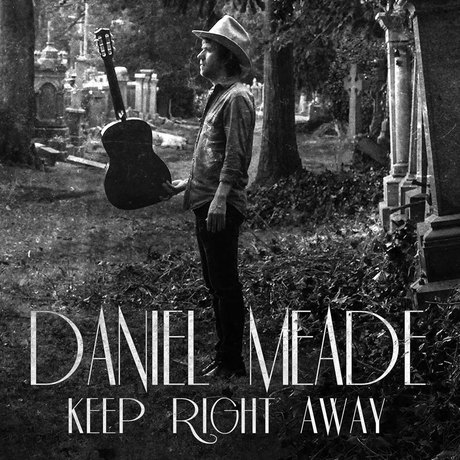
Daniel Meade. Keep Right Away. From The Top Records.

2014’s been quite a year for Glasgow based country and roots rocker, Daniel Meade. His debut album, As Good As Bad Can Be, released last year, had led to BBC Radio Scotland airplay and a video of his radio session came to the attention of Old Crow Medicine Show’s bassist, Morgan Jahnig. Sensing a kindred spirit Jahnig set wheels in motion leading to Meade travelling to Nashville to record Keep Right Away. In the interim Meade played a support slot for the then relatively unknown Sturgill Simpson and the pair hit it off with Simpson, who is now just about the hottest ticket in Country music, asking Meade to accompany him on his subsequent tour and then for Meade’s band, The Flying Mules, to play the support slot on his third and all conquering trip around the UK. To cap all this Meade is sitting at home back in October when his phone rings. It’s his new pals, the Old Crow guys. Their support act for their sold out Glasgow show is stuck in Ireland with the ferries cancelled. Could Daniel oblige? Several hours later, Meade and his guitarist, Lloyd Reid are astride the ABC stage as several thousand Glaswegians roar their approval.

You almost couldn’t make this up but it’s testament to Meade’s talent that guys of the calibre of Simpson and OCMS are first in line to recognise it. In addition his own work rate and dogged determination is now paying off. While it might seem that he’s sprung from nowhere Meade has beavered away with a past that includes a brief shot at rock stardom with The Ronelles. Hooked on The Beatles from the age of 13 he delved into the past to discover artists such as Hank Williams, Big Bill Broonzy, Robert Johnson, Muddy Waters and Jerry lee Lewis before hooking into current acts that shared his love of this music such as Old Crow Medicine Show, Justin Townes Earle, and Pokey LaFarge. When he’s not touring he can be found playing several nights a week in local bars and clubs, solo, as a duo or with a band, honing his skills. Blabber’n’Smoke can testify, having seen him several times with audiences ranging from four folk and a dog to a room of 50 folk, a hall for 500 or a concert for 2500, that he delivers every time.

Testimonial over, what of the album? True to his word Jahnig produced and conjured up a dream team including fellow Old Crow members Chance McCoy and Cory Younts, BR549’s Chris Scruggs, Joshua Hedley, fiddle player for Justin Townes Earle and Aaron Oliva. Meanwhile Meade’s long time guitar associate, Lloyd Reid, another Glasgow chap, adds his fine skills to the mix while there are guest appearances from Diana Jones and Shelly Colvin. The result is an untrammelled success with Meade delivering 13 songs that draw deep from the well of traditional American acoustic roots music with honky tonk, sad waltzes, string band stomps and rockabilly all featured. While his debut album had all these, here the bar is raised both in the writing and the performance with the players lifting it up to another level. Perhaps the best example is the rollicking country romp of Gimme A Draw with its honky tonk piano, harmonica vamps, talking blues vocals and western swing delivery. Similar in style (and content) to Smoke, Smoke, Smoke That Cigarette it swings mightily. Swing and rockabilly and at times even skiffle, inhabit the uptempo numbers here with the opening number Long Gone Wrong a classic take on 50’s rock’n’roll when country musicians were shoved into studios with quiffed young studs and Gospel quartets. Trying, Rising River Blues and Livin’ On Tootsie Time are all cracking skillet lickin’ country romps with a lick of rock and string band shenanigans thrown in with Meade particularly impressive on the tongue twisting vocals of the latter as he barn dances and barrels along and the band scoot magnificently. Meade releases the throttle to deliver Always Close To Tears which cleaves to the Hank Williams’ songbook with a fine swagger while Not My Heart Again (with Shelly Colvin on vocals) is classic Williams’ honky tonking with some fine humbucking guitar licks from Reid. The Hangman Blues is probably the song here that owes most to the influence of the Old Crow players as it twists and turns with sly slide guitars while Keep Right Away recalls The Nitty Gritty Dirt Band back in the seventies.

So far so good but the album excels when Meade gets maudlin and weary. Sometime’s A Fool’s The Last To Know is a tears in a bottle, Charlie Pride like, countrypolitan lament, Always Close To Tears could have come from the George Jones songbook while Mexico‘s accordion colourings remind one of Freddy Fender. The jewel here is the astounding duet with Diana Jones, Help Me Tonight, as Meade visits saloon bar territory with tacky piano stuttering along to this wearied love song that stands tall against comparisons to the great country duets with an antebellum feel and a sepia stained sound. Finally we need to mention Meade’s tribute to his forebears on Sing It Loud, a very fine loose limbed and fiddle laced shamble of a song that nails his colours to the mast and harks back to the outlaw country days.

Keep Right Away is released in January and already it’s looking to be one of the top albums of the year, certainly from a home raised musician. Meade will be touring in support of the release and the dates are here. In the meantime local folk should check their listings as it might be that soon enough Mr. Meade might not be so local if things go well for him.

The Primevals. Tales Of Endless Bliss. Closer Records

Back in 2011 Blabber’n’Smoke reviewed The Primevals‘ “comeback” album, Disinhibitor describing the band thus, “wired to the mainframe, sucking from the teats of The Cramps, The Gun Club, The Saints and Mike Wilhelm’s biker rock with a healthy dose of Captain Beefheart and some free jazz from the likes of Sun Ra and Pharaoh Saunders included”. They followed this with 2012’s Heavy War, another blitzkrieg of ferocious and trippy garage rock which saw the band digging into the grooves of bands such as The Seeds and the Doors with a healthy sneer and a ton of attitude. Live, the band turn in a breathtaking set that is literally visceral as their sheer noise attack assaults the ears and gut, feedback squalls and twin guitar combat rendering the listener helpless leaving their body like jelly on the bone. This aural attack continues on Tales Of Endless Bliss which, and it almost goes without saying, is best listened to loud. The Primevals have had one major lineup change since the last album with bassist John Honeyman leaving the fold. His replacement, Ady Gillespie mans the four strings here but it’s neat to see that Honeyman remains involved credited with backing vocals on the album.

And what of the album? Well, to paraphrase Bette Davis in All About Eve, “fasten your seatbelts, It’s going to be a bumpy ride.” From the start The Primevals take us on a rollercoaster ride with the thrills and spills supplied by some magnificent riffs, audacious key changes, pell mell rants and mind melting freakouts. Towering above this maelstrom is singer Michael Rooney whose vocal swagger exudes a cool sense of sang froid. There’s a languid menace in his voice, a mix of Robert Mitchum’s evil preacher, Iggy Pop’s glower and Lux Interior’s abandonment. Caged within the band’s swirling and mesmeric chaos Rooney rises to the occasion throughout while adding to the mix with some demented harp playing and snakelike alto sax on Crisis A-Go-Go.

Tales Of Endless Bliss is a short album, less than 30 minutes (and some folk will argue that’s the perfect length for a prime slice of vinyl) but within those minutes the band tackle pile driving Cramps’ like sleaze on Pink Cloud, freakbeat blues on Tell It Now (which flies into the stratosphere towards the end), Creation like pop art noisenik on You’re Not Here Now (with drummer Paul Bridges pummelling away and the guitars going apeshit). They even throw in some Texan psychedelia on Re-Frame It which channels The 13th Floor Elevators but despite the obvious forebears there’s no doubt here that The Primevals are a band that, while rooted in the rock’n’roll family tree that leads to leather, cult, garage and punk, are well able to stamp their own personality. If this lot came from Detroit they’d be legends.

website

Various Artists. Look Again To The Wind. Sony Masterworks

First thing to say here is that Look Again To The Wind is a perfect Christmas present for anyone who has any interest in American country music. Like the soundtrack to Oh Brother Where Art Thou it’s crammed full of excellent songs, excellently played by some of the best artists around. As a concept it’s interesting, as an album it’s little short of magnificent.

The album is a recreation of Johnny Cash‘s 1964 LP, Bitter Tears: Ballads of The American Indian. The original shows Cash at the cutting edge of the civil rights movement, the Civil Rights act was published that year in response to coloured Americans battles against segregation but Native American Indians were still primarily seen as fodder for John Wayne’s cavalry. Cash set out to highlight their cause although it’s not a political set as such. With five tracks penned by Peter La Farge, two by Cash himself and one by Johnny Horton (writer of The Battle Of New Orleans) it celebrates a culture while highlighting injustice such as on its most famous song, The Ballad Of Ira Hayes or the dangers of miscegenation as on White Girl.

Look Again To The Wind was produced by Joe Henry who picked the artists for the album, in particular Gillian Welch and David Rawlings who appear on several of the songs. Norman Blake, who played on the original, contributes as does his wife Nancy while Emmylou Harris, Steve Earle, Kris Kristofferson, The Milk Carton Kids and Rhiannon Giddens (of The Carolina Chocolate Drops) all perform. As such the delivery is impeccable, the songs transformed from the rough-hewn Cash originals into intricate tapestries with hints of bluegrass and country. Kristofferson towers on Ira Hayes while Earle offers a fine talking blues dissection of Custer. Nancy Blake, Emmylou Harris and Welch are delightful on The Talking Leaves while Giddens wails wonderfully on The Vanishing Race. The highlight however is the nine minute version of the opening title song of the original LP by Welch and Rawlings which opens here and almost spoils the album as it begs to be repeated as soon as it’s ended.

The track list follows the original with three exceptions. Apache Tears and As Long As The Grass Shall grow are reprised towards the end while another of Lafarge’s Native American songs, Look Again To The Wind, not featured on the original, is sung by Native American Bill Miller, a valedictorian statement that closes the album on a poignant note.

you can hear Gillian Welch and David Rawlings sing As Long As The Grass Shall Grow here

Red Dirt Skinners. Live At the Blue Lamp, Aberdeen.

Billed as an “official bootleg” and recorded in Aberdeen in July, Live At The Blue Lamp is a fine addition to the catalogue from the award winning married couple, Rob and Sarah Skinner, who have the distinction of being feted by both the blues and country fraternities. With Rob on guitar and drums and Sarah on sax and blues harp with both singing they inhabit a country blues world that in the UK started off with skiffle before being taken up by the beatnik community who all moved to Cornwall singing Josh White and Jesse Fuller songs. While Chicago heat was the primary fuel that fired the 60’s blues boom bands like McGuiness Flint and even Mungo Jerry kept the skifflish side alive. Live it seems the Skinners sit on this side of the fence with the sax adding a Dixieland touch to several of the songs. The album features songs from all of their three studio albums and while the “warts and all” one take capture means that the sound is slightly on the harsh side with the spoken introductions to the songs booming somewhat it does convey the sheer sense of fun and enjoyment that the band bring to their audiences almost as if this were a hootenanny.

They set up their stall on the opening Cornbread, Peas and Black Molasses which features the pair at their best, harmonising well while the song sashays with a Southern spiritual swing. Up All Night is more of a holler with a stomping beat while Girl In A Truck takes on the stereotypical chest beating bro country formula without the bombast with Rob declaring he doesn’t want a girl all dolled up, just a girl in a truck. There’s an odd detour next as they deliver a cover of Bowie’s Space Oddity, admittedly a very fine cover but at odds with the surrounding material. They also cover Dylan’s Forever Young which does fit into the canon but one gets the impression that these are primarily opportunities for Sarah to shine on the sax (she did win Instrumentalist of the Year at this year’s British Blues Awards) and it’s telling that both covers pale in comparison to the rest of the album.

Able to be tender on the likes of Lay Me Down they can also stoke the fires with a rousing Got My Mojo Working with Sarah channelling the last of the red hot mamas on breakneck sax and throaty vocals while Stuck is a sassy spurned lover rant. They close the album with the very fine countrified Browns Ferry Blues and the risqué romp of Hot Tamales which allows Sarah Skinner plenty of space to vamp on the sax.

website

Jason McNiff and The Lone Malones. God Knows Why We Dream. Tombola Records

Being a Yorkshire man of Irish and Polish descent is as good a reason as any for anyone to get into Americana and for Jason McNiff its produced results with his 2003 album, Nobody’s Son, voted Americana UK album of the year while April Cruel was nominated in the category of best alt-country album at the US Independent Music Awards in 2011. God Knows Why We Dream is his sixth release and his first with current band The Lone Malones who feature Polish fiddler and accordionist, Basia Bartz along with Neil Marsh of Ahab on drums and John Nicholls on bass and production duties.

McNiff sings with a whisper in his throat, a voice that has in the past occasioned comparisons to Dylan circa the Basement Tapes but here his light tenor comes across as more vulnerable, straining at times to keep up with the deft playing and arrangements. If one were to make a comparison to Dylan and The band it would be the spare but sprightly Planet Waves that you would reach for with McNiff’s lyrics the primary pointer as opposed to his singing.

The album opens with the wistful The Picture, Mcniff’s voice and guitar picking to the fore before the band weigh in and the song picks up some steam with Bartz’s fiddle adding a fine counterpoint to the gently swelling guitars. Throughout the album there’s a fine balance between country and folk with some hints of rock when the guitars break through especially on A Different Word which also features a haunting cornet played by Dan Kent. The scrabbled guitar flurries add a dark air to this plaintive love song while the coda features a solo that reaches to the heavens reflecting McNiff’s words “Looking at the stars tonight, there’s something strange, the billion and one stars, they don’t spell out her name, anymore” Brockdish wanders into Neil Young Stray Gators territory with its stumblebum guitars and prickly fiddle while Heart Of A Poet breezes along with gypsy fiddle and a galloping rhythm. While McNiff can do confessional such as his paean to L. Cohen on Thanks Leonard he’s able to offer the flowing Shy Truth and Before I Lose You, crammed full with rippling guitars and soaring fiddle that has a whiff of Mike Scott’s Waterboys about it (along with a sly reference to The Hobbit) . However the album’s crowning glory is the almost symphonic Game Over with Bartz’s fiddle swelling as McNiff takes to piano for a haunting ballad that has the pathos of Alex Chilton allied to the chilly dissections of mid seventies John Cale. A magnificent song.

website

Jingle Balls. Mr. Plow, Llewellyn & Kristin, Jim Byrne, The Lost Brothers Christmas music

Well it’s December so it’s safe to mention the C word. For the next four weeks it’s jingle all the way downhill as we get bombarded with “cute” adverts from mega million stores itching to squeeze more money from our pockets and have to endure endless loops of schmaltzy Xmas muzak in shops which are far too full of other people. Bah Humbug indeed. On the music side there’s a well-drilled and finely honed canon, chestnuts roasting and all that, fodder for the folk, the stuff of Christmas specials, funny pullovers and fake snow with some Slade thrown in for the “youngsters” which you can buy on any number of CDs with titles such as Now This Is Christmas Vol. 2014.

As always there’s another side to the coin and while for a time this Christmas underbelly was composed primarily of comic or smutty ditties, over the past few years there’s been a veritable outburst of reasonably fine Christmas songs. Along with this a wealth of blogs spring up around this time pointing folks in the direction of the darker side of the season with Blabber’n’Smoke’s favourite being Big Rock Candy Mountain who delve deep and bring up some astonishing items. Anyway, all of this is just a way of introducing some Christmas music that’s been sent in for review, so eggnog in hand (what on earth is eggnog?) here we go.

Mr. Plow weighs in with the grim noire of The Greatest Christmas Ever Seen that features some festive tropes, mentions of snow and percussion that is faintly reminiscent of sleigh bells, that identify its Christmas status but there’s no Ho Ho Ho here as he tells a tale of domestic violence, a woman battered as “the tills rang out their joyless greed.” Gabi Monk of The Good Intentions harmonises on vocals as the deadpan lyrics describe a Christmas of ambulances and hospital. It’s not going to be number one in the festive chart but all of the proceeds from sales are going to Refuge, a charity that supports victims of domestic violence. Available as a download there’s also a very fine and limited vinyl edition (with cool snow coloured vinyl) available from Pink Box Records that has an excellent wearied rendition of Away In A Manger on the flip side.

David Llewellyn & Ida Kristin offer up their reading of Christina Rossetti’s In The Bleak Midwinter, the song that has snuck Bert Jansch into many a home via numerous commercial Christmas compilations. Llewellyn & Kristin stay true to the familiar arrangement with its wintry air and old-fashioned Dickensian Christmas feel while they both sing well. The pair have their debut album, Songs Around The Kitchen Table out soon but in the meantime you can buy In The Bleak Midwinter here.

Glasgow songwriter, Jim Byrne download only For We Are Born To Doubt is a cracker (sorry) of a song as Byrne hymns the Cartesian way of life with some festive trappings such as a music box melody and heavenly choruses (provided by folk singers, the Linties). Towards the end Stuart Miller of The Linties speaks the chorus with a wonderfully couthy Scots tongue, reminiscent of Ivor Cutler that caps the song with a flourish. Expect to hear the likes of Iain Anderson and Tom Morton playing this in the next few weeks. For We Are Born To Doubt will be available from December 10th here

Finally (and capping a trip around the British Isles with England, Scotland, Wales and now Ireland all represented here) The Lost Brothers have Little Angel, another download only single which captures perfectly their wonderful Everly like harmonies on a song that is the most “Christmassy” one on offer here. It floats along like that flying snowman and evokes that simple sense of wonder and goodwill that films such as It’s A Wonderful Life manage. With brass flourishes building up towards the end it’s a song that will warm the cockles of your heart if you’re not a real curmudgeon. Little Angel is free to download but The Losties are asking folk if they can to donate to UNICEF via a link on the download

M. Lockwood Porter. 27.

Maybe it’s just a geographical coincidence or laziness on our part but when we listened to M. Lockwood Porter’s album 27 we were reminded almost immediately of Porter’s fellow Oklahoman, John Fullbright. Fullbright has blossomed into one of the best songwriters about these days with his arrangements and delivery recalling masters such as Randy Newman and Jimmy Webb while his songs hit the same nerve as the likes of Townes Van Zandt do. Porter lurks around the same territory with his songs tightly arranged, sprinkled with a touch of Americana (with pedal steel ornamenting several of the songs) but at his best he also recalls premier league songwriters with his song Secrets a meltingly wonderful confection that conjures up Brian Wilson’s vulnerability and wraps it in a Big Star production.
Big Star are revisited on the ode to Alex Chilton’s compadre, Chris Bell. Tributes to other writers, particularly dead ones can come across as mawkish or at worst, a tick box exercise but Porter manages to marry an excellent Neil Young type shuffle to an affectionate and worthy tribute to Bell that swells with emotion. It’s of note that the album title, 27, is Lockwood’s current age and also the age at which Bell and several other rockers died leading to the notion of the infamous 27 club.
Lockwood describes the album as “half break up, half quarter life crisis.” He looks back to his early years on the clamorous and percussive Mountains, describing his conversion to rock’n’roll almost as a religious experience. Different Kind Of Lonely harvests the sound of The Band on an organ kicked roustabout that sways and swaggers with a drunken joyousness while I Know You’re Gonna Leave Me celebrates rock music with a tremendous dynamic, part piano confessional, part soaring guitar, it recalls Wilco on their Being There album, superior pop rock which builds to an exciting climax. In addition there’s the mayhem of the Jim Steinman rockandrollrama of Restless that leaves the listener breathless and the more intimate There To Here that allows Lockwood to bare his soul for an instant. All in all a tremendous album.

website

Ten Gallon Bratz. Tales From The Long Shadows

Been a while since I heard from Ten Gallon Bratz, a band I reviewed for Americana UK back in 2006 but you can’t keep a good man (or band) down and Tales From The Long Shadows is a world away from their first tentative steps. Hailing from Greenock the Bratz are of a certain vintage that probably allows them to look back with some fondness to what passed for country rock back in the days before alt country kicked in. Their sound certainly reflects the likes of Poco, Guy Clark and the Eagles while there’s a Celtic tinge to some of their songs with Same Old Song seeming to come from time spent listening to The Waterboys.

A five piece band with three guitarists on board, they open the album with the guitar heavy stomp of Nothing Left To Say as the acoustics flail away and the electric guitar riffs in a Big Country style. It’s a big bold statement but in terms of the album somewhat misleading as what follows is more nuanced and dare I say, more interesting. Personally I’d prefer it at the end but there’s no doubt that it’s destined to be a crowd pleaser. The guitar crunching side of the band is revisited on the burnished bruise that is Fish Out Of Water, a shimmering groove that doffs its hat to Chris Issak and Jace Everett with its air of menace. For the remainder however the band allow their harmonies, allied to some fine picking, to showcase their talent and it’s here that that we find the heart of the band, one they offer live as testified some weeks ago when we saw them open for The Howling Brothers. While there’s a Ronnie Lane feel to the shuffling strut of Too Far Gone the band are at their best when they hunker down in their vision of American roots music. The addition of pedal steel by Iain Sloan (Wynntown Marshals) and fiddle (Alison McNeill, Reely Jiggered) fleshes out the sound on a slew of songs that drink deep from the Americana well. New King In Town has some very sweet and sorrowful Dobro and pedal steel flourishes as a relationship breaks down while All Fall Down swells musically despite the downbeat story. Brand New Old Fashioned Blues is a terrific tear stained lament with weeping pedal steel while Who’s Left To Save The Working Man delves into Steve Earle and Bruce Springsteen territory in their stripped down Woody Guthrie guises. Here the Bratz strive to celebrate and commiserate with the downtrodden and they succeed as they really nail it here.

website