Cahalen Morrison & Country Hammer. The Flower Of Muscle Shoals. Free Dirt Records.

Regular readers will know that Blabber’nSmoke are huge admirers of Cahalen Morrison and Eli West whose three albums have been superb bare boned distillations of what one might call the high church of Americana. Their pure and simple sound of acoustic instruments allied with lonesome voices recalls the pioneers of country music and the land around them. Tradition just about sums them up (while at the same time selling them short as they are as current as any of the big Nashville hitters). Cahalen Morrison continues in this vein with this offshoot release, The Flowers Of Muscle Shoals, recorded with his band Country Hammer. While Morrison & West are rustic, hewn from the ground, here Morrison moves into the city and finds that musicians are plugging in, adding some swing, finding honky tonks to play in, adding some Western to his Country. It still sounds as old as the hills but this time the audience are not on a back porch, more likely they’d be huddled around a radio catching static and occasional Grand Old Opry airwaves. The Carter Family have given way to Hank Williams.

Morrison is ably assisted in this venture by the magnificent Country Hammer, a country super group of sorts with Jim Miller and Rob Adesso on Telecaster and harmony vocals, Ethan Lawton on drums, Mary Maass on fiddle, Country Dave Harmonson on pedal steel and Michael Connolly on bass and accordion. Together they offer tear jerking ballads such as Through Your Window which limps along as if it’s four in the morning and the band are still playing for the last couple on the dance floor rebounding from the earlier fiddle led heartache of Over And Over And Over Again and the desolate I’ve Won Every Battle And Lost Every War, a magnificent lament. There’s more heartache albeit with a jauntier step on Sorrow Lines The Highway Of Regret, some Honky Tonk heaven here and they continue in this sweet and sour vein with the rousing Our Love Is Like A Hurricane, fiddles flying and guitars fatbacking in the best Western Swing tradition. Morrison’s vocals are stained with a sepia soak, at times recalling the late Levon Helm, and when they launch into the Cajun influenced San Luis one could be forgiven for thinking this is a Band outtake.

Essentially The Flower Of Muscle Shoals is one of the best albums we’ve heard this year and it is heartily recommended.

website

Ash Gray. Once I Got Burned.

Our recent Indian summer was an opportunity to listen to some “sunny” music and going through some CDs I noticed that Texan Ash Gray’s debut album was still in the pending file with its release date well and truly missed. Fuzzy recollections of a first listen to the album were of some shining pedal steel, reason enough to bang it back into the CD player and give it another go. Fortunately a fine decision as Gray’s songs are of a sunny type, not so much in the lyrics but the winsome acoustic guitars, the deceptively care free delivery and, yes, some shining pedal steel is definitely the sort of music you would want wafting around as you laze on a porch or in a garden sipping something cool and with the sun shining late last week we did just that.

Of course there’s little point in recommending a summer album just as we head into the darker nights but this isn’t the Beach Boys and Gray’s light tenored voice and the overall excellence of the majority of the songs here are just as well savoured indoors particularly the honky tonk styled Whiskey Down and the beguiling Needlecase which comes across somewhat like a meet up between Ray Davies and Neil Young. There’s some power pop brashness on 55 which recalls Tom Petty’s early offerings with jangling guitars galore while Waiting For The World sashays between cantina culture (courtesy of some very fine acoustic guitar from Paul Caruso) and portent with its Dylanesque lyrics.

The opening title song is another poetic piece stuffed full of fiery imagery but Gray really gets into gear with the following Two Lane Blacktop, a ramshackle ride of a song that has the looseness and vibrancy of Uncle Tupelo as the guitars corkscrew their way through a classic road song. Santa Fe Sound on the other hand swells with the aforementioned pedal steel soaring over and around the vocals with Nina Murphy harmonising with Gray. There’s a folky element to Fiddler’s Son which showcases Gray’s own fretwork as sparks fly from his acoustic guitar in a manner reminiscent of Bert Jansch, a feat repeated on the country blues of Black Muddy Woman where again his guitar playing stands out.

website

Santa Fe Sand

And here’s a video from a few years ago

Girls Guns And Glory. Good Luck/ Sarah Borges. Radio Sweetheart. Lonesome day Records.

Boston band Girls Guns And Glory are one of those hard working, hard touring bands who are the bedrock of roots rock in the US. Stolid and dependable they’re probably not going to set the world on fire but their past releases have been fine slabs of roots country rock and with Good Luck, produced by Eric “Roscoe” Ambel, they’ve come up with their most adventurous album so far. Years of touring have been the equivalent of daily workouts at the gym with the band now toned and able to rip out country, rock and blues while barely breaking sweat in a similar fashion to the likes of Jason And The Scorchers in their heyday.

The ten songs here are all top notch cuts. Delivered with a swagger and, on occasion, some ferocity they range from the halting ballad One of These Days to the switchblade blues of Built For Speed which recalls The Fabulous Thunderbirds. C’Mon Honey is a turbo charged Eddie Cochrane meets the Ramones thrash while while It’s Your Choice gets all Springsteen on the listener as the band rev up and show off their muscles. There’s more muscle on the horn driven Be Your Man and a time trip to the greasy fifties on Shake Like Jello which features an absurdly deranged guitar solo. The stand out cut is the opening song, All The Way Up To Heaven, a multi layered country rock song that marries acoustic and electric instruments and trots along wonderfully.

Good Luck is a fine album that benefits from listening with the sound turned way up with Ambel’s production capturing the band’s sound. It’s tempting to guess what they sound like live and fortunately (for some folk) Girls Guns And Glory have a short UK tour coming up in October although there are no dates north of the border. That’s a real pity as they are touring with fellow Bostonian and now label mate Sarah Borges who also has a new album out. Radio Sweetheart is Borges’ solo debut following the breakup of her backing band The Broken Singles and was originally crowd funded before Lonesome Day Records picked it up. Borges is an Americana femme fatale with a fantastic voice and a fine sense of the melodrama of Roy Orbison and his twilight cousins as imagined by David Lynch, she’s like the older and more “experienced” sister of Neko Case. Radio Sweetheart, despite the loss of The Broken Singles is another hard hitting rock swoon with tons of twang guitar, one foot in the fifties, one foot in the future. It smacks you in the head like a gutter punk hanging outside an off license, slicked hair and menace trying to bum a drink.

Produced by Steve Berlin, Radio Sweetheart belies its retrograde faux fifties Technicolor cover art as Borges instead dives into neon dreams and nightmares for the most part. There are some uplifting songs such as The Waiting And The Worry, a sprightly and tightly arranged pop song that is delivered with a heavy nod to NRBQ to the extent that Terry Adams plays piano on it. NRBQ’s quirky take on melody and rhythm surfaces again on the reverb drenched and skewed bar room swing of Heavy Dreams, a cover of a Lloyd Price song where Borges adds some oomph to the nth degree with her gutsy voice up front as guitars buzz with an exhilarating sense of menace. There’s a sassy southern rock come on on Girl With A Bow and a rare tenderness, albeit with an edge, on the title song but the best moments here are when gutsy guitar and gusty vocal collide. Think Of What You’ve Done approaches Muscles Shoals level soul drama while there’s a mighty clusterfuck on Mind On Me and Hands On Knees is muscular as hell.

Borges is touring with Girls Guns and Glory in October. Dates here

Daniel Meade. Long Gone Wrong/ Help Me Tonight

Blabber’n’Smoke first encountered Daniel Meade when he played a fine set in support of Sturgill Simpson at Glasgow’s Admiral Bar back in February. He was impressive, a Woody Guthrie meets Guy Clark sort of guy dressed in mod threads. His encounter with Simpson was fortuitous as the Kentucky singer, riding high on reviews of his tremendous Metamodern Sounds In Country Music, took a shine to Mr. Meade with the end result being that he and his compadre Lloyd Reid were invited to act as the defacto Simpson band on the man’s next UK tour playing some illustrious dates. Next month Simpson’s bringing his own band over for his next tour but faithfully has Meade supporting him on these gigs.

In the interim Meade’s been busy with an opportunity to record in Nashville and the first fruits of this have been unveiled on a download single available from this week. The results confirm that Meade has his finger firmly on the pulse of classic rootsy country folk with both songs impressive indeed.

Long Gone Wrong is a classic rockabilly thrash in the original sense. No turbo charged twang guitar here but rollicking fiddle and harmonica, dynamite piano, scrubbed guitars and Jordonaires like hollers add up to a fine collision of Lonnie Donegan and Joe Ely. It’s raucous and it rocks like a wildcat. Help Me Tonight is the flip side of the coin (and the record) as Meade visits saloon bar territory with tacky piano stuttering along to this wearied love song that is graced by the addition of the wonderful Diana Jones who duets with Meade on a song that stands tall against comparisons to the great country duets with an antebellum feel and a sepia stained sound. Hopefully there’s more of this to come.

Daniel Meade Facebook

buy it here

Adam Cohen. We Go Home. Cooking Vinyl.

Cards on the table straight away. Adam Cohen is the son of Leonard Cohen. Might not be fair to instantly tar him with this association but Adam seems happy to remind folk of it throughout the album with allusions to Hallelujah and First We Take Manhattan in his lyrics and what appears to be a picture of an infant Adam with dad on the rear cover. So primed, the listener is on the lookout for similarities and there are moments here and there when Adam does recall Leonard vocally but more so in mannerism and delivery. Unlike fellow travellers, Rufus and Martha Wainright and Teddy Thompson, Cohen junior was in his late thirties before he made a mark on the world. His early recordings were unheralded and a serious crash derailed him for a while before he left music aside for several years. 2011’s Like A Man however saw him accept and embrace his paternal lineage and was well received. We Go Home is much in the same vein, and casting all thoughts of the father aside for a moment it stands up well on its own two feet but ultimately there’s no denying that Adam is following in Leonard’s footsteps.

The songs are for the most part simply arranged, acoustic guitar or piano with minimal rhythm section, a female chorus and occasional strings. The more successful songs are those delivered with the minimum of melodrama, Cohen seems to like dynamic changes in melody and mood and this leads to a song like Love Is where he comes across like a tasered Neil Diamond. Fortunately this is a one off and he manages to curtail the drama of What Kind Of Woman to an acceptable level although he ends up sounding like dad circa New Skin For The Old Ceremony.

As we said his simpler melodies are the best and the opening Song Of You And Me is a warm and affectionate paean to love while Too Real is a very fine love song that hovers between Dobro flavoured country funk and string adorned confessional. We Go Home is an up tempo sing-along number with scrubbed guitar and catchy chorus that perks up the album before Put Your Bags Down weighs in, one of the more portentous numbers here and begging to be considered as an offloading of emotional baggage. So Much To Learn is sprightlier, an attractive and simple acceptance of his heritage and so much the better for it while Fall Apart directly addresses the father-son relationship Cohen has experienced and here he offers a finely tuned summary of his life in an attractive setting with a fine degree of acceptance on a song that would sound fine on a Bill Callahan album, quite lovely. Cohen signs off with the short and simple Boats, a string fuelled miniature that throws up the notion that this album could more accurately have been titled A Voyage Round My Father.

website

Mr. Plow. Not The Beginning, Not The End. PinkBox Records.

Third album in from the Midlands based murder balladeers, Mr. Plow finds them in fine form, gleefully documenting murder, mayhem and madness in their Gothic version of America, a land peopled by religious monster truck drivers, cocained cowpokes and grim amputees. They deliver this in a manner similar to The Handsome Family, sardonic wit, deadpan delivery and with a slightly spry step to the music. It’s no surprise that the band are popular at festivals as all the songs are gripping stories which the audience would savour. On record (and this is a vinyl release folks) the listener might miss the opportunity to join in on a mass tribute to the American art of death but there’s plenty here to enjoy.

Satan Wandered In opens the album with a Gospel flavour seeming to come from a possibly bleary-eyed Pastor regretting a night on the tiles and promising to get back on the straight and narrow. Dwight’s Roadside Grave, current favourite here, is a sweet sounding pedal steel embroidered country song could be a white trash movie script summary. The opening lines “I’ve never seen my Mother quite so happy/since Daddy smoked his crack pipe to the grave” set the scene for mean Uncle Dwight’s entrance. His comeuppance is tearfully and gleefully described. Excellent stuff. Bo Diddley Memorial Blues scoots along with boastful gloats worthy of the old gunslinger himself while snarling guitar cracks away. Jesus Loves Monster Trucks really doesn’t need any description, suffice to say that the spirit of Commander Cody is in the crankshaft here. There’s a sidestep into serious territory on Tango Para El Tigre Cautivo, a powerful dig at keeping animals in captivity which is leavened somewhat by the exotic delivery, a Tav Falco flavour twanged tango.

For the rest of the album it’s back to death and doom with Bag Of Bones a Kristofferson voiced suicide note with rippling guitars, Columbian Cowboy’s Roundup Time a clip clopped mash up of Gene Autry and Dennis Hopper both of whom would have had a silver spoon hung from their necks here. The album ends with the stripped back and folky Lonely Cold Waltz where Mr. Plow morphs into Johnny Cash in his latter days as he describes a wreck on the highway although we don’t know if anyone prayed.

So there it is. 40 minutes of killing fields, death and redemption. Lovely stuff indeed. Not The Beginning, Not The End is available on limited edition vinyl (with a CD thrown in) here or as a download.

website

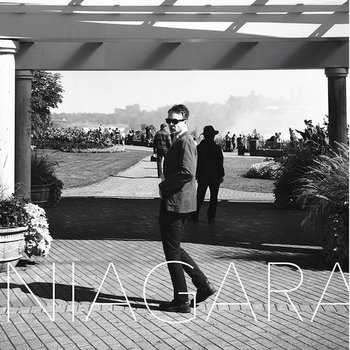
John Southworth. Niagara. Tin Angel Records.

We love mavericks here at Blabber’n’Smoke and Canadian John Southworth certainly fits into that category. Previous releases include an album of rejected jingles (Failed Jingles for Bank of America & other U.S. Corporations) and Easterween – a surreal cabaret-operetta described as “Part klezmer, part Weimer-era cabaret, part acid trip in the basement of a Transylvanian pub.” Who could resist that? A listen to some of the songs from these projects reveal an artist who is a wee bit Jeffrey Lewis, a wee bit Michael Marra, a weird combination indeed but one that might give you an idea of his sly genius and especially his way with words.

Niagara is of course the famous falls that constitutes part of the border between Canada and the USA and Southworth has lighted on the concept of issuing a double album composed of a Canadian side and an American side saying “each side is a simultaneous interpretation of the same crisis” adding that the Canadiana-leaning tracks are “spacious, numinous, Scorpion and evergreen,” while the U.S.-inspired back half is “unhinged, noir, mythical and metallic.” So there.

I reckon that Southworth is being more mischievous rather here than hoping to deliver a definitive statement exploring the sounds and psyches of both sides of Niagara but I could be wrong. What he does do is deliver 20 songs (nine Canadian and 11 American) accompanied by his band, the South Seas, that are very accomplished with his lyrics somewhat gnomic while the music ranges from jaunty piano led pop, smoky jazz lounge loucheness and tender wounded confessionals. If there’s a distinction between the two discs then it might be that the Canadian side has a more wintry feel, there are moments when one can imagine snowflakes falling on the keyboards, while the American side is neon lit and more assertive. Whatever, both sides are stuffed full of songwriting gems with Southworth’s lyrics always interesting, his frail yet arresting vocals captivating and the music wonderfully arranged.

There’s Jacques Brel inspired chanson on Niagara Falls Is Not Niagara Falls, brass band tomfoolery on Fiddler Crossed The Border, dappled folk on Folk Art Cathedral, pulsating power pop on Hey I Got News For You, skewed wordsmithery on If It Doesn’t Please The Gods (a song that so recalls Nilsson and Paul Williams), Brian Wilson melancholy on Loving You and a fantastic swoon of a song on She Is My Niagara Falls that is nothing less than hypnotising. With 20 songs to choose from the current favourite is Womb Of Time that to our mind encapsulates the album. Innocent on the surface with a dark underbelly and lyrics that are childlike and repetitive its heartbeat pulse captivates and enthrals but we’ve only scratched the surface here as the album deserves to be savoured slowly.

Southworth has some UK dates lined up later in the year, see here including an Edinburgh date on November 3rd.

website

Larkin Poe. Kin. RH Music.

Over successive releases there’ve been clues here and there that the Larkin Poe sisters duo ( Rebecca and Megan Lovell) have had a bit of a yearning to cast aside their acoustic beginnings and rock out somewhat. Their set of seasonal themed EPs back in 2011 were primarily acoustic but there were hints of Fleetwood Mac AOR in songs like Fall From The Trees. Thick As Thieves featured some rocking guitar and even a riff on Celebrate while our review of their album recorded with Thom Hell, The Sound Of The Ocean Soundremarked on their pursuit of what we thought was a bland stream of rock tailored for daytime radio.

Reviews of their recent July gigs remarked on a rockier approach and this is reflected here. Gone for the most part are the country tinged acoustic songs, instead the emphasis is on Megan’s bluesy lap steel playing amid a highly percussive beat with the sisters’ vocals tougher and more aggressive. The problem is that in the main the songs are dull and repetitive, rock fodder which fails to nourish. There are moments which succeed with the opening song Jailbreak kicking off like something from Tom Petty while the lap steel growls with menace. Stubborn Love floats aloft on sleek guitar lines and the sisters’ excellent harmonising as they briefly abandon their “rock chick” voices and they repeat this on the very fine Crown Of Fire which harks back to earlier recordings. Jesse has all the elements required to make it a live favourite, soaring guitar work and a murder ballad storyline but here the kinks, which would give it some authenticity, are ironed out.

Unfortunately these songs are surrounded by the workmanlike rifferrama of songs like Don’t and Sugar High while Elephant is simply embarrassing. It remains to be seen if they pursue this route or having got the rock fever (at least there are no cowbells) out of their system they return to a simpler approach.

website

Marianne Dissard. The Cat. Not Me. Vacilando ’68 Recordings.

Fans of Giant Sand and Calexico should need no introduction to French singer and cinema auteur, Marianne Dissard. Director of the Giant Sand flick Drunken Bees and Joey Burns’ femme fatale foil on The Ballad Of Cable Hogue Dissard moved to the States in her teens when her parents relocated eventually putting down roots in Tucson in 1985. Aside from her appearance on Calexico’s albums Joey Burns composed much of the music on her 2008 album L’Entredeux while L’Abandon was a reaction to the breakup of her marriage to Naim Amor, another continental import to the Tucson music scene. Both albums featured Dissard’s odd combination of French “chanson” and dusty Tucson Americana, odd indeed but a sound that reflected the European influences on the likes of Calexico with their Morricone inspired vistas and harked back to the kinship shared by Lee Hazlewood and Serge Gainsbourg, two artists who knew the alchemy of putting a sensual female voice over an impressionistic musical canvas.

Dissard decided to return to Europe last year but not before she recorded this, the third in her “Tucson trilogy.” On this occasion she recruited Sergio Mendoza from Tucson’s Y La Orkestra to write the music while Giant Sand’s Thoger Lund adds to the mix. The result is perhaps her most successful album to date, luxurious in its sumptuousness, molasses of music poured over her provocative voice as she bridges the Atlantic with some twang here and Bal-mussette there. There’s an analogue buzzing noise right at the beginning before Dissard leads us into the beguiling Am Letzen, a dreamy drifting ballad with multitracked vocals and a muted Nick Cave feel about it. With lyrics in French and German the European feel is also reminiscent of the Prague influenced Walkabouts. The spell cast is broken with Mouton Bercail, a neon lit rain slicked highway ride with spangled guitar bursts that sounds as if it sprang from a Davis Lynch movie. Loosely translated as Sheep Pen, O level French denies this listener the opportunity to understand Dissard’s urgent vocals here but the translation reveals lyrics that fit the lurid underworld suggested by the music such as ” I’ve done so many motels and basements/I’ve wasted so much time/so many dumps and shitholes/drooled so much blood/done so many fucked up things/made so many promises.”

Pomme lightens the mood somewhat with it’s childlike chorus before Je Ne Savais Pas hoves into view with vituperative lyrics and Gothic drama which would give the late Nico a run for her money. On Torture Dissard updates Serge Gainsbourg’s misanthropy singing “a tunnel with no lights, no smells and I walk barefoot in the mud under vaults that hang down. On the ground, soiled bodies, and cockroaches on the walls and rats that copulate under the drops.” Keyboard, horns and mellotron add to the melodrama. Election soars somewhat with snarly guitar solos and at the end a snapshot of La Marsaillaise on wheezy accordion. Salamandre is Gallic in the extreme, ponderous piano and accordion painting a doomed portrait, a Piaf in existential despair, a glorious and wounded sound that recalls the photographs of Robert Doisneau who captured the dying embers of Parisian decadence. The Lost Generation would dig this, its sensuality and despair as thick as Gauloise smoke. A parting gift from Tucson and a return to European roots The Cat Not Me bridges the divide with a handsome heft of Tucson musicianship and Dissard’s heritage.

website

Haas Kowert Tice. you got this.

It’s not often that Blabber’n’Smoke reviews instrumental albums. Unlike Jazz, roots music is very much grounded in the human voice, narrative and action. However and especially in string band and bluegrass music instrumentals are vital, showcasing prowess and occasionally virtuosity.

The trio of Brittany Haas (fiddle), Paul Kowart (double bass) and Jordan Tice (guitar) have decided that their debut album will be wordless, letting their instruments do the talking and in the end it’s a fine story they tell. Taking time off from their day jobs with Crooked Still (Haas), The Punch Brothers and The David Rawlings Machine (Kowert) and Tony Trischka (Tice) the three have taken a basic country style and added an almost classical sheen to it with the double bass in particular benefiting from the close up sound they achieve as Kowert plucks and more importantly bows his bass giving it equal footing with Haas’ tremendous fiddle playing and Tice’s very nimble fretwork.

While Down The Hatch and The Switchback Games are quite traditional in style over the rest of the album the trio play with time signatures, abrupt dynamic and mood changes and season these with dashes of classical influences ranging from impressionistic Debussy like swells and Bartok influenced folk themes. The result is a very pleasing venture that repays repeated listens as different solos or passages capture your attention. Currently The Decade is the stand out tune with its atmospheric feel up there with the best of Ry Cooder’s soundtrack work while Better Off’s almost medieval court guitar curlicues are impressive.

website