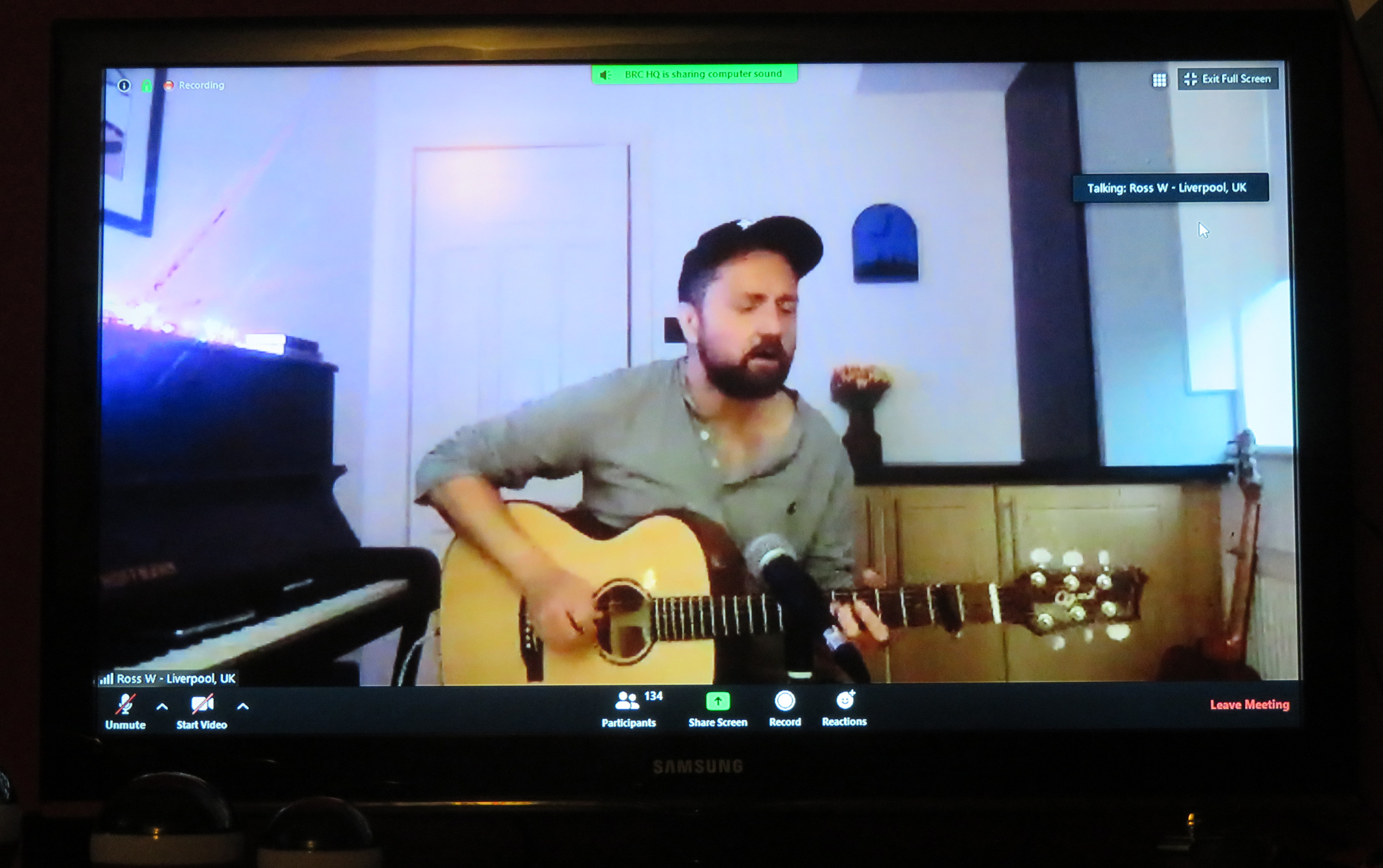
Is this the “new normal”? Hunched over a screen watching a musician (and generally it’s one unless your favoured act is a commune or a happily domiciled live in couple), at all hours of the day and – depending on bandwidth – buffering, freezing, disappearing altogether? Since the lockdown has robbed all musicians of the ability to play live (and earn their living) there has been a tsunami of live streaming shows, many of them excellent it has to be said, although there have been a few clunkers. Generally these shows have been free to watch and hosted on social media with a virtual tip jar available in the hope that some folk will bung in a couple of quid.
With many of these shows lasting a short time and available for anyone to watch long after the live action has ended, there hasn’t been much point in reviewing them. However, Blue Rose Code’s live show on Saturday night was a horse of a different colour. A private ticketed event, privy only to those who stumped up and not to be streamed or shown elsewhere. This encouraged a sense of occasion. None of that, “I’ll just watch it later” attitude which is tempting, especially if it’s an American act live streaming at 3 am on Facebook which you can watch whenever you fancy the next day.
Ross Wilson chose to launch his first live stream via Zoom, the video conferencing app which has been one of the few beneficiaries of Covid 19. Many reading this will probably have used Zoom by now and will wonder how in hell you could watch a show without everyone and their uncle chatting away, it would be worse than the bar area at Oran Mor. However, Wilson, assisted by Gavin Hastie on tech and host duty, had done their homework and by and large it worked. It was an experiment, no doubt. Wilson is unhappy with the concept of playing for tips and wanted to see if a paying model would work and after the show Blabber’n’Smoke spoke to him about that.
Anyhow, on with the show. A Zoom invite got you a front row seat for this solo performance by Blue Rose Code. The doors opened at 7:30 with an 8pm start time. As folk logged in you could see them on video getting settled in before their video and audio options were muted. Hastie spun some discs and welcomed folk as they joined in, some participating from as far afield as Canada, Italy and the States. At eight, Ross Wilson came on, the sole screen to be seen as all others had been taken down. Screening from his Merseyside home, Wilson played guitar and piano over two 45-minute sets with a short break.
As live streamed gigs go this was pretty much par for the course in the sense that we were being treated to an intimate set of songs with no fancy effects. Fans had the chance earlier to send in song requests and to comment as the show progressed allowing Wilson the opportunity to answer some questions (example – what is your favourite John Martyn song) and to play some songs which are rarely played these days. He kicked off with the newly released single, Starlit, from the forthcoming album, a glorious song etched with aching and love. Red Kites followed before Wilson switched to piano for the first request of the night, My Heart, The Sun and then took some time to say hello to several of the folk signed in. Digging into his past there was an excellent rendition of Skin & Bones and, following a request, he sang Love Is…, a song he says he rarely performs these days which was followed by a powerful and joyful rendition of Ebb & Flow.
As the first set ended, our host Gavin Hastie unmuted all to allow a round of applause and shouts. This was an opportunity to be part of the crowd but it was interesting to see who was making the most noise as the Zoom app hoisted up the names of those closest to their gadget’s microphone. In such a close-knit community, we recognised several of the names.
As odd as it might be for the audience, it must be odder still for the musician to get into a groove, sitting as they are at home, trying to play, watch the messages coming in and respond to them without interrupting their flow. Wilson was certainly getting into the flow in the second half of the night particularly when he played and sang In The Morning and then Sandaig, ten minutes of bliss really as he became evermore animated with his guitar playing here just excellent. Then there was one of the most moving moments of the night with his rendition of Over The Fields, dedicated to his late friend, mentor and sponsor, John Wetton while Pokesdown Waltz (the most requested song of the night), was, as always, a tearjerker.
Prior to this there was an unexpected appearance from Wilson’s Liverpudlian chum, Robert Vincent who sang The Ending from his latest album, In This Town Your Owned, before having a chat with Wilson about how to earn a crust in these virtual gigging days.
By now well fired up, Wilson offered us another peek into the new album on the upbeat London City Lights and then travelled north for the wonderful Edina. The closing song, Grateful (what else) was dedicated to NHS staff and many others, the nameless and pitifully underpaid shop workers, drivers and all who, overnight, suddenly discovered they were “key workers.”
Loud applause from all the virtual attendees at the end and then, video enabled, we could see the faces of all present at this event, a moment captured by Hastie on a screenshot.
And that’s how it happened folks. It was a Saturday night in. Laptop wired to giant TV, Bluetooth speaker for the sound, some wine and nuts, two hours of Blue Rose Code, live, in our living room. An occasion. We really enjoyed it as did all of the other 120 ticket holders (most likely around 250 viewers given that couples were watching). It’s not the same as going to a sweaty live gig but as that’s not likely to happen for a while, this was perhaps the closest one can get these days.
__________________________________________________________________________________________
Ross Wilson is a professional musician. That’s how he makes his living and right now, he has no paid work. Like all of us he’s seen Facebook explode with streamed shows, the tip jar dangled in front of us and he’s not happy with that. After the show, Blabber’n’Smoke spoke to him about his misgivings and about the model he’s proposing.
I’m an independent artist, this is my only means of making a living and I’m fiercely protective of that and I feel that there’s an awful lot of moaning going on but not much action. People rightly talk about the lack of proper remunerations from streaming but at the same time are happy to offer up lots of live shows on Facebook and asking for tips. That whole notion of tipping seems like a begging bowl and for me; if I’m not going to value what I’m doing then why should anyone else. I think there’s a responsibility on us to preserve the notion of paying for performances for the young musicians of today and tomorrow.
I’m lucky to have a fan base who support a lot of artists, buy albums and go to shows because they love live music, and they can’t do that right now. They’re sitting at home and from my experience, they are happy to pay for an event. So if you can create an experience for them which otherwise they wouldn’t be able to get during this time of lockdown, why shouldn’t you quantify its value? I’ve said it on Facebook, “It’s not just about the money but it’s also about the money”. I can’t understand how people can take issue with Spotify and then give it all away on Facebook. I can tweet all day complaining that I only get 000.1 of a penny for a stream but I think it’s better to do something about it.
Where I can maybe make a difference is by showing that it is possible to make money by putting on a “virtual concert.” There’s a whole bunch of people out there fed up watching Netflix and I showed that I can get 120 people to pay £12 a head to watch me. All of my work, my income, has been cancelled up to September and even then it might not start again. So the money I made through this show will let me pay my rent. The audience got to see me play and the show won’t be available online so it was a unique event. It won’t replace the real thing, the magic of being in a room with other people watching live music but I think we did a good job last night of interacting, I took requests, I answered questions, we had a song from Robbie Vincent and a chat with him. It worked well and I’ve got a few ideas as to how to make it better next time. It took me a while to work out how to do this model but I think I’ve shown that it can work. As a maiden voyage, it was no Titanic.
Is this a viable way ahead, allowing fans to experience a live show while guaranteeing a fee to the musician? It certainly seemed to work in this instance and, according to Wilson, the technical side of using Zoom was relatively easy to mange. It will be interesting to see if others begin to use this model to create a sense of an event rather than just the random selection of another Facebook video. If anyone reading this wants to know more about playing a concert via Zoom, Ross Wilson is happy to answer any questions you may have. Contact him at rossbluerosecode@gmail.com.
Blue Rose Code website
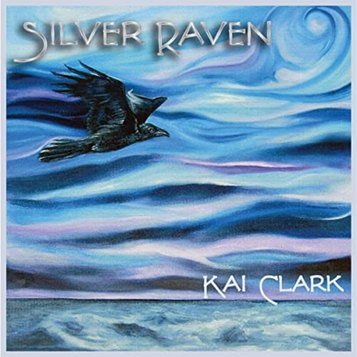 Have to admit it. I was trepidatious regarding this release. Aside from the Wainwright/McGarrigle clan, precious few artists offspring have produced much to write home about, so news that Gene Clark’s son, Kai, was releasing an album of his father’s songs was a worrying prospect. Clark’s star has been in the ascendant over the past few years, sadly, too late for him, with a slew of unreleased recordings and renewed critical acclaim (in particular for his “lost” masterpiece, No Other) allowing him more positive press than he ever had in his lifetime. Thankfully, Clark Jnr. does his father proud here with a judicious song selection (some favourites – Mr. Tambourine Man, Eight Miles High, bona fide classics – Silver Raven, Polly and some deeper cuts). In addition, his voice has a slight touch of his father (must be the genes!) and he has enlisted Carla Olson to sing on several of the songs.
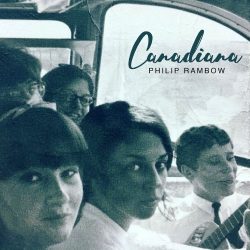 For most, Philip Rambow is a name from the past having made some waves in seventies London, bridging pub rock, glam and punk. Rambow, a Canadian, had two shots at fame, first with his band The Winkies and then as a solo artist. His albums were critically admired but he had more success with his song writing, including co-writing There’s A Guy Down The Chip Shop Swears He’s Elvis with the late Kirsty MacColl. So much so that after two solo albums in 1979 and then 1981, he didn’t release another album until Whatever Happened To Phil Rambow? appeared in 2015.
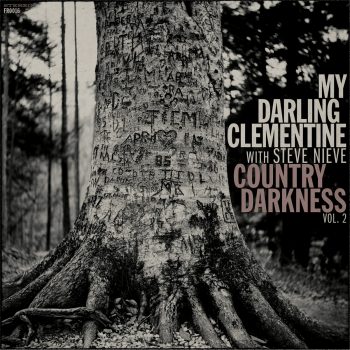 On this second instalment of their three piece interpretation of songs by Elvis Costello, My Darling Clementine continue to seek out elements of country darkness from the man’s catalogue. From the start of their career, My Darling Clementine (Lou Dalgleish and Michael Weston King) have been in love with classic male/female country duetting and their application of this to the songs of Costello continues to impress. Furthermore, they have delved deep into Costello’s songbook (it would be a pretty obsessive Costello fan who could immediately pinpoint these songs) avoiding most of his more familiar numbers.
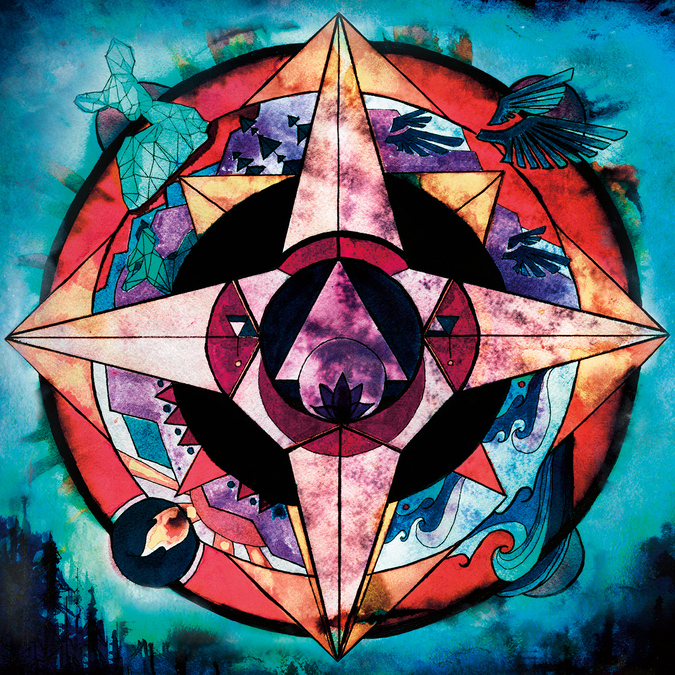 Husband and wife duo, Dorothy Daniel and Ben DeBerry (Danberry, get it?) beef up their familiar back porch sound on SHINE, their third album, gathering a full band clan including gutbucket electric guitar, pump organ, trombone and tuba. This allows them to deliver some raucous songs such as the Tom Waits’ like junkyard stomp The Road along with the opening title song which reeks of southern menace. It’s quite a shift in gear and not all of this revamp is as striking as the two songs mentioned as the duo wander into AOR territory.
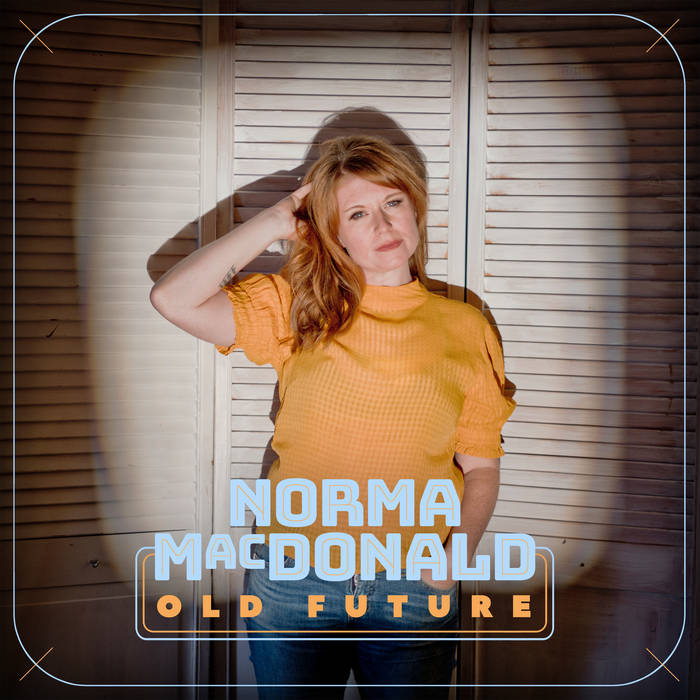 This fifth album from Nova Scotia’s Norma MacDonald maintains the high standards set by her previous releases. Here she’s drawn to the sound of classic early seventies singer songwriters – that Laurel canyon vibe, captured well on the mournful Golden Age with some lovely pedal steel garlands, played by Dale Murray (who also co-produced).
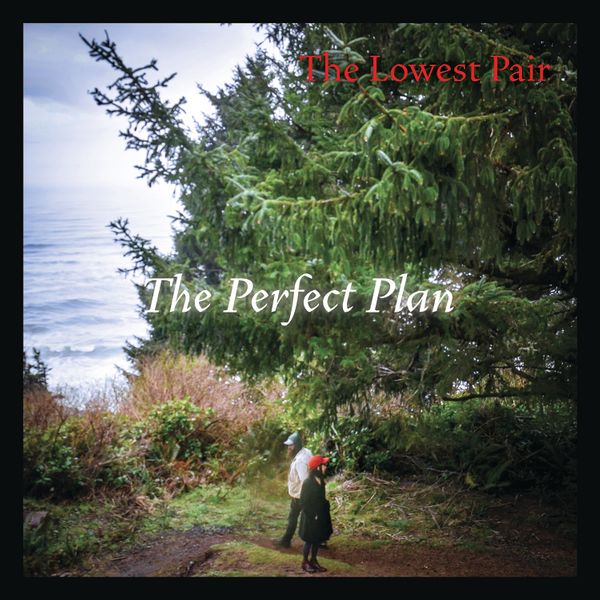 For an acoustic duo, The Lowest Pair electrified audiences when they toured the UK in 2018, their clinch mountain banjo sound exemplifying the spookier aspects of weird old Americana. Kendl Winter’s songs sounded as ancient as the hills while her chemistry with Palmer T. Lee was obvious in their playing and their harmonies. On record, they recorded as a banjo and guitar playing duo but they expanded their sound slightly on their last album,
 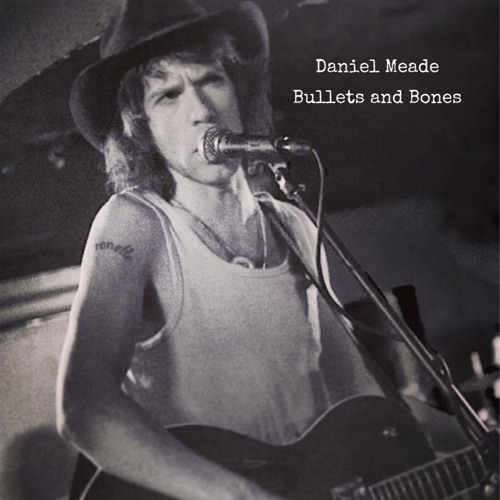 Although Glasgow’s Daniel Meade has recorded with the cream of Nashville, he’s no stranger to home recording so it’s somewhat apt that in these lockdown times he’s come out fighting. Bullets And Bones is a three-song release, download only and for a ridiculously low price, with Meade really playing to his strengths.
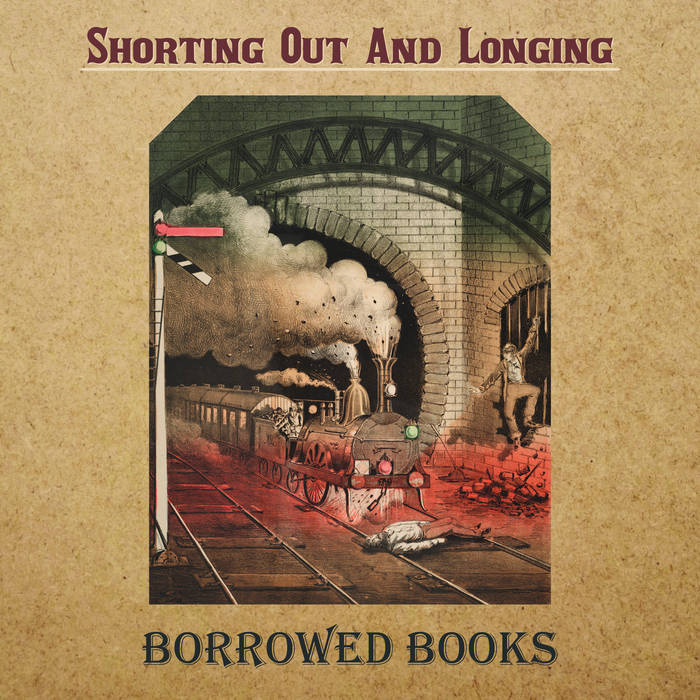 Borrowed Books are a new Edinburgh based band who can count among their members two luminaries. There’s Cam Fraser, ex of The Cateran, a Scottish band who more then held their own against the likes of Husker Du and even the mighty Nirvana back in the days. Alongside Fraser is Ray Neal, guitarist with Miracle Legion and now resident in the Athens of the north. The whys and wherefores of how these two teamed up are not explained but suffice to say that their album (with a line up completed by Aly Barr on bass, Chris archer on drums and Colin sands, piano) is an excellent listen with its heritage sound of REM like jangled glistening pop.