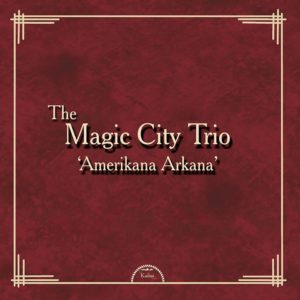
 When a band says that they take their inspiration from pre-war country music, The Carter Family, and the psych-cowboy music of Lee Hazelwood, then the results are either going to be a mess or something a wee bit magical. Thankfully, in this case it’s the latter as this London based trio (who expand when required) turn in a grand listen on their debut album. Truth be told we can’t find too much evidence of The Carter Family here but there are oodles of Hazlewood styled melodramas with an added ingredient of spaghetti western fuzzed guitars to spice it up a little. They also cite “hillbilly noir” writer Daniel Woodrell (author of Winter’s Bone) as an influence with the result that many of the songs are deliciously dark examples of gory gothic Americana not too dissimilar from that of The Handsome Family.
Led by Frank Sweeney who was a member of indie favourites The June Brides the band comprise of Sweeney along with Annie Holder (guitar, vocals and autoharp), Adi Staempfli (bass and vocals) and Charlotte Burke (drums and percussion). Since his indie days Sweeney has obviously become steeped in that old weird Americana (or the Arkana of the title with Sweeney alluding to The Tarot and its themes of death, confusion and justice) which has informed so many great albums. As such there is some old fashioned music on the disc in the form of the banjo driven Oliver Curtis Perry Part 1 which rattles along much like the train which Oliver Curtis Perry robbed back in the 1890’s. Meanwhile their version of Down In The Willow Garden (heard by Sweeney on The Everlys’ Songs Our Daddy Taught Us) roots around in the tradition while adding a wonderful psychedelic folk fug to the arrangement with the song coming across as if it were by Pearls Before Swine.
However it’s the dramatic mix of doomed romanticism, twanged guitar and sweeping orchestral sounds along with the Nancy and Lee like duets which really grab the ear here. Goodbye My Friend is not too far removed from Down In The Willow Garden but it has a much grander cinematic dimension to it. Black Dog Following Me is quite majestic with its fuzz guitar, strings and horns so evocative of images imprinted on us from western movies while the vocals are up there with Some Velvet Morning. That they can repeat this trick several times on Trav’ler, 22 and Dust of Mars just ups the ante for those of us who are suckers for this freaky frontier music (and surely 22 must get the award for the best murder song allied to a jaunty clip clop Mexicali trot if such an award exists). Best of all is Cousin’s War which opens with a gloom laden organ before a banjo clips in urging the song forward as Sweeney opens the proceedings singing, “A summers day, a yellow dress, she wore violets in her hair/She was to marry her own true love, with a love only they could share/But her brother took a hunting knife, He hurt her love full sore/And he is dead by her brother’s hand, that led a family into war.”
If you are interested in murder ballads, border ballads or just plain old-fashioned gory story telling with a cinematic scope then round up a posse and seek out this album, we’re sure you will enjoy it.
Here’s a whirlwind tour of the album…
And one to savour…
Black Dog Following Me by The Magic City Trio from the magic city trio on Vimeo.
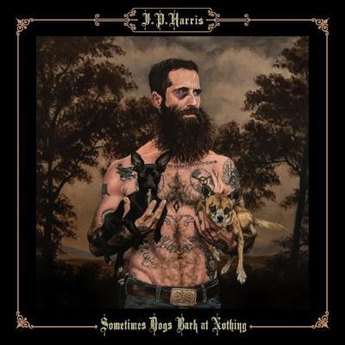 JP Harris modestly describes himself as a carpenter who writes country songs. On his third album, Sometimes Dogs Bark at Nothing, he has indeed carved an excellent benchmark by which the remainder of this year’s releases should be measured. A colourful (and heavily tattooed) character, Harris has lived an itinerant life since leaving eighth grade class in Alabama, riding the rails and hitching lifts for a decade or so picking up labouring jobs for a spell and then moving on. This lifestyle informs several of his songs which he delivers with a raw authenticity whether they be hard driving honky tonkers or gritty ballads and on this album he even tackles some sweet Nashville countrypolitan sounds.
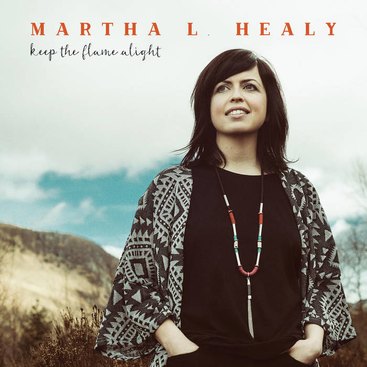 For her second album Scottish singer songwriter Martha L. Healy returned to Nashville where her first album
 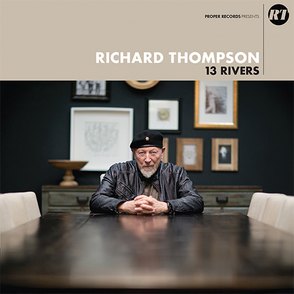 It’s always a cause for celebration when a new Richard Thompson album comes out. An artist who has rarely put a foot wrong over a 50 year career, he’s one of those touchstones (a bit like Nick Lowe or Loudon Wainwright) who constantly remind one of what great song writing is all about. 13 Rivers follows on from the two volumes of Acoustic Classics, which found Thompson revisiting his back catalogue, and the Jeff Tweedy produced Still which stands up as perhaps his best album over the past decade and a half.
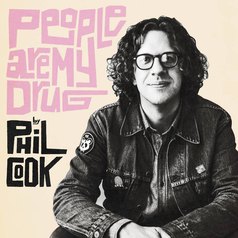 Best known for his associations with Hiss Golden Messenger and freak folk band Megafaun Phil Cook has also spent time as the musical director for The Blind Boys of Alabama and worked with Mavis Staples. It’s the latter names who spring to mind as one spins People Are My Drug which is steeped in gospel music and New Orleans rhythms, the impressive array of female singers who whoop, holler and testify with a soulful abandon giving the disc its signature sound.
 Sam Misner and Megan Smith were both actors before joining forces musically after meeting at a Shakespeare Festival. Having released four albums notable for the pair’s harmony singing here they return somewhat to their thespian roots explaining this collection of covers by saying, “Every actor’s job is to interpret someone else’s words…For us, approaching covers is about capturing the essence of the song…”
 Nicky Murray made a bit of a splash when he released his debut album on Martin Stephenson’s label back in 2014 before going on to be one of the standout acts at the following year’s Wickerman Festival. A singer/songwriter who reminds one of the glory days of singer/songwriting he leans towards the more bucolic and experimental end of the spectrum. Murray is blessed with a tremendous voice in addition to his writing skills and when he was staying in Glasgow a few years back he used to turn up at open mic nights and you could guarantee that there would be gasps from the audience as soon as he started to sing.
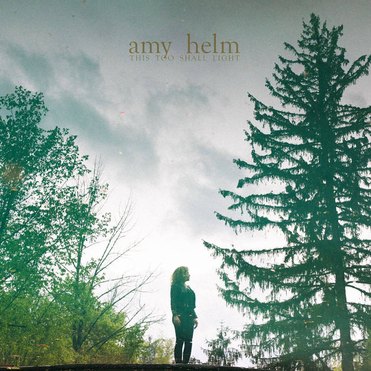 Amy Helm’s second album opens with a blast of guitar sounding like a foghorn announcing the arrival of what is quite a special album. That foghorn guitar belongs to the opening title song which is a masterful slice of soulful funk, the rhythm section metronomic and sly while guitars fizz and burn beneath her impassioned vocals. The song was written for Helm by Hiss Golden Messenger’s Mike Taylor and Josh Kaufman and it’s a perfect introduction to an album that is yet another addition to the grand canon of releases which celebrate the soul of American roots music.
 It’s been a while since Warren McIntyre and The Starry Skies released their well-respected debut album, Ask The Animals. Six years in fact. Now they’re back with McIntyre dropping his prefix to the band name although he remains the driving force behind the band’s pulsating mix of driving power pop and folkier material all filtered through an Americana sensibility. Be Kind is an upbeat album and McIntyre is on record as saying that, “One thing there is not enough of is people being kind to each other, it’s really clichéd but it’s nice to be nice. I decided I wanted to be more straightforward lyrically and send a simple message about spending the rest of my time on this planet being as kind as I can as much as I can.” Well he just about does that here although some of the songs on the album do wander into darker territory.
 After about four years of relentless gigging the length and breadth of Scotland, Anton & The Colts finally unleash their debut album and a fine beast it turns out to be. The band, based around front man and chief writer Anton O’Donnell and the mercurial would be glimmer twin, Roscoe Wilson (with a fine rhythm section in John Dunlop on bass and Dillon Haldane, drums), are one of those who sound more American than many American bands do. However there’s a boastful swagger to their gait which owes more than a little to the raunch of the Stones and the jollity of The Faces, in particular, Ronnie Lane’s contributions to the band such as on Ooh La La.