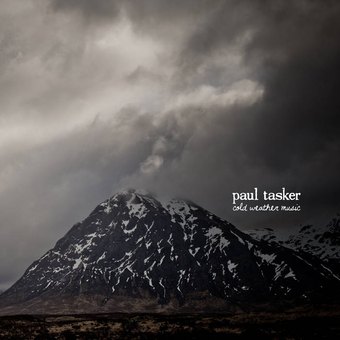
Paul Tasker. Cold Weather Music. Yellow Room Records

a2960792692_16

It’s been a while in the making but here’s the debut solo album from Doghouse Roses‘ Paul Tasker and it’s been well worth the wait. Tasker, most folks reading this will know, is a guitarist of some renown. Originally an acolyte of the work of Bert Jansch his guitar playing is a joy to hear (and see) while he’s also a dab hand on banjo and mandolin. Doghouse Roses, the band he shares with Iona MacDonald are currently emerging from a near five year hiatus, a new album recorded for release later this year and tour dates coming up in April but prior to these the fruits of his labour over the past two years are now unveiled.

Blabber’n’Smoke recently spoke to Tasker about the album with him revealing that this release is his third attempt at the album. Recordings in 2010 and again in 2012 fell short of what he was looking for and it wasn’t until last year that he hunkered down in an analogue studio in Glasgow and the pieces all fitted. With Tasker on guitar and banjo the album also features guitar from Dejan Lapanja along with pedal steel & Weissborn guitar from Thomas Marsden. Luigi Pasquini handles percussion while Jo Shaw and Corran McArthur play flute and cello respectively. The collective appearing in various combinations throughout the album.

All instrumental, the album works on several levels. At its simplest it’s a wonderful and contemplative set of music, perfect to listen to while relaxing, a guitar and banjo led example of Brian Eno’s theory of ambient music and indeed there’s a whiff of Eno’s cosmic astronaut cowboys (as on Deep Blue Day) on the opening number here, Husker’s Theme, with pedal steel suitably evocative. Flute adds a “Northern Skies” touch a la Nick Drake to the wistful Sky Train while Blooms In The Autumn could well have been plucked from a John Renbourne medieval rhapsody. The album may be called Cold Weather Music but it begs to be listened to in front of a roaring fire with a suitable libation to hand, the coals crackling echoing the occasional snap and slither you can hear of Tasker’s fretboard work.

A deeper listening reveals the musicianship on display here. Tasker’s guitar playing is at times breathtaking. The whorls and winds of Gorlitzer are hypnotic, his fingers dancing on the strings, while Ne’er Day alternates flurries of melody and sharp chording. He uses banjo to add a layer of patina on some songs evoking bygone times. Valve Oil  huffs and puffs laying down a backdrop for some nimble slide guitar work and InE sounds as if it was originally recorded on an American civil war battlefield, a threnody for the fallen. Of course here one thinks of pictures and in particular moving ones and one is inevitably reminded of soundtrack albums, in particular the work of Ry Cooder and also Nick Cave and Warren Ellis. The McGuffin here is that Tasker has written several of the songs with a soundtrack in mind, his comrade, James Morrison, had asked him if he had any music suitable for a screenplay he is developing, a western with some Celtic leanings. Much of the record then was inspired by a road trip they took to the Highlands and the accompanying booklet is composed of photographs taken by Morrison around Scotland, each tied to one of the tunes. The movie is yet to be made but in the meantime the album is here and it’s one to savour, to wallow in and allow it to conjure up your own visions in your head. It’s simply beautiful.

Available on CD and vinyl (a lovely package) here. Doghouse Roses are playing several dates in April, details here
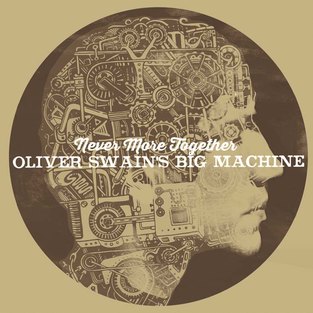
 

Oliver Swain’s Big Machine. Never More Together

cs206

I know that British Columbia is a big place but it seems to be packed full of excellent musicians with Oliver Swain the latest to pop out of the woodwork. Apparently he’s big over there in folk circles but Never More Together, his second album, is our introduction to him. He plays double bass, banjo and guitar (his banjo a nineteenth century goat skin creation), sings and at times, whistles. His brief whistling here  causing us to recall Andrew Bird but the fact is Swain is much more fun than Bird.

He’s paid his dues playing with early incarnations of The Bills and The Duhks and with Ruth Moody before setting out with Outlaw Social and then The Red Stick Ramblers. His debut album, incidentally called In A Big Machine, was a mixture of traditional and self penned songs and included a fine cover of Springsteen’s’ I’m On Fire which successfully transferred the Boss from his NJ streets to the Canadian pines.

So to Never More Together. It’s less folky than its predecessor and all songs are written by Swain who demonstrates a fine versatility here creating what one might call “chamber pieces” along with more regular fare. In addition to his instruments his voice is an important part of the jigsaw, a slight tenor, he can sound ethereal, swooping around like Rufus Wainwright at times and he uses this ability best on the closing eight minute Take Me Up, a richly textured piece.

The album opens however with the claw hammered banjo jaunt of the title song. Light and airy it occupies similar territory to fellows such as Pharis & Jason Romero or Morrison & West although instead of peering into the deep dark woods of Appalachia Swain is in a sun-dappled clearing. No Strange Thing sees Swain coming across as a sweet voiced soul singer duetting with Emily Braden on a string-laden swoon (arranged by producer Adrian Dolan) that is like a country cousin to Norwegian Wood. Maggie, Molly & Raul is an oddity indeed, a confusion of nursery rhyme like words and Beatlish chiming guitars it has a charm but might have been more suited to appearing at the end of the album with its coda extended as that does have a bracing, almost psychedelic, feel.

After this blip Swain really gets down to work. Gone is a tender and beguiling song, Swain’s voice enveloped by the gradual instrumental swell, a burbling woody swirl. The Moan is a short instrumental lead into Apple Sucking Tree, both sinister with cello and Swain’s double bass as evocative as any of the instruments on Peter and The Wolf, creating a dark wooded space, the song exploring a similar sonic ground as that commanded by Cam Penner, an atavistic response to the wildernesses these guys travel around in. There’s some brief respite on the gentle string driven caresses of Old Dreams, a song that ripples like a mountain stream before Swain wraps it up with the epic Take Me Up. Opening with a potpourri of stringed instruments somewhat akin to an orchestra tuning up Swains voice swoops in eventually as the strings coalesce and judder almost as if they were auditioning to play Stravinsky’s Rite Of Spring. There’s a delightful instrumental passage with Swain’s guitar picking to the fore before he and the  strings  hit a wonderful baroque folk  swing and then the song eventually collapses back into its primordial shape, a last gasp from double bass bowed low bidding farewell. It’s an audacious song but it works and is a fine end to what is a fine album.

website


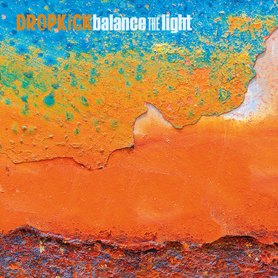
Dropkick. Balance The Light. Rock Indiana Records/Sound Asleep Records

a0889279772_16

It’s hard to believe that Balance The Light is Dropkick’s 14th album. The East Coast Scots certainly don’t sound (or look) like grizzled veterans of the rock’n’roll world while the album is as fresh as a daisy and brimming with energy. Over the course of 16 years they’ve gathered a well deserved reputation as purveyors of power pop and sunny jangled country tinged rock, an idiom that we rain sodden Scots seem to do well in (see Teenage Fanclub, Daniel Wylie, Attic Lights) while they are, to paraphrase Tom Waits, “big in Spain.” Their 2013 album, Homeward, saw the band, by then a five piece, expand their horizons with more keyboards in the mix, an occasional melancholic air and some tantalising glimpses of an almost psychedelic buzz. Balance The Light continues in this vein. There’s still a jangle in their stride but as befits a band with older heads on their shoulders that stride is more paced and measured, pausing to reflect.

Having said that Dropkick are still adventurous and this is evident on the opening song here, Save Myself. The song opens with a hazy shimmer, a guitar charged slow beat, the vocals delicate, almost strained although the harmonies remain in place. Halfway through a synthesised noise begins to beep and flutter as if the BBC’s Radiophonic Workshop had popped in and the band step up the pace as the song reaches a crescendo in a thrash of sounds. It’s an exhilarating opener which recalls the more experimental side of Wilco and the sonic wizardry of Todd Rungren. It’s the most way out number here but its layers of sound are reflected throughout the album. I Wish I Knew shape shifts between Beatles like guitar harmonics and swelling organ notes with a fine McGuinn type guitar solo at its centre. Wake Me In The Morning is a gossamer thin confection which sits atop a repetitive synth sound, gradually replaced by stately piano chords and burnished guitar before returning at the end of the song.

Elsewhere the band continue with the groove they hit on Homeward. There’s a Neil Young kick on the closing Think For Yourself and Out Of Love Again flows along like a meeting of The Only Ones and The Byrds while they actually offer a song called Homeward which is suffused with the vulnerability of Alex Chilton and the chug along country soul of Neil Young. Here the guitars curl and the organ sweeps the rhythm along as Andrew Taylor sings like a lost soul. Again much of the words on the album continue in the vein of its predecessor, Taylor trying to salvage relationships, most nakedly expressed here on the gentle A Long Way To Go.

Despite the above litany of influences there’s no doubt that Dropkick have a sound of their own. They have a heftier take these days on their sunshine sound, the guitars more muscular, the backdrop more ornate. Before The Light sees Andrew Taylor’s brother, Alistair, leaving the fold (although he mastered the album). There’s a continuity of sorts however as he was replaced by Roy Taylor (no relation), returning to the band after a five year hiatus.

The album is released on 25th March. If you pre purchase it here you can get an additional three unreleased songs. The band are playing some shows in support of the album release including dates in Edinburgh, Glasgow and Dundee in April. Dates here

website


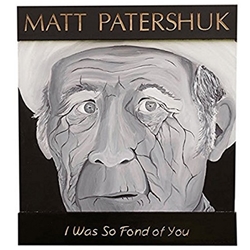
Matt Patershuk. I Was So Fond of You. Black Hen Records

395678

We’ve written about several acts who might be considered a new wave of young country bucks (Sturgill Simpson, Cale Tyson, Daniel Romano, Barna Howard etc.). They sidestep the current Nashville trends such as Bro’ Country and EDM and instead look back to classic country music, not the hillbilly type but the golden years of the fifties and sixties, their heroes George Jones,  Waylon Jennings, Kris Kristofferson, Glen Campbell and John Hartford, artists who were mavericks but still able to turn in a hit song.

Well it’s time to add Canadian Matt Patershuk to this list. I Was So Fond Of You, his second album, is a breath of fresh air, an inhalation of healthy banjo, fiddle, pedal steel and guitars, all set to a fine shuffle from the excellent rhythm section and topped with his  sometimes honeyed, sometimes gravelly  vocals.  Recorded at producer Steve Dawson’s Nashville studio, the band, Mike Bub, bass, Gary Craig, drums, Fats Kaplin, fiddle, banjo, accordion and guitar along with Dawson on guitar and pedal steel, sat down together and played live with no overdubs. The cherry on the cake here is the addition of Ana Egge on harmony vocals, added later but knitted right into the songs.

The opening song, Back Against The Wall is a gritty slice of Southern slither with mean slide guitar and rasping fiddle. It’s a great opener but hardly indicative of what is to follow. Prettiest Ones introduces Egge’s voice, a perfect foil for Patershuk’s wearied tones on a gentle song that tiptoes along sprinkled with mandolin and sweet pedal steel. She remains on board for the mild Western swing of Smoke A Little Cigarette, Kaplin here superb on fiddle and Patershuk capturing the laconic songspeak of Bob Wills perfectly, a trick he repeats on the upbeat Burnin’ The Candles At Both Ends. Pepe The Cat Murdering Dog, an absurdist tale of sorts finds the band all jaunty and hitting a bluegrass stride while Mean Coyotes heads into Tex-Mex country on a Willie Nelson like ticket. Here Patershuk just hits all the right buttons, the harmonies with Egge beautiful, the band just on the right side of closing time at a cantina, reedy accordion setting the scene  on a mournful song that paints a rancher burying a pony, a victim of those coyotes, as he relates this to his own life.

There’s more equine content on Tennessee Walker, an epitaph to a beloved steed that recalls Doc Watson as imagined by Steve Earle and Earle comes to mind again on the revenge ballad of Harviestown. Here a “yellow bellied drunk man killed my darling girl” and the singer vows to go down to Harviestown where “I’ll use my two bare hands, I won’t need a gun.” It’s a great song, a fine addition to the old murder ballad tradition but it gains some extra weight when one realises that Patershuk is here dissembling a tragic moment of his own. His sister, Clare, was killed by a drunk driver in 2013 and he dedicates the album to her memory and in particular he describes his memory of this on the title song, a truly affecting piece which is given a respectful reading from the band, a slow waltz with Egge echoing his plaintive vocals. It’s tearstained indeed and sad to think that the song grew from a tragedy but ultimately (and here one does feel somewhat helpless, like a mourner not knowing what to say at a funeral) it’s a beautiful song and hopefully gives some comfort for those who knew her. Patershuk can certainly wring the emotions and he does so expertly on Little Guitar, a song that stands tall in the grand tradition of the likes of Kris Kristofferson and Jon Prine. Here he inhabits a veteran of world war II, bruised and battered, his brother killed in the war, blood flowing through his flaxen hair. He finds solace in his second hand guitar singing, “you can’t make a fist when you’re playing guitar.” It’s a monumental song delivered with grace by the players and well worth the price of admission on its own. A wonderful album.

website

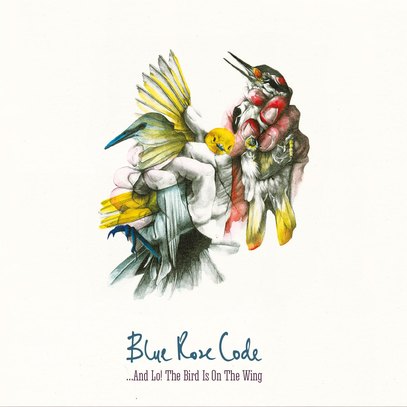
Blue Rose Code. And Lo! The Bird Is On The Wing

brc0011_birdwing_cd_press_front

The third instalment of Ross Wilson’s testament to the glories of life and living, And Lo! The Bird Is On The Wing is a magnificent listen; a collection of songs with a beating heart, flurries of melodies with Wilson’s voice an instrument in itself. There is hurt and heartbreak, emotions that give the album some of its most affecting moments, but above all there’s a sense of celebration, a celebration of just being alive, of seizing the moment. The album title (from The Rubaiyat of Omar Khayyam), a reminder that life is fleeting so be grateful for each day. Wilson and his cast of supremely talented musicians have crafted an album that dips and soars like a murmuration of starlings offering the listener a myriad of delights.

There’s an organic flow to the album, the songs almost weeping into each other, the opening glimpse of the majestic single, Grateful, here in an abridged state, setting out Wilson’s agenda. Thereafter it’s a thrilling ride through folk and jazz tinged celebrations and wallows, the sinewy bass note that opens the free flowing box of memories that is Brave Cedars & Pied Wagtails returning later on the free form closing moments of In The Morning Parts 1 & 2, a nod perhaps to one of Wilson’s heroes John Martyn and his experimentation on songs such as Bless The Weather. In The Morning returns in the guise of Part 3 as the closing song here, this time with Colin Steele’s trumpet leading into Wilson’s closing remarks which are blessed with harmonies from The McCrary Sisters, the Gospel troupe who raised Grateful from the great to the magnificent. There’s a thread here. Musically it’s Wilson’s debt to Martyn and Van Morrison (and if anything there are moments here which recall Veedon Fleece) while lyrically Wilson takes us from his first moments of recovery into his marital breakup and his current sense of purpose.

The billowing breeze of Brave Cedars & Pied Wagtails leads into the confessional My Heart, The Sun, a false dawn of hope, the gentle pummel of percussion and lonely trumpet harbingers of what is to come. Rebecca is a spritely love song with some fine guitar work from Wild Watt Wyatt, a respite of sorts as Wilson then heads into the brokedown palace of Pokesdown Waltz, his naked exploration of his marriage ending, a song that bursts with regret, the words so emotive, the delivery stunning. Steele’s lonesome trumpet and Danny Thompson’s burbling bass introduce the centrepiece of the album, Glasgow Rain, an impressionistic journey though the West End as desolate as watching rivulets of rain running down a window as a storm lashes around you. Here Wilson unleashes his love of jazz and experimental music, trumpet, double bass and piano delicately tracing his voice before swelling into a mild cacophony as John Lowrie’s scattered percussion and Lauren MacColl’s violin join in, a ghostly spoken part here delivered by actor, Ewan McGregor. The music then gradually subsiding into rain swept sound effects with a final farewell from the bass and piano washed away like chalk on a pavement. A song of misery and self loathing with Wilson pleading “I try and I try and I try but I told you darling, I’m no good” it’s elevated into a thing of beauty as his voice trembles and pleads, the repetition and phrasing recalling Van Morrison on classics such as Listen To The Lion and Linden Arden Stole The Highlights. Aside from Morrison the song recalls the work of Robert Wyatt and his collaborations with Michael Mantler and Carla Bley while its rain swept Glasgow vista will also beg comparisons to The Blue Nile.

It’s truly a testament to the wonder of this album that even after the emotional blitz and sonic adventure of Glasgow Rain the listener can be transfixed by the following songs. In The Morning Parts 1 & 2 returns to the spritely breeze of Brave Cedars and Rebecca, the band skipping along with a refreshing spring in their step as Wilson and Wrenne and The McCrary Sisters celebrate a new dawn, the words uplifting as Wilson describes a rebirth of sorts. It’s a joyous song and as it heads towards its dissolution in a welter of bowed bass, skittering keyboards and gliding pedal steel, the vocals just peeking through, there’s an undeniable sense of willing Wilson on,  urging him to carry on and cast his demons aside. The following track, Love, alleviates this concern as he delivers a most tender and affecting paean to Cupid’s arrow, the mournful, almost brass band opening giving way to a song that most recalls the late John Martyn with Wilson sounding at his most vulnerable. The chorus with Wrenne wrapping herself around Wilson’s voice like a bountiful siren is just gorgeous, the band’s playing hypnotic, a song to savour. Favourite Boy is an almost playful aside, a Harry Nilsson like ballad balancing shadow and light, hopeful for the future but with a sense of gloom ever present. Again The McCrary’s are on hand to enhance the song. The curtain draws with the closing In The Morning Part 3, Steele’s trumpet coolly recalling the likes of Miles Davis before Wilson looks to the future over a lonesome picked guitar, the band gradually joining in, fiddle to the fore and The McCrary’s back in the fold for the blossoming swell at the end. The words here, as throughout the album are poetic and inspiring, indeed, had we quoted some of the gems from the album this review would be twice as long. Suffice to say that Wilson here sings, My best days they still lie before me, a sentiment that his very dedicated following will surely subscribe to.

And Lo! The Bird Is On The Wing is an album of import, a personal statement from Ross Wilson which is suffused with a humanity and grace that one generally attributes to a great novelist. Wilson is a rare animal these days, his music vibrates with a life-force sadly missing in much of the music offered to us. On stage he has an uncanny ability to draw an audience into his world, an Odyssey of loss and redemption and the album does capture that. A definite contender here for album of the year.

website

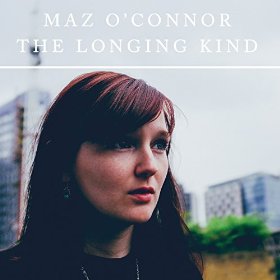
Maz O’Connor. The Longing Kind. Restless head Records.

41ghitggt9l-_ss280


This third album from folk artist Maz O’Connor finds her leaving the world of traditional songs behind, heading instead on a musical odyssey, a journey from youth to adulthood if you will. O’Connor has written a brace of songs which open with several that can refer to leaving home while the closing songs see her finding her own two feet. In between she writes about two historical figures, women betrayed, inspired by paintings of them in the National Portrait Gallery. It’s a warm and woody sort of album, cello, harmonium and double bass comforting although there are some sublime pedal steel moments (courtesy of Chris Hillman, no, not that one, this is CJ Hillman from Manchester) and on one occasion some clangorous guitar. The songs are guitar or piano based, the latter at times recalling the work of Judee Sill, indeed the album as a whole rarely has any sense of Albion’s folk tradition coming across instead as a continuation of the sixties and early seventies singer/songwriter tradition. O’Connor’s voice, a fine instrument in itself, aids and abets this comparison as she occasionally switches octaves like a young Joni Mitchell particularly in the opening bars of A Rose.

Produced by Jim Moray (who plays several instruments here) the album flows well, the avowed journey from youth to now not immediately apparent nor necessary for the listener’s enjoyment. Instead, it can be relished as a somewhat sumptuous wallow in burbling bass and rippling guitar, woody cello and comforting keyboards. A brief intro leads into The Longing Kind, a crystal clear teardrop of a song which is followed by the wonderful travelogue of A Winter’s Blues, O’Connor painting a vivid portrait of rainy days and an escape to Italy over an hypnotic backing, the double bass (from Matt Downer) gently pushing the song along amid O’Connor’s fine guitar lines. Crook Of His Arm builds on this, the sound fleshed out by percussion, cello and pedal steel but with the same heartbeat, O’Connor’s words quite sublime as she sings of leaving home with a bittersweet sense of regret and defiance, her vocals here unrestrained. Mother Make My Bed is an adolescent carouse and the one most reminiscent of O’Connor’s northern roots, the trumpet reminiscent of brass bands, the sing-along strum redolent of Cumbrian get togethers. It segues into the folk rock balladry of Greenwood Side, a song written and performed much in the manner of Fairport and Steeleye Span with guitar solos and with an affiliation to the traditional song The Cruel Mother.

Emma marks the appearance of O’Connor’s piano playing and the song inhabits that pained world epitomised by Judee Sill while Jane Gray recalls Joni Mitchell well before she discovered jazz. These songs act as an interlude before the quintet which closes the album with O’Connor looking at her relationships since stepping out into the world. Billy Waters has a spring in its step as O’Connor salutes a fellow musician, Coming Back Again is a simple affair, guitar and vocal only with a purity reminiscent of Greenwich Village folkies as O’Connor relates a doomed affair. There’s an elemental touch to A Quiet Word with O’Connor evoking the sea and the weather on another love song before she launches into the beguiling emotional awakening that is A Rose, the highlight of the album. O’Connor wraps the album up with the mildly rambunctious When The Whiskey Runs Dry which finds her coming to terms with her past.

As we said above, The Longing Kind is an album to savour, the songs unveiling like the layers of an onion as you delve in, the playing excellent and O’Connor marking her place as a songwriter and singer of note.

website

The Strange Blue Dreams EP. Holy Smokes Records

12622282_957250637675418_3235491012408770722_o

Glasgow audiences have always had a soft spot for some retro rock so it should be no surprise that there’s a buzz about The Strange Blue Dreams, a quintet who, judging by this debut EP, have been supping at the well of Sun Records with dollops of Gene Pitney, Chris Isaak, Richard Hawley and mondo surf movie soundtracks to follow. Released at the beginning of March the lead song on the EP, Reverberating Love, has been play listed on Radio Scotland, Vic Galloway and Roddy Hart are fans and the band were invited to play at the closing event of the Glasgow Film Festival, fitting perhaps as the video for Reverberating Love is a work of art in itself. The band plugging into an elegant yesteryear, the monochrome perfectly capturing a film noir effect, all Fritz Lang and Orson Welles, shadows and light and all.

a0327484043_16

The band are not gung ho retro rockabilly fiends. There’s an element of sophistication in the songs, a skip that Orson Welles might not recognise in his role as Hank Quinlan in Touch Of Evil but would surely have relished as the twinkle eyed Harry Lime in The Third Man, dark but tantalising with an almost vaudevillian touch. This is most evident on Up To The Stars, the third song here, merrily dancing along with a Gypsy tipsiness, an Eastern romance with a circus touch, a kaleidoscopic merry go round.

The Sun And The Moon is another song with a skip in its step, its jauntiness a Richard Hawley like song with a big smile on its face, the guitars scooping up happiness as singer Dave Addison tells a tale of cosmic rivalry twixt the two orbs amidst some great whistling. Shadows and light again.

Reverberating Moon, the lead track, is the jewel in the crown here. Reverb set to stun, attitude to cool, they strut excellently through this vibrant slice of shimmying and shivering rock’n’roll recalling elements of Barry Gray’s theme song for Fireball XL5 and the work of Joe Meek.

The band are appearing at the Glasgow edition of Country To Country and will be playing the EP and other songs at Hereford (Mar 18), London (Mar 19) and Dundee (Apr 9).

website

Holy Smokes Records

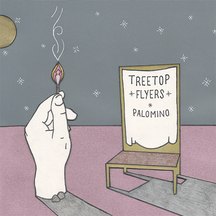
Treetop Flyers. Palomino. Loose Music.

Ross Ellis 12" Gatefold 11298

I must confess to really wanting to like Treetop Flyers. They hit all the right buttons, their name copped from a Steve Stills song, their vibe that West Coast seventies highway hum, the liquid guitars spiralling into the sunset. Palomino, their second full album, continues in the vein of its predecessor, 2013’s The Mountain Moves, the vocals recalling America’s Dewey Bunnell but at times the music is reminiscent of mid seventies bands who added soul music, Latin influences and jams to the initial clear air of the originals.

Several of these songs exceed the six minute mark and are dominated by whirling organ and guitar flourishes that cloud the quality of the songs. Live they may be quite exhilarating but on disc there’s a temptation at times to skip to the next track. Having said that the setting might be an issue here as when I listened to the album in the car on an hour plus drive it was quite invigorating and remained in the player for a second listen.

The album gets off to a fine start with the grand sweep of You, Darling, You, a song that does inhabit that same Ventura Highway that America ventured down but in this case instead of long hair flowing in the breeze of a convertible there’s a sense of claustrophobia, windows tight shut against the night, the road a lost highway. Sleepless Nights zips into action with Allman Brothers’ guitar like duelling as the band buckle up for another bumpy ride, turning off to Altamont instead of Woodstock with a fine pastoral coda acting like a rear mirror view of what could have been. There’s another left turn as Lady Luck tucks into another strand of yesteryear, UK post psychedelic rock, Canterbury bands such as Caravan. Here mellotron and guitar swirl around portentous lyrics, the song wouldn’t be out of place on an early King Crimson album. From here on in there’s a patchwork of sounds. A lysergic soul number in It’s A Shame, a Santana like rumble on the lengthy Dance Through The Night (which, if were a stick of rock, would have Fillmore West stamped throughout it) and on Never Been As Hard they dive into a submarine world of swooning guitars and soft mallet percussion as Reid Morrison plumbs emotional depths the likes of Mercury Rev could only imagine. There’s a magical end to this song as a discordant piano outro abruptly stops as the band launch immediately into their closer, Wild Winds.

Apparently, the album was recorded following a period of turmoil for the band members and this is reflected in the barest song here. St. Andrews Cross is a stark lament set to acoustic guitar, the harmonies casting some light on the darkness like a stained glass window in some dark cathedral. It starts wonderfully but like several of its siblings it could have done with some pruning. Overall, the album is a bold venture but it lacks focus although there are some killer songs in here that definitely grow with repeated listens and which are tailor made for the stage.

Website

Love. Reel To Real. High Moon Records


hmrlp003w03

Arthur Lee, Love, Americana? Well, this blog is so named thanks to the great ZigZag magazine which informed much of this writer’s formative musical years (ears) and old Arthur was a ZigZag hero so news of a CD (and vinyl) release of the last “proper” Love album deserved some investigation.

By 1974 Lee was pretty much a done deal, his sixties glory days behind him and despite Love’s albums, in particular Forever Changes, considered classics of LA psychedelia, his band was gone, Bryan, Snoopy, Echols and DC cast to the wind. Lee himself was considered wayward and difficult but those fans of Forever Changes were desperate to will him into creating another masterpiece and so it was that RSO Records offered him a bunch of money to make another album. It sank like a stone.

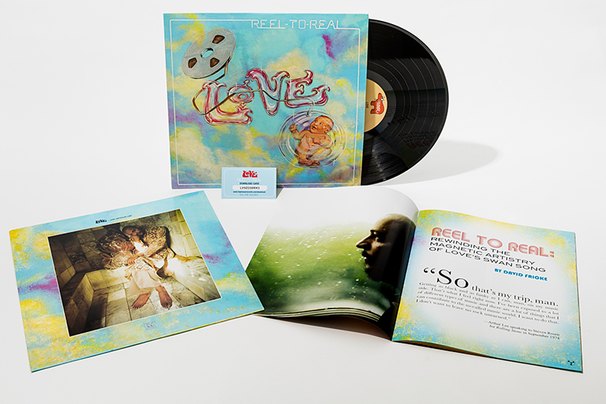
So is Reel To Real worth a listen these days? Well, it’s the first time it’s been available on CD so diehards will go for it. In addition there’s a whopping 12 additional tracks and a 24 page booklet detailing the album’s genesis and ultimate death throes, more manna for Lovemaniaxs. It’s not Forever Changes, in fact it’s not remotely like any of the Elektra albums, but listened to in the clear light of day, preconceptions cast aside, it’s a sometimes thrilling and always intriguing slice of seventies funk, Lee not in rainbows anymore but Black and proud, digging Hendrix, Sly, Otis and Curtis Mayfield. There are some hypnotic grooves, fat horn riffs and clavinet propelled funk chunks that place the album firmly in its time, if this was an obscure act finally unearthed then I’m sure folk would be salivating over it and Quentin Tarantino would already be cueing it up for his next Blaxploitation flick.

There are shades of the super cool LA hipster on you Said You Would and Singing Cowboy (from Four Sail) gets a reprise but there’s a fascinating glimpse into what the moneymen (and fans) were wanting in the final track here. A previously unreleased rehearsal of a song that was written about the time of Forever changes, Wonder People has the vibe of that album, a freewheelin’, almost bossa nova swing as Lee half sings, half scats through the words. As it falters and ultimately fades out it’s a tantalising glimpse into an alternate world. Nevertheless there’s enough solid energy in the album itself to keep a listener satisfied. Time Is Like A River is a strong Gospel inflected churn similar to what Delaney and Bonnie and Leon Russell were popularising at the time. Who Are You? visits funk central, its busy horns, frenzied keys and percussion with some liquid guitar solos somewhat badass. With A Little Energy buzzes with its sloganeering tying it into the vibes of the time, all Wattstax and that and Be Thankful For What You Got is a gossamer glide into Curtis Mayfield territory.

Lee and Hendrix were apparently mutual fans and on Busted Feet Lee dives headlong into the distorted blues world of Hendrix coming up with a tremendous approximation of The Band Of Gypsies era. The original album had a truncated version and there’s an extended and indeed heavier take included here which is just sublime, Lee adlibbing as the guitars scatter and squall, the end result somewhat breathtaking.

So, a relic of sorts but an important addition to the Lee canon. Lee himself seemed reconciled to be forever tied to Forever Changes in his later years as he toured with his ensemble recreating those glorious sounds, a better ending to his turbulent and troubled life than many would have anticipated. Reel To Real however is another testament to his vitality. And while it’s cool that Reel To Real is at long last available on CD High Moon are also issuing it in a deluxe two disc vinyl edition.Go visit them if you’re interested.

High Moon Records

Carrie Rodriguez + The Sacred Hearts. Lola.

210d32e2e287d008900f6a706700d363


Carrie Rodriguez first came to prominence on her collaborations with Chip Taylor before delivering several solo albums, her vocals and fine fiddle playing along with some deft song writing planting her firmly into the Americana camp, Austin, Texas chapter. Lola finds Rodriguez firmly embracing her Mexican roots, abandoning dusty Texas ballads for a set of songs, some staples of the Mexican music scene and some written in that vernacular, delivered in English and Spanish, all set to a wonderful Latin infused sultriness.

Rodriguez was inspired by her great aunt, Eva Garza, a San Antonio born recording star of the 1940’s and set out to capture some of that era’s Chicana romanticism, much in the manner employed by Ry Cooder on his reimagining of Cuban ’50’s music on Mambo Sinuendo. Cooder wasn’t content to just recreate the sound of the times, imbuing his album with a modern gloss and so Rodriguez does here, her ace in the pack being the presence of Bill Frissell whose guitar playing throughout sparkles. Frissell is but one part of the band conjured up for this album and christened The Sacred Hearts (the other members being Viktor Krauss, bass; Luke Jacobs, pedal steel, guitars; David Pulkingham, guitars; Brannen temple, percussion). Raul Malo of The Mavericks sings on one song and Max Baca adds bajo sexto with Gina Chavez also adding some vocals. Throughout the album the playing is exemplary and producer Lee Townsend captures the ensemble perfectly, the melodramatic ’40’s passion balanced expertly with a modern clarity.

The die is cast from the opening swoon of Perfidia, written by Alberto Dominguez in 1939, it went on to be a big band standard when Glen Miller glossed it up. Rodriguez ditches the English translation singing in Spanish with Raul Malo in tow. The music is a sinuous (and sexy) mix of twangy guitars, languid rhythms and exotic language (at least for those of us stuck with basic Anglo Saxon grunts) and she repeats this throughout the album albeit offering some of the songs in English. The covers include Que Manura de Perder, a wonderful duet between Rodriguez and Jacobs, she is singing in Spanish, he in English, both dancing around the song. There’s the tango drama of Frio En El Alma and the deep nostalgia of Nocha De Ronda, a song that begs to have a lush video setting as Rodriguez inhabits the melodramatic posturing of the era. Written by Maria Teresa Lara, Nocha De Ronda is here given a performance that elevates it into the heights. A torch song, beautifully realised by the band, it conjures up images as disparate as Isabella Rossellini’s stained victim in Blue Velvet and the stark monochromatic vision of Mexico in Orson Welles’ Touch Of Evil.

Rodriguez does well in her own writings, Llano Estacodo is a menacing stew of snarled guitars with a southern drawl while La Ultima Vez flows wonderfully. Z is a sassy slice of swampy blues and Cariocas lilts along with some tenderness and verve. She closes the album with a fine double whammy on an instrumental and then vocal take on Cuco Sanchez’ Si No Te Vas, the former stately and again reminiscent of Ry Cooder’s reclamation of this music, the latter, a wonderfully stripped down cantina type plea, Rodriguez giving it all.

website