Findlay Napier. A Very Interesting Conversation.

a2170981267_16

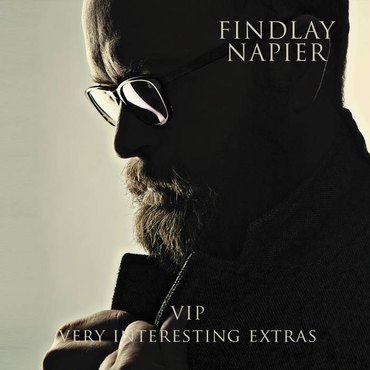
It was a tired but happy Findlay Napier who met up with Blabber’n’Smoke in early February to talk about his latest release, an EP called VIP Very Interesting Extras. As the title implies this is a companion piece to his 2015 release VIP Very Interesting Persons, an album that was given the accolade of second best folk album of the year by Martin Chilton, music critic of The Telegraph. We had meant to talk in January but there was the little matter of Celtic Connections to contend with, Findlay’s workload there, hosting the late night sessions at Drygate (seven shows in all) along with his work curating Hazey Recollections just too much for his diary.

Very Interesting Extras, released this week, is a five song EP that complements the 10 songs on Very Interesting Persons. That album, a result of a mentoring project funded by Creative Scotland which saw Findlay teaming up with Boo Hewerdine, is a collection of songs about people who lived “interesting lives,” some famous, some not so. Favourably reviewed on release these songs about folk such as Hedy Lamarr and Mickey Mantle were fine poetic encapsulations with some biographical detail included but it was the imagery and allusions that stood out along with the quality of the playing and Napier’s strong vocals. Much of the biographical material was gleaned from the likes of Wikipedia in the first place with Findlay and Boo then taking the raw material and shaping it into song. Their success in bringing these characters to life in a musical setting was enhanced by the short notes which accompanied each song on the album sleeve. Tantalisingly brief they begged the listener to carry out their own Wikipedia expedition to find out more regarding these intriguing folk, folk like the Japanese soldier who refused to surrender until 1974 and Jimmy Angel, the pilot who accidentally discovered Angel Falls in Venezuela. Happily, Findlay has produced a book (VIP – Behind The Lyrics) which offers more detailed information on the subjects along with his inspirations for the words.
0006049862_10

The EP was recorded at the same time as the album and opens with another song about an historical character, this time Harry Houdini, and closes with another true story. The other three songs however are fictitious creations, dreamt up by Findlay from observations and situations he’s encountered. We started off by talking about the EP. The songs here are as strong as those on the album, there’s no sense of them being outtakes or demos so I asked Findlay why none of the five songs made the cut for the album.

Well, they were all recorded at the same time. We had 15 songs recorded but we only wanted to put 10 on the album, a self-imposed limit, so we had to consider which ones to leave off. After The Last Bell Rings, Princess Rosanna and 52Des aren’t technically about real people so they were the first ones to be left off. With How Will You Escape, well, we just thought there were too many songs in 3/4 time, Boo in particular was listening to the songs and making sure there was a certain amount of variation in the running order. So on the last day we recorded Eddie Banjo and Sweet Science simply because we had too many waltz time songs. The Houdini song actually was one of my favourite co writes with Boo. I wrote the three verses and sent them to him and he wrote the chorus and the music, he wrote it on a ukulele actually. And while it’s about Harry Houdini I was actually thinking of Amy Winehouse when I wrote it, that thing about having to please your audience and having to push yourself one step further. Houdini I think had to do that, in fact I think he died after challenging someone to punch him in the abdomen. And Winehouse, I mean Rehab was just perfect and then Back To Black came out and it was like, how can she top that? And when her drugs stuff was going on a bunch of us were drunk up in the Shetlands and we thought we should just get a van, go to London, grab her and bring her back to some croft and dry her out so she can get on with her music. Daft, but looking back maybe someone should have done it. However, back to the song and your question, as I said we just had too many in 3/4 time so it didn’t fit into the running order.

Can you tell us about these fictitious folk, Princess Rosanna for example?

I was underneath Jamaica St. Bridge, it was part of my running route and on the north side, under the bridge, someone had spray painted in luminous pink, “RIP Princess Rosanna” and I took a note of that on my phone and it just grew out of that. I haven’t found out who Princess Rosanna was, nothing on Google or anywhere so I liked the idea that it’s a bit of a mystery, was she murdered, did she drown, was it suicide? It’s a wee bit like Taggart, I wanted to leave that unknown and then I liked the idea of her body being taken out by the tide and then coming back in, I can see it as a wee black and white film. I used to hill walk with my dad on a place called Ben Rinnes and close to that is a smaller hill called Babby’s Moss. It’s named after a woman who killed herself and was buried there because as a suicide she couldn’t be buried in a churchyard or cemetery and that had always stuck with me, I mean, what an unchristian thing to do to someone who was so unhappy they killed themselves. At least let them actually rest in peace because they weren’t at peace when they were alive. So that was woven into the song.

And what about 52Des?

Well Des is not a real character but it was a real number plate on a car, a BMW I saw in Haghill when I was out running. In Haghill there were doorways were people were dealing and I thought, “Oh Man, don’t park a brand new BMW outside an old tenement,” because that’s giving the game away, telling the police a drug dealer lives here. The last line, “your beautiful things always give you away,” it’s like in crime films where there’s always one idiot in the gang who can’t wait to spend the money instead of sitting on it until the heat fades, so Des is that guy.

Folk will know who Harry Houdini, who you sing about on How Will You Escape, is but can you tell us what inspired the closing song, Showfolk?

Boo wrote that one and it’s a kind of complicated story. The album was a Pledge campaign and a guy called Jono McLeod who is a filmmaker was one of our major backers at the level where we would write and record a song based on his idea. He then sent us a story that was just perfect for VIP all about his uncle, a Scots’ comedian called Jimmy Mac. I had several goes at writing it but they were awful, just dreadful attempts and then Boo just called me up and said I’ve done it and sent it to me and it was just right. It’s a great story. Jono’s uncle was a comedian in Glasgow working in music hall and he then fell in with a troupe called Fred Roper’s Performing Midgets down in London. Roper had this trick of promoting his show by organising midget weddings and he thought it would be a great idea to have Jono’s uncle, a tall, slim guy, marry a midget. Her name was Winnie and even though it was a publicity stunt she fell in love with Jimmy, Jono’s great uncle. It’s a bizarre story, in fact there’s a whole album of songs or even a movie in there all about Fred Roper’s Performing Midgets but you can’t really say midget these days, the term now is little person. Anyway the song’s about Winnie and her having to come to terms with it all being a publicity stunt and it’s full of killer lines from Boo like, “the angel on my shoulder lied, perhaps the lie was mine,” and really I can see Boo just running through this minefield of political correctness trying to write this song without using THAT word. It could be too easy to turn it into some funny circus type song but it’s turned out really beautiful. And another great thing about it and something I totally forgot to mention on the EP credits is that Jono sang the backing vocals on the song. He came in to film us recording and we managed to persuade him to do it so there’s a nice connection to the story and the performance as it was his uncle and he sings on the song. It’s even weirder how Jono came to find out about the story. He was at some exhibition in London and saw this photograph and recognised his uncle in it. So he went to his family and asked them and gradually got all the details. His uncle, Jimmy Mac, appeared at the Panopticon with Stan Laurel back in the music hall days and then years later he was actually in Dad’s Army as one of the Home Guard platoon!

Going back to the album, you mentioned Eddie Banjo and it’s a song that really stood out for me when I first heard it, it reminded me of Gerry Rafferty’s Can I Have My Money Back.

My dad told me about Eddie Banjo and Boo said, “let’s try to do a song with only one chord,” so up until the bit from You Are My Sunshine kicks in it’s only one chord. But, I can see what you mean about Can I Have My Money Back, I love that album. In fact one of my early memories was a birthday party, I must have been about primary one,  and my parents played that song while we were doing musical bumps, you know, everyone has to sit on the floor when the music stops and as we all jumped down the needle was skipping and jumping on the record. My dad, I think a lot of his records were stolen at one point but he had Penguin Eggs and Can I Have My Money Back and Do You See The Lights by Rab Noakes, maybe a Hamish Moore album as well. There was also an album called The London Hootenanny (recorded live in 1963 with martin Carthy, Alex Campbell and Nigel Denver among others) and I learned every song on that album and then later we got Rab Noakes’ Standing Up which was a big influence on me, I learned how to do all the songs on that album. Standing Up is a real good solid album, it’s like, “here’s how to write a song and here’s how to put a bunch of them together and if you do that it’s going to be great.”

Is it true that you used Wikipedia to find out about these characters?

We used Wikipedia for some of the songs, Hedy Lamar, The Man Who Sold New York, Angel Falls, Rising Sun, Idol in Decline. Sweet Science was mostly taken from an article in The New York Times. Eddie Banjo was a story from my dad about a guy who used to tramp around Wick, What A Shame About George, well, that’s just me because I love George Jones. Valentino I got from Tumblr when I saw a picture of her there. The Sport of Kings was mostly from a Guardian obituary of Sir Henry Cecil which I tweaked a bit

So, out of these twelve characters which one is your favourite or the most intriguing?

It’s probably Hedy Lamarr. It was again really weird how I found out about her. I was watching a documentary on The Adverts and they said that Gaye Advert, the bass player, looked like Hedy Lamarr. I’d never heard of her so, onto Wikipedia and it had this stuff about her inventing Bluetooth, “Aye right, typical Wikipedia,” I thought, but I looked a bit further and sure enough, she had developed a forerunner of the technology. I was playing a gig and when I was introducing the song some guy shouted out, “Oh, she didn’t actually invent Bluetooth,” and I was like, “Okay, this is a gig, not a lecture, let’s just say she did for the sake of the song.” But there was so much more about her, married six times, done for shoplifting, just a fascinating life but such a hard one. People think; Hedy Lamarr, rich and famous, but she was beaten up by her husbands, she wanted to be a scientist but the guys in charge said no, they didn’t want that, they just wanted her for her looks and that’s what that line, “every time the lights shine down you disappear,” means, Hedy Lamarr vanishes and all we see is the character she’s playing.

a31bbe_c8e3841639a642e1abf1215cae3f5c48

Picture copyright Shaun Purser

You’ve said the release of the EP wraps up this VIP phase so what’s next on the cards?

There’s a tour coming up for late February and March, all over the place right down to Torquay and back up again. In London I’m doing a show called Boo Hewerdine and Friends along with Chris Difford and Brooks Williams, we did it last year at the Ely folk festival. We all do short sets and then bits together and it went down a bomb so I’m really looking forward to doing it again. It’s an honour to play with Boo and Brooks and especially with Chris Difford, he’s one of the greatest lyricists in the world in my opinion, him and Nick Lowe and Elvis Costello.

Then I’ve been thinking about a couple of projects. I’ve been living in Glasgow for 20 years come October so I’d really like to do something around that, 20 years in Glasgow, although it might need a snappier title. I’m also really keen to do a folky type thing with some of the hip hop artists around, folk like Loki and Solareye from Stanley Odd, I’ve got this thing in my head that’s a folk hip hop thing that I want to sort out. And then there’s a song writing workshop with Karine Polwart. That’s already sold out and it’s pretty exciting. Teaching or tutoring has really blossomed over the past few years and I’ve been really lucky because I’ve been doing it for some time so I’ve got the skills needed. Apart from the workshops with Karine I’ve done stuff at the Scottish Music Centre and some really interesting work with Vox Luminis who work with prisoners and their families. I went to Castle Huntly prison with Louis Abbott and Donna Maciocia for three days and we wrote songs with the guys in there and it was fantastic.

There’s also a couple of commissioned pieces I’m doing. One for the Hartlepool Folk Festival writing about East Durham and that was really interesting. East Durham is where the final scene in Get Carter was filmed, the black beach and the coal being tipped out to sea. Well now it looks like the Mediterranean, the sea is blue, so clear you can see the rocks below. It’s a beautiful place now but its surrounded by all these old colliery towns that have problems, no work and lots of drugs. A really rich history to write about. I’ve also been asked to write a song for the 250th anniversary of my hometown Grantown on Spey.

Finally, how did it feel when The Telegraph put VIP in second place in their folk album of the year list?

Fantastic, really really fantastic. Stuff like that, well it helps when you try to get a gig, they might not seem too interested but when you point that out they perk up a bit. It’s like a passport and it’s helping to open doors in America and hopefully Europe, I’d really like to do more tours over there.
napier

So there we have it. The album, EP and book are all available via Findlay’s Bandcamp page  and his tour dates are all  here including a show at The Glad Cafe on March 2nd. All very interesting indeed and, who knows, the knowledge contained within might just include that esoteric piece of information that will win you the tiebreak in your local pub quiz. If not, well, just enjoy some very fine and very interesting  music.
Miranda Lee Richards. Echoes of The Dreamtime.

ed_peach_flowers_freehand_stipple20copy

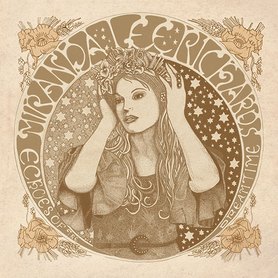
A daughter of the sixties, her parents being contemporaries of Robert Crumb in the Underground Comix world of San Francisco Miranda Lee Richards first came to attention as a member of the anarchic Brian Jonestown Massacre, appearing in the acclaimed film, Dig!, which, if you haven’t seen, you should. Echoes of The Dreamtime is her third solo album and it leans more towards what one might expect from a flower child’s child as opposed to The Jonestown’s more combatative efforts. Recorded at her home studio with husband, Rick Parker producing, the eight songs here are sumptuous slices of ethereal folk/pop/rock, bathed in a sunny glow, the instruments sparkling like reflections from a crystal pool.

Richards has a glorious voice, at times reminiscent of Laura Cantrell, which is heard to best advantage on the flowing Tokyo Dancing, gliding over the shimmering guitars and on the closing contemplative Already Fine where she’s multi tracked over a string section with the guitar underlay recalling the English folk revival of the late sixties; the weeping cello and viola melancholic. Lyrically she veers towards the self aware meanderings and symbolic portentousness common amongst some Seventies freak flag carriers (yeah, Dave Crosby, we mean you) but when the words are wrapped up in the hypnotic swoon of a song like 7th Ray the effect is just so appealing.

7th Ray opens the album with a bang and the following Tokyo Dancing promises a full garden of delights here. However Little Radio is somewhat clumsy, the guitars too charged up as if the aim here is FM radio play (if that still exists), the same applying to the menacing First Light Of Winter while It Was Given tends too much towards the twee pastoral psychedelic folk that stuffed record racks back in the days. However there’s pay dirt in the two songs that are the centrepiece of the album. Julian is a direct hit into the heart of the sixties, tabla and sitar pinning the song into the Indian music fetish of the times while Colours So Fine shines, its arabesque guitars and busy drum sound hitting a Byrds like groove, the harmonies soaring aloft. More of this and the album would be that much better.

website

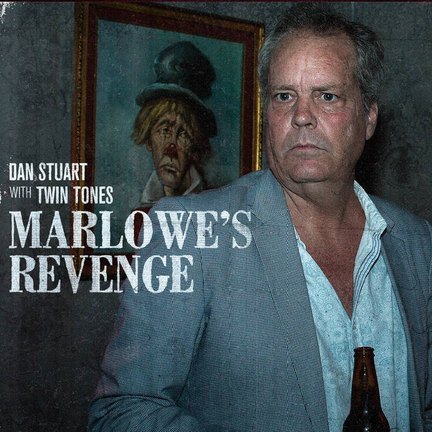
Dan Stuart With Twin Tones. Marlowe’s Revenge. Cadiz Records.

a3237830926_16

“He was safe here; this was the place he loved – sanctuary, the paradise of his despair.”
Malcolm Lowry – Under The Volcano.

Malcolm Lowry, author of Under The Volcano, a novel about a drunk and disillusioned ex consul falling apart in Mexico, was an English writer who fled to Oaxaca, Mexico back in the 1930’s following a marital breakup and a spell in New York’s Bellevue Psychiatric Hospital. Dan Stuart, known primarily as the singer of the now lauded Green On Red, trod this self same path around five years ago, rebuilding himself with the assistance of his alter ego, Marlowe Billings, under which name he wrote a “false memoir,” The Deliverance of Marlowe Billings and recorded an album of the same name. Mexico, despite its murderous reputation, appears to have been some kind of salve for the battered and bruised Stuart as he slowly re-entered the music business, however he seems to have been somewhat repelled by the current rules of the game, the sanitisation, the pigeon holing that goes on; he wanted to sound dangerous, to get some revenge on the business that all but chewed him up and spat him out back in the eighties. Holed up like some Graeme Greene character Stuart recorded some songs with a Mexican engineer, Daniel Sanchez Jimenez, who added some rudimentary percussion backing to Stuart’s guitar strums (a little black egg shaker and thumped telephone directory). Some of these songs were released briefly on Stuart’s A Little Guitar EP but he wanted more, some danger, someone to really spark off of.

“In Mexico your wishes have a dream power. When you want to see someone, he turns up.”
William Burroughs – Junky.

Stuart already had a foil, the mercurial Italian band, Sacri Cuori, who are like a dream band from an Alexandro Jodorowsky vision but they were 6,000 miles away. Burroughs’ drug stained quote is apt however as Stuart found a bunch of Mexican upstarts via Google who played scuzzy surf and garage rock, Twin Tones they were called. Contact made, turns out they had some mutual friends including Steve Wynn and Danny Amis from Los Straitjacket, and lo, holy mescalito, a union was formed and thus came about Marlowe’s Revenge.

Bolstered by the retronuevo garage blasts, fuzzed guitar and cheesy organ throbbings of Twin Tones Stuart lets loose his demons here, his voice snarling, sneering, sometimes vulnerable. Hola Guepo (Hello Beautiful) is a blunderbuss slice of 60’s fuzz punk, the guitars snarling like a two headed dog as Stuart pens a poisonous will for his wife singing,” you’ll get my ring, wear it from your neck, try not to choke on it.” He returns to his sense of abandonment on the spectacular guitar blazoned epic Soy Un Hombre, almost spitting out the words, “I’m a man who has always loved you no matter what the world had to say but you decided to leave with another less worthy than me.” There’s despair on the melodrama of Last Blue Day, a song that recalls Loudon Wainwright’s desolate Central Square Song on the opening bars before the band weigh in with a hefty thump sounding like a psychedelic version of The Band, Stuart at the end of his tether, dark thoughts on his mind with this stark image, ” darkness greets me as I open my door the rope on the crossbeam hangs to the floor.”

There’s  bi-polar mood swings throughout the album, rage, despair, defeat and a manic edge to some of his Boho tales of life on the skids, the cannibalistic fantasies of The Whores Above swimming in a scuzzy garage punk morass of guitar and organ mixing up Burroughs, Bukowski and Brion Gyson, an evil laugh from Stuart catching the unhinged joy of narcotic revenge. I‘m All Over You is an amphetamined Dylan sneer,  the tune pummelled into submission by massed handclaps and a stratospheric guitar solo while Name Hog roots itself in a Lou Reed strut as Stuart snarls his contempt of the treadmill rock’n’roll route.

Lest it be thought that these are just the musings of a misanthrope set to a farfisa and tremeloed heaven (or hell) Stuart actually delivers a bona fide (although slightly skewed) love song on the delicious Elena, a twisted Tom Petty like song that some brave radio shows might pick up on while Over My Shoulder is almost tender. Zipolite is a script in waiting, a sonic Mexican riposte to Alex Garland‘s The Beach, the band ominous as waves crash and dogs howl in the mix, this is really quite wonderful. Stuart winds it up with the languid flow of The Knife, a song that allows the band to show their mellow Santos & Johnny side although there’s a hint of menace in the guitars as if they’re being honed to kill; his whispered words recalling Brando’s utterances in Apocalypse Now.

Marlowe’s Revenge is an album that will surely please those who hanker for the unruly days of Green On Red, Stuart teetering on the edge, still sounding dangerous. However, This Dan Stuart is older, maybe wiser, certainly bearing more scars. I’ll leave the last words to his old sparring partner, Chuck Prophet, “It’s like I tell people, mark my words: Dan Stuart will end up in jail or an institution or living above a discotheque in Mexico City still writing real songs and shaking his fist at the world.”

Dan Stuart is embarking on a lengthy European tour including a date in Glasgow on 25th February where he’ll be supported by Tom Heyman (whose album Blabber’n’Smoke reviewed here) and Fernando Viciconte. A compelling performer this is not to be missed. All tour dates here.

And here’s a taste of Twin Tones

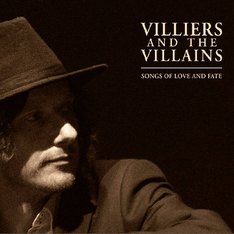
Villiers and The Villains. Songs Of Love and Fate.

a4180087236_16


Tony Villiers from Armagh, N. Ireland seems to be a bit of a Dylan fan calling his first album Thin Wild Mercury, a reference to a famous Dylan quote when he was asked to describe his mid sixties music. Songs Of Love and Fate, his second album, could similarly be a nod to L. Cohen’s 1971 album, Songs of Love and Hate however anyone expecting an album of dyed in the wool existentialist angst will be somewhat let down. Now surrounded by his Villains (Paul Meehan – Guitar, mandolin, banjo, Kevin Mahoney – Bass guitar, Aidan McGillion – Percussion , Paul Gurney – Piano, organ, guitar, accordion , Danny Sheerin – Backing vocals and Tony Fitzgibbon – Violin) Villiers still has a bit of a Dylan habit, witness his Big Old Dancin’ Bear Blues. It opens with Villiers coming across like the early Dylan; scuffling for basket money in Greenwich Village with his talking blues songs before the band come in after a few bars, the focus switching to Dylan and his Canadian buddies holed up in Big Pink having fun as they recalled that old weird Americana. Of course Villiers et al aren’t up there with Bob and The Band but he does grab the essential sense of fun that was conjured up in Woodstock and lyrically the song is a tremendous grab bag of Villiers’ heroes referencing Johnny Cash, Ray Charles and of course Dylan himself while also throwing in Pretty Boy Floyd for good measure.

The heady mix of country and blues that composes The Basement Tapes is recalled on several of the songs here. Lucky Rabbit Foot is a fine loose-limbed ramble with a fine joke in the opening lines as Howlin’ Wolf comes “a ‘knocking at the door” while Dear Mama is a steady rolling song with some fine bar room piano barrelling throughout. Villiers and band deliver this type of folky blues with some aplomb, able to go old time on Rabid Dog Blues and get down and dirty on the lascivious Last Night although here they’re leaning more towards an urban electric blues groove.Rocksalt meanwhile leans more towards the UK sixties acoustic folk scene, almost easy listening but with a slight nod to that old refrain of having cocaine in my vein.

Dylan is again recalled as Villiers opens his song Ramblin’ Man with the words, “Woody Guthrie was a ramblin’ man” but here the band hit a different stride as they hit a groove that, despite the Dylanish harmonica, recalls the strut and swagger of Lou Reed or Willy DeVille. Whether this was written after Villiers and the band were more comfortable together is not known but it serves notice that they’re capable of much more than their very efficient delivery of country blues songs. This is compounded by the excellent opening song, Devil And The Deep Blue Sea which again has the Lou Reed street suss and arrogance delivered with a grand sweep that, as the fiddle becomes more prominent, moves into Waterboys territory. More so, Swinging Into The Sunshine mainlines Lou Reed like lyrics and vocal warbles, the band humming in the background on what is a minor gem of a song.

website

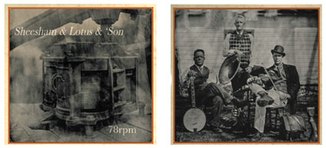
Sheesham & Lotus & ‘Son. 78rpm.

both1
Regular visitors to Blabber’n’Smoke will know that we’re partial to old timey sounding American music, a habit we’d date back to first hearing The Nitty Gritty Dirt Band’s album, Uncle Charlie & His Dog Teddy, which had a scratchy rendition of Chicken Reel on it (40 years on and any album with a chicken scratch rhythm on it gets automatic approval here). Anyway, while the reissue industry has made much of the genuine article available, over the years we’ve been privileged to have heard and seen several bands who seem to breathe the same air as The Carter Family, The Skillet Lickers, Uncle Dave Macon and Bascon Lamar Lunsford, all of them entertaining and often leading to frenzied Googling in order to hear the originals. Imagine the frisson then when the latest from Canadian trio, Sheesham & Lotus & ‘Son dropped in the post; a trio well versed (one could say immersed) in this very music, they’ve not only produced another fine collection of sepia stained rag time, blues and country, they’ve gone the whole hog and recorded their songs direct to 78rpm lacquer.

The project has come about via the auspices of Tyneside based Lathe Revival, an organisation dedicated to vintage recording techniques and in possession of a 1937 Presto recording lathe, the self same machine that was lugged about by Alan Lomax for his field recordings. In the summer of 2015 the band travelled to Skegness (yes, a wee bit away from Appalachia although I’ve heard tell it’s bracing) for seven days of recording, all captured by this steampunk technology with each song singly carved into lacquer as it happened. Unfortunately the logistics of offering a 21 disc collection of the songs is somewhat beyond their reach but this CD is an accurate representation of what went down and stands up as a very fine listen.

The trio, banjo, parping horns, fiddle and hollering voices, are delivered faithfully as if they were in a hot and dusty hotel room back in the thirties. The sound is thick, sometimes muddied, the limitations of the recording process apparent (the last tune, Up The Wooden Hills, suffering the most and probably only there as the CD process allowed an extra number). However the majority of the songs transcend (or benefit from) the patina bestowed upon them from the opening jollity of Down In Your Pockets to the rousing 1929 and the vaudevillity of Sister Maude Mule. The mannered grandeur of All Dressed Waltz is evocative to the nth degree, stately but slightly infirm it could have been the backbone of any number of “authentic” Western movies from McCabe and Mrs. Miller to Cold Mountain. The album is a somewhat audacious concept but for fans of the band and aficionados of old time Americana I’d suggest that this is essential listening.

For more information on the Lathe Revival see here

website

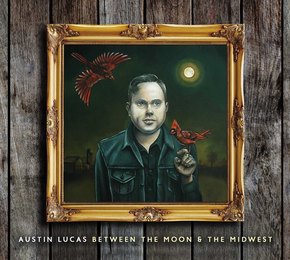
Austin Lucas. Between The Moon and The Midwest. At The Helm/Last Chance Records

btm_tm_lp_cover

After the country rock rumble of  Stay Restless Austin Lucas has stumbled further down that path to come up with the glistening jewel that is Between The Moon and The Midwest. I say glistening but shimmering would do just as well as there are moments here when the music does just that, it shimmers. Sure enough it’s laden with pedal steel and ringing telecasters, the ghost of George Jones is in the mix and there are some glorious duets with Lydia Loveless but Lucas, in tandem with Glossary’s Joey Kneiser has swathed the album in a sixties like sheen. Elements of Gram Parsons’ Cosmic American Music, Glen Campbell and Jimmy Webb’s Wichita Lineman and even Brian Wilson’s teenage symphonies are all recalled while there’s a nod to the more recent metaphysical musings of Sturgill Simpson. There’s even, if you dig into the lyrics, a concept of sorts, several characters appearing in several of the songs.

The album opens with a welter of sounds as if the band were tuning up like an orchestra before Unbroken Hearts hits its sweet country stride. Riding the range here like Waylon Jennings,  Lucas lays his cards on the table from the start singing, “I’ve been told to walk away nearly every time I make an album. I hear there’s no good men left, everyone in Nashville’s deaf, sad songs are a thing of the past.” Thankfully over the ten songs here he proves conclusively that those deaf guys are in the wrong. Unbroken Hearts itself proves the point, its muscular Jennings chug leavened by some gliding pedal steel and chiming guitar especially at the end of the song as they spiral away. Lucas digs into the muscle and sinews of country rock throughout the album. Ain’t We Free rips away like Doug Sahm rocking the Armadillo back in the seventies, the curling guitars going apeshit while The Flame is introduced with a tremendous thick stringed grungy guitar strum that propels the song into a cosmic honky tonk heaven with a stinging pedal steel solo that recalls the fuzz fuelled efforts of Buddy Cage and Sneaky Pete back in the days. Wrong Side Of The Dream ripples along like The Burritos backing Gram and Emmylou with Lydia Loveless trading lines with Lucas in fine fashion before Lucas dips into George Jones territory for the piano led tear stained heartache of Pray For Rain.

An album composed of the above would already be well worth listening to but Lucas and Kneiser up the ante with a brace of songs that, as we said above, positively shimmer. Next To You is at heart a country ballad but it’s dressed up in a sumptuous confection of guitar and pedal steel that is like a heat haze conjuring up Dave Crosby and Israel Nash’s psychedelic country visions. Call The Doctor is like Jackson Browne or the Eagles on speed, the band whipping up a frenzied beat like a Koyaanisqatsi fast motion version of California freeway driving as Lucas thrashes around envisioning his own death. Death and dying are writ large on the closing song, Midnight (the album was recorded as Lucas was recovering from a period of depression) and here he just excels. A return to the mix of Parsons’ cosmic aspirations and old fashioned country writing that opened the album, here Lucas sounds like Willie Nelson sleepwalking with Santos and Johnny over a fluorescent nightscape, Steve Daly’s pedal steel lighting the way. It’s impossible really to convey just how good this song is, you really need to hear it. Aside from the perfect delivery the lyrics are somewhat amazing as Lucas sings

Let the devil have his horns and heathen souls.
Midnight, I’m too young to feel this old.
Only two ways this can end,
I’ve got to die or find Jesus, don’t know which one is worse.
I might die cursed, at least it’s an end
And if I’m born again I’ll live with a hole where my heart should have been.

If you’re somewhat restless waiting for that next Sturgill Simpson album to drop then grab this, it will not only tide you over, it might even be better.

The album’s released on 19th February and Lucas is playing some UK dates to tie in with that. Dates here

website


Malcolm Holcombe. Another Black Hole. Proper Records

malcolm-holcombe-2016-another-black-hole-compact-disc

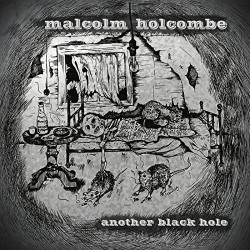
Hot on the heels of last year’s The RCA Sessions where Holcombe re recorded some of his lengthy back catalogue Another Black Hole is a very fine collection of ten new songs guaranteed to satisfy fans old and new. Holcombe certainly seems to be of the opinion that “it it ain’t broke, don’t fix it,” so there’s a familiarity to many of the songs here. Country and folk blues tunes, eminently foot tappable with his guitar picking to the fore, his voice still gruff and rough, gnarling the words, chewing them up and spitting them out. Of course the words are masterful; he’s an excellent story teller, able to open up worlds in the manner of Guy Clark and John Prine, vivid images and characters populating the songs.

Recorded in Nashville with his regular studio band, Jared Tyler (guitar, mandolin, banjo, dobro), David Roe (bass) and Ken Coomer (drums) Holcombe does add some new meat to the stew in the shape of the legendary Tony Joe White who adds some stinging guitar to several of the songs while additional percussion is handled by “Futureman,” AKA Roy Wooten. Drea Merritt adds her voice to several of the selections, her vocals on Papermill Man recalling Merry Clayton on Gimme Shelter. Together they can whip up a fine storm as on the swampy Papermill Man and the muscular title song where White is particularly impressive on guitar, his slide snaking throughout the song over the robust acoustic picking. They’re equally able to sit back and let the song ride out, nimbly picking the melody on To Get By or allowing Holcombe the spotlight on the spare September, a sombre bowed double bass the only accompaniment to his guitar playing and voice.

Be it a snarling blues tune or a sunny folk like lilt Holcombe’s word’s light up the songs. He mentions McMurtry and Cormac, presumably Larry and McCarthy respectively, in his lyrics and there are arresting lines in all of the songs here. He spits out the words, “fuckin’ damn frackin’ and backroom stabbin’ knocks me down on my knees” on Don’t Play Around while on Another Black Hole he sings, “the past has a smell and a one way ticket to leave you standing still.” Leavin’ Anna opens with the fine couplet “The Florida sunshine baked my bones All my life I been cold. Bronchitis, Winston cigarettes, I layed in bed alone.”

So, another excellent collection and the good news is that Holcombe is touring the UK and Ireland in May to promote the album with a Glasgow show included. All dates are here.

website

Songs of Separation. Navigator Records

songs-of-separation-songs-of-separation

Aside from being an excellent platform for a multitude of musicians to descend on Glasgow in the dark winter nights Celtic Connections has a reputation for commissioning or being a focal point for unique events; collaborations, celebrations, tributes, meetings of minds and songs. This year has seen the “Celtic” appropriation of Joni Mitchell’s Hejira and tribute is paid to the late Bert Jansch. The plight of Britain’s lost children is commemorated with The Ballads of Child Migration concert and Roaming Roots continues its multifaceted memories of songwriters and troubadours.

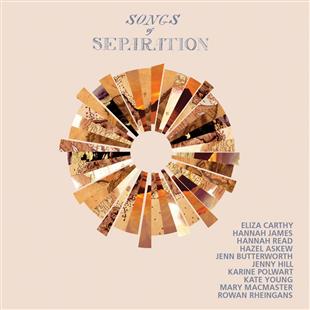
Today we’re paying attention to an album released in tandem with the Scottish premier of its live setting on Sunday 24th January at The Mitchell Theatre. Songs of Separation is a magnificent collaborative effort from ten of the UK’s leading female folk artists who gathered together on the Isle of Eigg in the Inner Hebrides last year. Separation was the theme and the stroke of genius was to offer it to a female cast as throughout history it has been women who have carried the burden of carrying on as children and men folk have left them, off to war, to sea, seeking fortune or fame or into the grave. The memories carved into song by the womenfolk who stoically carry on. The original idea was conceived by Jenny Hill as the turbulent waters of the Scottish Independence Referendum washed over the land. A travelling musician, she saw the differing views offered north to south, the idea of separation welcomed or decried hence her wish to investigate the concept.

The ten (Eliza Carthy, Karine Polwart, Mary Macmaster, Rowan Rheingans, Hazel Askew, Hannah James, Kate Young, Hannah Read, Jenn Butterworth and Jen Hill) have certainly risen to the occasion. The 12 songs here, traditional and new, sung in English or Gaelic, don’t fly any political flag and indeed, concept put aside, the album is, at base, a gorgeous collection of traditional sounding folk songs that is somewhat sublime. From the opening croak of the titular endangered bird on Echo Mocks The Corncrake (with Polwart taking the vocal here) to the closing birdsong on Road Less Travelled there’s a sense that the album was conceived in communion with nature. Indeed several of the pieces are “field recordings,” the ensemble gathering in Eigg’s Cathedral Cave for acapella renditions of Sad The Climbing and the Unst Boat Song, both haunting. Gathering songs and stories from Scotland and Yorkshire along with songs inspired by Danish and American poetry they relive the legend of the Pictish “big women of Eigg” on Soil and Soul, tell the tale of a mermaid unable to return to her land family on Sea King and recall a clan massacre on Sad The Climbing. London Lights sees Hazel Askew bemoaning the fate of single mothers with an almost music hall arrangement that recalls the warning songs of Victorian times, the sentimentality tempered by the sheer brilliance of the voices and arrangement. Eliza Carthy’s Cleaning The Stones visits similar territory musically while its lyrics are opaque and reminiscent of vintage Richard Thompson. Over The Border delves into traditional songs (including Flowers of The Forest) with Polwart pointing out the contemporary issue of refugees hindered here and there by borders that fail to see their desperate need.

It’s a wonderful album, soaked in history and tradition but bang up to date as we repeat the mistakes of the past. The singers and players excel themselves and it’s almost impossible to have a casual listen as the songs (along with a fine website) demand further investigation.

website


Gretchen Peters. The Essential Gretchen Peters. Proper Records

essential500-300x300


Gretchen Peters‘ career has been an interesting intersection of her song writing skills and her own performances. Initially she was successful as a writer, her songs providing hits and awards for country stars such as George Strait, Shania Twain, Trisha Yearwood and Patty Loveless. As a performer she found the going tougher, her early albums struggling to get recognition. Gritting her teeth she ploughed on and in part due to her frequent visits to these shores she gained momentum here, Bob Harris an early champion, and then in the States, eventually being inducted into the Songwriters Hall Of Fame. Her last album Blackbirds (reviewed here) is the pinnacle of her career so far, lauded far and wide. Now, on the eve of yet another UK tour she releases this handpicked two-disc overview of her work so far, not a “best of” but an intriguing collection of familiar songs, rarities and demos.

Disc one contains a selection of songs from her albums going back to 1996’s The Secret Of Life. It opens with the tremendous murder ballad Blackbirds, a bold move but the twelve songs that follow aren’t shadowed by it, indeed they cast light on the excellence of her work throughout her career along with her versatility. There is one previously unheard song here, a collaboration with Bryan Adams on When You Love Someone, an achingly tender duet in classic boy/girl country style, pedal steel weeping away. Elsewhere there’s no doubting the majesty of songs like Hello Cruel World and Sunday Morning (Up And Down My Street), the simple truth of If Heaven and the hypnotic pull of The Matador.

A fine selection but for any avid Peters’ fan the lure here is the second disc, the demos and live songs, many of which are unveiled for the first time. Here one can hear her own versions of The Chill Of An Early Fall (a hit for George Strait) and Independence Day (Martina McBride) while an early recording of Blackbirds with vocals shared by the co-writer, Ben Glover, is stunning. There’s a live recording of The Stone’s Wild Horses from the Wine Women and Song set up (Peters, Suzy Bogguss and Matraca Berg) with heavenly harmonies while Peters also covers John Lennon’s Love (from his Plastic Ono Band album) and sings a dreamlike When You Wish Upon A Star, originally recorded for a charity album some years ago. Best of all is the stark The Cruel Mother, a song that was included as a bonus track on some versions of Blackbirds. It’s a song soaked in tradition, Celtic and Americana, lilting and mournful and just wonderful.

Ms. Peters will be appearing at Celtic Connections on the 30th and 31st January as part of an extensive UK tour. Dates here

Have Moicy 2 The Hoodoo Bash Red Newt Records

hoodoo20bash-front20cover

The 1975 album Have Moicy! was the summit of what Greil Marcus has called The Old, Weird America, a term he coined to describe Dylan’s basement tapes which he saw as a continuation of the spirit of Harry Smith’s Anthology of American Folk Music. What Marcus missed was the true keepers of the spirit of Smith’s groundbreaking collection, the musical misfits, smokers and tokers who constituted the extended Holy Modal Rounders family and who were responsible for the delights contained in Have Moicy! After surviving the sixties (and leaving behind him a slew of discs that, among other things, added the word psychedelic to the folk lexicon, graced the soundtrack to Easy Rider and funked up The Fugs) Peter Stampfel regrouped the Rounders without Steve Weber and with Michael Hurley and Jeffrey Fredericks and his Clamtones recorded what critic Robert Christgau called “the greatest folk album of the rock era.” While in 1975 Neil Young was heading for the ditch, Stampfel and his allies were manning a gleeful and zany outpost armed with fiddles and guitars taking aim at the absurdities of the day. Songs about hamburgers, alimentary canals and robbing banks delivered with zest, rock’n’roll, doo wop and folk reimagined in their imaginary world.

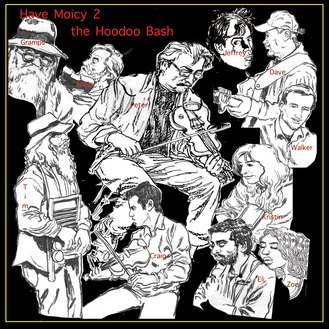
Have Moicy! ended with the song Hoodoo Bash, a saw fiddle fuelled and surreal gathering of the tribes all bringing Thunderbird wine and a pound of hash. Stampfel sings, “Lovers or strangers we’ll all go through changes when we get the good old spirit down at the hoodoo bash.” Fittingly enough The Hoodoo Bash is the given title for this long waited follow up of sorts to the 1975 masterpiece. The genesis of the album is too long to be repeated here but Stampfel had been considering some sort of sequel for some time. With original collaborators Jeffrey Frederick and Paul Presti deceased and Michael Hurley eventually declining an invite Stampfel still had Robin Remailly and Dave Reisch from the original disc and in a reflection of the earlier sessions managed to marry New York and Oregon freakiness with his inspired invite to Baby Gramps and Jeffrey Lewis to join in, the stage then set for this second summit meeting.

It’s important to state that this is not an attempt to remake the earlier album. While that may have been Stampfel’s original vision, with Hurley, Frederick and Presti out of the equation it couldn’t be. Instead it has the same irreverent yet respectful take on old time American music going back to minstrel shows and up to early rock’n’roll. Recorded without overdubs and no chance to listen to the tapes (other than for producer Matt Sohn) it’s an unholy mess but wonderfully so. Instruments wheeze and splutter, plink and plonk with the rhythm wavering and voices appearing from nowhere on the choruses. The ensemble are completed by Kristin Andreassen, Zoe Stampfel and The Dustbusters and it’s a song by a member of The Dustbusters, Rich Man Poor Man that best displays the wonky groove they found and worked on while the instrumental Banjolina shows that there was indeed a lot of work put into rehearsals with the ensemble playing here incredibly tight. Scattered throughout the album, Stampfel’s goofiness, Lewis’ witticisms and Gramps’ seadog saltiness are all aired while all three Dustbusters contribute songs that sound as if they were written a century ago.

Stampfel opens the album with his reboot of Del Shannon’s Searchin’ complete with spooky hoodoo chorus voices while New Fiddler’s Dram is classic Stampfel weirdness adapting the old chestnut into a tale of, as he puts it, “a patricidal mother fucking skull fucking sociopath.” It works a treat as does Eat That Roadkill, originally a minstrel song called Carve Dat Possum, it has a similar macabre pull as those old racist cartoons that depicted black folk as simple folk happy just to sing.

Lewis in the main takes Stampfel tunes as a start point, he channels the sixties in Nonsense, a wonderful ditty that does recall the psychedelic sweetness of Random Canyon, Intelligent Design could have sat easily on a Fugs album and It’s No Good is a skeletal slice of beat freak folk, a Horse Badorties for our times. As for Baby Gramps, his songs are shanties of the utmost saltiness, his voice growling and burbling in fine fashion on Nailer’s Consumption and Crossbone Scully. While I’ve kind of separated the contributions here, throughout the album there’s a fine degree of cross fertilisation, lead vocals swapped and shared, a true collective effort.

A wonderful collection of songs that see saw away with Stampfel’s love for (and his long standing subversion of) old time music proudly at the helm, The Hoodoo Bash is an essential listen for anyone beguiled by the idea of old, weird Americana.

The album is available here