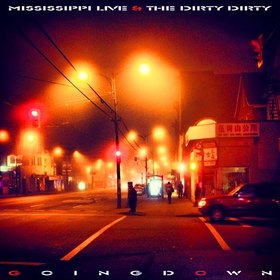
A Vancouver band, Mississippi Live & The Dirty Dirty are based around the talents of Mississippi born Connely Farr who, with his three Canadian band mates (Jay B. Johnson, drums; Ben Yardley, guitar and Jon Wood, bass, piano and organ) released a very fine slab of Southern rock on 2010’s Way Down Here. Going Down maintains the quality of its predecessor and in a similar fashion mines a sound more akin to the Deep South rather than what we might expect from the Canadian seaboard. As for Deep South we mean the guitar charged thrust of bands like The Drive By Truckers as opposed to soul or blues.
The album opens with the country rock strains of Trouble, a deceptive opener as thereafter we are in deep rock country but it’s a lovely song, Farr’s hoarse vocal delivery carrying just the right amount of hurt to counteract the sweet guitar lines. The title song follows and dives into a clangourous riff with a garage punk sneer; turn this one up as it will rattle the house. It’s So Easy pales in comparison with its relatively tame delivery although the sparring guitars midway are invigorating while Hurtin’ (written by Johnson) limits itself with a pile driving riff that recalls muddy seventies boogie bands without really going anywhere. Likewise Mexico, which despite some superb guitar squalls, lacks the originality and vigour of its compadre songs here.
All is forgiven however with the spectral guitars, gloomy organ and rolling drums of Dead & Gone and the brooding Country Boy which serves to deliver the heads of the Truckers and Neil Young on your platter. Here the guitars curl with a menace as the song heads into the swamps. Even better is Bad Bad Feeling where Jon Wood’s production recalls his work with Cam Penner, slide guitars sound as if they’re being scraped by rusty knives as Farr descends into an alcohol fuelled hell.
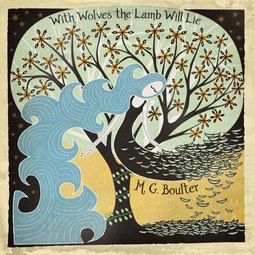
Aside from his duties with The Lucky Strikes and his in demand session player status (with Simone Felice and Blue Rose Code among others) M.G. Boulter is the poet laureate of the Thames estuary detailing the (often) sorry dreams and aspirations of those who populate the faded grandeur of Essex’s Southend and Clacton and hymning the meeting of water and land. His 2013 album The Water Or The Wave was a captivating collection of bittersweet songs with a somewhat folkish feel to several of the songs and with lyrics that at times recalled the sardonic strokes of Richard Thompson’s pen. For With Wolves The Lamb Will Lie Boulter has forsaken his estuary for a trip up north to Sheffield where he recorded the album with producer Andy Bell and a fuller backing band including woodwind and strings giving the album a more layered and at times sumptuous sound than its predecessor. Indeed much of the beauty here is in simply letting the arrangements wash over you while Bell has captured the bass and drum sound perfectly offering a solid base for the lilting and lifting guitars that float through the songs.
Boulter’s pedal steel colours the opening songs, both brisk, almost country rock numbers, their breeziness belying the dark lyrics contained within. Opener Sean or Patrick tells of a down and out character seeking refuge in booze and prone to grandiose notions comparing himself to Hemingway while the protagonist of In Sight of The Cellar is resigned to his delivery job, vicariously sharing life from outside bay windows with silent TV flickering but refusing to succumb to despair. This sunny side up musical mask is henceforth abandoned however as the music becomes more introspective and the arrangements more elaborate.
His Name Is Jean features a wonderful string arrangement over a fine woody double bass as Boulter sings of a parent reminiscing with pride regarding the son called Jean. Lyrically reminiscent of Loudon Wainwright there’s an ambiguity here with Jean/Gene’s gender not fully disclosed, nor is the manner of his “moving on” but there’s no doubting the tenderness and fragile beauty of the song. Lalita is a dreamlike trip into Boulter’s own memories, of a girl who followed his band and the murder of an acquaintance although the memories are vague and there’s a sense of regret that we don’t make more effort to know people. The string arrangement here is suffused with sadness, the vibraphone tying the song somewhat to sixties singer songwriters such as Tim Hardin.
There’s another burst of energy on the frantic The Last Song which races along with a fine soaring chorus and some nifty guitar work but the pop baroque keyboard of The Defeatist’s Hymn and rolling percussion amid the mysterious rhythms of Some Day The Waves are the highlights of the latter half of the album. Indeed Some Day The Waves throbs with mystery and slowly reaches its climax in a manner that suggests a weird combination of ESP act Pearls Before Swine and Fairport Convention circa A Sailor’s Life while the lyrics are poetic and again quite mysterious, WB Yeats sunk in ghosts and woods and trees. Nature and visions inform many of the songs. Starlings is a startling piece that is like Red Riding Hood reimagined as a self cutting girl at the mercy of men who prowl while Carmel Oakes is a girl sick of life who offers hope to a hopeless commuter who may be the man at the station referred to in Some Day The Waves.
Despite the grim subject matter Boulter offers glimpses of light. The promise that one day life will get better in Carmel Oakes and the cry to raise your sights and see the sun on Brother Uncles is reinforced on the closing Let Light In where he references the biblical quote the album is named for. It may be reading too much into the album but that’s the sense we get from the words, like Dylan they are open to discussion. However you approach it With Wolves The Lamb Will Lie is a beautiful listen and one that will repay repeated immersion in its wayward and woody intricacies.
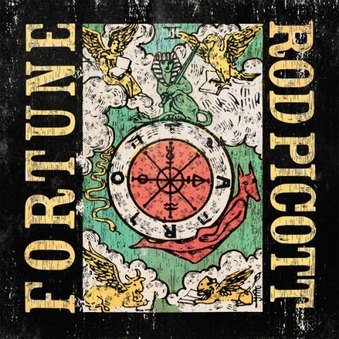
Steadily Rod Picott has come up on the inner track to catch up with his better known peers in the school of hard knocks singer/songwriter stakes. Welding Burns and Hang Your Hopes On A Crooked Nail were very fine albums, Picott weaving blue collar tales with a sense of grit and determination while able also to draw tender portraits of love gone wrong. Fortune builds on the strengths of those albums with Picott attempting to place more of himself into the songs as opposed to his snapshots of the current state of the ragged ass union. Fear not however, this is no exercise in navel gazing as several of the songs here maintain his ability to paint a vivid portrait as on the war widow’s farewell to her dead soldier on Jeremiah and the clattering tribute to the ‘ornery Uncle John.
Recorded quickly as Picott wanted to capture the immediacy of the performances in the studio the album seesaws between his gentler soloish performances and the gutsier band pieces. Here he’s ably assisted by the ubiquitous Will Kimborough on guitars (including oil can guitar!), Lex Price on bass and co-producer Neilson Hubbard (another name that is coming up increasingly) on drums. If there’s a theme to the album (and Picott says that the songs are about the sense of chance) then his view seems to be that we are playing with loaded dice as the players here all seem to be on the losing end. The suitor kneeling before his would be queen on the folky Maybe That’s What it Takes sees his dreams burned down while I was Not Worth Your Love is somewhat akin to a supplicant yelling I am not worthy before an idol not worthy of his praise. In a way Picott is furthering his broken love songs from the Crooked Nail album here, we mentioned back then that Roy Orbison seemed to inhabit the song All The Broken Parts and here Picott again plugs into that raw emotion on Secret Heart, his voice almost a crooner over his delicate guitar and Kimborough’s excellent and refrained shimmerings. Kimborough shines again on the wonderful closing song, Spare Change which, aside from the wonderful playing, captures Picott, the wordsmith, at his best.
There is some rollicking here and some humour. Uncle John “drinks his beer from a can cause bottles break/nine fingers from one mistake.”Elbow Grease has Picott mythologizing his life over a cracking country rock beat (with Kimborough again in fine form) as he recalls his failures and sings on the chorus “How’d a wreck like me even get this far/One more chance is all I need/I got a lucky charm and elbow grease.” We get some soulful blues on the slinky Until I’m Satisfied and a tremendous rewrite of Hank Williams’ Ramblin’ Man on the apocalyptic and surreal Drunken Barber’s Hand that is somewhat fabulous.
Rod Picott is touring the UK in January and February with a Celtic Connections appearance on 25th January at The Royal Concert Hall. All dates here
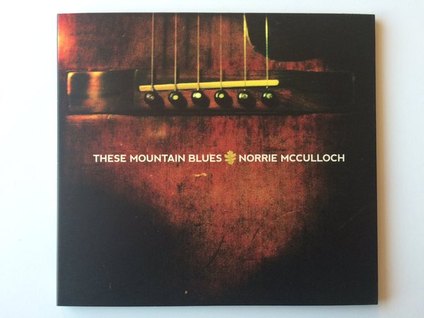
Ayrshire man Norrie McCulloch’s 2014 album, Old Lovers Junkyard, remains possibly Blabber’n’Smoke’s favourite Scottish album of the decade. McCulloch, seemingly from nowhere, wove a magnificent tapestry of country and folk influenced sounds on the album, its creamy pedal steel to the fore. However, as we mentioned when reviewing the album, there was more than a hint of classic UK folk rock lurking in the grooves, in particular the slightly jazz inflected keyboard work that John Martyn and Nick Drake used to adorn their songs on the cusp of the sixties and seventies. These Mountain Blues, due for release in February, reverses the mix. Yes, there are some sublime songs here which could stand tall beside the works of Townes Van Zandt or Guy Clark, the pedal steel still warms but the prominent instrument here is the piano, its cascading notes colouring the album with an autumnal melancholy and offering an understated grandeur. A perfect accompaniment for McCulloch’s excellent sense of nostalgia and regret expressed through his songs and his very fine, slightly wearied, voice.
Recorded live to analogue tape in the space of three days at The Tolbooth in Stirling (which just happened to have a baby grand piano in situ), These Mountain Blues captures McCulloch and his band (Dave McGowan, upright bass, piano and pedal steel; Marco Rea, bass and piano and Stuart Kidd, drums) in fine fettle. There’s an intimate organic feel to the disc as if they were playing in your room conjuring the images from the songs in front of you. McCulloch’s writing is evocative as he sings of his landscapes, his forebears and his descriptions of outsiders trying to fit in as on the impressive New Joke.
The album opens with Calico Days, a punchy acoustic guitar riff, not dissimilar to Bert Jansch’s work with Pentangle, grabs you before the rhythm section and piano glide in. A hymn in praise of life and the power of music McCulloch welcomes “old friends,” urging them to “bring your stories and your grace on these Calico days.” It’s a wonderful breeze of a song and the most upbeat on the album although the sweeping Pass By My Door which follows is a close contender. Here McCulloch captures some of that heady mix of folk, blues and jazz which informed Van Morrison on songs such as Young Lovers Do on astral Weeks. The freewheeling vibrancy and joyousness of the song is really that good, the piano celebrant, the lyrics approaching Morrison’s stream of consciousness way back then.
However if there’s a template for this album then it’s a fair bet that John and Beverly Martyn’s Stormbringer would fit the bill. Recorded in Woodstock in 1970 with Levon Helm on drums that album was produced by Joe Boyd with arrangement by Paul Harris who also played the very elegant piano parts. The sound they created informs much of These Mountain Blues with the title song a fine example. It’s a poignant recollection of McCulloch’s visit to the grave of Townes Van Zandt and as it soars and weeps the piano chords are resonant amid the guitar balladry at the heart of the song. Hard To Be The Man You Are Not and New Joke follow in similar style, wearied songs almost limping along but buoyed up by the piano along with pedal steel on the latter and it’s pedal steel which predominates on the tremendous When She Is Crying Too, a song which fulfils the promise shown on Old Lovers Junkyard. It’s a beautiful song, expertly played; steel guitar gliding over the slow rhythm and rich piano playing as McCulloch turns in a great vocal and lyrics,
” when that thief nightime comes around and steals the stars before they’re even out / that’s not the only crime even when you’re not here/ all it takes is a song for the pieces of my heart to start to disappear.”
Wreathed in a forlorn LA country vibe, When She Is Crying Too has some of the emotional heft and melancholic beauty of Gene Clark in its veins and is the stand out song here. That’s not to dismiss the remainder as McCulloch sings of his grandfather’s travails in the coal mines on Black Dust, a song that is defiantly rooted in local folk roots while The Old Room is another heady bout of nostalgia delivered with a light touch. Cloudberry Flowers is suffused with jangling acoustic guitar and woody bass and again captures some of that late sixties folk vibe and the album closes with another superb song, the ethereal Heart’s Got To Be In The Right Place. This tale of a split family, mother and father separating, is given a superb arrangement, the instruments delicately tip toeing around each other as McCulloch sounds forlorn, it’s a song that tugs at the heartstrings.
Richly textured, warm and chilling, soaked in memories and delivered with its heart on its sleeve These Mountain Blues is proof that Norrie McCulloch is mining a rich seam of songwriting. He transcends his influences creating some beautiful music which deserves to be heard by all who care about music.
Release date 26th February but you will be able to pre order the album on CD or vinyl soon via Norrie’s website
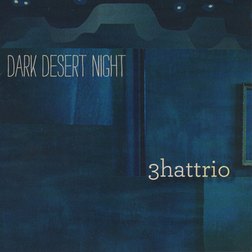
3hatrio, from Utah, invoke “the cultural traditions of the generations who have worked and lived on the deserts of the American southwest” as the influence for their peculiar brand of acoustic American music. It wears a similar patina as any Appalachian influenced recording but their approach (from their line up; fiddle, banjo, double bass to their slightly experimental touches) is somewhat singular. They describe it as “American desert music” and cite Ansel Adams’ photographs as a pictorial equivalent. The songs on Dark Desert Night are certainly evocative but listening to the album the pictures conjured up are moving ones from John Ford to Sam Peckinpah (and most strikingly Robert Altman’s McCabe & Mrs. Miller despite it being set in the snowy wastes of Washington State). Indeed, this band are ripe for picking for soundtrack work.
The 11 songs here are dark and evocative. There are two takes on traditional songs. The anglicised folkiness of Carry Me Away, a murder ballad recorded by John Lomax way back when betrays its origins with its dum dum di de rae refrain (as satirised by Tom Lehrer on his Irish Ballad). The tale of an 1881 cattle drive on Left Texas, another Lomax field recording, is delivered like a porch spun memory, the narrator recalling long ago events over a narcoleptic string band backing, fly blown and all but exhausted. The effect here is of hearing a Cormac McCarthy western tale told by one of his characters.
To their credit, the self-penned numbers equal or better these snapshots. Recalling at times The Handsome Family 3hatrio cast up scenarios of horses panicking in Sand Storm, the aftermath of a railroad disaster on Get Back Home and winter’s travails on White Pressing. But more often they marry their music to lyrics that just evoke a feeling, a moment, usually of something dreadful or portentous leaving the listener to fill in the gaps. Nothing, Tammy’s Sister and Off The Map are all tremendous pieces, musical jigsaws you have to make sense of although there is able assistance in the excellent playing of the band. A cold, wintry fiddle is the prominent instrument here while the double bass features as much more than a rhythm instrument, burbling and bouncing around the spare banjo and guitar parts. With two vocalists, the pained and strained Greg Istock and the wearied baritone of Hal Cannon, on board there’s a pleasing variety to the album although both are equally able to conjure up a mood. The mood overall being elegiac for a past when the desert was not somewhere to visit but a living presence with folk eking out some kind of existence on its borders.
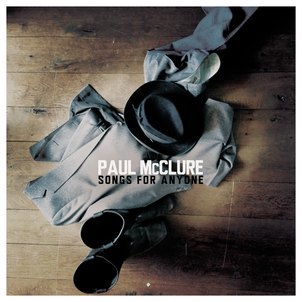
The self styled “Rutland Troubadour,” Paul McClure releases his second album, Songs For Anyone, in January. His debut album, Smiling From The Floor Up, released in 2014 was a fine affair, in the main one man and his guitar which Blabber’n’Smoke likened to an old favourite, Loudon Wainwright III, although we did note that the extra instrumentation on some of the songs added that little bit of chutzpah. It’s unlikely that this caused Mr. McClure to cast around for musicians for his follow up album but cast around he did and the results are generally cause for celebration.
Songs For Anyone, an album of ” songs about love; trying to get it, trying to keep it, trying to understand it, and just getting on with it…” according to the man himself, is a band album. It’s loose limbed at times, a hootenanny of sorts, the songs purveyed with a fine sense of the here and now. McClure’s apparently the man for house concerts and here he recreates one on disc although it would need to be a large room in order to accommodate the instrumentation. He plays several (acoustic guitar, harmonica, mandolin, ukulele and percussion) while producer Joe Bennett adds his panoply of strings and things (bass, lap steel, piano, organ, violin, banjo, trumpet and percussion). Along with Michael Monaghan on drums and Hannah Eton-Wall (from The Redlands Palomino Co) on backing vocals the stage is set for some excellent country, confessional folk and soulful love songs.
The freewheeling Gentleman’s Agreement opens the album with a flourish. Rooted in Laurel Canyon 70’s country style it glides along with the ease and comfort of early Eagles back when they were in torn denim. Unremarkable Me relocates from LA to Muswell Hill as McClure busks away on a song that details a humdrum life brightened by his partner’s forbearance that could have been penned by Ray Davies. Likewise I Could Be A Happy Man could have been plucked from the Kinks’ “country period” and here McClure paints a fine picture of a satisfied mind describing a late night jam with the band and outings with his family, the bumpy country vibe resonant of cobblestones, not freeways, with Bennett’s fiddle adding a nice indolent atmosphere.
Emboldened (and encouraged by his producer) McClure visits several styles on the album. There’s his harmonica playing troubadour set up on Holding A Ten Ton Load and My Big Head Hat Of Dreams, both slightly Dylanesque (with some Chuck Prophet thrown in on the former and some Mariachi on the latter). The introspective singer/songwriter is portrayed on the gentle Yesterday’s Lies, a string laden lament with some great harmonies, and Don’t Take Me Under which is one of the mightier songs here. Organ and stinging lap steel add some emotional heft to McClure’s vulnerable opening stanzas, his voice here passionate and yearning, similar to Elvis Costello but without the bile. McClure outdoes this however on the stripped back guitar ballad Everyday Is Mine To Spend where he and Eton-Wall sing together in best duo fashion (take your pick, Gram and Emmylou, George and Tammy) and they repeat this trick on the excellent So Long, a waltz of sorts that spins around some fine band playing with piano gently guiding the star crossed lovers amid some excellent percussion. A song to savour indeed but exceeded by the swoonful, Pink Floyd like (indeed) bucolic beauty of A Song For Anyone that is just, (excuse the bathos here) heavenly.
Songs For Anyone is a deeply romantic album that has its moments of joy and sadness, all wonderfully conveyed with some brio and hopefully Mr. McClure will have the resources to deliver it live with his compadres. On this showing, solo or accompanied, he’s one to watch out for in 2016.
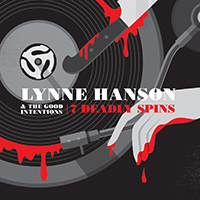
Canadian Hanson’s 2014 album, River Of Sand, was a riveting exploration of Southern music somewhat akin to the mood and atmosphere of Roseanne Cash’s hymn to the Mississippi on The South and The River. For 7 Deadly Spins Hanson has honed in on a particular theme of Southern music, the murder ballad. Her seven tales here are soaked in sin and blood, true confessions and lack of redemption all feature while the music is dark and alluring.
Shifting from languid, guitar heavy brooding to sparse finger picked and bare boned storytelling Hanson evokes a mood that would fit perfectly into the TV series True Detective. Her characters are caught up in modern morality tales, some are cold and calculating, others victims of circumstance. Black Widow is musical story telling of the highest order, the protagonist described perfectly in the opening lines, “Raven hair, long green dress, red lined lips, rose tattoo above her breast.” Married five times with “husbands who drop like flies” the widow is celebrated with a slinky Southern groove, the band shuffling along like an upbeat Handsome Family as she deals with husband number six. Wonderful stuff.
The album opens with the Tom Waits’ like blues of Gravedigger (complete with hammered anvil and swirling organ) and a mood is immediately conjured. Hanson is deadpan, her vocals dispassionate as befits a killer as she lays out her C.V.
Water’s Edge is as sludge filled as the Mississippi, gutbucket guitar bellowing as a husband is buried on the tide line. Hanson sings “He knocked me down, he got me to my knees. Shot of courage, kitchen knife, two timing man I took his life. He broke my heart so I made him bleed.” Her image, “Tattered dress, bloody hands, dirt covers my wedding band” says it all. My Mama Said is a death row confession, church bells tolling as Hanson inhabits the mind of a cold killer in the shadow of the gallows, a fate foretold by her mother. Cecil Hotel is the starkest song here, simple guitar and a forlorn horn motif highlight the spare existence of a god fearin’ farmer on the run after killing the rapacious landlord, bereft of family and waiting to be caught.
The last two songs up the ante in terms of the music, moving into blues boogie territory with Hanson exclaiming like a sixties Dylan on First One’s Free while Run Johnny Run is a fine swampy Ry Cooder like escapade but both are a bit of a letdown after the magnificence of the previous songs. Overall 7 Deadly Spins posts notice that Ms. Hanson is on a bit of a roll and is definitely not to be messed with.
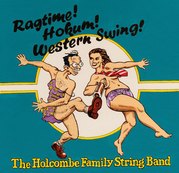
Seems like the old time music bug has hit Leeds as word reaches Blabber’n’Smoke of The Holcombe Family String Band, as fine an outfit as ever scrubbed a washboard. Regular readers will know of our affection for Pokey LaFarge and Woody Pines along with Newcastle’s Rob Heron. Well this outfit are mining a similar musical vein and doing it with some style and panache. This, their debut album, finds the five piece (C.D. Wallum, guitar, tenor banjo and kazoo; Rob Bromley, fiddle; John Scully, trumpet; Felipe Petry, double bass and Francis Watson, washboard, percussion with Benjamin William Pike adding some pedal steel) well versed in depression era music, playing, well, what it says on the tin (although I’d add some viper blues and old time country to the description). That they do it so assuredly is a measure of the fact that they’ve been treading the boards for a couple of years with support slots for the likes of CW Stoneking, Sheesham & Lotus & Son, Curtis Eller’s American Circus, Simone Felice and The Stray Birds under their belt. C.D. Wallum writes all of the songs here and again he’s spot on, capturing the rhymes and rhythms of pre war America to the extent that one is surprised to see that these aren’t retreads of old time hits. Indeed Wallum includes topical issues as on the song The Great Fire of Armley which relates to a conflagration in Leeds in 2014 (and interestingly Rob Heron and his Tea Pad Orchestra did much the same with their song Great Fire of Byker about a fire in Newcastle).
They open with the strutting Hard Times, a song that captures their syncopation perfectly, the instruments sweetly backing Wallum’s laid back vocals on a hard luck love song with some wonderful lyrics such as “When she dances , oh man I mean she really dances, she’s well dressed and fiddle like. Can’t lose, she’s my little goose, well I must have something right.” Times are tight but love endures says the song which has something of Buddy, Can You Spare A dime about it. The Great Fire of Armley continues in the syncopated jazz vein with some space for solos from the band before You Really Done Me Wrong‘s woozy and bluesy Big Easy styled tale of drunkenness.
Aside from the viper jazz the band shift into old time country on the gentle breeze of River, Black River, a song that evokes latter day Byrds as well as old time Carter family while The Captain is a rousing number that one might expect from The Mekons, the pedal steel adding some depth here. However it’s the celebration of old times that resonate most here, the Fats Waller styled Yo’ Hairs Too Long and the cod Hollywood Oriental mystery of Once I Was A Navy Man both excellent while Rag Mama Rag avoids the expected nod to The Band instead coming across like a mix of Tom Waits and CW Stoneking. Overall an excellent album and although it’s lazy writing to just throw out comparisons we’re tempted to say that this lot are on their way to being a UK equivalent to Pokey LaFarge. Songs so jolly they could persuade R Crumb to don a dress and jitterbug. And if you buy the album be sure to wait after the closing song for a wee skillet licking extra song.
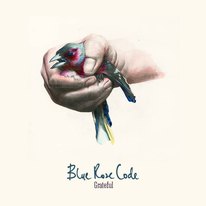
We’ve been eagerly awaiting the new album from Blue Rose Code and this week a taster was unveiled in the shape of a four song EP, Grateful, in anticipation of And Lo! The Bird Is On The Wing which will be released in January with a launch show at Celtic Connections. Following on from the acclaimed The Ballads Of Peckham Rye, Grateful is further evidence of Ross Wilson’s magisterial song writing while the performances are simply stunning.
The title song is a sumptuous slow-paced celebration of life with Wilson crooning in best John Martyn style over stately piano and keening pedal steel, his voice superbly buttressed by the graceful presence of Gospel singers, The McCrary Sisters. It weeps and exults equally and bodes well for the new album. A video of the song has been released comprising snippets sent to Wilson by fans who were asked to record their reasons for being grateful: it’s quite moving.
Midnight’s Mass In Suffolk’s Breast has a Christmas theme and its spritely pace with no sleigh bells in sight is reason enough to welcome it but again Wilson comes up with a winner. The jazz tinged folk verses recall Robert Kirby’s arrangements for Nick Drake especially on the piano playing while the chorus soars with celebration. My Heart, The Sun is a remix by James Yuill (who remixed Blue Rose Code’s Whitechapel some years ago), its throbbing beat and synthed sounds showcasing Wilson’s eclectic tastes while his words remain poetic. The EP closes with a magnificent performance of In The Morning recorded live for Radio Scotland’s Roddy Hart show. Playing as a six piece with piano, cello, drums, double bass and guitars the piece billows gently along on a perfect breeze of Celtic folk, it ripples and eddies wonderfully and captures well the live Blue Rose Code experience.
A fine taster then for the forthcoming album, the EP is available here and Blue Rose Code are launching it with shows in London and Glasgow on the 2nd and 3rd of December. All tour dates are here
Regular readers will be familiar with Daniel Meade whose album Keep Right Away was released way back in January . Produced by Old Crow Medicine Show’s bassist, Morgan Jahnig and featuring Diana Jones on one song the album was well received with one Texan based producer getting in touch with Blabber’n’Smoke asking about “this guy from Glasgow.” Fast friends with Sturgill Simpson, Ms. Jones and the Old Crow boys, when he’s not gigging away (this year saw two tours in Europe and shows in England with Pokey Lafarge) Meade can be regularly seen at several regular pub and club residencies in the Glasgow area either in a duo setting with his wizard guitar buddy, Lloyd Reid, or with his four piece Flying Mules. In fact when I interviewed Pokey LaFarge at his last Glasgow gig he asked the first question, “Do you know if Daniel is playing anywhere tonight?”
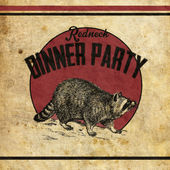
So it was great news that Meade has a new release available, Redneck Dinner Party. A new release but not a new album as such. Recorded in 2008 when Meade’s band was then called The Meatmen it’s an eleven song burst of rockabilly and country thrash, all penned by Meade, in a similar vein to Keep Right Away’s lead single Long Gone Wrong. Inevitably it’s not as polished (although polished is not a word one would generally use here) as Keep Right Away although the sound is clear and vibrant, the bass thudding from the speakers as the band seem to be having a ball. This is evident from the start with the raucous title song, an uproarious paean to hillbilly cooking where it seems everyone in the studio (and the street outside) are involved in the backing vocals and general noises that punctuate the song. It’s like a Glasgow version of Robert Earl Keen’s Merry Christmas From The Family taken at a faster pace with the family hyped up on Buckfast (and without the Christmas element of course).
This souped up take on country music permeates the album as Meade delves into familiar themes (drink, love, infidelity) and brands them with his own mark. The songs barrel along with some ferocity, the Killer piano on My Band’s Better Than Your Band worth the price of admission alone. Songs such as Pie Eyed Joe, Sod’s Law and That Girl’s Old Enough To Be Your Mother are tremendous slices of old fashioned Sun Records rockabilly although it’s a fair bet that had they been recorded back then they would have sat in the vaults for years as Meade is earthier than those God fearin’ folk back then would have allowed with lyrics like “so get your hat on your head and your ass on home.” God knows what they would have made of Shitkicker Blues, the frenzied album closer which sounds like a demented Nick Cave hallucinating in a Gospel tent.
Aside from the Jerry Lee Lewis inspired rockerama Meade finds time to visit another touchstone, Hank Williams, on the graceful country of She Lost My Heart In New York and the tumbledown heartbreak of Sweethearts and Broken Hearts, the latter having the potential to become a classic of the genre.
For an album that was hastily recorded to sell at gigs Redneck Dinner Party is simply superb and more proof, if needed, that Meade has his finger on the pulse of classic roots American music. Happily he was available to spend some time with Blabber’n’Smoke to talk about the album and bring us up to date.
Redneck Dinner Party dates back to 2009, why have you decided to reissue it?
It’s not really a re-issue as such as it was never issued at the time it was made, it only ever made it to crudely home-burned CDs that we would sell at gigs to fund getting to the next gig. I came across it again by chance earlier this year when my parents were moving house and it was in amongst a box of old CDs. I hadn’t heard it in years but it still sounded great (to me), so I thought I’d just release it properly for old times sakes really.
The majority of it was written when I spent a few months in L.A when I was 22 or 23, and I was introduced to all this great country music over there. I was already getting into Old Crow Medicine Show and there was a lot of similar cool stuff happening, it was great to be around and I guess I brought some of it home with me.
We recorded it at TornFace Studios with our good friend Chris Gorman. I don’t remember too much about the session but I hear it was a lot of fun! It somehow managed to get into Mark Lamaar’s hands and he played ‘I Remember Now’ on BBC Radio 2, and I just remember thinking that was it, we made it! Oh to be young…
So who’s playing on the album with you?
We have Richard Anderson on bass, now of the Shiverin’ Sheiks, Danny Shepherd on drums and on electric guitar we have Lloyd Reid, of course. This was actually the first thing we ever worked on together, still going strong!
Listening to the album today what sort of memories does it conjure up?
Just good ones really, we were just young guys having a very good time and I think it comes across like that. It’s hardly the most accomplished album you’ll hear, lyrically or musically, but that doesn’t matter, it’s just a lot of fun. I think the album/song titles and content would suggest that it’s not going to be one to ponder over, just get a few tipples down your throat and go for it, and I’m glad to say a lot of folk did just that, on a weekly basis. We used to play two gigs every Saturday in Glasgow for a couple of years, Maggie Mays, 6-8, then The Butterfly and Pig, 10-12, and it was always a party. Good, mad times.
Back to the present is there any news on a follow up to Keep Right Away?
Well myself and The Flying Mules do in fact have a new album recorded and good to go, it should be with you in the Spring. More details to come soon.
As usual you’ve been busy this year, touring with Diana Jones, Pokey LaFarge and about to go out with The Proclaimers. You’ve been abroad in Europe, how did those shows go?
I’m glad to report they’ve all been great, different in their own ways and never two crowds the same. That’s why it’s so much fun heading out with other acts like Pokey, Diana and The Proclaimers, you never know what to expect from night to night, fair keeps you on your toes. Plus you get to watch them every night and that’s a privilege, especially with acts of their calibre. I mean last night we were watching ‘Sunshine on Leith’ being sang back at The Proclaimers by 1600 punters in Motherwell from behind the stage, that’s something special!
Last time we talked you said Jerry Lee Lewis’ Live At The Star Club was your favourite album. I believe you saw Jerry Lee Lewis when he played in Glasgow this year. How was that and are there any other performers you would fight your way through to see?
It was great, strangely emotional knowing that I probably won’t have the chance to ever see him play again but he was still amazing at 80 and I managed to briefly meet him, shake his hand and say thank you, and he said it right back! I’d waited a long time for that, if it wasn’t for him I probably wouldn’t be doing any of this so I’m glad I got the chance. My brother and I also met James Burton and Kenneth Lovelace, it was just one of those days..
I’ve been lucky in that I’ve seen most of my heroes live, but I’d still like to see Tom Waits and probably Tom Petty, there are probably more but not that I’d have a fight for, I’ve got soft knuckles and a softer nose so it would have to be someone ridiculous, probably someone raised from the dead, Big Bill Broonzy or Hank! Let me know if that happens cheers and I’ll gladly get in the ring.
Any plans for the New Year?
Taking a few weeks off actually, recharge and get to working on whatever’s next, whatever that may be. Any requests?
Redneck Dinner Party is available on CD although its a limited edition, you can purchase a copy from Daniel here while stocks last. It’s also available on itunes here