Richard Thompson. Still. Proper Records.

Most of the advance publicity for Still, Richard Thompson’s latest album has honed in on the producer being Jeff Tweedy of Wilco and we must admit that the thought of Thompson and Tweedy together was tantalising. The reality is that Tweedy has done what a good producer should do; he’s all but invisible here, apparently on some backing vocals but not ostentatiously so. Tweedy’s quoted as saying, “Richard’s been one of my favourite guitar players for a very long time. When I think about it, he’s also one of my favorite songwriters and favorite singers. Getting to work closely with him on this record was a truly rewarding experience” while Thompson adds, “Jeff is musically very sympathetic. Although some of his contributions are probably rather subtle to the listener’s ear, they were really interesting and his suggestions were always very pertinent.”

Obviously, we’re not privy to what went on in the Chicago sessions that formed the album but Still is probably the most satisfying Thompson album we’ve heard in several years. There’s a variety to the songs that captures Thompson’s various musical guises, the melancholic folk singer, the music hall entertainer, the pessimistic dissector of human emotion. In addition Thompson’s guitar, acoustic and electric, shines throughout the album and again his variety is well captured, bagpipe like drones, quicksilver tones and fifties inspired rock licks are all present and correct and if Tweedy has done nothing else he’s captured Thompson’s guitar sound with a deadly accuracy. The ringing clarity of Where’s Your Heart the primary evidence here. As for the writing Thompson has delivered a solid set of songs with a few that, given time, might be considered among his classics.

The album opens with one of these, the excellent She Never Could Resist A Winding Road. A song that recalls his early solo career with martial drums and a wonderfully corkscrewed guitar solo it’s a tremendous opener. Patty Don’t You Put Me Down is another song that perks up the ears, a solid four beats to the bar thump that allows plenty of space for Thompson to solo on several occasions while the aforementioned Where’s Your Heart just drips with melancholy as Thompson’s guitar rings throughout with a spectacular solo turn that is somewhat gob smacking. There’s an almost Byrds like chime to the guitars on the darkness of Dungeons For Eyes and Josephine has an almost medieval feel with acoustic guitars adorning the Tennyson like lyrics. His drollery is well represented with All Buttoned Up one of his back terraced tales, this time about a girl who frustrates her boyfriend with her refusal to go all the way while he closes the album with the lengthy and perhaps autobiographical Guitar Heroes. A bit of a throwaway song when considered against its peers Thompson sings of sitting home alone, rejected at school, losing jobs all due to his need to practice and learn from his heroes as he plays some famous riffs from the classics including The Shadows, Chuck Berry, Duane Eddy et al. It’s good fun with Thompson admitting at the end of the song that he still doesn’t know how they did it (despite the evidence to the contrary).

website

Georgie Jessup. Philosopher Dogs

Georgie Jessup runs what is reportedly the best little house concert space in the Baltimore/Washington D.C. area, Edith May’s Paradise. In addition she works in special education with children with autism and special needs. She’s an activist for Native American causes and has been a musician since the 1970s releasing five albums prior to Philosopher Dogs. A transgendered country singer Jessup also campaigns for the transgendered community and featured in the award-winning documentary Woman In A Man’s Suit.

Philosopher Dogs is an old fashioned album in many respects. There’s some fine country rock, a dash of soul and some soul searching ballads while a version of Ring Of Fire is delivered with a veneer so polished it might have come from an eighties stadium band. Not a bad thing in this case as there’s no eighties production values, just a tremendous burst of energy and some scorching guitar work that could have come from the fingers of Warner E Hodges.

With two songs about Geronimo included Jessup reminds the listener of Michael Martin Murphy (author of Geronimo’s Cadillac and the original Cosmic Cowboy). Geronimo’s Bones is a dramatic and multi layered ballad with soaring organ and spiralling guitar while Geronimo (written by Dirk Hamilton) is a plaintive mandolin speckled tribute to the Apache leader. However, Jessup’s interest in Native American culture is best realised on the highlight of the album, Red Cloud’s Room. A loose-limbed rhythm section beds in, pedal steel flits gracefully overhead and Jessup with Christina Van Norman intones with an appropriate sense of mysticism. Elsewhere Jessup seems to be indebted to Brian Wilson on the confessional Reluctant Phoenix and she offers a potted biography on the tribal drum led title track which again harks back to FM radio anthems although there weren’t too many songs in the top twenty back then about the singer’s pet dogs.

website

Chuck Hawthorne. Silverline. 3 Notches Music.

The good book mentioned beating swords into ploughshares and Chuck Hawthorne’s debut album, Silverline is a fine example of this. Hawthorne is a time served US Marine joining straight after high school and spending 21 years as a leatherneck. He starting picking guitar when aboard the USS Iwo Jima and was writing songs by the time he served in Iraq. Retired, he was scuffling around when a chance encounter with Ray Bonneville led to the recording of this album with Bonneville in the producer’s chair. The end result is a relatively unadorned slice of down home rootsy picking and singing that’s elevated on two counts. Hawthorne has one of those voices that just fits, half Don Williams, half Guy Clark, superbly supported by the pared back playing, for the most part acoustic guitars and a rhythm section with occasional pedal steel and fiddle. Secondly Hawthorne turns out to be a fine writer in the grand Texas style offering snapshots of hard lives that breathe life into the characters.

He opens with Silver Line, a mellow train song which has Gurf Morlix on pedal steel adding a stately grandeur to Hawthorne’s hymn to the frontier rail lines. Morlix again features on Welding Son of A Gun where Hawthorne salutes the sweat and toil of a man who has sold all his guns and bought himself a welding machine while the thumping The Gospel Hammer has Hawthorne recalling his father’s skill with a hammer and bal peen which defines his life and death. Eliza Gilkyson adds fine harmonies to Dragon Flies, a song that comes across like a Guy Clark rewrite of The Ballad Of Lucy Jordan and she features again on Leaving Amarillo, a dusty portrait of a woman with a chequered past, “A wild desert rainbow lost in her shadow. She’s dated every cowboy that fell to the ground.”

Hawthorne’s fine sketches continue on the slow country waltz of Ovando and the story of an old drinker lost in his thoughts and memories on Ashes and Embers. There’s a darker edge however on the sinister Enemy which features only Hawthorne’s guitar and voice along with some spooky harmonica from Bonneville. Finally, Hawthorne confronts the war in Iraq with the simple folk tale of Post 2 Gate which tells of the murder of a child street vendor caught up in a suicide attack, a scene revisited each night by the soldier narrator in his dreams as he eventually returns home a different man.

website

Andrew Hawkey. What Did I Come Up Here For? Mole Lodge Records

It’s a rock’n’roll cliché, getting it together in the country. Generally speaking it seems to be when a band or artist wants to escape the hurly burly and pressures of the city and decamps to some bucolic idyll where the hope is the muse will descend. Traffic did it in Berkshire, The Dead in Marin County and Led Zeppelin in Bron-y-Aur in Wales. Usually the temptations of the city soon beckon and album written or recorded it’s back to the treadmill. However for Andrew Hawkey, getting it together in the country has been a forty-year labour of love as this Cornish born veteran has nestled in the hills of Mid-Wales since 1973. In his potted biography (available here) Hawkey mentions living in a variety of dilapidated properties including one that was accessible only by foot and which had been previously occupied by Albert Lee’s Heads Hands and Feet (presumably getting it together in the country at the time). Variously employed as an editor, label owner and promoter he’s been making music since the late seventies (releasing two solo efforts in the eighties) and played with various bands. As he tells it What Did I Come Up Here For was a dream of sorts, a long time wish to gather his songs in one place, a wish fulfilled when a neighbour, Stuart Maman Bolton declared himself willing to handle the recording and engineering side of things and to contribute his various instrumental skills. Reckoning that 32 years was long enough to wait before releasing his third record Hawkey and Bolton got to work and with the addition of some friends recorded this fine meditation on life.

Recorded mostly at Hawkey’s home along with two older cuts retrieved from ’80’s cassette only releases and a live recording of Hawkey with Pat Grover’s Blues Zeros ( a band he’s played in for over 20 years) What Did I Come Up Here For is a fine listen with a few moments that are actually quite sublime. Hawkey himself plays 6 and 12 string guitars, piano, organ harmonica and percussion with Bolton adding bass, percussion and lead guitar. David Cornelius Eger adds mandolin on two songs and Wale’s premier folk harpist, Sian James appears on Wild Flowers. Not playing but credited with support (and artwork design) is Jeb Loy Nichols. Despite Hawkey’s long time involvement with blues bands the only blues here is the live cut of I Had A Fight With My Heart from 2004. Written and sung by Hawkey it comes towards the end of the album and weirdly enough doesn’t stick out like a sore thumb. A slow burn (with some fierce guitar from Will Davies) it’s in the style of Otis Rush and the recording actually sounds like vintage John Mayall with Peter Green. Two recordings rescued from Hawkey’s 1980’s cassette recordings offer a glimpse into his past and an introduction to his very fine way with a lyric. Forgiveness is a truly solo effort with Hawkey on piano and guitar exploring the angular waywardness of folk like Jack Bruce or Peter Hammill. Invitation (For N.T.) finds him in a wistful mood buoyed by fine backing vocals on a low key song that recalls Clifford T Ward or Donovan.

As for the bulk of the songs Hawkey is able to reflect on life with a grace and wisdom that at times recalls the poetry of WB Yeats while his music is akin to the work of Christy Moore or Jackie Leven. There’s an indeterminate Celtic feel to several of the songs as they waft from the speakers along with some Southern soul. The album opens with a lonesome organ and 12-string guitar before Hawkey weighs in with the Zen like advice of Hold On, Let Go. Apple Green is an uplifting breeze of a song disguising the bitter reminiscence of a love gone wrong with Bolton adding some inspired Knopfleresque guitar flourishes. No Shadow is one of the sublime moments we mentioned earlier. Dark and moody, reminiscent of David Crosby’s ruminations with a hint of the dark side of Peter Green it creeps along with a powerful undertow provided by electric piano and sinewy slide guitar. Hawkey goes on to provide some superb songs that are stuffed full of fine lyrics as on Treasure Of Time’s

“Well time is the currency, nobody knows where it goes. We hide it in old storage boxes and nobody knows..For some it increases in value while others invest in thin air”

and on The Land Beyond Compare

“Listen let me tell you about a place that I once knew. About a million miles behind beyond those mountains blue. You can only find it through the kindness of the moon and I do believe that I shall see it soon.”

As we said Hawkey does wax poetic and the settings for the songs are for the most part exquisite, lilting mandolin, sly guitar and Hawkey’s fine keyboard work knitting together. The gem of the album is the immense tone poem of Wild Flowers that is graced with the harp playing of Sian James and which might have been plucked from the Child Ballads as Hawkey relates the tale sounding like a male counterpart of Sandy Denny. Wonderful.

website

The Alan Tyler Show. Littlefield Records

Back in the nineties London’s The Rockingbirds were one of the few acts carrying the torch for UK based Americana when the genre was having one of its leaner periods. Like their Edinburgh counterparts, The Felsons, they weren’t able to capitalise on the interest generated by the “No Depression” wave of American bands and split in 1995. Sporadic reunions over the past eight years eventually led to a comeback album released by Loose Records in 2013 and there’s talk of another disc on the way, possibly titled The Curse Of The Rockingbirds. In the interim Alan Tyler, lead singer and songwriter for the band is touring bars and folk clubs with his acoustic trio, The Alan Tyler Show. This ten song disc is a fine taster of what to expect if he pitches up in a bar near you with a selection of covers of some of his favourite artists along with five of his own songs.

Accompanied by Patrick Ralla on guitar, banjo and vocals and Jim Morrison on fiddle and mandolin Tyler has recorded a low key and intimate listen. The latter half of the album is an aficionado’s delight as the trio breeze gently through five classic songs that will be familiar to anyone who has a decent record collection. The Streets Of Baltimore, She Thinks I Still Care, Tecumsah Valley, Return Of The Grievous Angel and True Love Ways are all delivered faithfully, not in a reverential manner but with a genuine love and respect for the songs, it’s like having a pub gig in your own room.

The first five songs are all Tyler originals and apparently are part of a project of his, the River Songs where he explores London’s heritage in a psychogeographical fashion. There’s a notable shift in the feel here as the band take on a folkier element that’s more Anglicised. Dark River is a harmonica fuelled tribute to the River Fleet, one of London’s now buried ancient waterways. Down On Deptford Creek tells of the opportunity to walk and explore another old river at low tide describing the mossy quay walls and the detritus uncovered by the ebbing waters. It’s delivered with lilting banjo and mandolin in a wistful fashion while Tyler’s voice and words recall Jackie Leven’s hymns to the Highlands. Essex Girls is another nostalgic trip, this time into the Thames estuary and eschews the usual stereotypes of the titular maidens as Tyler prefers to sing about the topography of the area with the Essex girl in the classical role of a siren. Long Time No See seems to celebrate the writer’s return to familiar grounds and is similar in delivery to the busked harmonica style of the opening song. Finally, Tyler burrows into London’s ancient greenery on the delightful The Fields Beneath which is a tender lament on the so called march of progress. Weirdly it recalls the late Glasgow folksinger Matt McGinn’s work on songs such as Magic Shadow Show and Troubled Waters In My Soul.

The album’s available for the princely sum of a fiver here.

Danny And The Champions Of The World. What Kind Of love. Loose Music.

Over the past few years Danny And the Champions Of The World’s live shows have increasingly resembled a country soul revue with the band incorporating elements of Motown and Stax into their invigorating music. While in the past Blabber’n’Smoke has noted that this mix has resembled van Morrison’s Caledonia Soul years the new album, What Kind Of Love, shows that the Champs have dived head first into soul territory with horn charts and full blown female backing singers accompanying Danny Wilson’s impassioned soulful vocals. While the obvious touchstones here are the likes of Otis Redding and Solomon Burke there’s a host of other singers who have been more associated with a country influenced take on soul, singers such as Arthur Alexander, William Bell, James Carr and Eddie James and it’s to them rather than the raucous Redding shows that the songs pay homage. In addition Wilson notes that some of his favourite singers are those sixties white guys who first heard Motown discs and immediately set up their own bands and whose voices proved perfect for strained and urgent R’nB. He cites Rod Stewart, Terry Reid, Paul Rodgers, Reg King, Frankie Miller, Steve Ellis, Van Morrison, Joe Cocker, Chris Farlowe and Eric Burden and there’s definitely a moment here on the title song What Kind Of Love when he sounds uncannily like prime Rod Stewart. Meanwhile Precious Cargo riffs mightily and not a million years away from Farlowe’s version of Out Of Time.

The decision to go down this route is not a huge departure for the band for anyone who has heard them playing Cold Cold World or Let’s Grab This World With Both Hands but the album is an unalloyed soulful wallow with huge horn riffs and Marvelettes like choruses which are most prominent on the one cover here, a version of Tyrone Davis’ Can I Change my Mind. Paul Lush’s clipped guitar drives the song along, the horns parp and the vocal interplay between Wilson and the backing singers is the most joyous we’ve heard since Laura Nyro and Labelle’s Gonna Take a Miracle album. Towards the end of the song Henry Senior’s pedal steel carries off the spectacular task of seeming to be part of the vocal harmonies.

While there’s a nod to the “classic” sound of the Champs on Words On The Wind with guitarist Paul Lush given full rein and sax man Free George wailing away, it fits neatly into the overall scheme of the album with Wilson channelling Steve Marriott and the sha la la refrain recalling the Small Faces. However it’s the slow sashay, the soulful strut, the reverential gospel tones of songs like Just Be Yourself and It’ll Be Alright In The End that confirm that the band have nailed the notion of recording a bona fide soul album. While all ten songs are bountiful mention should be made of Wilson’s magnificent vocal performance on This Is Not A Love Song (which of course it is). Curling pedal steel, a curt and magisterial guitar break and weeping organ sweep the song along as Wilson parries with the female chorus. The album ends with another cracker, The Sound Of A Train which moves on from the churchlike sixties soul sound to the urban sophistication of the seventies with mellow saxophone and jazzy guitar styling’s. Sounding like a nighttime version of The Rascals’ Groovin’ as performed by George Benson it winds the album up wonderfully with the only regret that the fade is not much much longer.

The album is out this week and The Champs are touring this month. The Glasgow show is on 20th June at Broadcast, the others are here. In the meantime, Danny Wilson has given a song by song account of the album which is a great read, have a gander here

website

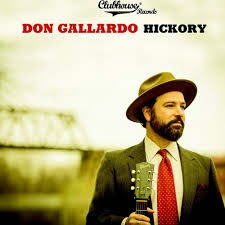
Don Gallardo. Hickory. Clubhouse Records

Latest addition to the ever impressive Clubhouse Records roster is North Californian Don Gallardo whose besuited dapper appearance on the cover of Hickory belies the rustic feel to much of the album. A resident of Nashville for the past eight years Gallardo has his own band How Far West who accompany him here along with guest appearances from Mickey Raphael, Rob Ickes, Randall Bramblett, Bobby Clarke, and Guthrie Trapp who between them can boast of playing with some of the cream of Americana.

Gallardo is yet another artist who is tapping into the seventies sound although at times he is tempted into leaving the hills and cruising the streets with his music dipping into FM territory, late night sax and Hammond organ or electric piano creating the atmosphere. Midnight Sounds epitomises this, starting off like a Wilco song before the saxophone comes in, a touch too silky for me. When The World Wakes Up is more successful with pedal steel replacing the sax and the song sounding not a million miles removed from the likes of the Wynntown Marshals. Back in the country air the loose limbed barrelhouse piano romp of Ophelia, We Cry (Ode To Levon Helm) is more surefooted ( and another song where Gallardo sounds like Jeff Tweedy singing) and the carefree ambience is revisited on Will We Ever Get It Right with the piano rolling and fiddle sawing away. However it’s the rarefied heights of clear country air that offers the best moments here. Down In The Valley is a mandolin rippled hymn to the simple life. Diamond & Gold is a sunlit romp with sparkling Dobro while Carousel benefits immensely from Raphael’s harmonica playing. The North Dakota Blues is a finely paced outlaw ballad in the vein of John Phillips’ Me And My Uncle with Gallardo painting a vivid picture and the band swaying and swaying away brilliantly. The album closes with what might be the best song here, Pearls. Drawing deep from the tradition of southern country soul with weeping pedal steel and solemn organ it recalls The Stones in the grip of Gram Parsons and Muscle Shoals, a magnificent song.

website

The Hello Strangers

Another review that got lost when submitted to another publication. The album’s so good I reckoned it deserves an outing.

The Hello Strangers are two sisters, Brechyn Chace and Larissa Chace Smith and their self-titled debut album is the result of them winning an Airplay Direct competition allowing them to record the album with producer Steve Ivey in Tennessee. With roots in Austin and Pennsylvania, the pair have been performing since 2006 and they’ve certainly brought this experience to bear on the album. Their harmonies are without fault, another example of how singing siblings can seem almost telepathic while their songs, whether contemporary in style or more rooted in classic country, are all above par.

Runaway is a fine opener that recalls the Roches (although without their quirkiness) as the pair’s strong vocals cut through atmospheric guitar rumblings while next up is the rambunctious country stomp of What It Takes To Break A Heart which swings with a sassiness that is very alluring with a hint of danger in the lyrics. While the album sashays between different styles such as the honky tonk of Ruined, the dark murder ballad, Conococheague and the Carter Family country righteousness of The World Knows Far Better the sisters keep a firm hand on the rudder steering the album into four star status with Oh He’ll Drown standing out with its twanging guitar and widescreen Western storyboard. There are two cover songs on the album. A version of Que Sera Sera, recorded in tribute to their Grandfather who sang with Doris Day obviously appealed to the sisters but it does stick out like a sore thumb here. However Jim Lauderdale and John Leventhal’s What You Don’t Know is given an excellent reading, brooding and atmospheric it recalls Roseanne Cash’s recent album, The River And The Thread, and Lauderdale turns up to add his voice to the sisters’ very fine delivery. Highly recommended.

website

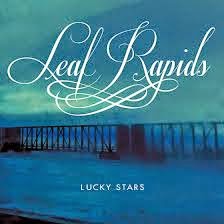
Leaf Rapids. Lucky Stars

Veterans of the Canadian alt country scene courtesy of their joint membership in the band Nathan, husband and wife duo Devin and Keri Latimer have branched out to produce Lucky Stars, an album that covers the spectrum from breezy country influenced pop to dreamlike swoons. With Devin happy on bass to provide a solid rhythm section along with drummer Gary Craig, Keri’s gossamer voice and her occasional use of Theremin are the hooks here. She floats across the songs reminding one at times of Hope Sandoval although she’s perfectly capable of coming back to earth and sounding like a young Dolly Parton on the spritely Gravity And A Ladder Of Gold. The pair are perfectly served by their choice of producer, Steve Dawson, who has worked with Jim Byrnes, Kelly Joe Phelps, Old Man Luedecke, The Sojourners, and The Deep Dark Woods in addition to having a very healthy back catalogue of his own albums under his belt. Aside from his production duties Lawson plays all of the additional instrumentation here, acoustic and electric with some wicked guitar licks and sweet pedal steel throughout the album.

Of the 12 songs here there’s an eclectism apparent with some rootsy playing on the Dobro adorned April and the aforementioned Gravity And A Ladder Of Gold while Virtual Machine is more dreamlike, floating like a dream of flying and not dissimilar to Julee Cruise’s work for David Lynch. The twangful thrust of Agent Of The Night and the night creep of Healing Feeling point to another forebear, the much missed Detroit duo Blanche and there’s a doff of the cap the Handsome Family with a cover of Don’t Be Scared. To cap it all they close the album with a very fine cover of Bowie’s The Man Who Sold The World with Keri’s Theremin adding the spookiness to Dawson’s spidery guitar. Very nice.

website

<p><a href=”https://vimeo.com/113230095″>Leaf Rapids live studio recording of their song, &quot;Healing Feeling&quot;</a> from <a href=”https://vimeo.com/leafrapidsmusic”>Leaf Rapids</a> on <a href=”https://vimeo.com”>Vimeo</a&gt;.</p>

Rory McNamara with The Ring Of Truth Trio. Dangerous Business.

Based in Santa Rosa California, Rory McNamara has a lengthy pedigree stretching back to the sixties. There’s a full account on his website but he was playing in the London folk scene with Dick Gaughan and Mick Softley and travelling Europe before moving to the States in 1974. Recording for Kicking Mule Records and playing with the likes of Mike Wilhelm he eventually formed a band called The Mild Colonial Boys who were the focus of a San Francisco Irish scene. Along the way he was involved with the late Billy Marlowe whose album we reviewed here and Dangerous Business features four songs from Marlowe, two co written with McNamara.

Dangerous Business is a warm and laid back stroll of an album with McNamara’s voice conveying his years, not dissimilar to Chip Taylor or David Olney (whose Walk Downtown is covered here), it’s worn but worn well. With fine support from The Ring Of Truth Trio (Henry Nagle on guitar and some sublime pedal steel, Roxanne Oliva, accordion and LH Jones on bass) there’s a Texas feel to the album, dusty ballads in a Guy Clark style while Oliva’s instrumental Blue Box Waltz is a particular delight. On the sublime Marlowe song I Bet You Still Get Blue one is reminded of Mike Nesmith’s seventies heyday and Leon Payne’s Things Have Gone To Pieces is given a tremendous outing. The opening title song, again written by Marlowe, is a strong and moving meditation that recalls Townes Van Zandt without his frailty and Townes is again brought to mind on the gentle country skip of Jim Ringer’s Rachel with Peter Lacques’ harmonica a highlight here.

website